
CART
No products in the cart.
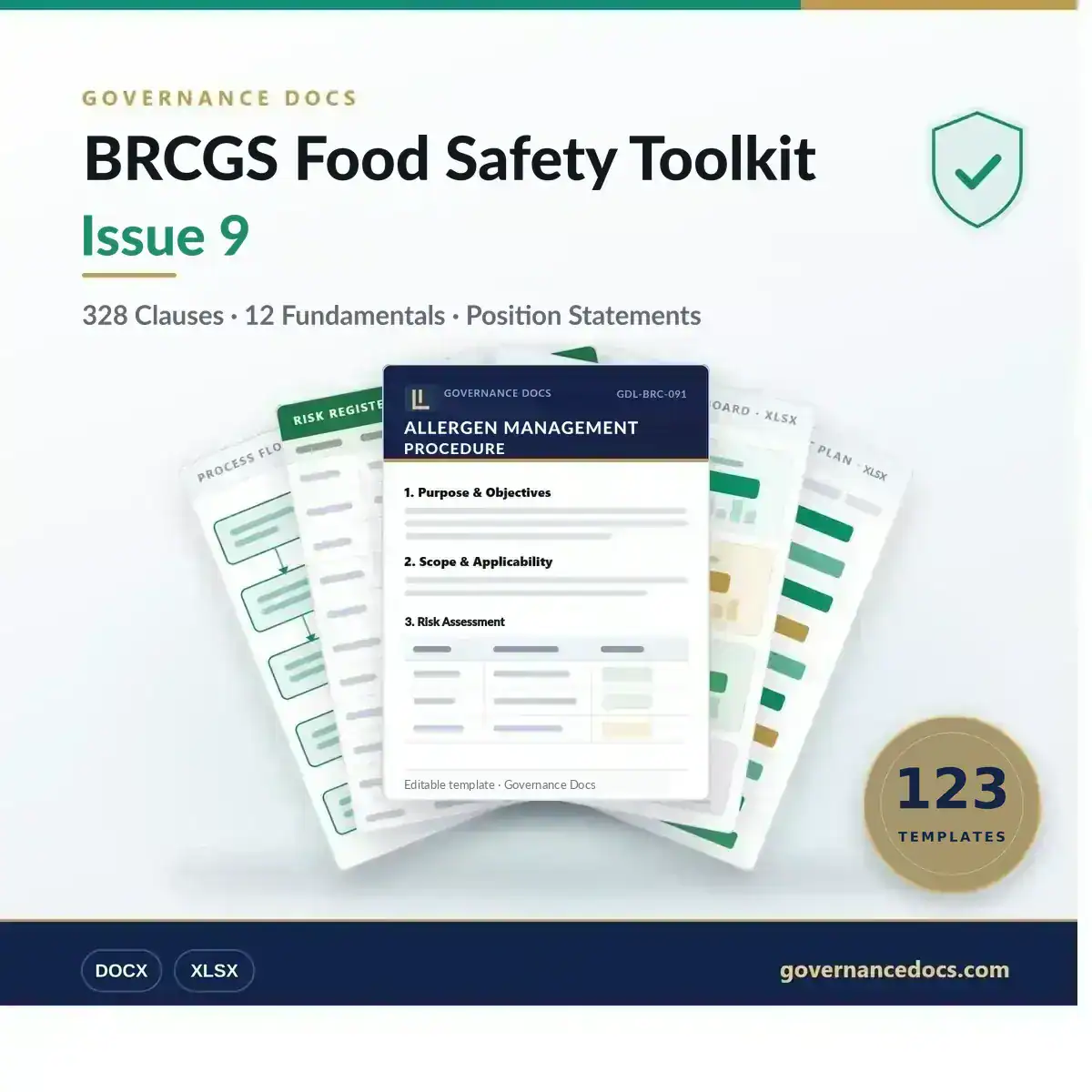
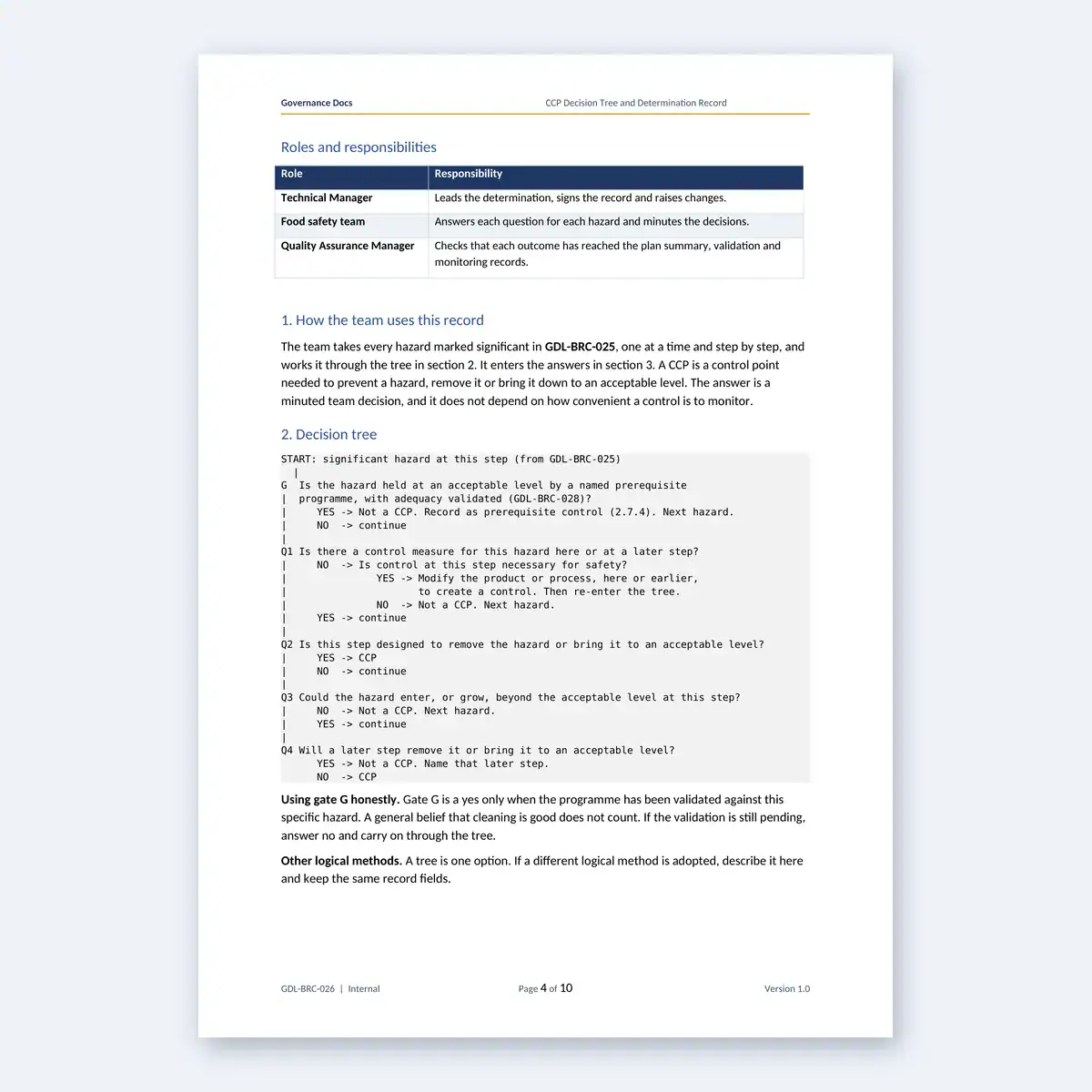
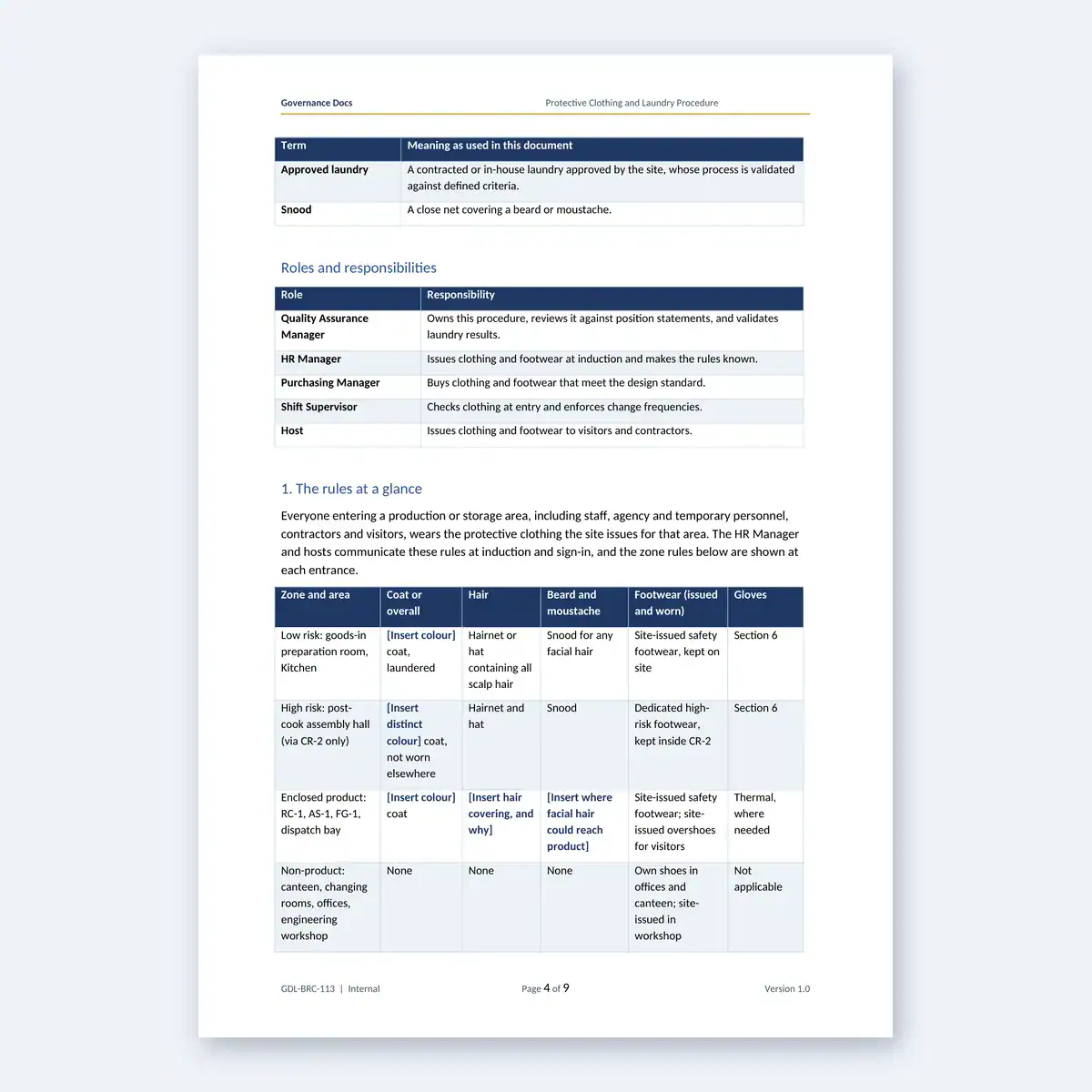
The BRCGS Food Safety Toolkit gives you 123 editable Microsoft Office templates for the BRCGS Global Standard Food Safety, Issue 9: 78 Word documents and 45 Excel workbooks. Folders follow the Standard’s own section numbers, and each of its 328 clauses has a named working document. It includes a pre-loaded self-assessment, an audit grade and recertification calendar, and the 4 BRCGS position statements that change the printed 2022 text. Independent of BRCGS.
$149.00
✓ In stock — instant download after checkout
The BRCGS Global Standard Food Safety is the certification scheme many retailers and food businesses ask their suppliers to hold. BRCGS says it supports over 24,000 businesses in more than 130 countries. BRCGS Issue 9 is the current issue, and a site is judged clause by clause, on its documents, its records and what the auditor sees on the factory floor.
The BRCGS Food Safety Toolkit is built on the Standard’s own structure. Folder S04 is section 4, folder S05 is section 5, and so on, so when an auditor works a section you can hand over the matching folder. A separate folder, S00, covers the audit protocol in Part III.
The BRCGS Food Safety Toolkit answers the requirements a site has to meet:
| Part of the Standard | What the pack covers |
|---|---|
| Part II requirements | All 328 clauses across 72 subsections in sections 1 to 9 |
| Statements of intent | All 57, including the 12 fundamental requirements |
| Part III audit protocol | 25 blocks: audit options, grading, non-conformities, recertification, unannounced audits |
| Appendices a site acts on | 6, including production risk zones and root cause analysis |
| Position statements | All 4 in F926 version 5, dated 6 October 2026 |
Every Word document opens with a table of the BRCGS references it answers. The build that produced this pack fails if any BRCGS Issue 9 clause is left without a working document. That is a check we run, not a claim we make.
BRCGS position statements extend the Standard and are binding, and they change text printed in 2022. A site working from the PDF alone would miss them. The BRCGS Food Safety Toolkit is written to F926 version 5:
arrangements with the certification body in place before the audit window opens.
BRCGS is developing Issue 10. As far as we can see it has not announced a publication date, so we do not give one. Check the BRCGS website for later position statements and for news of Issue 10.
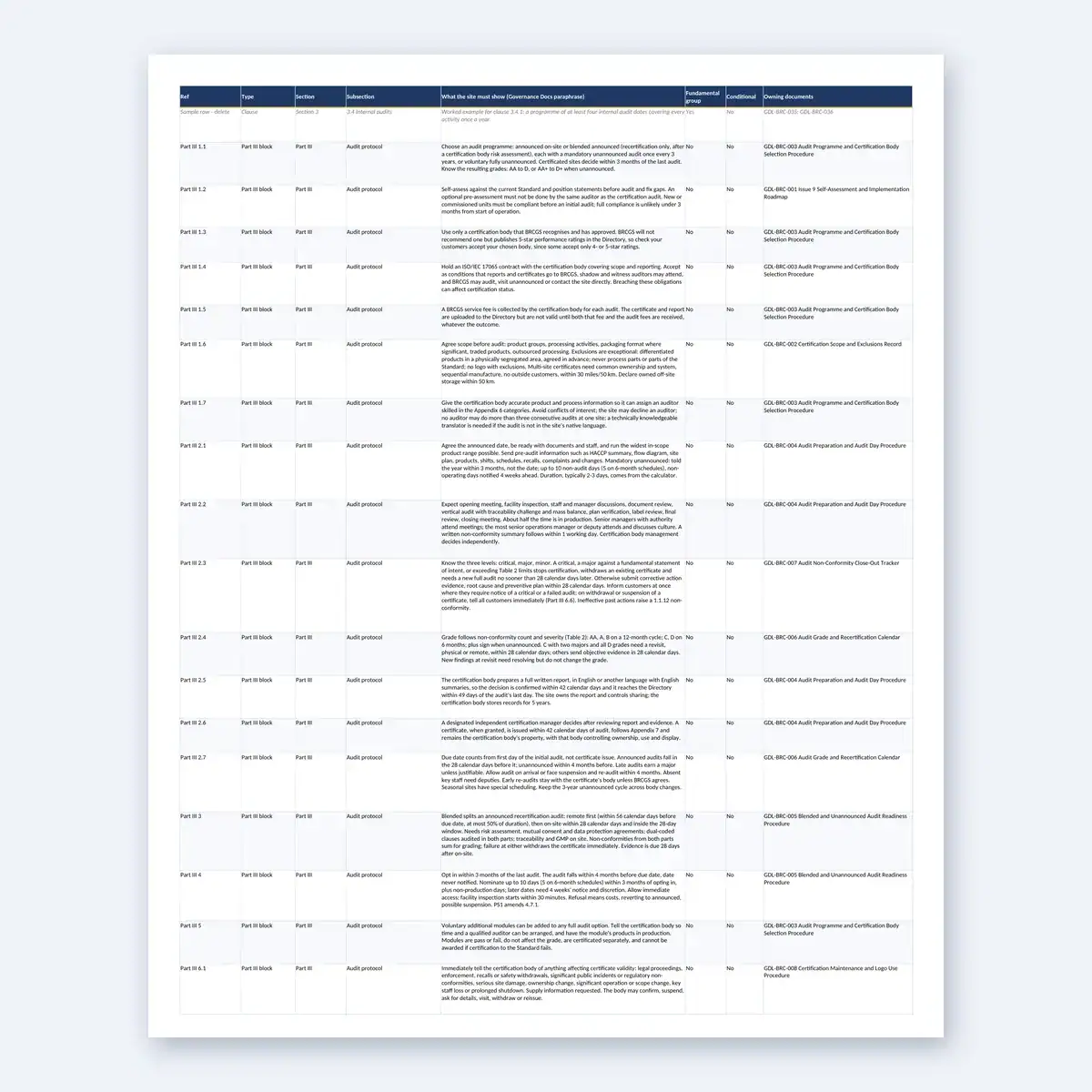
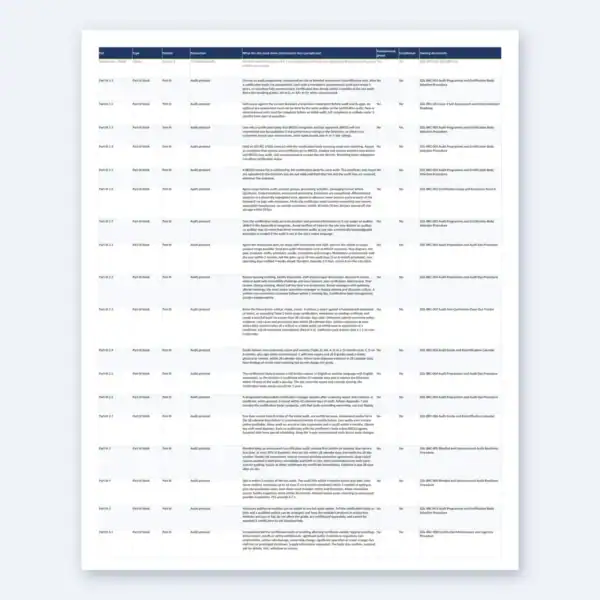
The Issue 9 Self-Assessment and Implementation Roadmap workbook arrives pre-loaded with 420 rows: every clause, statement of intent, audit protocol block, appendix and position statement. Each row carries its fundamental and conditional flags and the toolkit document that answers it. Add your status, gap, action, owner and due date.
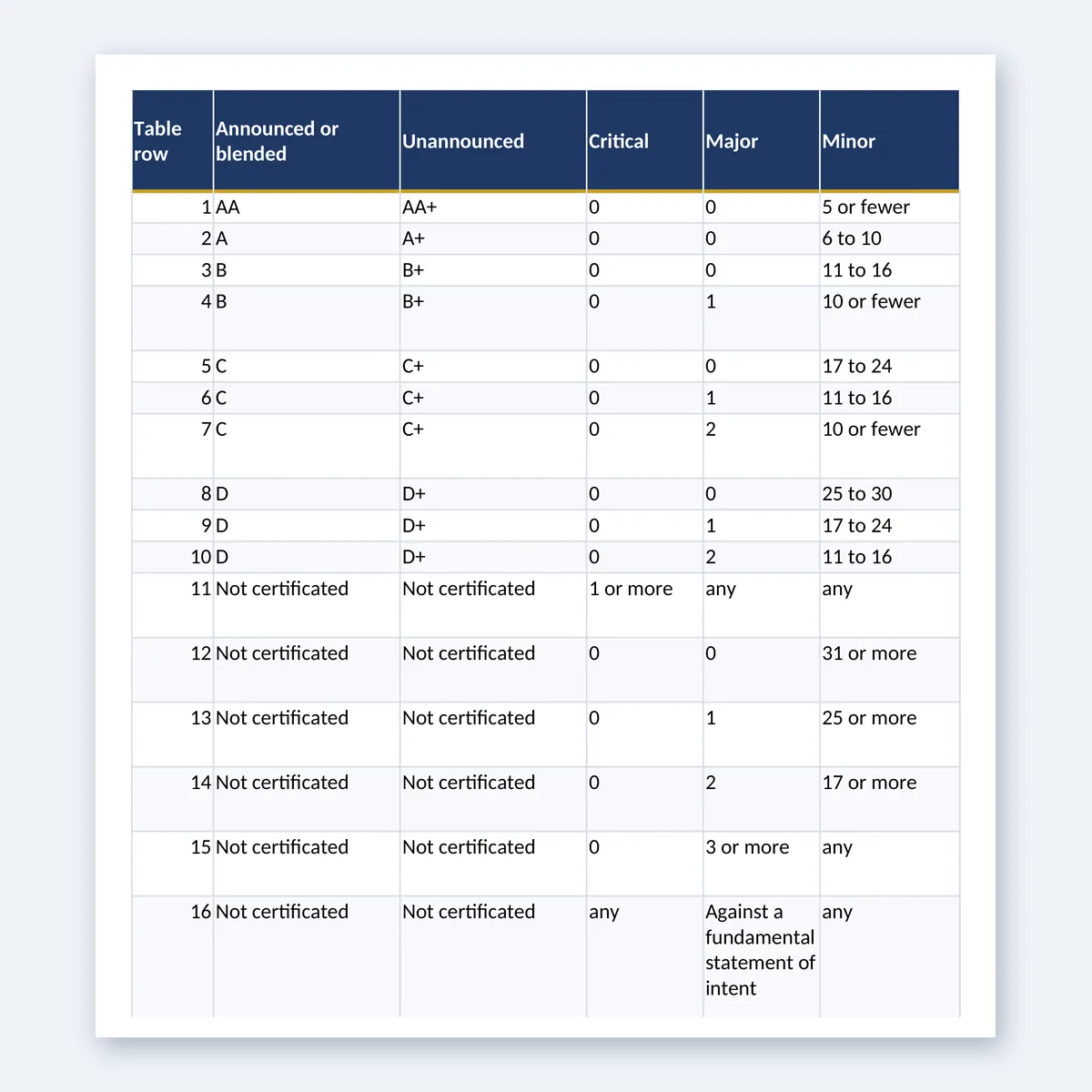
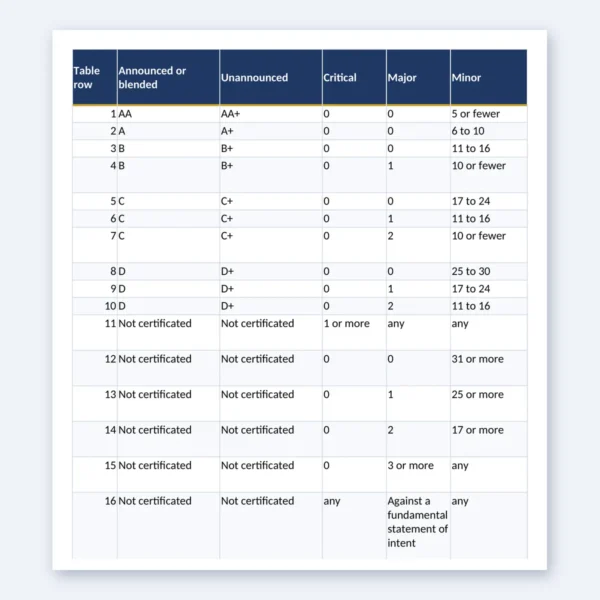
The Audit Grade and Recertification Calendar turns your critical, major and minor counts into a grade using the Part III table, and works out your audit due date, audit window and unannounced year.
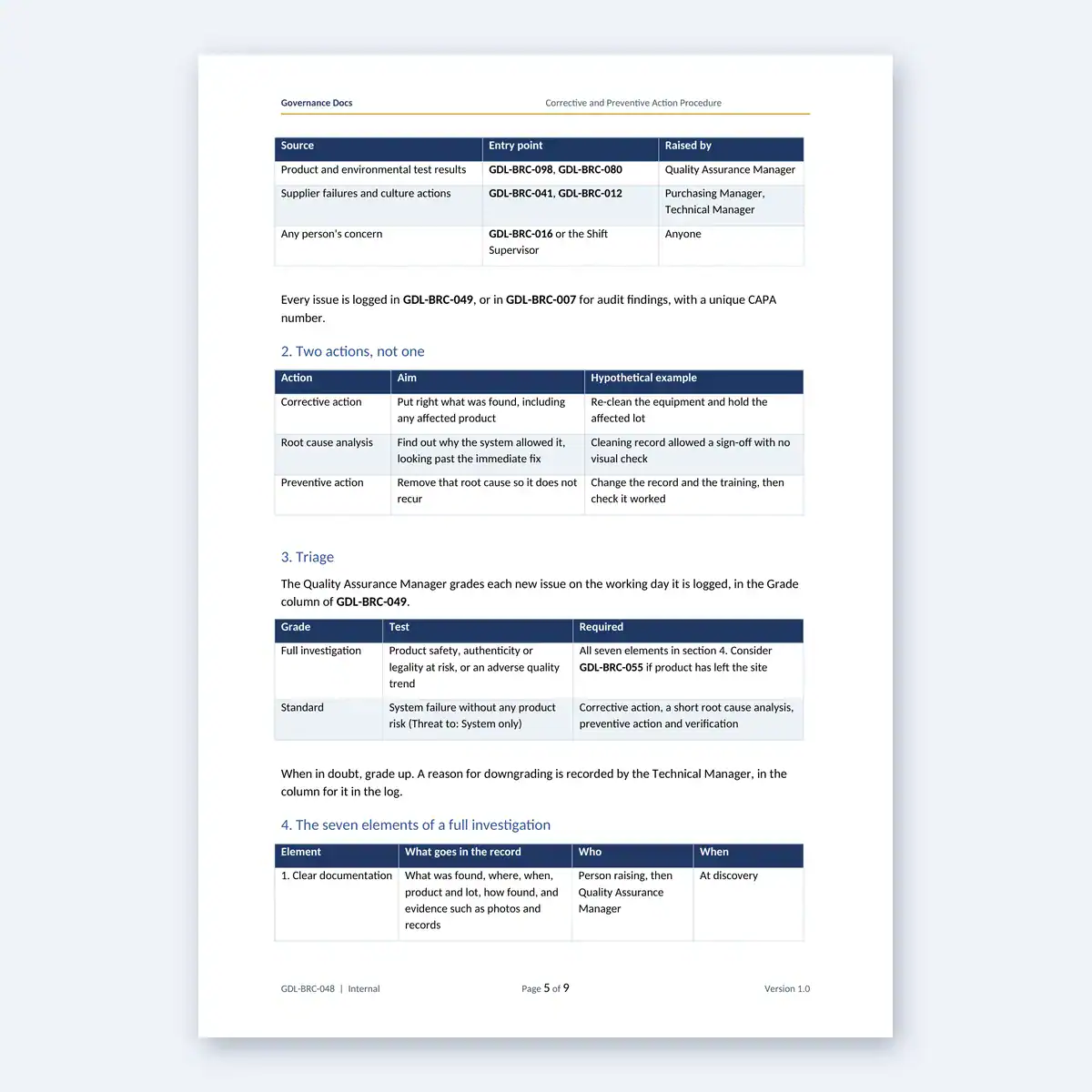
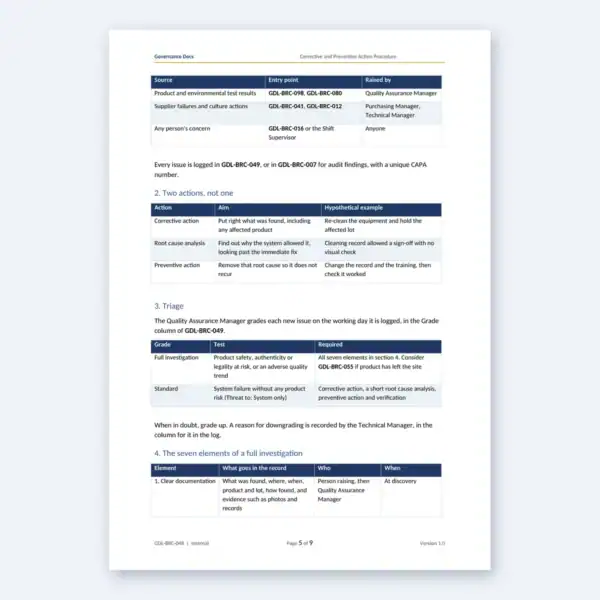
If an auditor raises a major against one of these, a new site gets no certificate, a certificated site loses its certificate, and only another full audit puts it right. BRCGS documents that own one say so at the top. They cover senior management commitment, the food safety plan, internal audits, supplier management, corrective and preventive action, traceability, layout and segregation, housekeeping and hygiene, allergens, control of operations, labelling and pack control, and training.
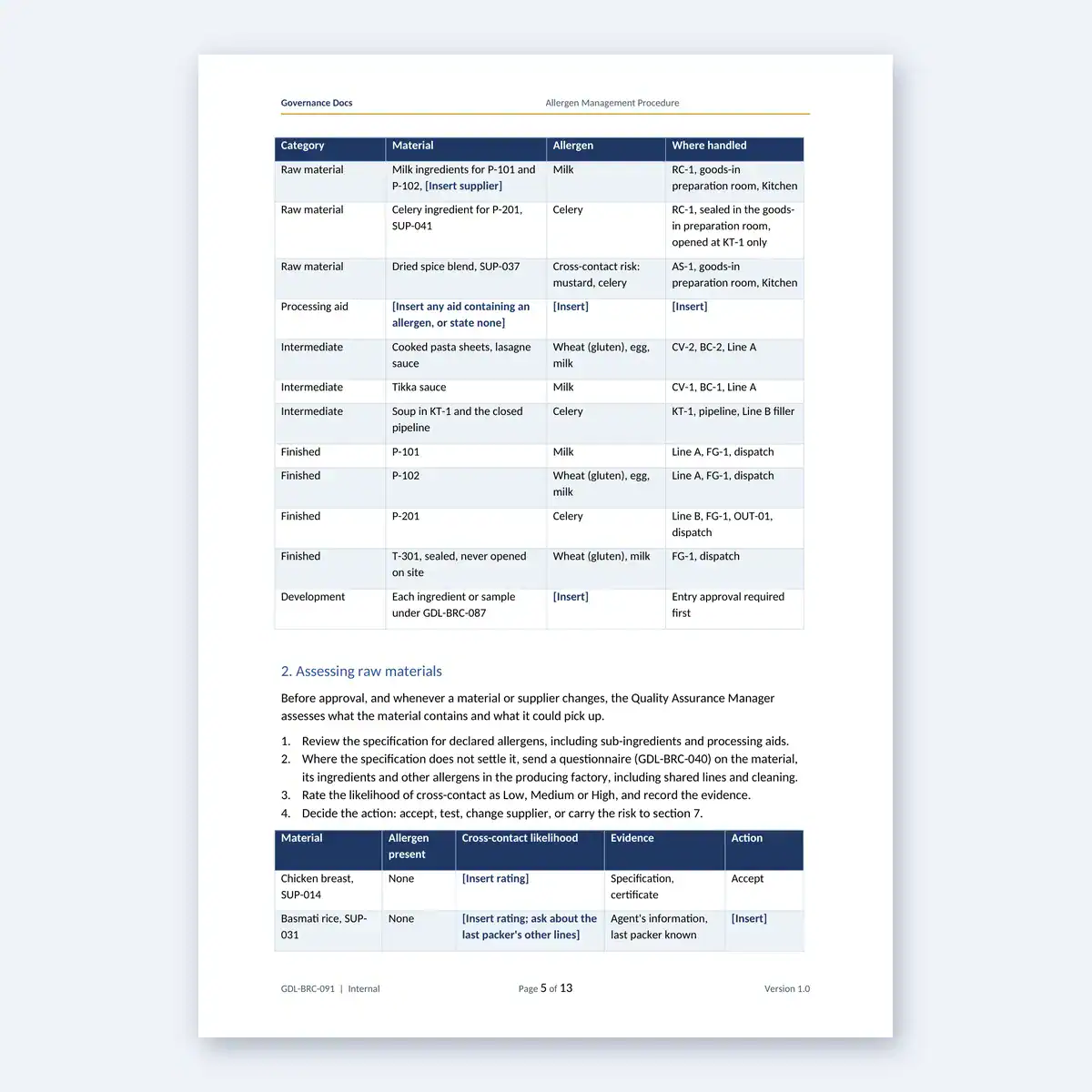
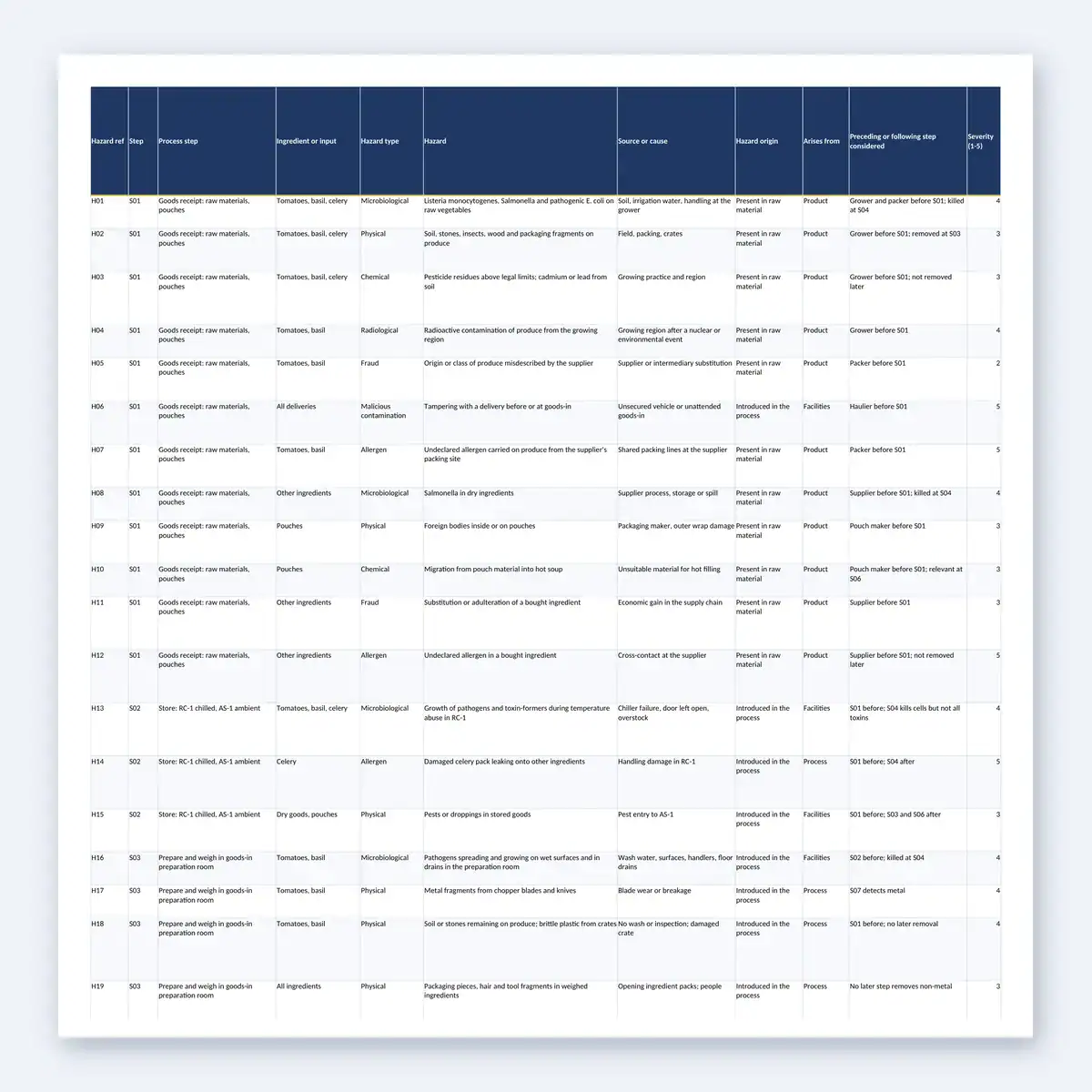
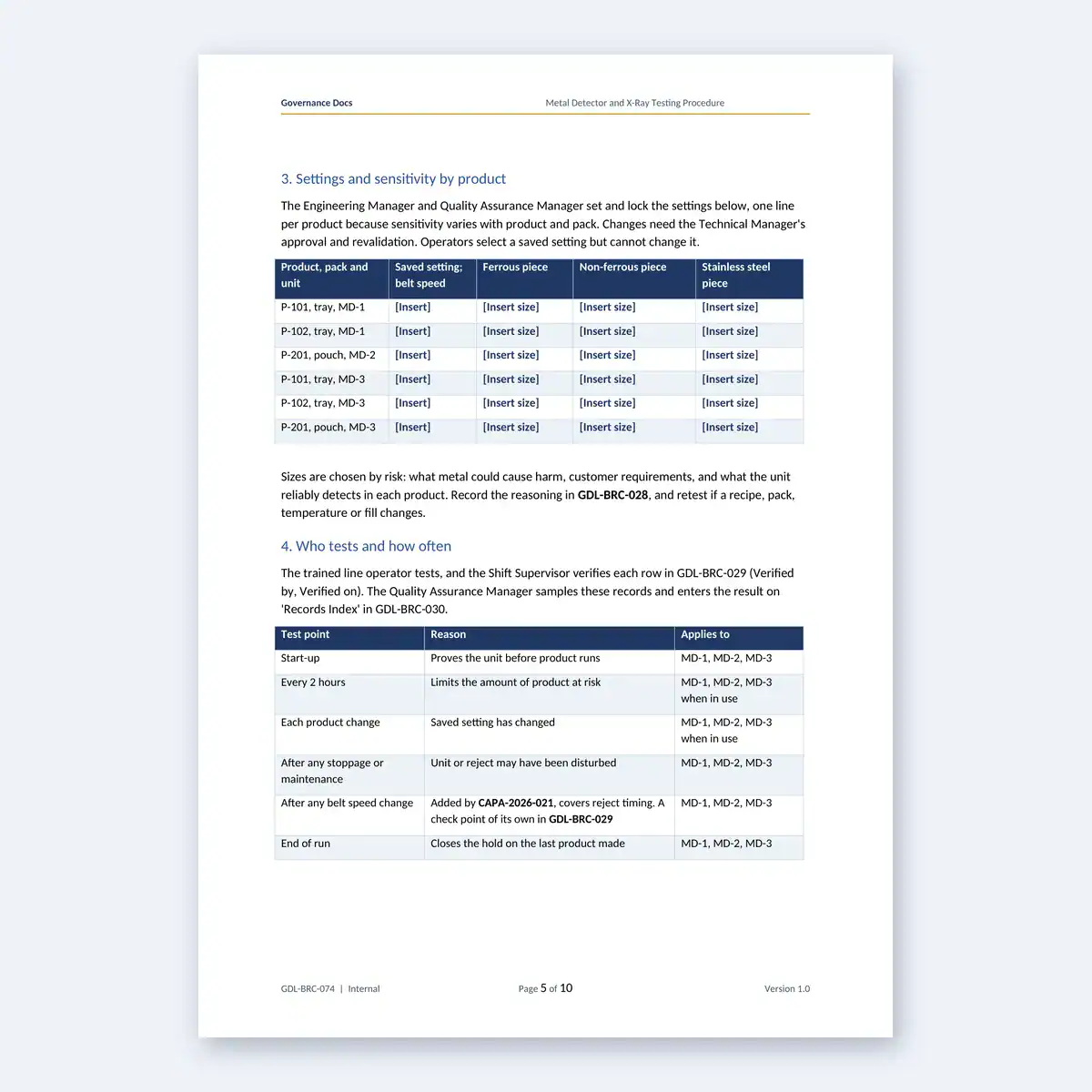
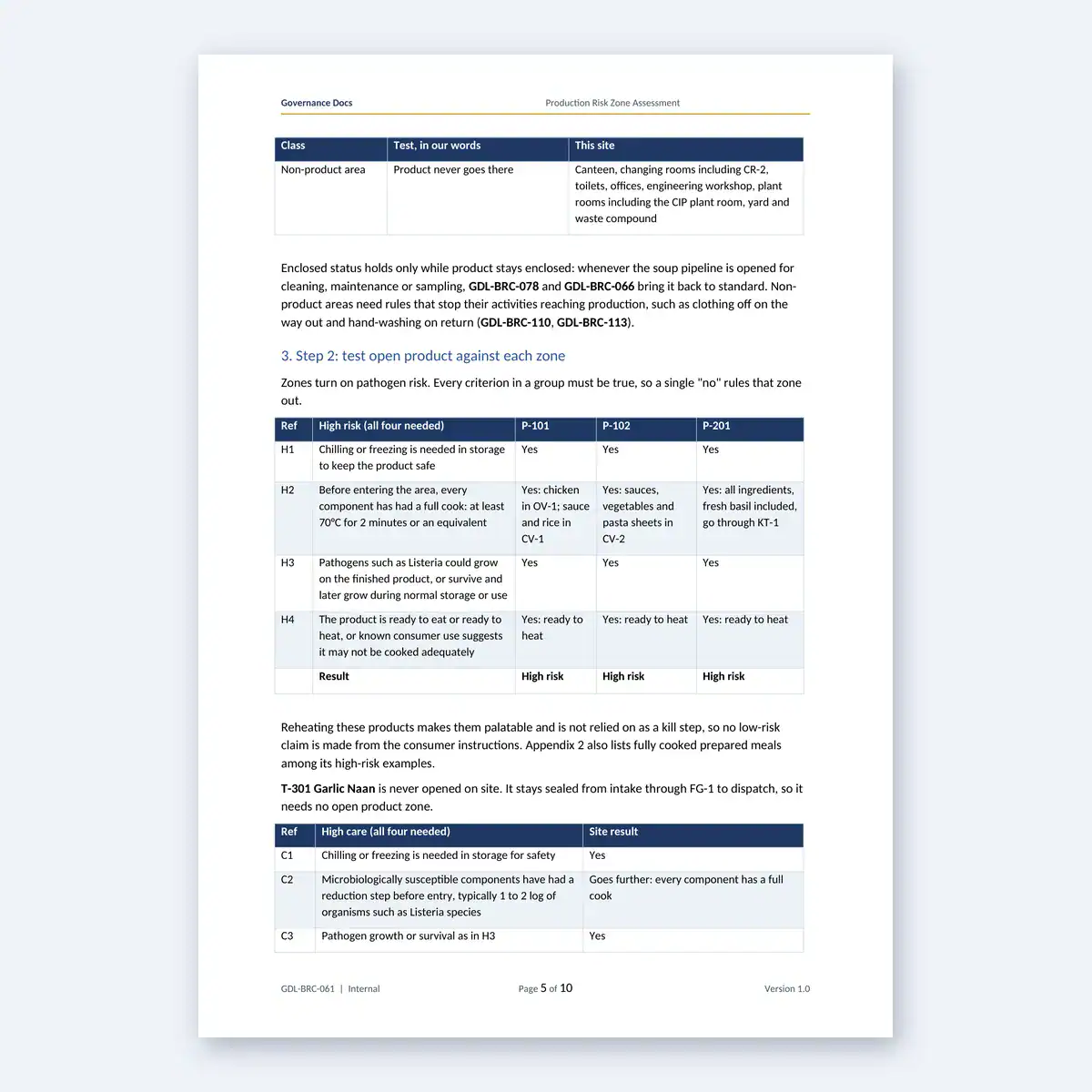
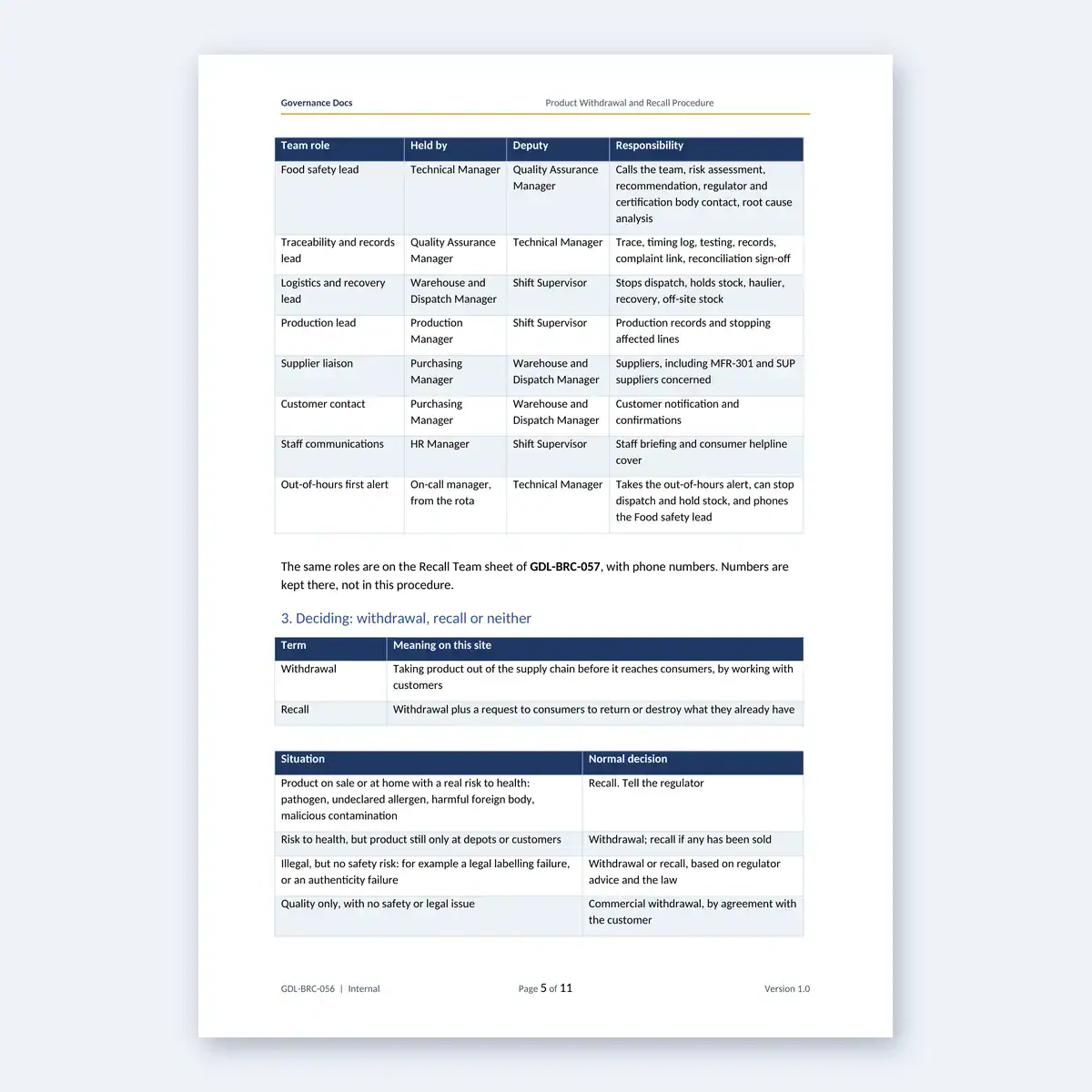
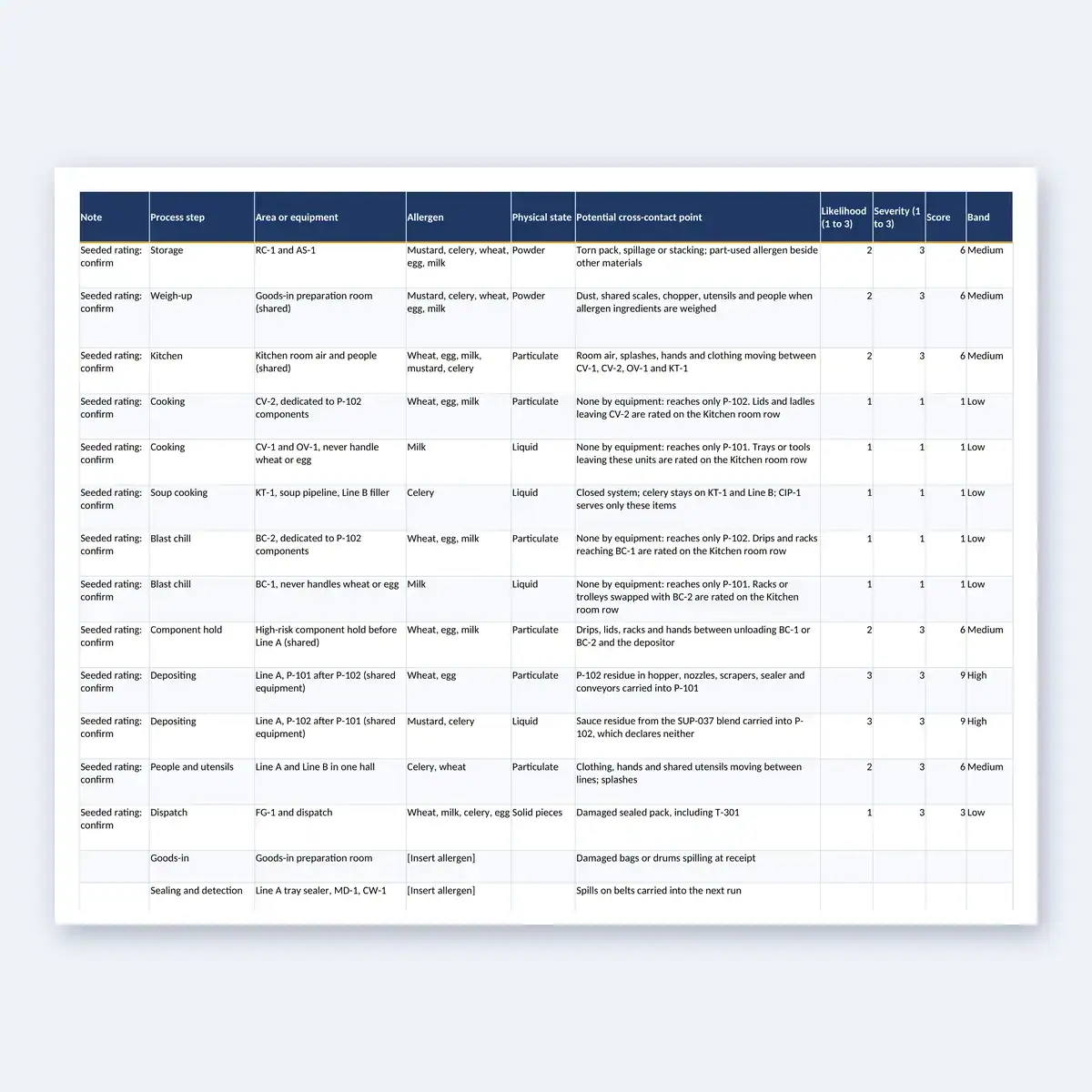
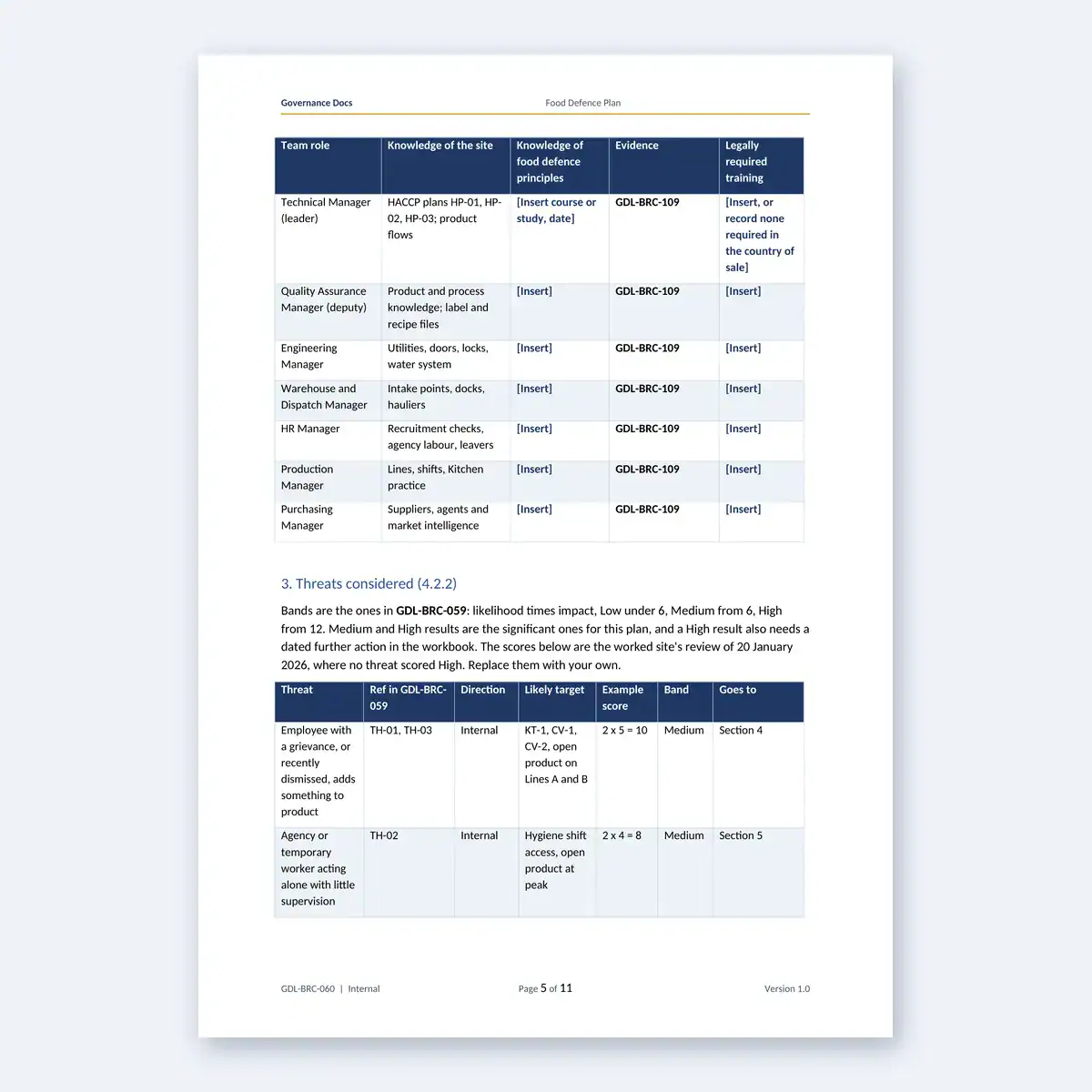
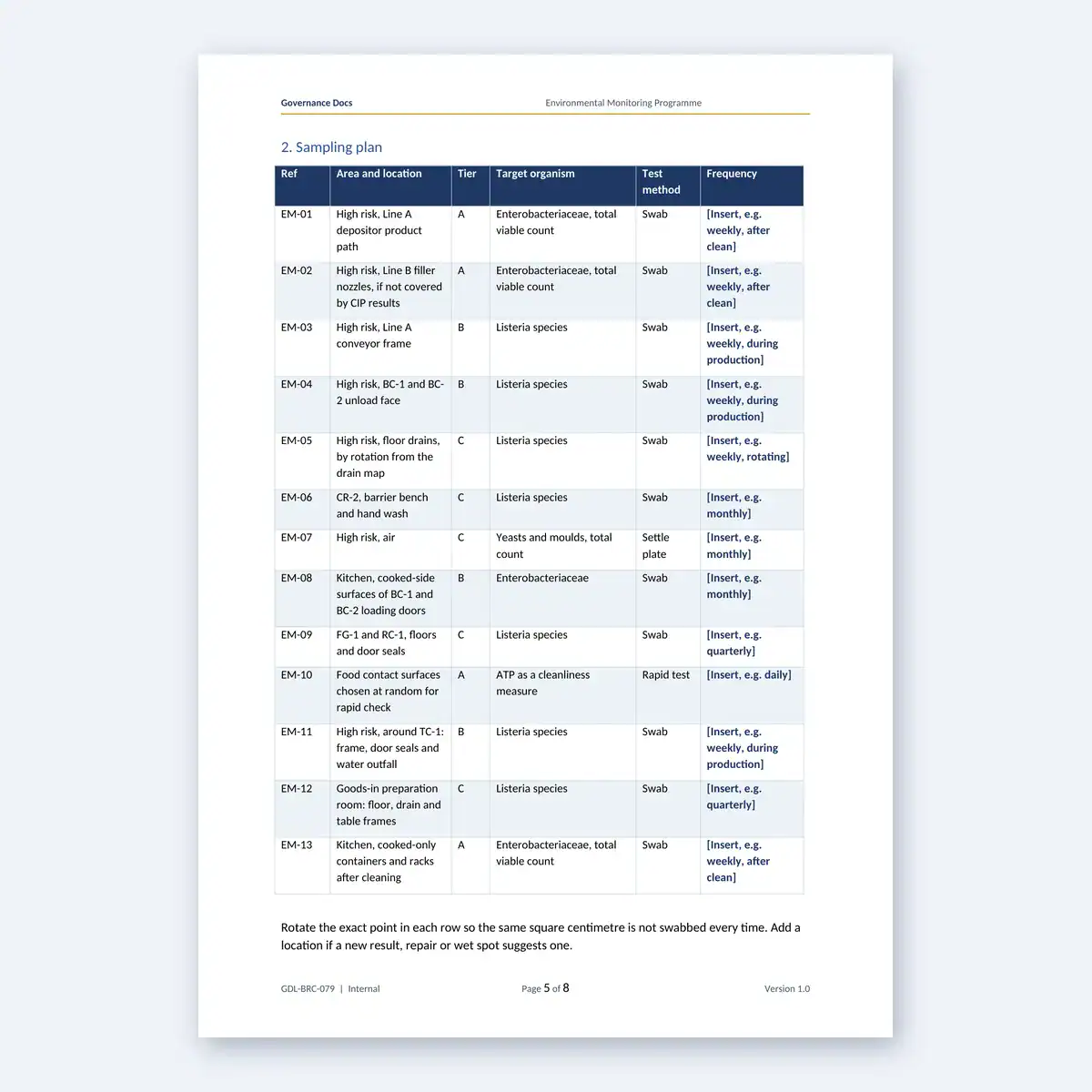
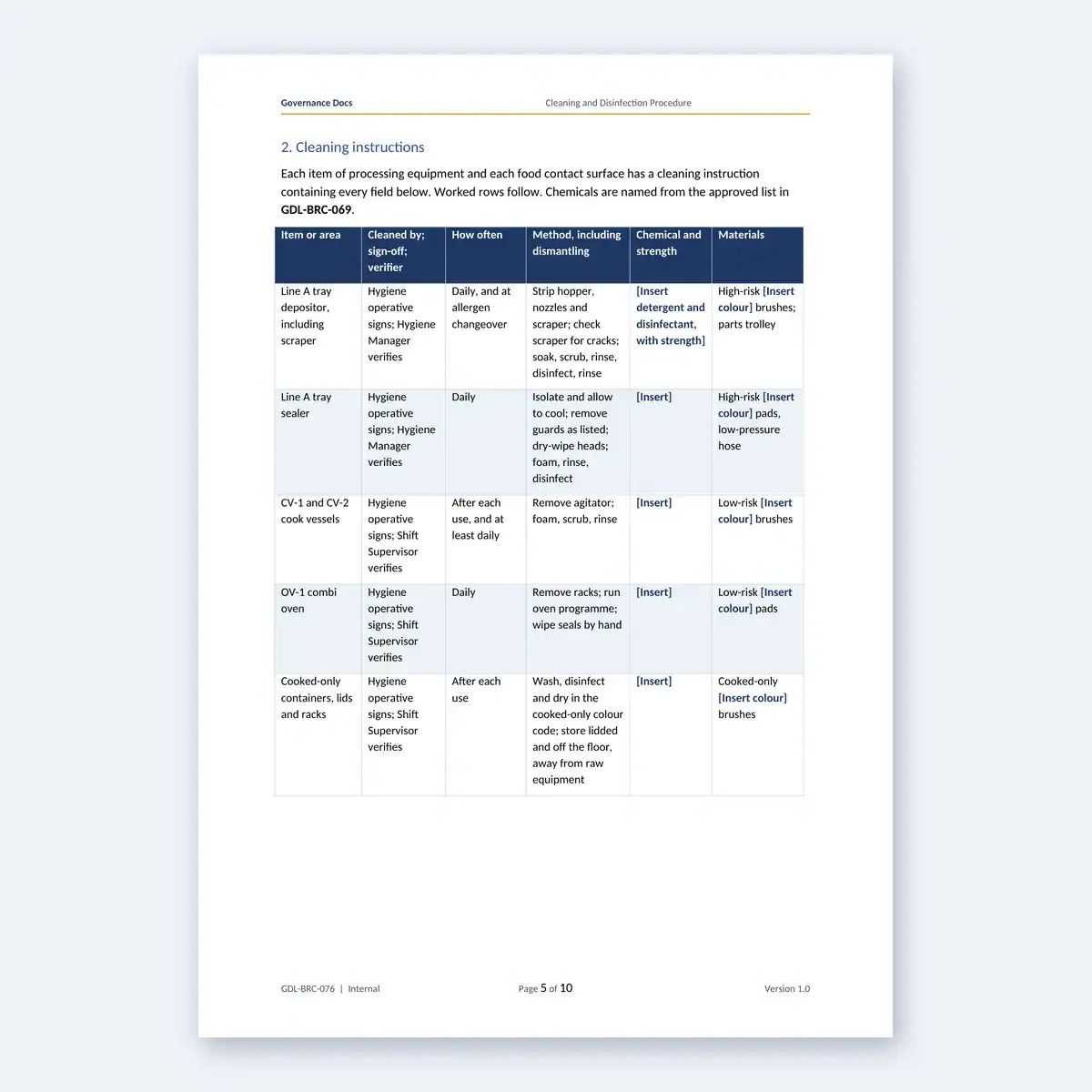
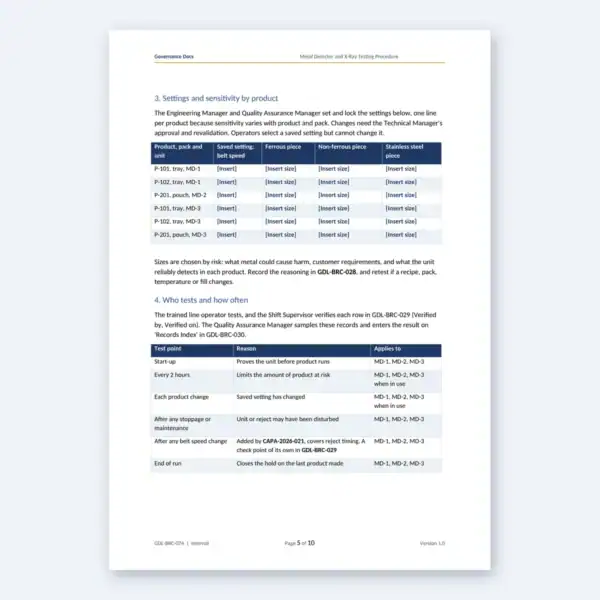
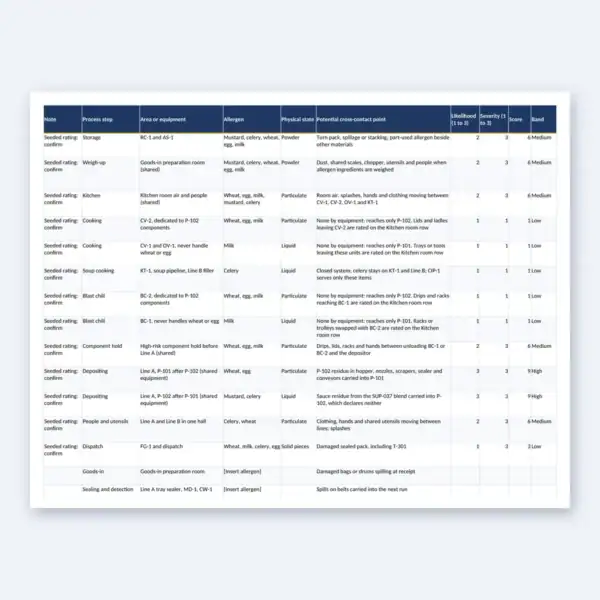
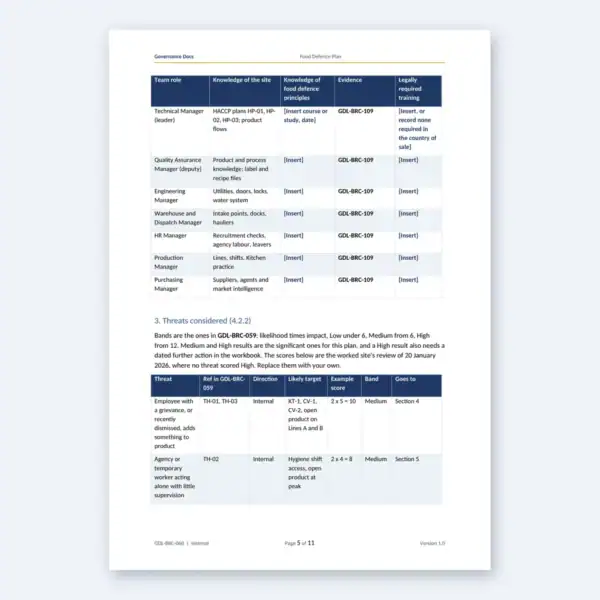
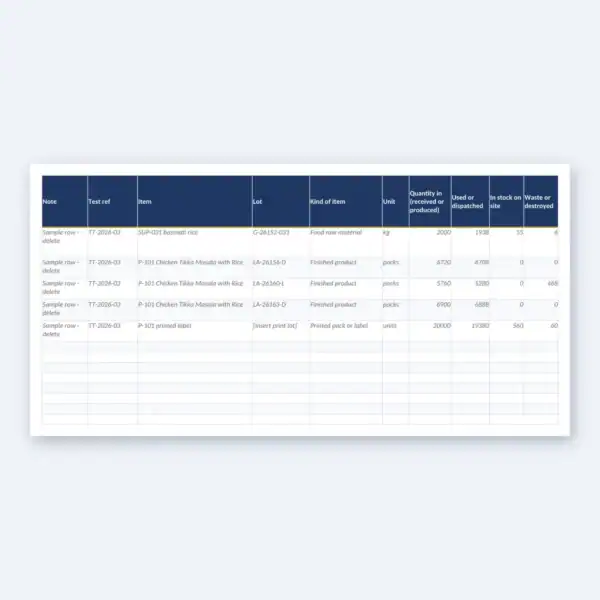
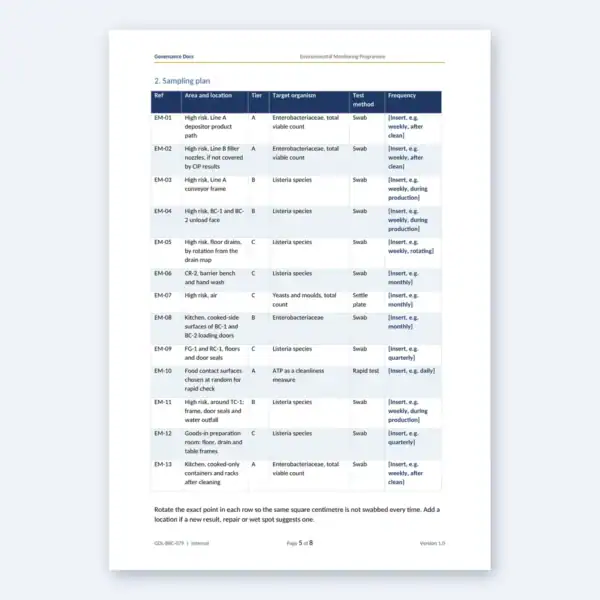
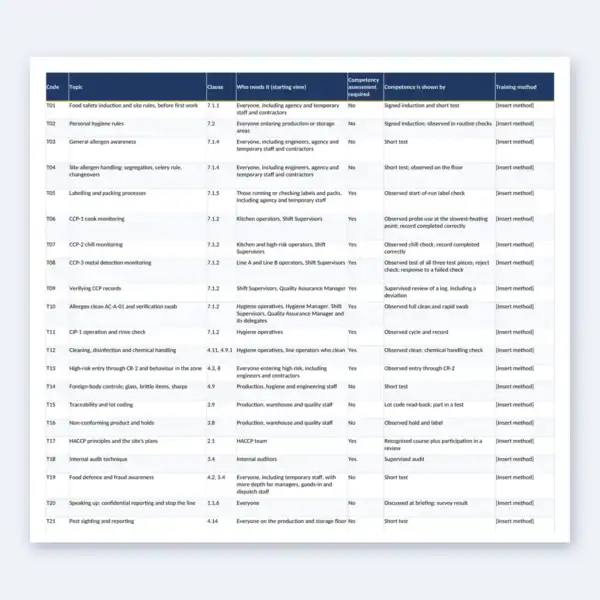
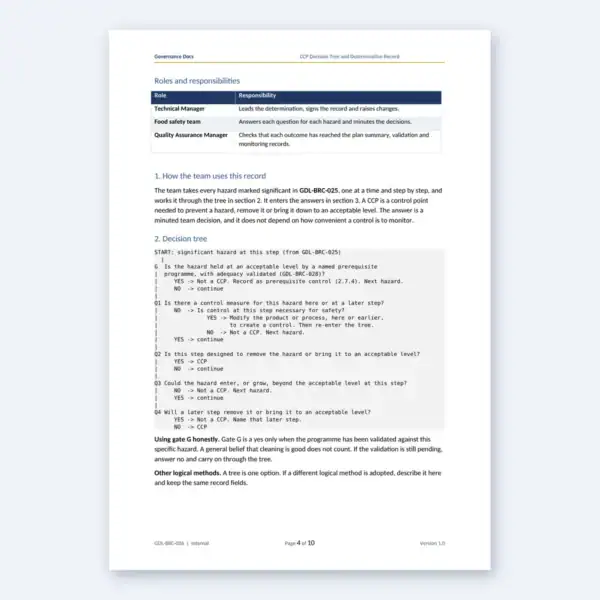
The worked examples in the BRCGS Food Safety Toolkit follow one fictional manufacturer of chilled ready meals and soups, with low-risk and high-risk zones, real allergen decisions and a traded product. A metal detector test failure, a consumer complaint about a plastic fragment, a Listeria result from a floor drain, an annual recall test and an internal audit each keep the same reference and the same facts wherever they appear. That is how your own records will need to read at audit. Limits your site must set stay as placeholders, so a number in an example is never presented as a legal limit.
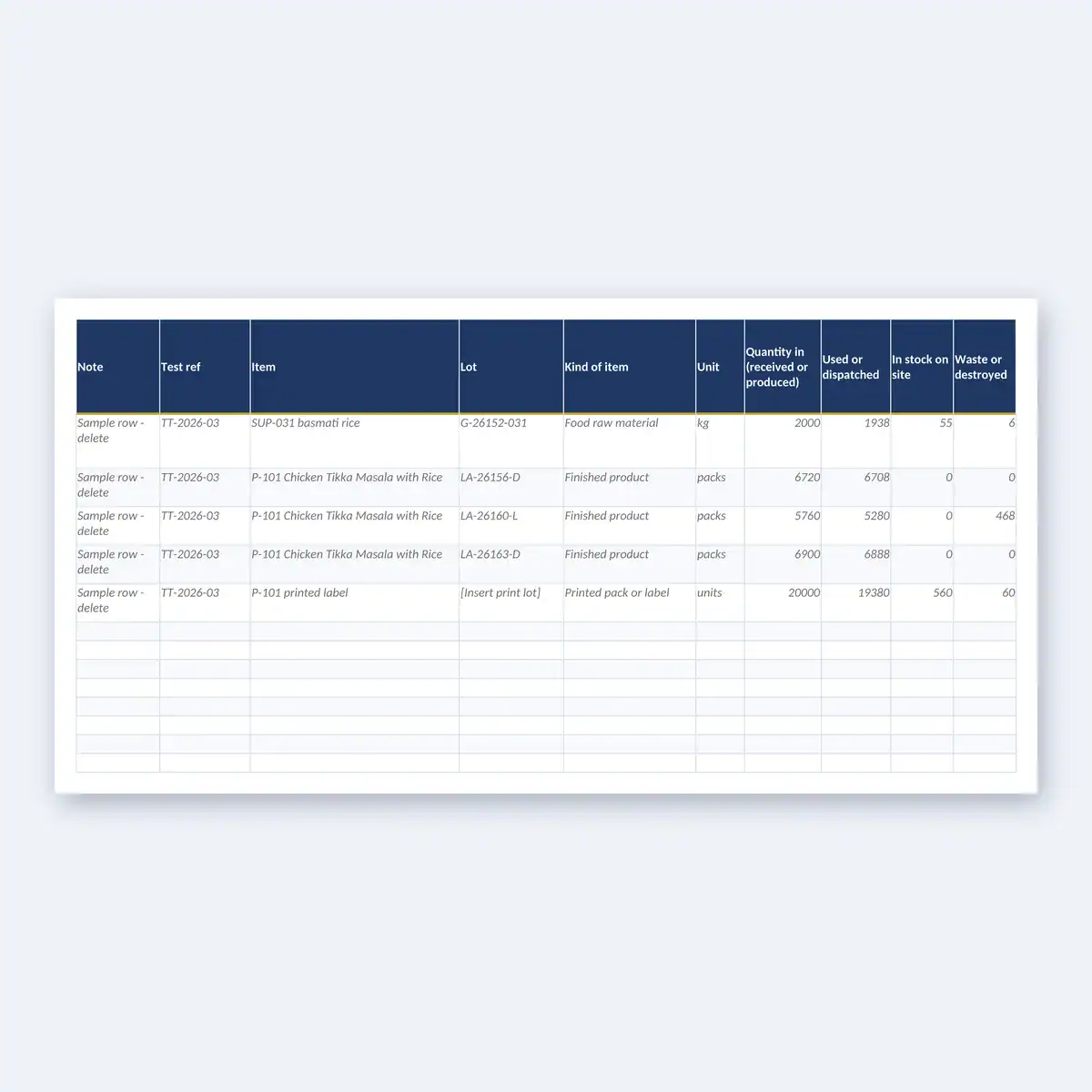
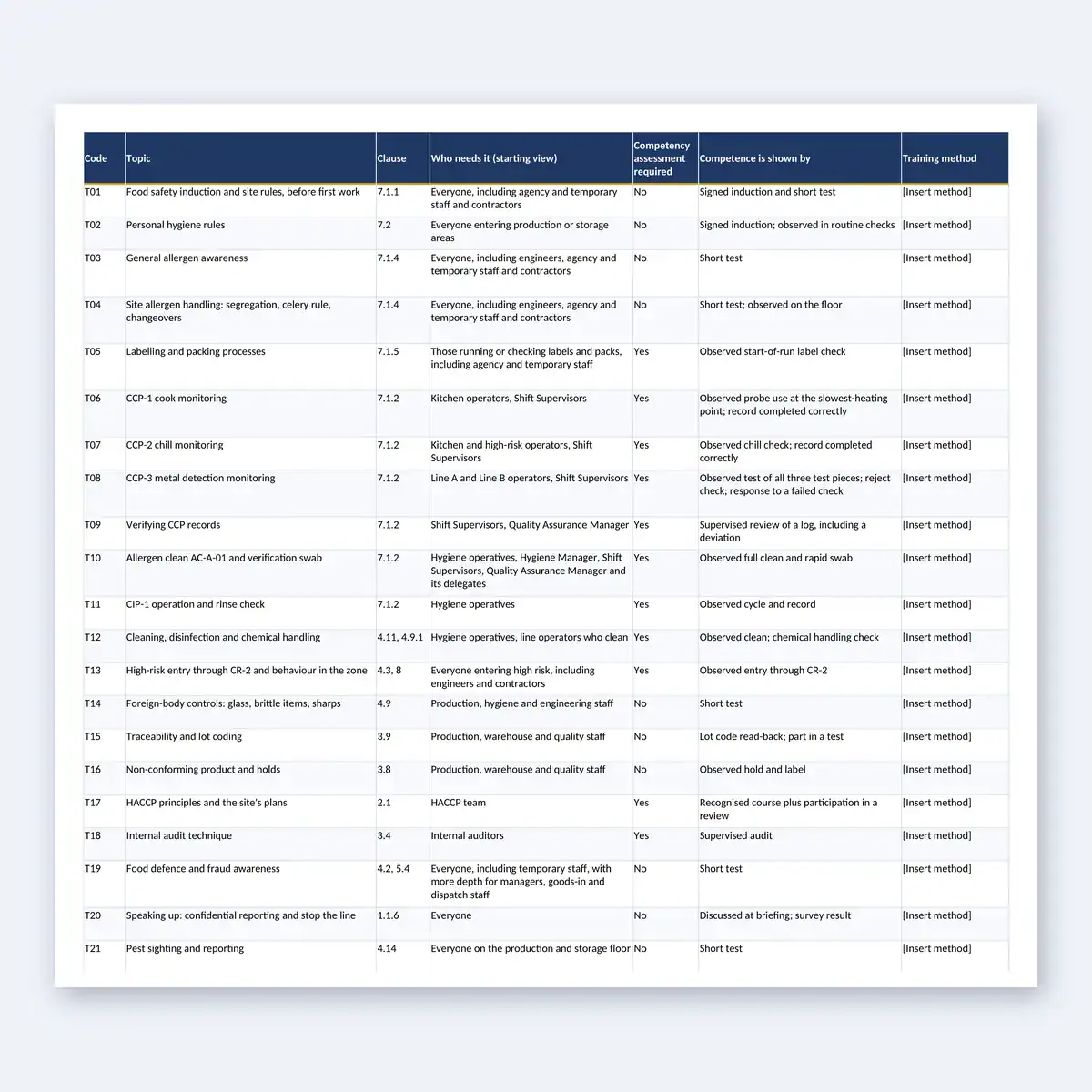
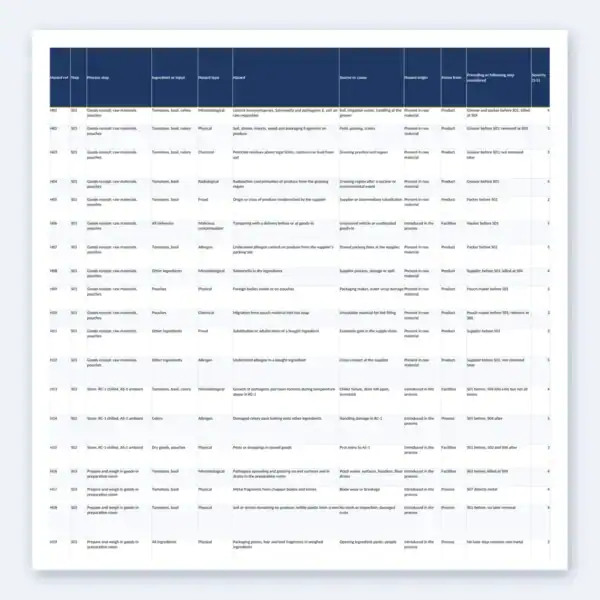
The 45 Excel workbooks in the BRCGS Food Safety Toolkit calculate what can be calculated: dates, totals, hazard scores and summaries. They do not mark a record passed, closed or released. You choose each row’s Status from a dropdown, and a Prompt column flags anything missing or out of limit, for example “Enter the date”, “Overdue” or “Date is in the future”. The one exception is the audit grade lookup, which follows the Part III table. Rows typed below the ruled range turn red and are counted on the summary, so nothing goes missing quietly.
| Folder | Section | Standard | Documents |
|---|---|---|---|
| S00 | Certification and Audit | Part III; App 4, 6, 8 | 9 |
| S01 | Senior Management Commitment | Section 1 | 10 |
| S02 | Food Safety Plan – HACCP | Section 2 | 11 |
| S03 | Food Safety and Quality System | Section 3 | 27 |
| S04 | Site Standards | Section 4; App 2, 3 | 29 |
| S05 | Product Control | Section 5 | 14 |
| S06 | Process Control | Section 6 | 7 |
| S07 | Personnel | Section 7 | 6 |
| S08 | Production Risk Zones | Section 8 | 5 |
| S09 | Traded Products | Section 9 | 5 |
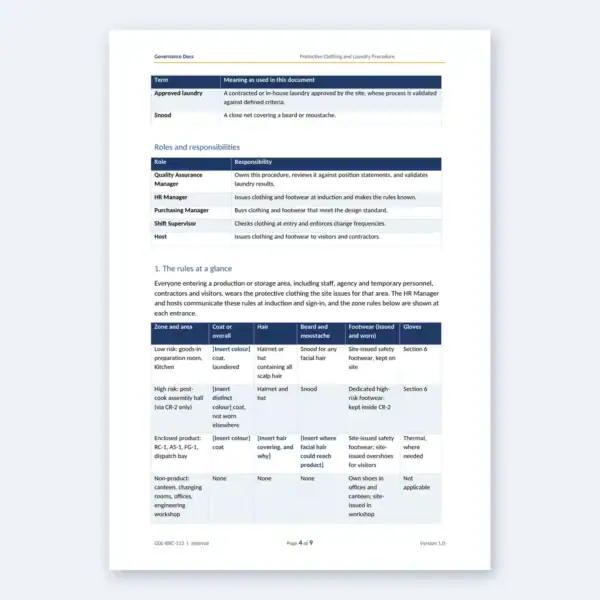
The BRCGS Food Safety Toolkit is 78 Word documents and 45 Excel workbooks. Every file in the BRCGS Food Safety Toolkit has a branded full-page cover and the same styling throughout. Every placeholder is a [square-bracket] token, such as [Organisation Name], so one find-and-replace makes the BRCGS templates yours. They are written in British English, matching the Standard.
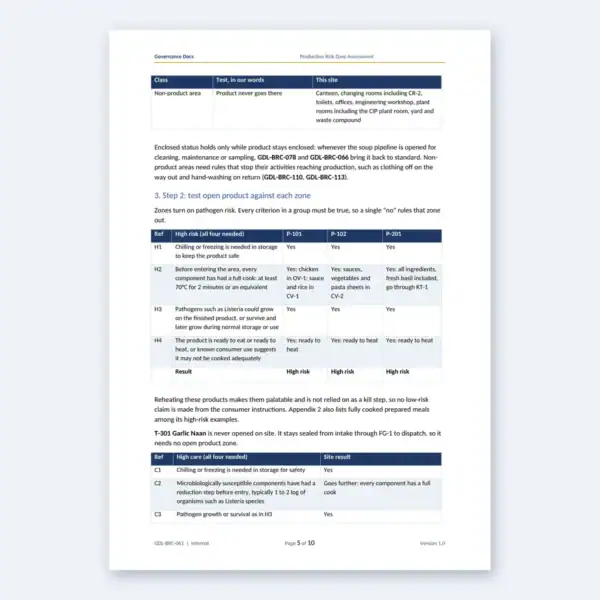
Sections 5.8, 5.9, 8 and 9 apply only to sites doing that activity: pet food and animal feed, animal primary conversion, production in the three higher-hygiene zones, and traded products. Those BRCGS templates are marked, so you can record a decision and set them aside.
certification scheme around them.
The BRCGS Food Safety Toolkit is independent of BRCGS and is not approved or endorsed by BRCGS. The Standard is BRCGS copyright, and clause 1.1.9 expects a site to hold a genuine current copy, which is available from brcgs.com. The BRCGS Food Safety Toolkit cites clause numbers and short names and describes each requirement in our own words. We check that mechanically: the shipped files were compared against the Standard’s text, and no run of words matches beyond headings and references. Read the Standard itself alongside the toolkit.
S00 — Certification and Audit (9 documents)
S01 — Senior Management Commitment (10 documents)
S02 — Food Safety Plan – HACCP (11 documents)
S03 — Food Safety and Quality System (27 documents)
S04 — Site Standards (29 documents)
S05 — Product Control (14 documents)
S06 — Process Control (7 documents)
S07 — Personnel (6 documents)
S08 — Production Risk Zones (5 documents)
S09 — Traded Products (5 documents)
The BRCGS Food Safety Toolkit is 123 editable Microsoft Word and Excel templates for BRCGS Issue 9, the BRCGS Global Standard Food Safety: 78 documents and 45 workbooks. Folders follow the Standard’s section numbers, and each of its 328 clauses has a named document.
No. The Standard is BRCGS copyright. Get your copy from brcgs.com, where the document page for Issue 9 lists a free PDF as well as paid and printed versions. Clause 1.1.9 expects your site to hold a genuine current copy in any case.
No. The BRCGS Food Safety Toolkit is independent of BRCGS and is not approved or endorsed by BRCGS.
Certification comes from an audit by a certification body that BRCGS recognises. The BRCGS Food Safety Toolkit gives you the documented system and the record templates. Your site still has to run them, keep the records and pass the audit.
Yes. The BRCGS Food Safety Toolkit is written to F926 version 5, dated 6 October 2026, and includes a register for tracking later ones.
Only if they apply to you. Section 8 applies to sites whose products need higher-hygiene production zones, and section 9 to sites choosing to include traded products in their audit. The Production Risk Zone Assessment helps you decide.
Microsoft Word (.docx) and Microsoft Excel (.xlsx), 78 and 45 respectively. Every file is fully editable, unlocked and unprotected. The workbooks have dropdowns, frozen headers and worked example rows that you delete before use.
With the Issue 9 Self-Assessment and Implementation Roadmap and the Food Safety and Quality Manual. The self-assessment shows which BRCGS documents you already have an answer for, and which clauses need work first.
Free articles that explain the requirements this toolkit covers.
 Comprehensive BRCGS Food Safety Toolkit – 123 Templates$149.00














Reviews
There are no reviews yet