CART
BRCGS vs SQF is a choice between two food manufacturing certification schemes that audit in very different ways. BRCGS grades you from AA to D, SQF scores you out of 100, and FSSC 22000, which may also be on your shortlist, grades findings and does not score. This comparison keeps to facts we can source, and it is meant to be fair to all three. The toolkit mentioned at the end is independent of BRCGS and of the other schemes.
Free gap assessment
Would your HACCP plan survive an inspection?
Score the whole of the Codex text, free - the good hygiene practices as well as the seven principles, with the US and EU overlays on top.
Run the free HACCP gap assessment → or View premium report sample
| Topic | BRCGS Food Safety (Issue 9) | SQF Food Manufacturing (Edition 10) | FSSC 22000 (Version 7) |
|---|---|---|---|
| What you implement | One Standard: Part II holds 9 sections and 328 clauses | One code: Part A rules, Module 2 (94 requirements) and Module 11 (164 requirements) | ISO 22000:2018, the ISO 22002 prerequisite parts for your category, and the FSSC Additional Requirements |
| Cost of the requirements | Standard free from BRCGS as a PDF | Code free from SQFI | Scheme free; ISO 22000 and the ISO 22002 parts are bought |
| Audit result | Grade AA to D, with a plus sign if unannounced | Score out of 100 and a rating | Graded findings (minor, major, critical), no score |
| Certificate cycle | Audit every 12 months, or every 6 months at grade C or D | Recertification every 12 months; 6-month surveillance after a lower rating | Three-year certificate with annual surveillance audits |
| Unannounced audit | At least one in every 3 years on announced options, or every audit by choice | Once every 3 years | At least one surveillance audit in each 3-year period |
| Closing findings | Evidence or revisit within 28 calendar days of audit end | Corrective actions closed in the SQFI database within 40 calendar days of audit end | Certification body approves minor action plans and closes majors within 28 calendar days of the last audit day |
| Current edition position | Issue 9 is current; no successor date known to us | Edition 10 published March 2026; audits expected from 2 January 2027, subject to GFSI benchmarking | Version 7 published May 2026; Version 6 audits can run to 30 April 2027 |
The table shows the broad shape. The sections below cover the differences that change the work.
BRCGS gives you one Standard for food manufacturers. Part II of Issue 9 holds nine sections, from senior management commitment through the HACCP-based food safety plan, site standards, product control, process control and personnel, then production risk zones and traded products. Sections 8 and 9 are conditional, depending on your products. Twelve clauses are fundamental, and a major against the statement of intent of any of them stops certification.
SQF also gives you one code. Module 2 holds the system elements and Module 11 holds good manufacturing practice for processing food. Edition 10 introduces Core Clauses, which carry heavier deductions.
FSSC 22000 is three layers: an ISO management system standard, prerequisite programme standards and its own additional requirements. Sites already running other ISO management systems will recognise the first layer.
BRCGS and SQF each set out their requirements in one document, while FSSC 22000 draws on three sources. Neither description makes one scheme easier overall, and a scheme is easier when the site’s existing system already looks like one of them.
This is the biggest difference in how the result feels.
| Result | BRCGS | SQF |
|---|---|---|
| Best outcome | AA (AA+ if unannounced): no critical or major, 5 or fewer minors | 80 to 100: rating “Certified”, 12-month recertification |
| Middle outcome | C or D: 6-month audit frequency | 70 to 79: rating “Certified with Surveillance”, 6-month surveillance audit |
| Failure | Not certificated: any critical, 3 or more majors, or large counts of minors, with or without majors | Below 70 at an initial audit: fails; a critical at an initial audit fails outright |
| Fundamental or heavier-weight items | 12 fundamental statements of intent; a major against one means no certificate, or withdrawal | Core Clauses (11 elements) cost 2 points per minor and 7 per major, against 1 and 5 |
BRCGS grades by counting non-conformities at three levels: critical, major and minor. A grade of AA needs no critical, no major and five or fewer minors. Moving down the grades increases the audit frequency from 12 months to 6 months at C and D, and some outcomes need a revisit rather than evidence alone. Our post on BRCGS audit grades sets the full table out.
SQF starts at 100 and subtracts. A minor costs 1 point, a major 5 and a critical 50, with Core Clause minors at 2 and majors at 7. See our SQF audit scoring guide.
The practical effect: BRCGS gives you a letter that moves with the number and type of findings, SQF gives you a number, and FSSC 22000 gives you graded findings with no score. Pick the one whose result your customers and your management team will actually use.
All three schemes include unannounced audits. They differ in how.
The cycle differs too. BRCGS and SQF are annual by default, with six-month frequency after weaker results. FSSC 22000 issues a three-year certificate with annual surveillance audits in between. A site may prefer the FSSC pattern because surveillance audits are shorter, though each covers the whole Scheme and the unannounced requirement still applies.
BRCGS says its Standard supports over 24,000 businesses in more than 130 countries. Certification comes from a certification body that BRCGS recognises, and position statements published by BRCGS bind as part of the Standard. SQF is owned by SQFI, a division of FMI, and uses certification bodies accredited to ISO/IEC 17065. FSSC 22000 is owned by Foundation FSSC and uses bodies accredited to ISO/IEC 17021-1 and ISO 22003-1:2022.
Auditor rotation rules differ in detail. BRCGS allows the same auditor for at most three consecutive audits. SQF allows no auditor on the same site for more than three consecutive certification cycles. FSSC 22000 allows no auditor for more than two three-year cycles at the same organisation. Read the rule in your own scheme.
Site roles differ as well. SQF asks for a primary and substitute SQF Practitioner, both HACCP-trained, with the primary employed at the site. BRCGS expects the most senior production or operations manager at the opening and closing meetings and a nominated deputy for key managers (Part III 2.7.5).
Start with the customer. Retailers and manufacturers that buy from you may name the scheme they accept in their supplier requirements. If one customer insists on one scheme and another on a different one, the cost of holding two certificates can be less than the cost of losing the contract. Ask in writing which edition they accept.
After that, a short checklist helps:
Our guide to SQF vs FSSC 22000 goes deeper on those two, and the BRCGS certification guide does the same for BRCGS.
We have not given certification or audit costs, because they depend on the certification body, your size and complexity, and we have no sourced figure to offer. We have not claimed which scheme is more widely accepted in any country. Ask your customers and certification bodies for both. The primary sources are the BRCGS website and the scheme owners’ own sites for SQF and FSSC 22000.
If you pick BRCGS, the BRCGS Food Safety Toolkit includes an Audit Programme and Certification Body Selection Procedure and an Issue 9 Self-Assessment and Implementation Roadmap, within 123 templates (78 Word and 45 Excel) for $149.
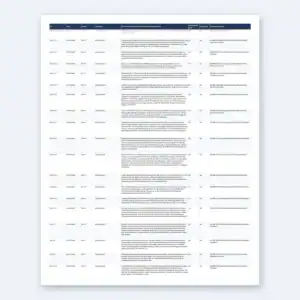

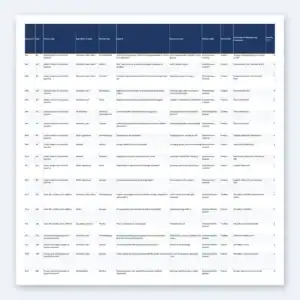
Sample pages from the toolkit: Issue 9 self assessment; Audit grade and recertification calendar; Hazard analysis workbook.
Neither is easier across the board. Both are prescriptive. BRCGS has 328 clauses in Part II and 12 fundamentals. SQF has 258 requirements in Modules 2 and 11. The difficulty depends on how close your current system is to each.
Nothing in our sources forbids it, and some customers ask for different schemes. Each carries its own audit, cycle and cost, so check whether one certificate would satisfy all your customers first.
BRCGS lists a free PDF of the Standard on its site. SQFI also provides its code free. Certification still requires an audit by a certification body.
They do not convert. BRCGS grades from AA to D by counts of critical, major and minor non-conformities. SQF subtracts points from 100. Compare your results within each scheme, not across them.

November 7, 2026
November 6, 2026
November 6, 2026
November 6, 2026
November 6, 2026