CART
Key Takeaways
Free gap assessment
Would your HACCP plan survive an inspection?
Score the whole of the Codex text, free - the good hygiene practices as well as the seven principles, with the US and EU overlays on top.
Run the free HACCP gap assessment → or View premium report sample
Food safety is a critical issue in today’s globally connected world, where the journey from farm to fork involves multiple steps and stakeholders. Ensuring that food is safe for consumption requires a systematic and comprehensive approach, and this is where ISO 22000 plays a vital role. As an internationally recognized standard, ISO 22000 provides a robust framework for organizations involved in the food chain to control food safety hazards safely and effectively.
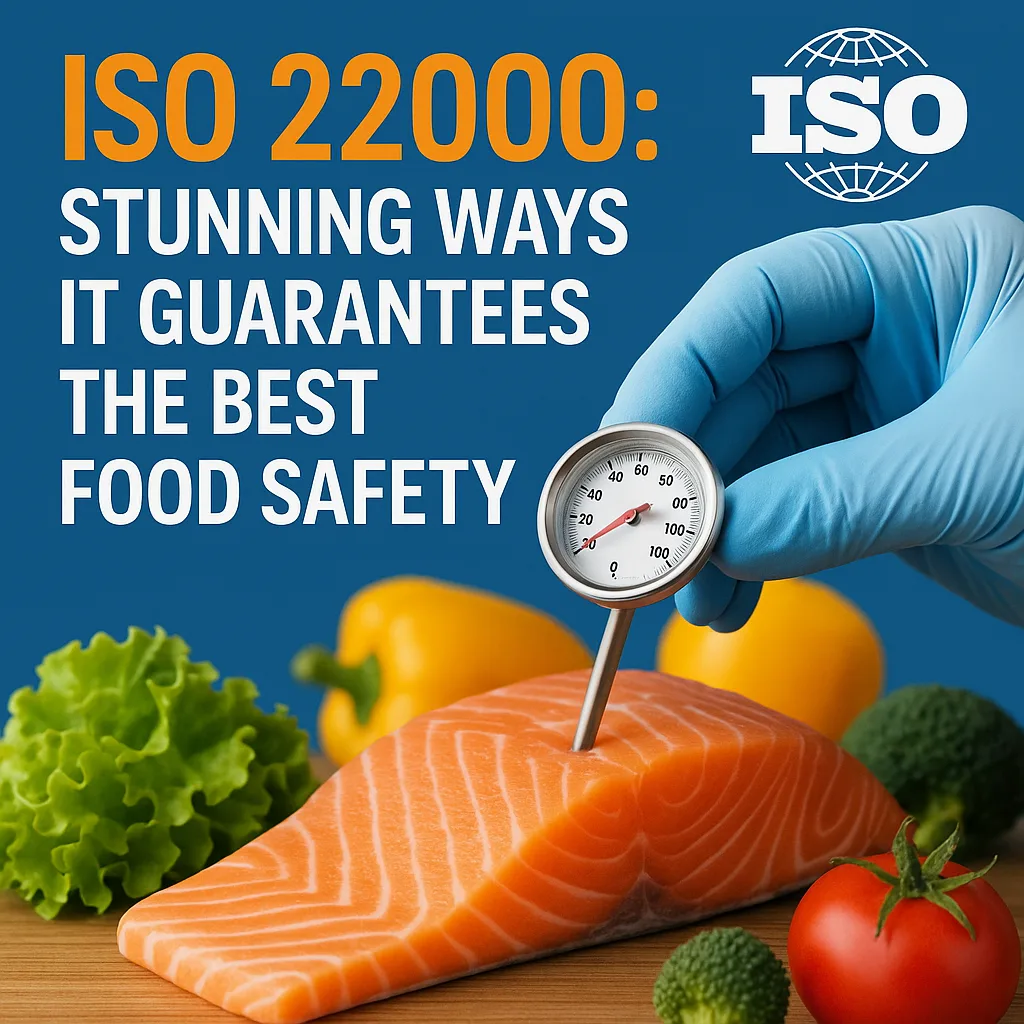
In this article, we will explore the stunning ways ISO 22000 guarantees the best food safety by outlining its key principles, benefits, implementation process, and how it empowers organizations to meet the rising demands for safe food products. Whether you are a food manufacturer, supplier, or simply interested in understanding how food safety is maintained, this guide will provide valuable insights.
ISO 22000 is a food safety management system (FSMS) standard developed by the International Organization for Standardization (ISO). It combines the principles of the Hazard Analysis and Critical Control Point (HACCP) system and other prerequisite programs (PRPs) to deliver a comprehensive approach for managing food safety risks.
Food safety is crucial not only for protecting consumers but also for safeguarding brands and complying with legal requirements. Contaminated or unsafe food products can lead to foodborne illnesses, recalls, or even severe public health crises. ISO 22000 helps minimize these risks by ensuring that all food safety hazards (biological, chemical, and physical) are properly identified, controlled, and monitored throughout the supply chain.
—
ISO 22000’s design enables it to cover every aspect of the food chain, including production, processing, transportation, and distribution. The stunning ways it guarantees food safety include:
At the heart of ISO 22000 is the systematic application of HACCP principles. Organizations are required to conduct thorough hazard analyses to identify possible food safety risks. This includes assessing potential sources of contamination, such as bacteria, allergens, toxins, or foreign objects.
Once these hazards are identified, the organization determines critical control points (CCPs) — stages where control is essential to prevent or eliminate hazards. Real-time monitoring and corrective actions at CCPs ensure that risks are managed effectively, preventing unsafe products from reaching consumers.
Before addressing specific hazards in the food process, the foundation must be set via prerequisite programs. These include activities such as hygiene measures, cleaning and sanitation, pest control, maintenance of equipment, training personnel, and supplier management.
Through PRPs, ISO 22000 guarantees that the basic operational conditions support food safety. When combined with hazard controls, PRPs create a strong food safety culture within the organization.
Unlike some traditional methods, ISO 22000 emphasizes a proactive, risk-based approach. This means food safety is managed based on realistic risk assessments, focusing resources where the greatest hazards exist. The framework encourages constant reviewing and updating of the FSMS to adapt to new challenges, emerging risks, or changes in processes.
Organizations are required to establish measurable food safety objectives and continually improve processes based on data, audits, feedback, and performance outcomes. This dynamic approach leads to fewer errors, reduced recalls, and increased consumer confidence.
One of the unique aspects of ISO 22000 is the emphasis on interactive communication. Safe food production requires seamless information flow among suppliers, customers, regulatory bodies, and internal teams. This helps in early identification of hazards, specification compliance, and traceability of products.
Stakeholders can share critical information such as allergen declarations, contamination alerts, and corrective actions. Such transparency and collaboration help prevent food safety incidents before they escalate.
—
ISO 22000 brings multiple benefits to organizations seeking to guarantee food safety:
By adhering to ISO 22000, companies can significantly reduce the risks of foodborne illnesses and contamination. Consumers can trust that products have undergone rigorous checks and controls, which leads to higher satisfaction and loyalty.
Food safety laws and regulations vary slightly across regions but generally mandate a strong control over hazards. ISO 22000 aligns with global regulatory requirements, helping businesses avoid legal penalties and import/export restrictions.
Implementing ISO 22000 requires organizations to streamline their processes, eliminate waste, and optimize resource allocation. This leads to cost savings and better use of staff and equipment.
ISO 22000 certification is increasingly demanded by retailers, exporters, and partners. It signals a strong commitment to food safety and quality, making certified organizations more attractive in competitive markets.
By having documented procedures and monitoring systems, organizations can respond promptly to food safety incidents, limiting damage and protecting public health.
—
While the benefits are extensive, successful implementation requires careful planning and commitment.
Begin by assessing existing food safety practices versus ISO 22000 requirements. This helps identify gaps, potential risks, and areas requiring improvement.
Assign a dedicated team responsible for developing, implementing, and maintaining the FSMS. This team should include representatives from key functional areas such as production, quality assurance, purchasing, and logistics.
Create a food safety policy aligned with organizational goals. Develop procedures and records to support hazard analysis, CCP monitoring, PRPs, traceability, and emergency preparedness.
Training is essential to ensure all staff understand their roles in maintaining food safety. Promote awareness on hygiene, allergen management, cross-contamination, and corrective action protocols.
Set up CCPs with clearly defined critical limits, monitoring methods, and documentation processes. Maintain rigorous PRPs for general safety and hygiene.
Regular audits help verify that controls function as planned. The management team should review FSMS performance and make decisions for continual improvement.
Once confident in compliance, organizations can seek ISO 22000 certification from accredited bodies. The external audit evaluates conformity and helps build trust with stakeholders.
—
Across the globe, many food companies have successfully leveraged ISO 22000 to revolutionize their safety practices. For example:
– A dairy producer in Europe reduced contamination rates by implementing HACCP controls per ISO 22000 standards, enhancing shelf life and market reach.
– An export-oriented seafood processing plant in Asia improved traceability and supplier management, resulting in smoother regulatory approvals and increased export volume.
– A bakery chain in North America enhanced staff training and sanitation, significantly reducing customer complaints linked to allergen mishandling.
These examples underscore the tangible benefits of embracing ISO 22000 frameworks.
—
As consumer awareness and regulatory demands continue to rise, food safety management is evolving with new technologies and stricter standards. ISO 22000 remains adaptable by incorporating updates such as:
– Integration with digital traceability tools like blockchain for transparent food provenance.
– Alignment with sustainability goals to reduce food waste and environmental impact.
– Enhanced focus on allergen control and emerging pathogens.
Organizations adopting ISO 22000 today are well-positioned to meet future challenges and maintain leadership in food safety best practices.
—
The assurance of food safety is paramount in protecting public health and ensuring the success of food businesses. ISO 22000 offers a stunningly effective framework by integrating hazard analysis, prerequisite programs, risk-based strategies, and clear communication channels. Its implementation not only guarantees safer food products but also enhances operational efficiency, regulatory compliance, and market reputation.
By committing to ISO 22000 standards, organizations in the food chain can demonstrate their dedication to delivering high-quality, safe food – a promise that consumers worldwide value deeply. Whether you are in manufacturing, distribution, or retail, embracing ISO 22000 is a strategic move towards a safer and more sustainable food future.
Skip the blank page. Download auditor-written, fully editable ISO 22000 documentation templates and adapt them to your organization in minutes.
Further reading: For authoritative guidance, see the ISO 22000 standard.
ISO 22000 on its own is not benchmarked by the Global Food Safety Initiative. FSSC 22000 is, and it is built from ISO 22000 plus sector-specific prerequisite programme specifications and a set of additional requirements. If a retailer is asking for a GFSI-recognised certificate, ISO 22000 alone will not satisfy it — but it does most of the work towards FSSC 22000.
HACCP is a hazard-control methodology. ISO 22000 is a full management system that contains HACCP and wraps it in leadership commitment, context, communication, competence, internal audit, management review and continual improvement. Put simply, HACCP tells you how to control hazards at the process; ISO 22000 tells you how to run an organisation that keeps doing so reliably.
An operational prerequisite programme controls a significant hazard where a measurable critical limit is not practical, so control is demonstrated through action criteria and observation rather than a hard measured limit. A critical control point has a measurable critical limit, continuous or scheduled monitoring, and defined corrections when the limit is breached. Misclassifying between the two is one of the most frequent audit findings.
Yes. It is written for every organisation in the food chain, which includes feed producers, primary producers, ingredient suppliers, transport and storage operators, retail and food service, and providers of packaging, cleaning chemicals and equipment. Each applies the requirements proportionately to the hazards it can introduce or control.
The 2018 edition runs Plan-Do-Check-Act at two levels: one around the management system as a whole, and one around the operational hazard-control processes inside clause 8. It matters in practice because it separates governance improvement from process control — a management review can be effective while a CCP is drifting, and the structure is designed to surface both.
If you are ready to move from reading to implementing, the ISO 22000 Toolkit gives you every policy, procedure and record template mapped to the standard — auditor-written, fully editable and ready to download from $99. Not sure it is the right fit? Our Which ISO Toolkit Do I Need? buyer’s guide compares options by goal and industry.
A consultant can be invaluable for complex or high-risk programmes, but they typically charge $150–$400 per hour and take days to weeks to engage. A documentation toolkit delivers 80–90% of the same ISO 22000 documentation instantly, for a one-time $99–$199 — and many teams buy the toolkit first, then use a consultant only for a final gap review or audit preparation. See our full toolkit vs. consultant comparison.

October 20, 2026
October 20, 2026
October 19, 2026
October 19, 2026
October 18, 2026

