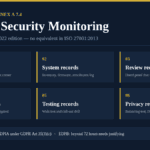
AS9100 on-time delivery is one of the few performance measures the aerospace standard names explicitly, and it shows up in three separate places: customer satisfaction, management review and supplier control. ISO 9001 leaves the choice of measures to you. AS9100 Rev D does not. If you cannot show how you measure delivery performance, what it is and what you do when it slips, you should expect an audit finding.
This AS9100 on-time delivery guide explains where delivery appears in AS9100D, how to define and calculate an on-time delivery metric that auditors and customers trust, and how to act on the results. AS9100D remains the certifiable revision as of October 2026.
Free gap assessment
Are you ready for the 2026 edition of ISO 9001?
Score yourself against the new edition, free, including the risk and opportunity split and the clause 10 renumbering that breaks converted checklists.
Information monitored to evaluate customer satisfaction includes product and service conformity, on-time delivery performance, customer complaints and corrective action requests
Your own delivery to customers is a mandatory satisfaction input
9.3.2 Management review inputs
Customer satisfaction inputs include on-time delivery performance
Delivery data must be reviewed by top management
8.4.1 External providers
Periodic review of external provider performance includes on-time delivery
Supplier scorecards must include delivery, not only quality
9.1.2 Customer satisfaction (planning)
Develop and implement plans to improve customer satisfaction that address deficiencies identified
Poor delivery needs an improvement plan, not just a chart
Read the exact wording in AS9100D from SAE. The pattern is clear: delivery is treated as part of quality in aerospace, because a late part can stop an assembly line or ground an aircraft just as surely as a defective one.
Defining AS9100 On-Time Delivery Properly
The most common audit problem is not poor performance; it is an undefined metric. Two people in the same company calculate OTD differently and get different answers. Before you measure anything, write down these decisions:
Unit of measure: purchase order lines, shipments or units. Order lines are the most common basis in aerospace.
Target date: the date the customer requested, the date you acknowledged, or the date in the current purchase order revision. Many primes measure against the contractual date on the PO.
Early deliveries: whether early counts as on time. Some customers reject or penalize early shipments, so a delivery window may apply.
Partial shipments: whether a line counts as on time only when complete.
Measurement point: ship date or receipt date at the customer. Customers usually measure receipt.
Exclusions: customer-caused delays such as late drawings or held material, only if agreed and documented.
Align your definition with your customers’ scorecards. If your internal number says 96% and your main customer’s portal says 82%, the customer’s number is the one that affects your business, and the auditor will ask why they differ.
How to Calculate AS9100 On-Time Delivery
The basic formula on a line basis:
OTD % = (order lines delivered complete within the agreed window ÷ total order lines due in the period) × 100
Worked example for one month:
Order lines due: 240
Delivered complete and within window: 216
OTD = 216 ÷ 240 × 100 = 90%
Track it monthly, show a rolling three- or twelve-month trend, and break it down by customer, product family and cause of lateness. Many aerospace customers expect performance in the mid to high 90s, but targets vary widely by customer and program, so use the figures in your customers’ supplier requirements rather than a generic benchmark.
Finding the Causes of Late Delivery
A delivery metric is only useful if you know why lines are late. Record a reason code for every late line. Typical categories:
Late material or supplier delay
Capacity or scheduling conflict
Quality hold, scrap or rework
Late or changing engineering data
Special process or outside processing delay
Inspection or first article inspection backlog
Shipping and documentation errors
A simple Pareto chart of reason codes usually shows that two or three causes account for most late lines. Those are where corrective action and improvement plans should focus.
Acting on Poor Delivery Performance
AS9100D expects action, not just measurement. Practical steps:
Set thresholds that trigger formal action, for example a monthly result below target or a customer escalation.
Raise corrective action for systemic causes, using the same root cause rigor as for product nonconformities.
Use operational risk management at contract review to flag delivery risk before you commit. Our AS9100 risk management guide explains clause 8.1.1.
Review at management review, with trends, causes and the status of actions.
Communicate with customers early when a date is at risk. Primes generally respond better to early warning than to a surprise.
Measuring Supplier On-Time Delivery
Use the same discipline for your own external providers. Clause 8.4.1 requires periodic review of supplier performance including on-time delivery. Measure suppliers against the date on your purchase order, at receipt, and feed the result into the supplier scorecard and approval status decisions. Late supplier deliveries are often the biggest cause of your own late deliveries, so the two metrics should be reviewed together.
Our guide to the AS9100 internal audit checklist includes questions to test both customer and supplier delivery monitoring before your certification body does.
What Auditors Look For
A documented OTD definition and calculation method
Monthly or periodic OTD data, broken down meaningfully
Evidence that delivery performance is reviewed at management review
Improvement plans or corrective actions where performance falls short
Supplier scorecards that include delivery
Consistency between your data and customer scorecards, or an explanation of the difference
The AS 9100 Toolkit includes a consolidated registers workbook and management review templates aligned to AS9100D that you can use to track delivery performance alongside quality metrics. For how delivery fits into the wider AS9100 family, see our overview of aerospace quality management.
Reporting AS9100 On-Time Delivery to Management
A one-page delivery dashboard is usually enough for management review. Include:
Monthly AS9100 on-time delivery against target, with a rolling trend
Performance for each major customer, compared with that customer’s own scorecard
A Pareto of late-line reason codes
Status of corrective actions and improvement plans
Supplier on-time delivery for the top suppliers by spend or risk
Forward-looking risks such as capacity constraints or long-lead material
Record the decisions management makes in the review minutes. Evidence that delivery data led to resourcing or priority decisions is exactly what clause 9.3.3 outputs are meant to show.
Improving AS9100 On-Time Delivery Over Time
Sustained improvement usually comes from a few structural changes rather than expediting:
Realistic commitments at contract review, based on actual capacity and lead times
Material planning that orders long-lead and special process items early
Visible scheduling on the shop floor so priorities are clear
First-time quality, because scrap and rework are hidden causes of late delivery
Supplier development for the providers who cause most delays
Treat AS9100 on-time delivery as a process measure, not a sales number, and the improvement actions become much clearer.
Common AS9100 On-Time Delivery Mistakes
Measuring against your own promise date while customers measure against the PO date
Silently re-dating orders so late lines never appear late in the data
Counting partial shipments as on time without an agreed rule
Reporting a single company-wide number that hides one customer’s poor experience
No link to corrective action, so the same causes repeat each month
Each of these makes the data look better than the customer experience, and auditors who compare your figures with customer scorecards will usually find the gap.
AS9100 On-Time Delivery for Services and MRO
On-time delivery is not only a manufacturing measure. Maintenance organizations under AS9110 measure turnaround time against agreed return-to-service dates, and engineering or test service providers measure delivery of reports and data packages. The same principles apply: define the commitment, measure against it consistently, record reasons for lateness and act on the main causes. For MRO work, aircraft-on-ground orders usually deserve their own category, because a missed date has a much higher customer impact than a routine repair.
Frequently Asked Questions
Is on-time delivery mandatory to measure under AS9100?
Yes. AS9100D names on-time delivery performance as information to monitor for customer satisfaction, as a management review input, and as part of external provider performance review.
What is a good on-time delivery target for aerospace?
There is no single standard target. Customers set their own expectations in supplier requirements, often in the 90% range or higher. Use your customers’ targets as the baseline.
How is AS9100 on-time delivery different from ISO 9001?
ISO 9001 leaves the choice of customer satisfaction measures to you. AS9100D specifically requires on-time delivery performance to be monitored, reviewed by management and included in supplier performance reviews.
Should customer-caused delays be excluded from on-time delivery?
Only by documented agreement. If a customer’s late drawing or held material caused the delay, record it with evidence. Excluding lines informally makes your figures look better than your customers’ scorecards and invites audit questions.
How often should on-time delivery be reported?
Monthly is the most common frequency, with a rolling trend for management review. High-volume operations often track it weekly on the shop floor so problems are visible before the month closes.