CART
Key Takeaways
Free gap assessment
Are you ready for the 2026 edition of ISO 9001?
Score yourself against the new edition, free, including the risk and opportunity split and the clause 10 renumbering that breaks converted checklists.
Run the free ISO 9001 gap assessment → or View premium report sample
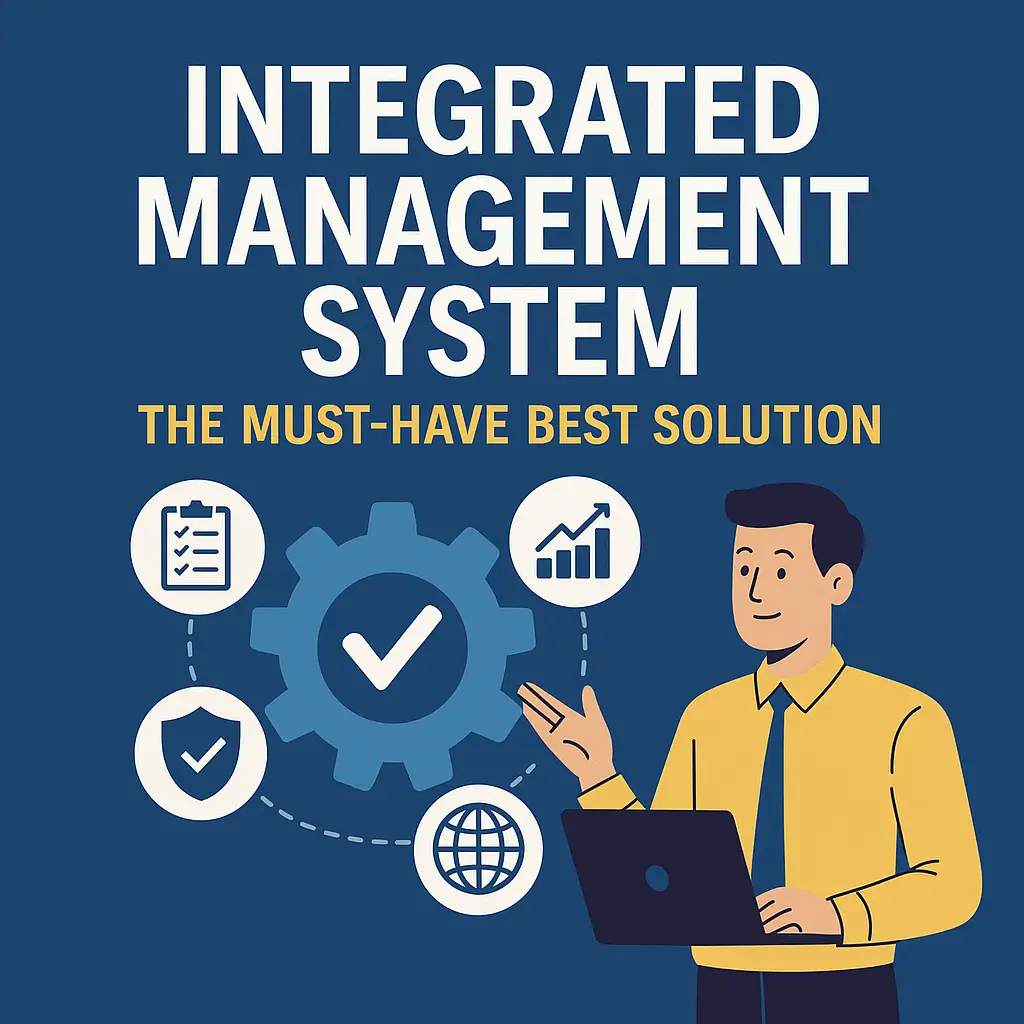
In today’s fast-paced and competitive business environment, organizations face increasing challenges in managing multiple standards, processes, and regulations. An Integrated Management System (IMS) has emerged as the must-have best solution for companies aiming to streamline operations, enhance compliance, and improve overall performance. By combining various management standards into a unified framework, IMS helps organizations work more efficiently, reduce duplication, and foster a culture of continuous improvement.
This article explores what an Integrated Management System is, the benefits it offers, steps to implement an IMS, and why it is becoming indispensable for businesses across industries.
—
An Integrated Management System is a consolidated framework that merges multiple independent management systems within an organization into a single cohesive system. These management systems often address different areas such as quality, environmental, occupational health and safety, and information security. Instead of maintaining separate systems for each standard—for example, ISO 9001 (Quality), ISO 14001 (Environmental), and ISO 45001 (Occupational Health and Safety)—an IMS integrates the requirements and processes to simplify management.
By doing so, organizations avoid redundancies, streamline operations, and facilitate consistent compliance with multiple standards. The integration can cover areas like:
– Quality management
– Environmental management
– Occupational health and safety
– Information security management
– Energy management
– Food safety management
This unified approach allows organizations to align their goals, policies, and procedures across various disciplines seamlessly.
—
Many organizations opt for independent management systems tailored to each standard, often resulting in duplicated efforts, conflicting processes, and increased costs. The Integrated Management System addresses these challenges by:
When the management systems are integrated, organizations reduce duplication of documentation, audits, and training. Employees work from a singular set of procedures, forms, and policies, freeing resources and time. This integration simplifies workflows, enables faster communication, and promotes greater accountability across departments.
Each management standard comes with its own set of regulatory and statutory requirements. Integrating these standards ensures consistent compliance, making it easier to identify and mitigate risks that intersect across quality, environmental, and safety concerns. An IMS also strengthens internal controls, making regulatory audits less stressful and reducing the risk of non-conformities and penalties.
IMS fosters a culture of continual improvement by embedding combined objectives and performance indicators into one system. Organizations can monitor and analyze data holistically, making informed decisions that affect multiple facets of the business. This comprehensive improvement model leads to better products, safer workplaces, and reduced environmental impacts.
A well-implemented IMS highlights an organization’s commitment to excellence, sustainability, and employee safety. Customers, investors, and regulatory agencies recognize this integrated approach as a strategic advantage, often leading to stronger business partnerships and market differentiation.
Maintaining separate management systems can be costly in terms of administrative overheads, training, audits, and system updates. By integrating these systems, organizations generate economies of scale and achieve better utilization of resources, thus significantly lowering overall operational costs.
—
Successful implementation of an IMS requires an understanding of its critical components:
Organizations must develop a clear, overarching policy that encapsulates the commitments for quality, environment, health and safety, and other relevant areas. Setting aligned, measurable objectives ensures that all departments work towards common goals that support the organization’s mission and vision.
A critical element of an IMS is consolidated documentation to eliminate duplication and confusion. This includes integrated manuals, procedures, work instructions, and records designed to address requirements of various standards in one place.
Clearly defined roles and responsibilities across departments encourage collaboration and accountability. Cross-training employees enhances flexibility and ensures that all aspects of the IMS are maintained effectively.
Regular internal audits are essential for assessing conformity and effectiveness. IMS internal audits cover multiple standards in one comprehensive audit plan, reducing the burden on auditors, employees, and resources.
Regular management reviews that consider the performance of all integrated aspects help identify improvement opportunities, assess risks, and allocate resources effectively to maintain system effectiveness.
—
Implementing an IMS can be complex without proper planning and commitment. Here’s a roadmap to facilitate a smooth adoption:
Begin by assessing existing management systems and identifying overlaps, redundancies, and gaps. Conducting a thorough gap analysis provides a baseline and clearly outlines the integration scope.
Integration affects all business units and requires leadership’s full support to allocate resources, foster collaboration, and drive cultural change.
Develop consolidated policies, objectives, and documentation. Define integrated processes and workflows, ensuring they meet requirements of all relevant standards.
Provide training that covers the IMS as a whole, highlighting the benefits and how it impacts each employee’s responsibilities. Engage stakeholders to support the transition.
Begin applying the integrated system in daily operations, ensuring all teams understand how to use the new procedures and tools.
Plan audits that consolidate assessments of all the relevant management standard requirements. Use findings to correct issues and improve system efficiency.
Use KPIs, audits, and management reviews to monitor IMS performance, ensuring continuous improvement and compliance.
—
Many organizations, from manufacturing giants to service providers, have successfully leveraged IMS to their advantage:
– A global automotive manufacturer used IMS to combine ISO 9001 and ISO 14001 certification processes, reducing documentation and audit times by 40%, while boosting environmental compliance.
– Healthcare providers integrated ISO 45001 into their quality and safety programs, enhancing employee safety while maintaining high patient care standards.
– Food industry leaders merged their ISO 22000 food safety systems with quality and environmental standards to enhance traceability and reduce risk of contamination.
These examples demonstrate the versatility and effectiveness of an IMS in diverse sectors.
—
With increasing regulatory complexity and stakeholder expectations, businesses worldwide are recognizing the strategic value of IMS. Emerging trends further solidify its importance:
– Digital Transformation: Integration with digital tools such as ERP, business intelligence, and compliance software enables real-time data sharing and analytics, enhancing decision-making.
– Sustainability Focus: Organizations are expanding IMS scope to incorporate sustainability standards like ISO 26000 and carbon management, aligning business goals with global environmental challenges.
– Risk and Resilience Management: Integration of risk management frameworks with IMS enhances organizational agility and resilience against disruptions.
These developments signal a growing role for IMS in enabling organizations to thrive in an ever-changing global landscape.
—
For organizations striving to excel in quality, environmental stewardship, safety, and other critical areas, the Integrated Management System is the must-have best solution. It offers multiple benefits including efficiency, cost savings, improved compliance, and enhanced stakeholder confidence. By unifying disparate management standards into one coherent system, businesses can achieve greater operational harmony and sustainable growth.
Investing in an IMS is not just about meeting standards—it is about creating a robust foundation for excellence and continuous improvement. As markets evolve and regulations become more complex, adopting an IMS will be essential for organizations wanting to stay competitive, compliant, and forward-looking.
—
Implement your Integrated Management System wisely, and it will serve as a powerful tool to unlock new levels of organizational success.
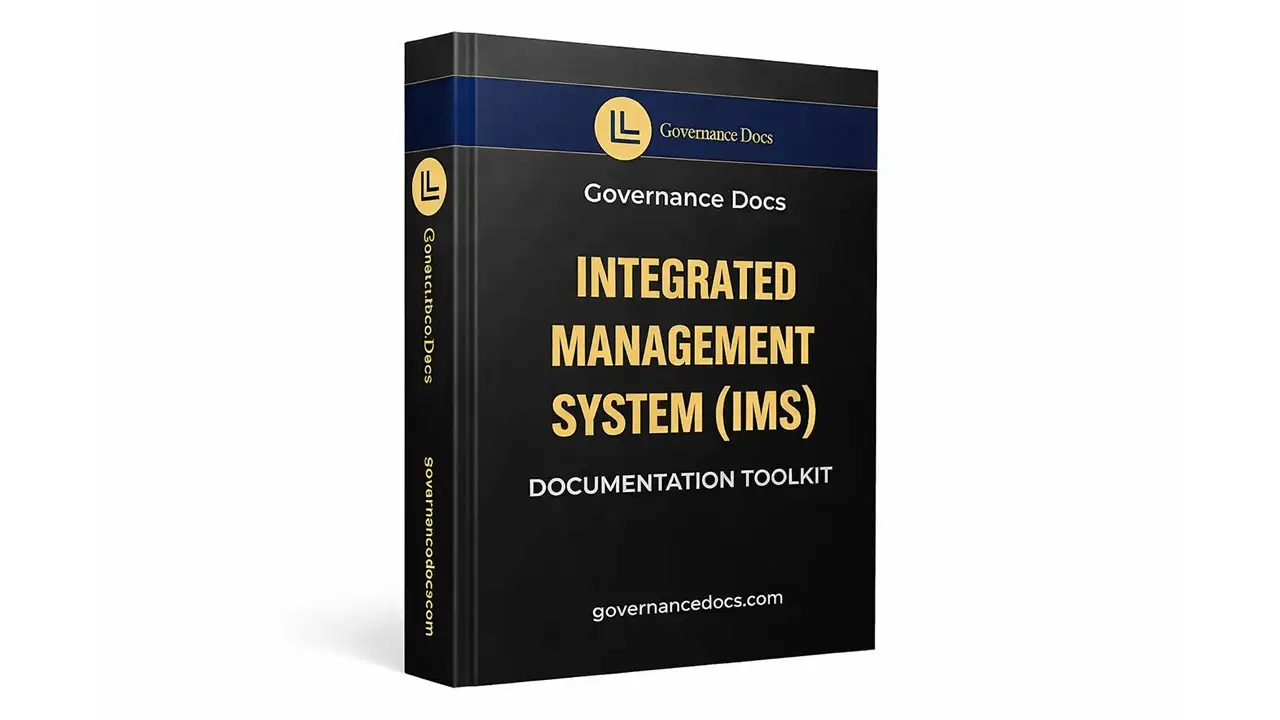
Skip the blank page. Download auditor-written, fully editable IMS documentation templates and adapt them to your organization in minutes.
Further reading: For authoritative guidance, see the relevant ISO standard.
Any that follow ISO’s harmonised high-level structure, which is now most of them — ISO 9001, ISO 14001, ISO 45001, ISO/IEC 27001, ISO 22301, ISO/IEC 20000-1 and ISO 42001 among others. They share clauses 4 to 10, so context, leadership, planning, support, operation, performance evaluation and improvement can be run once rather than once per standard.
You keep a separate certificate per standard, but you can have them audited together in a single combined or integrated audit. That is where the saving comes from: one audit visit, one set of shared evidence for the common clauses, and typically a reduction in total audit days compared with running the assessments separately. Ask your certification body to quote both ways.
The shared elements are the ones worth merging: scope and context, interested parties, the policy set, roles and responsibilities, document and record control, competence and training, internal audit, management review, nonconformity and corrective action. What stays separate is the technical core — hazard identification for ISO 45001, environmental aspects for ISO 14001, information security risk for ISO 27001.
Merging the documents without merging the processes. Organisations produce a single combined manual while quality, safety and security teams carry on running separate risk registers, separate audit programmes and separate review meetings. The auditor sees one document set describing a system that does not exist. Integrate the governance rhythm first, then the paperwork follows naturally.
If you hold no certifications yet and know you need two or more, build integrated from the beginning — retrofitting is harder than starting joined-up. If you already run a mature system for one standard, extend that system rather than starting again: the clause 4 to 10 machinery you already operate will carry most of the load for the next standard.
If you are ready to move from reading to implementing, the IMS Toolkit gives you every policy, procedure and record template mapped to the standard — auditor-written, fully editable and ready to download from $99. Not sure it is the right fit? Our Which ISO Toolkit Do I Need? buyer’s guide compares options by goal and industry.
A consultant can be invaluable for complex or high-risk programmes, but they typically charge $150–$400 per hour and take days to weeks to engage. A documentation toolkit delivers 80–90% of the same IMS documentation instantly, for a one-time $99–$199 — and many teams buy the toolkit first, then use a consultant only for a final gap review or audit preparation. See our full toolkit vs. consultant comparison.

October 20, 2026
October 20, 2026
October 19, 2026
October 19, 2026
October 18, 2026

