
CART
No products in the cart.
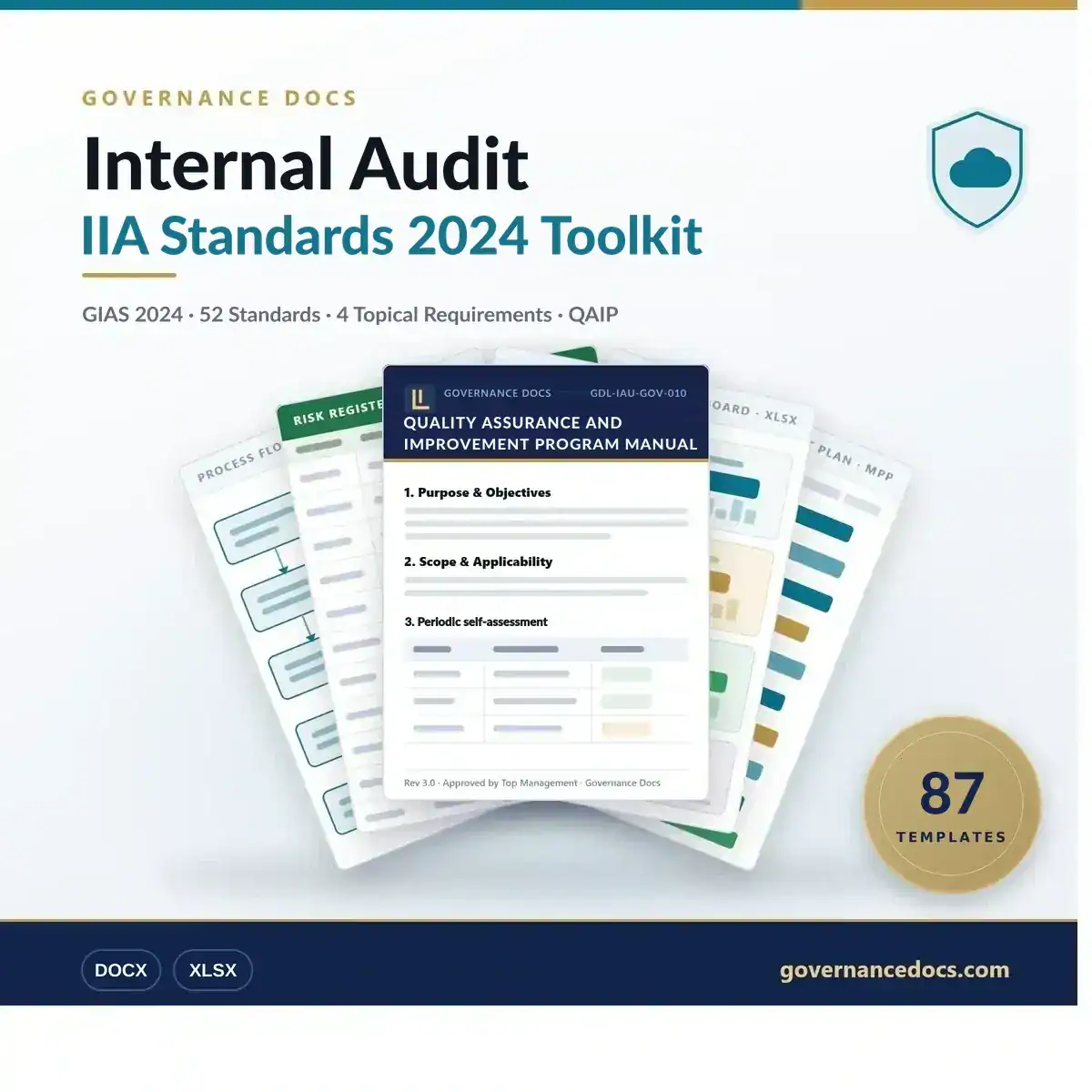
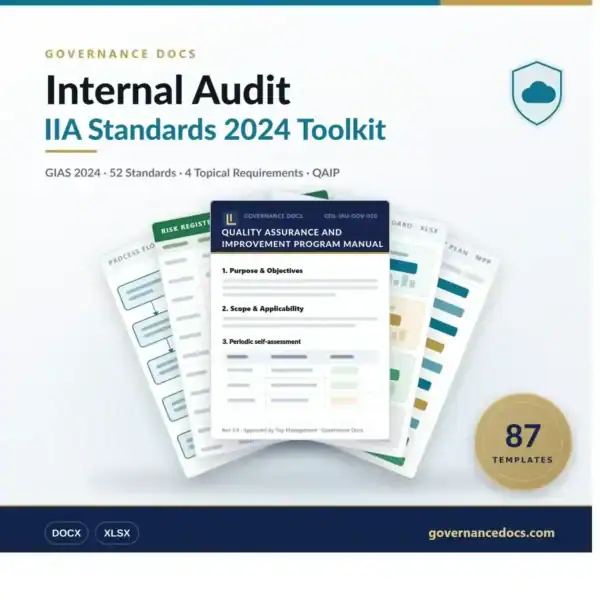
Internal Audit Toolkit: 87 editable templates — 60 Word documents and 27 Excel workbooks — built on the structure of the IIA’s Global Internal Audit Standards (2024): all 52 standards and every item of the four issued Topical Requirements, Cybersecurity, Third-Party, Organizational Behavior and Organizational Resilience. Charter, risk-based plan, methodology manual, quality assurance and improvement program, external quality assessment, engagement templates from notification to follow-up, and workbooks that arrive pre-loaded with every standard. Instant download.
£74.11
✓ In stock — instant download after checkout
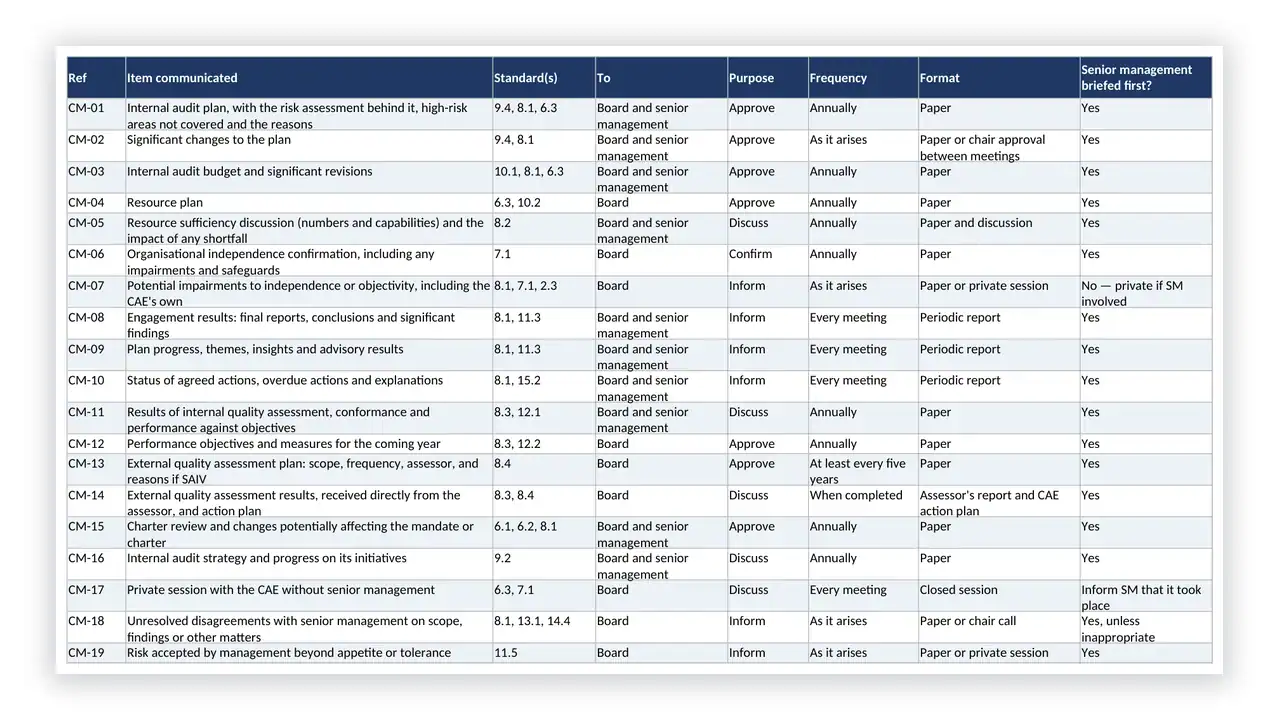
The IIA’s Global Internal Audit Standards took effect on 9 January 2025 and replaced the 2017 International Professional Practices Framework. They are organised in five domains, fifteen principles and 52 standards, and they added things the 2017 framework did not have: board and senior-management Essential Conditions, an internal audit strategy, formal performance measurement, and mandatory Topical Requirements.
The Internal Audit Toolkit follows that structure rather than a generic audit-manual template. Its sections are the Standards’ domains, so the pack is laid out the way an external quality assessor works through it. 87 editable templates: 60 Word documents and 27 Excel workbooks, in eight sections.
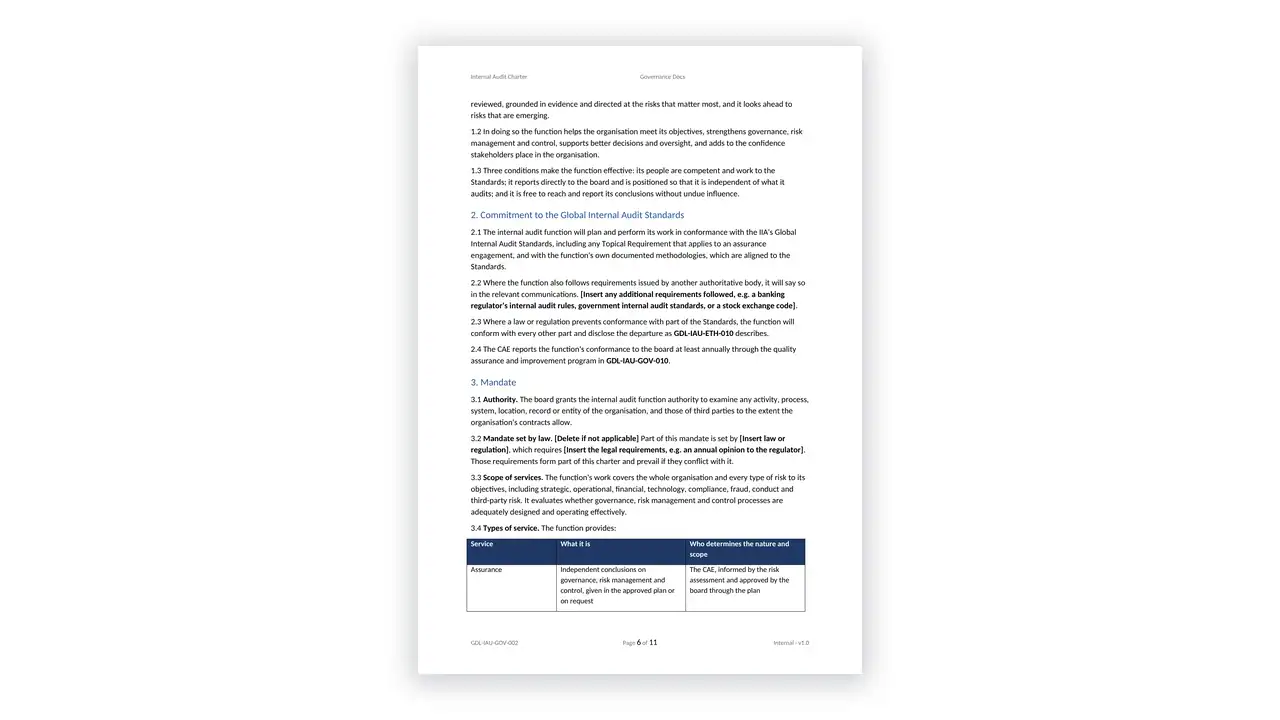
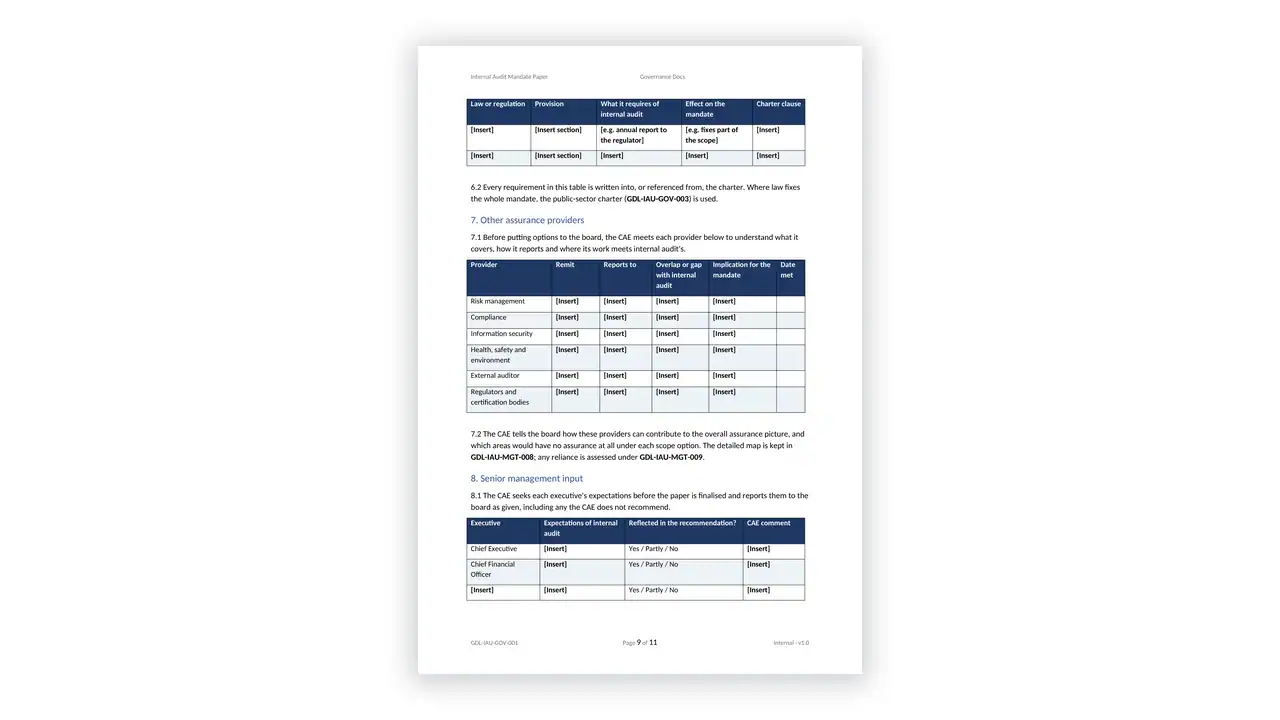
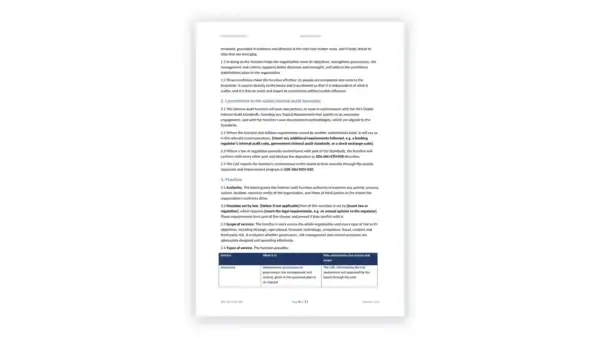
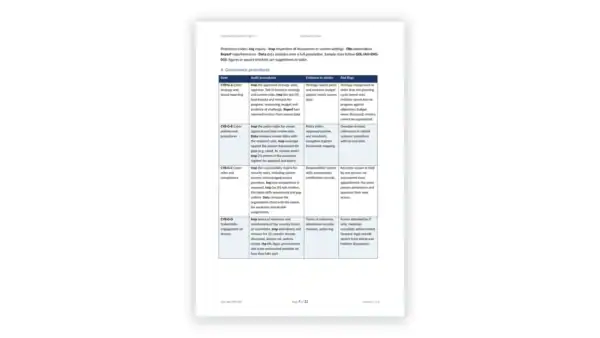
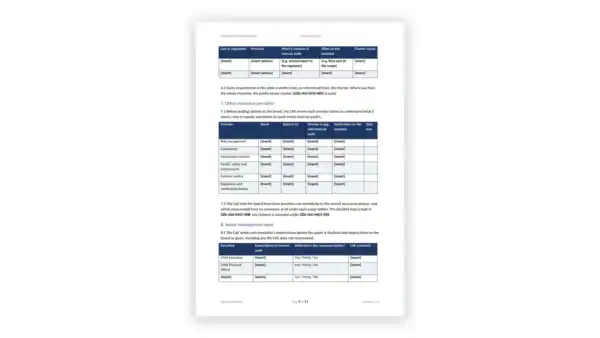
Every Word document opens with a Requirements addressed table naming the standards — or the Topical Requirement items — it answers, and the clause of the document that answers each one. The pack is built from a single register, and the build fails if any of the 52 standards or any Topical Requirement item is left without a document that answers it. That is a check we run, not a claim we make.
Topical Requirements are mandatory when internal audit gives assurance on the topic. The IIA requires the function to record, for every item, whether it applies — and to write down why for every item it excludes. Assessors check this item by item.
| Topical Requirement | Effective | In the Internal Audit Toolkit |
|---|---|---|
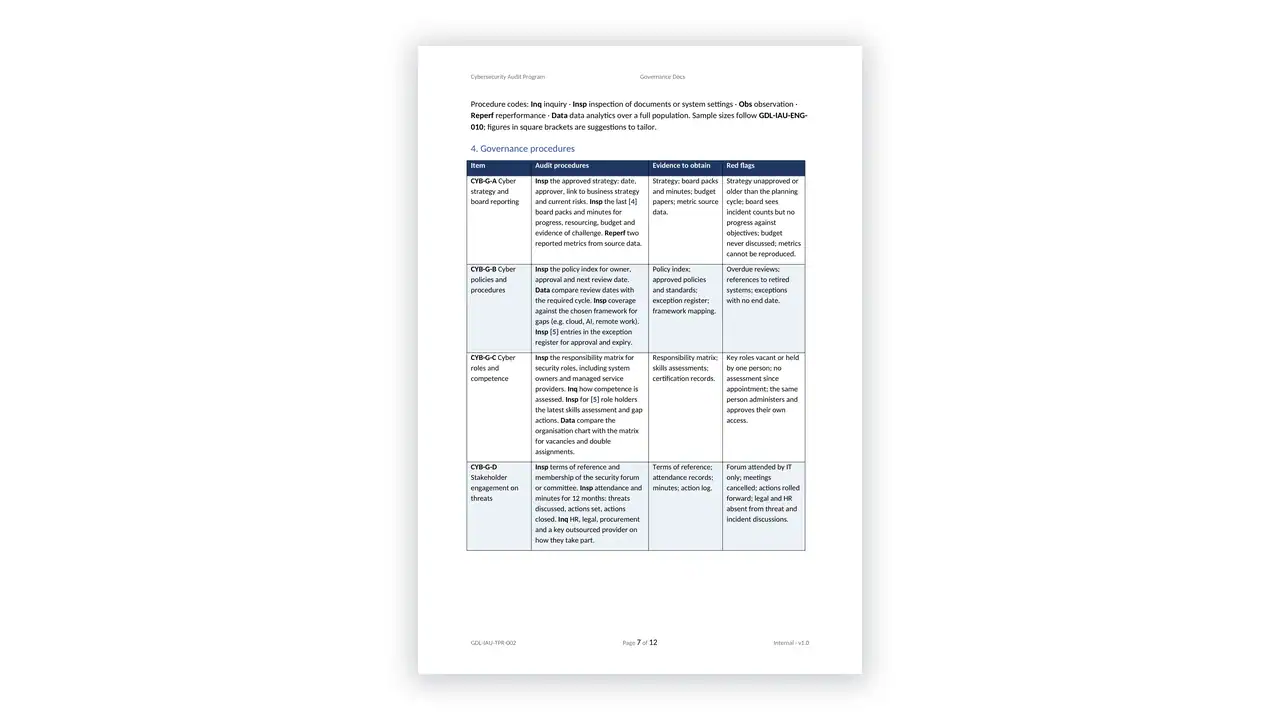
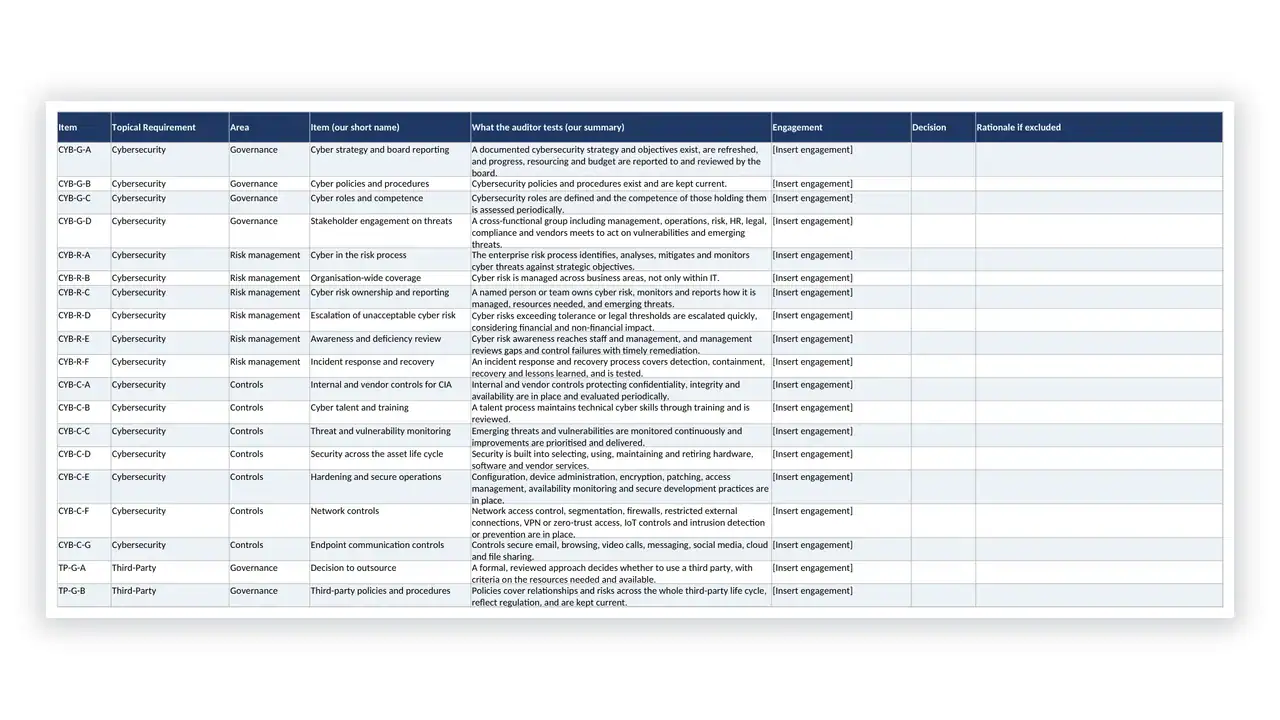
| Cybersecurity | 5 February 2026 | Audit program and testing workbook, every item |
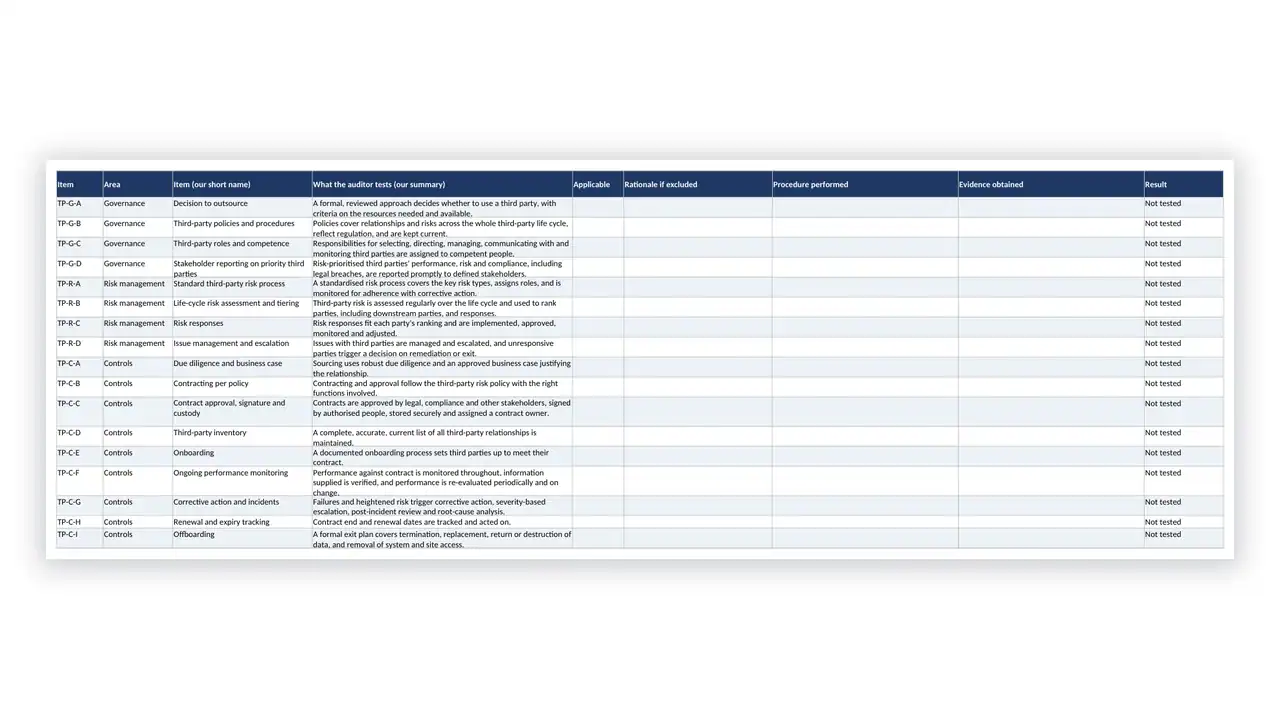
| Third-Party | 15 September 2026 | Audit program and testing workbook, every item, including downstream parties |
| Organizational Behavior | 15 December 2026 | Audit program, testing workbook and a culture and behaviour survey |
| Organizational Resilience | 30 April 2027 | Audit program and testing workbook, every item |
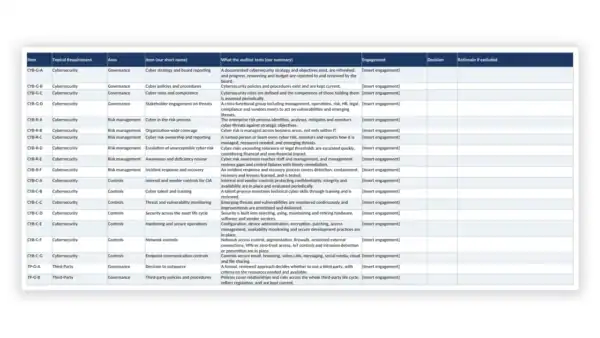
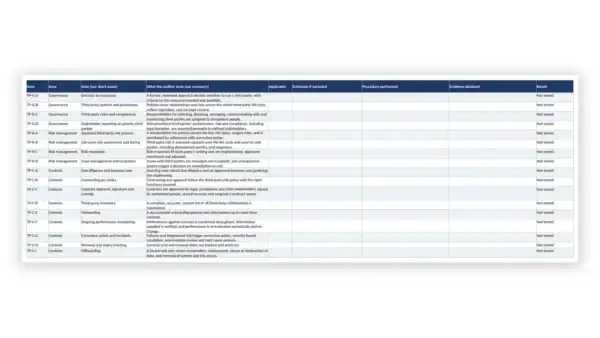
An applicability and exclusions workbook comes pre-loaded with all 69 items across the four, with a live check that counts any exclusion recorded without a rationale. It must read zero before an assessment.
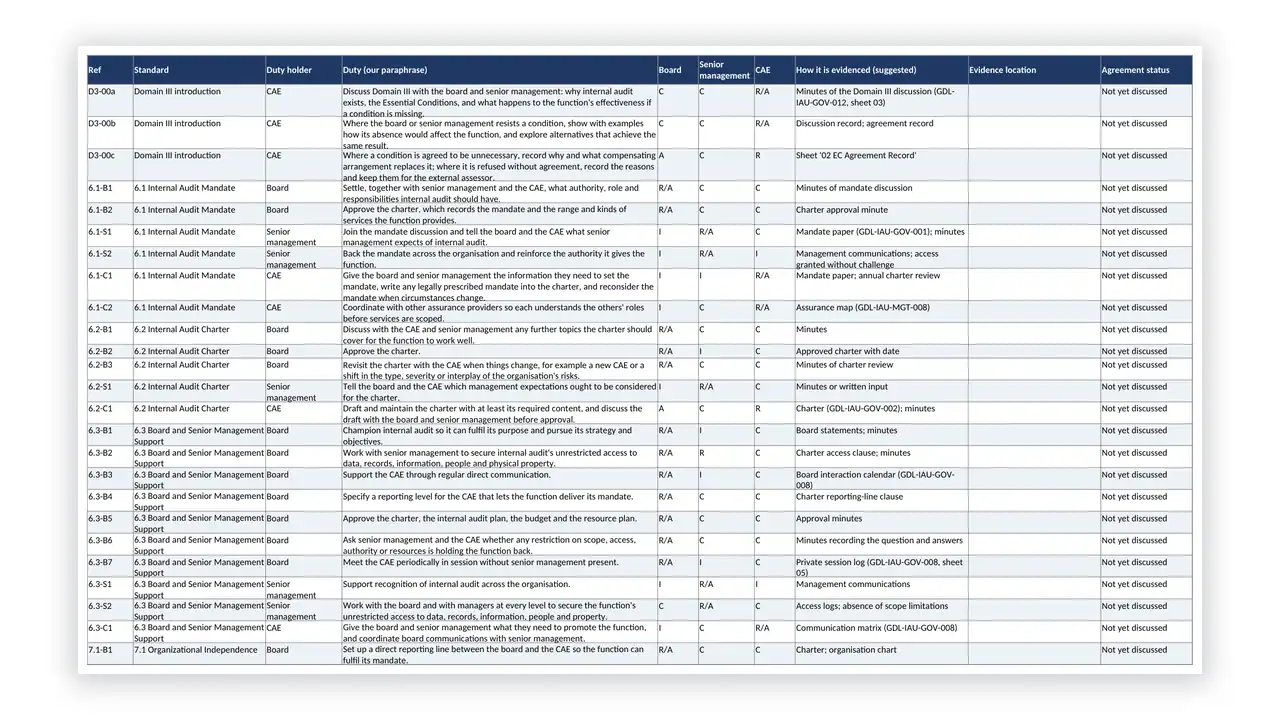
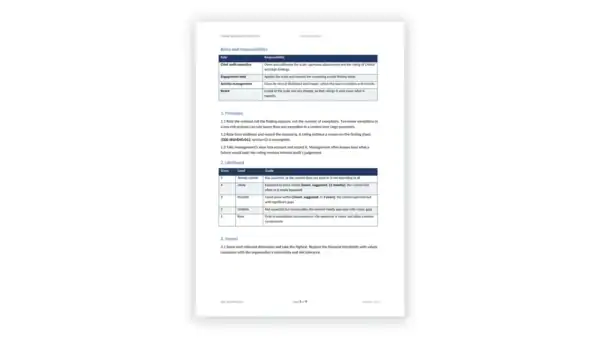
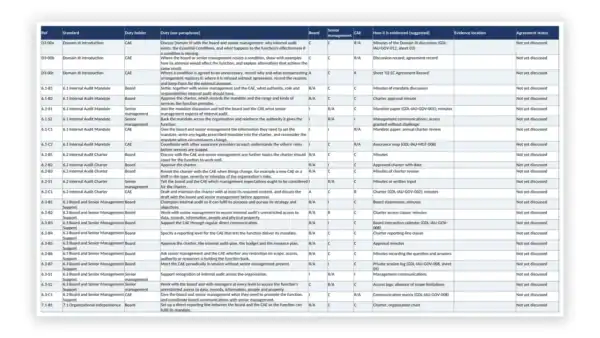
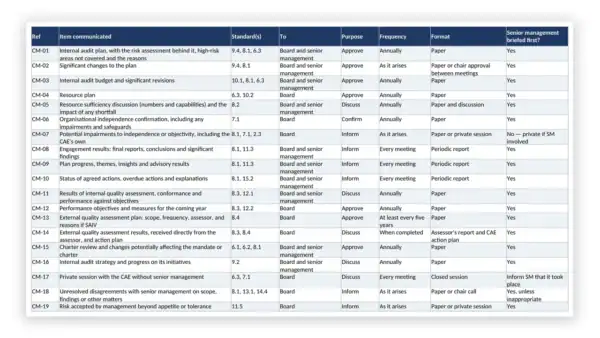
Nine of the Domain III standards list duties for the board and senior management — the Essential Conditions. They are not the chief audit executive’s to perform, but the chief audit executive must discuss them with the board, and where a condition is agreed to be unnecessary, record why and what compensates for it.
Most charter templates stop at the charter. The Internal Audit Toolkit carries the board’s commitments in the charter the board approves, an audit committee terms of reference, a roles and Essential Conditions RACI with an agreement record for any condition the board decides it does not need, and a board oversight self-assessment.
The Internal Audit Toolkit workbooks are not blank grids:
| Workbook | What it holds on arrival |
|---|---|
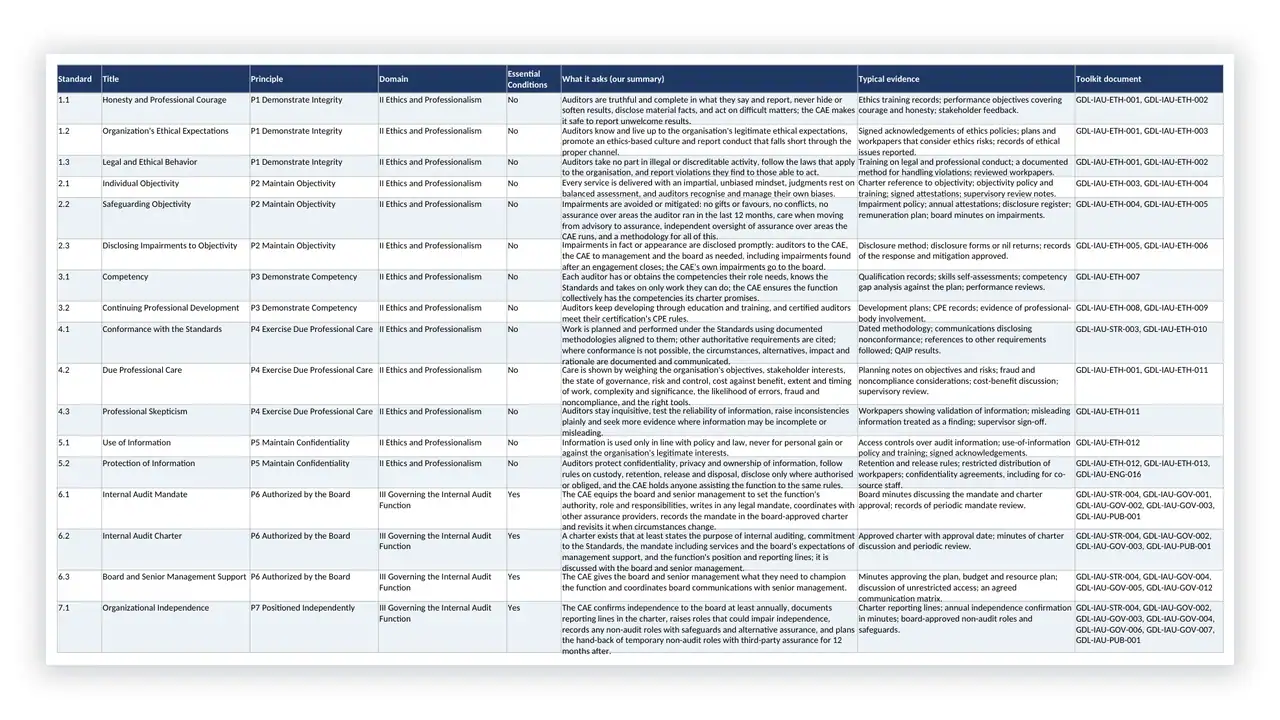
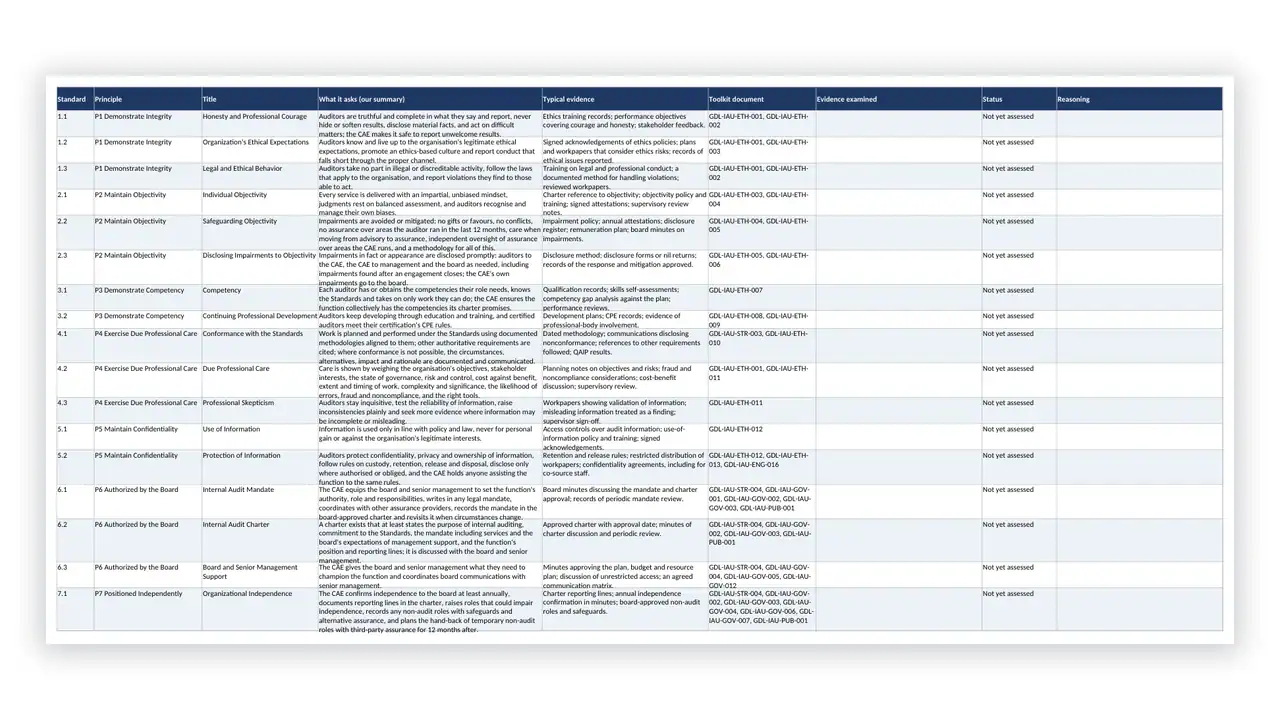
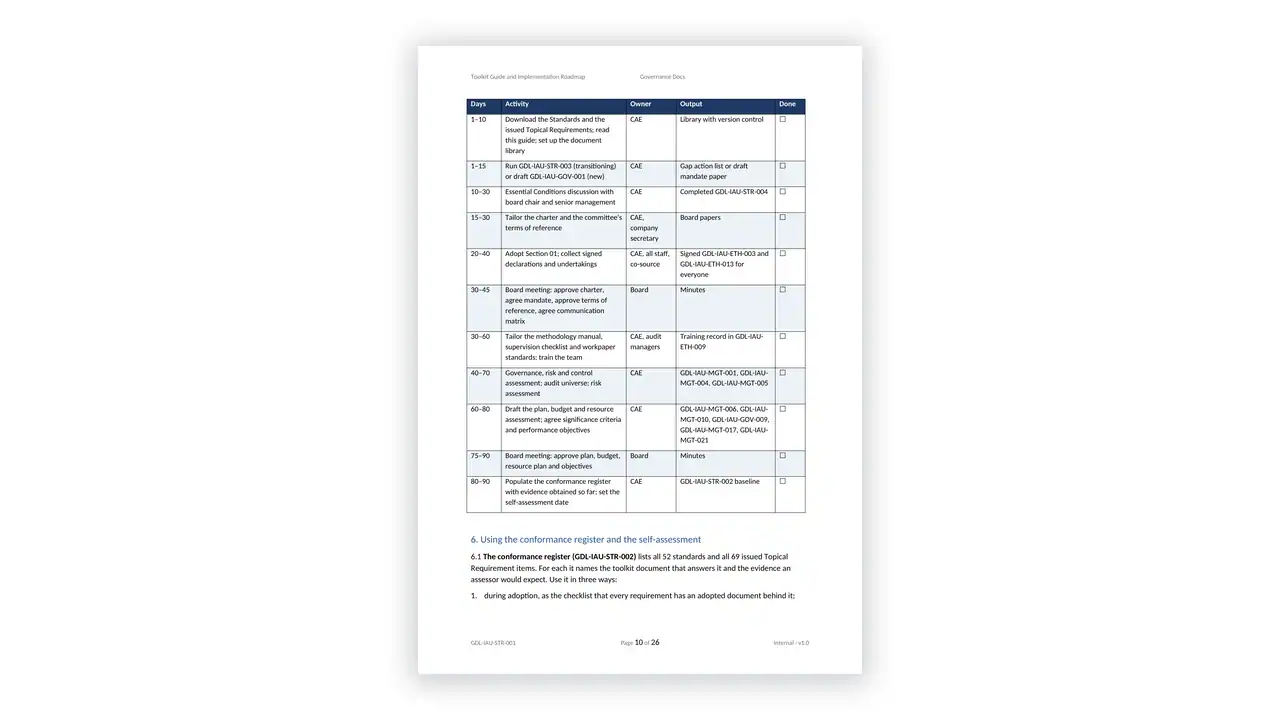
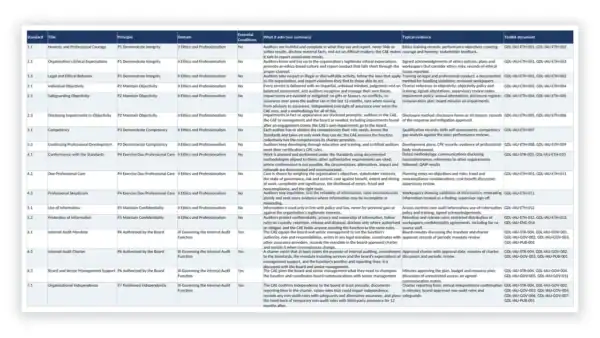
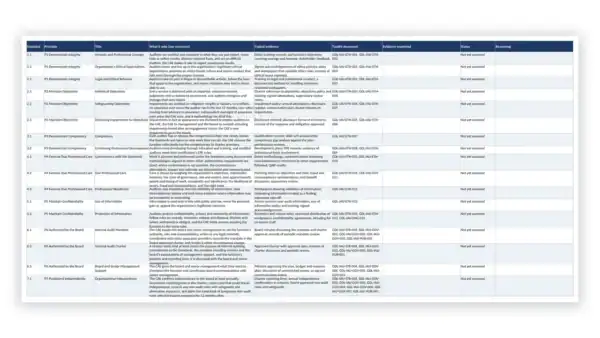
| Standards Conformance Register | All 52 standards and all 69 Topical Requirement items, each with the toolkit document that answers it and the evidence an assessor typically looks for |
| Periodic Conformance Self-Assessment | All 52 standards ready to score, with live summaries by principle and an action plan |
| 2017 IPPF to 2024 Transition Gap Assessment | Every standard, with its 2017 reference and the main changes noted, ready for your current-state and gap columns |
| Topical Requirements Applicability | All 69 items, with the exclusion-rationale check |
| Four Topical Requirement testing workbooks | Every item of each Topical Requirement, ready for procedures, evidence and results |
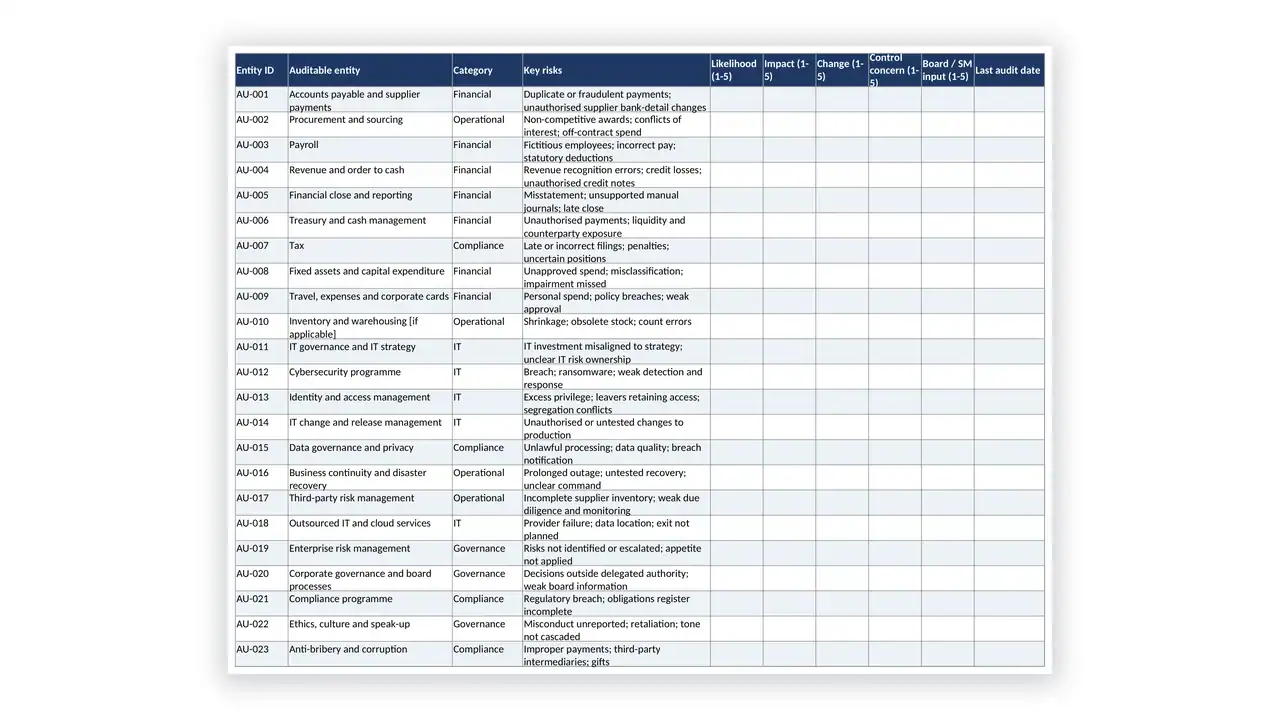
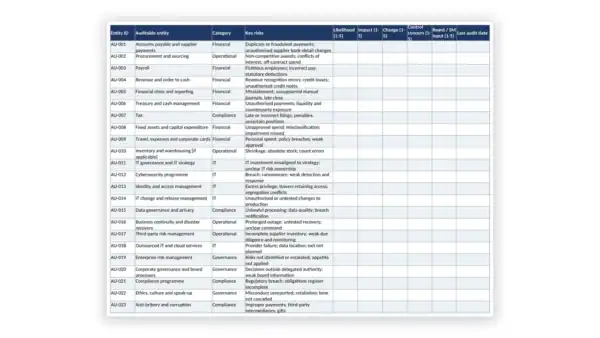
| Annual Risk Assessment and Audit Universe | A weighted scoring model with formulas, coverage flags for IT governance, fraud risk and compliance and ethics, and a starter universe |
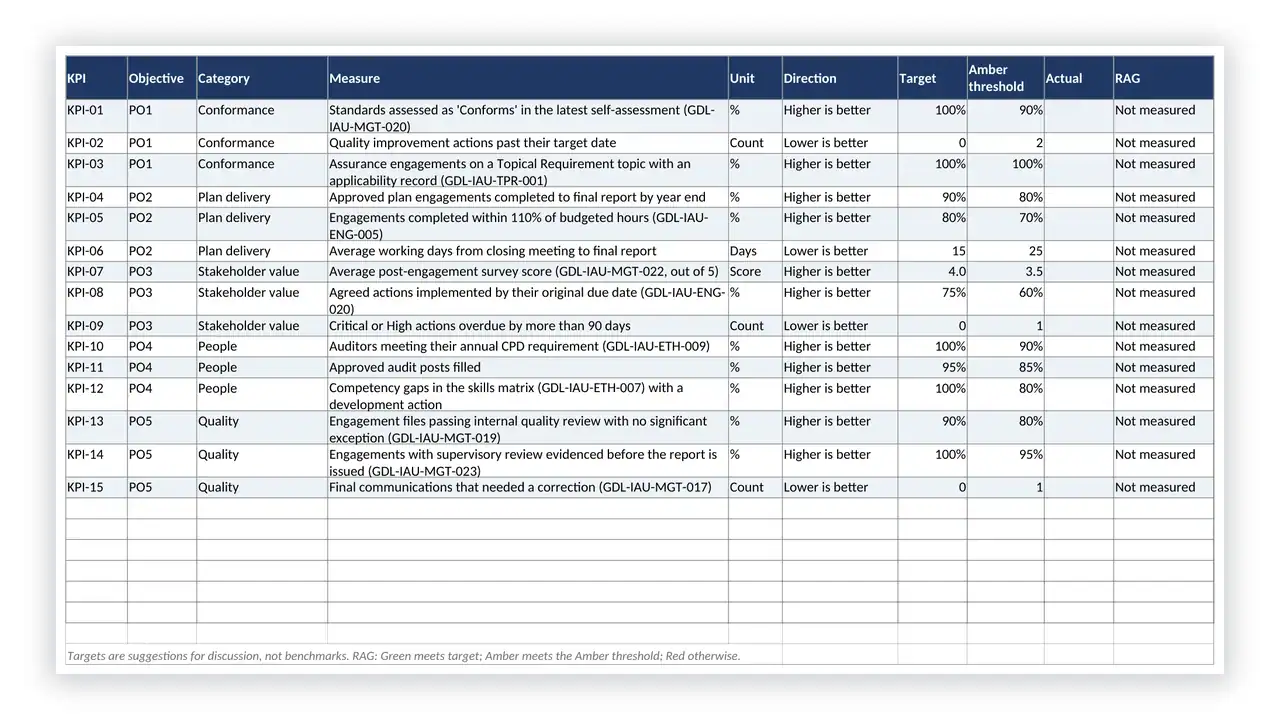
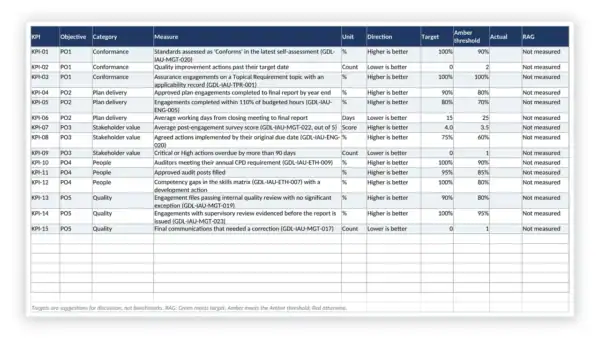
| Performance Objectives and KPI Dashboard | A starter set of objectives and KPIs with RAG status calculated |
Summaries use live formulas, so they are right the moment the data is. Worked example rows are shown in grey and are never counted in the totals.
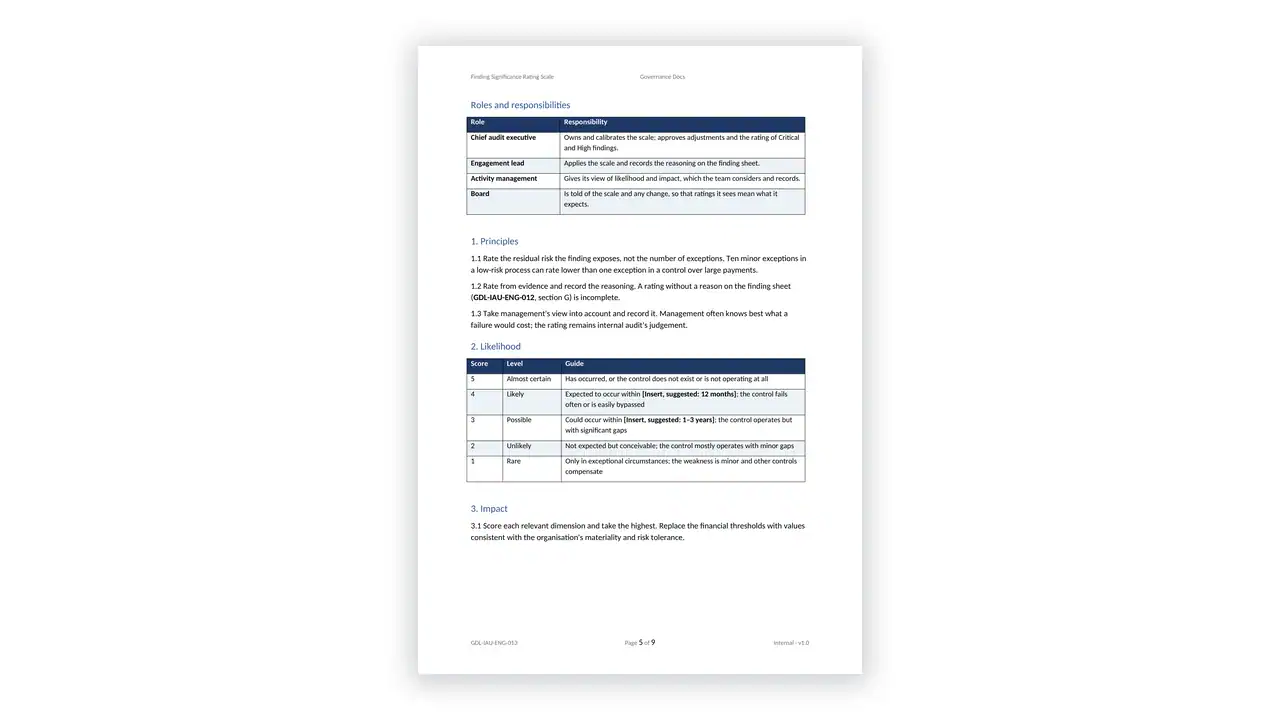
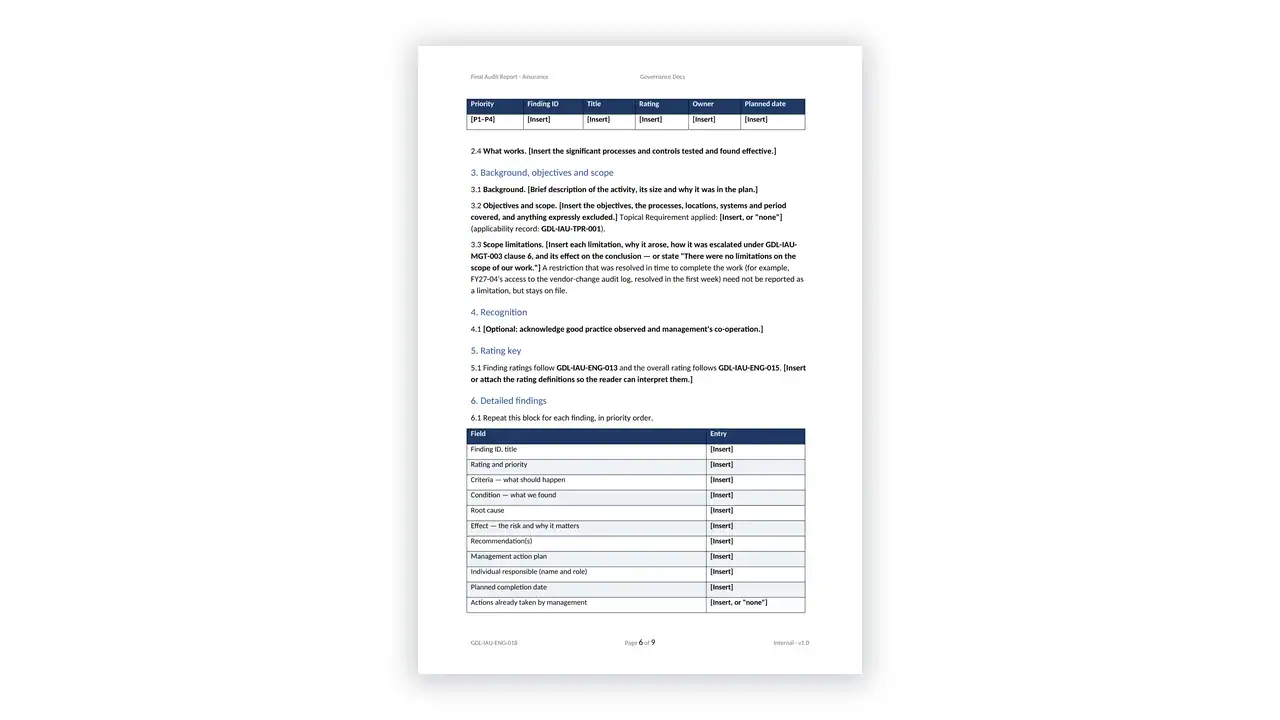
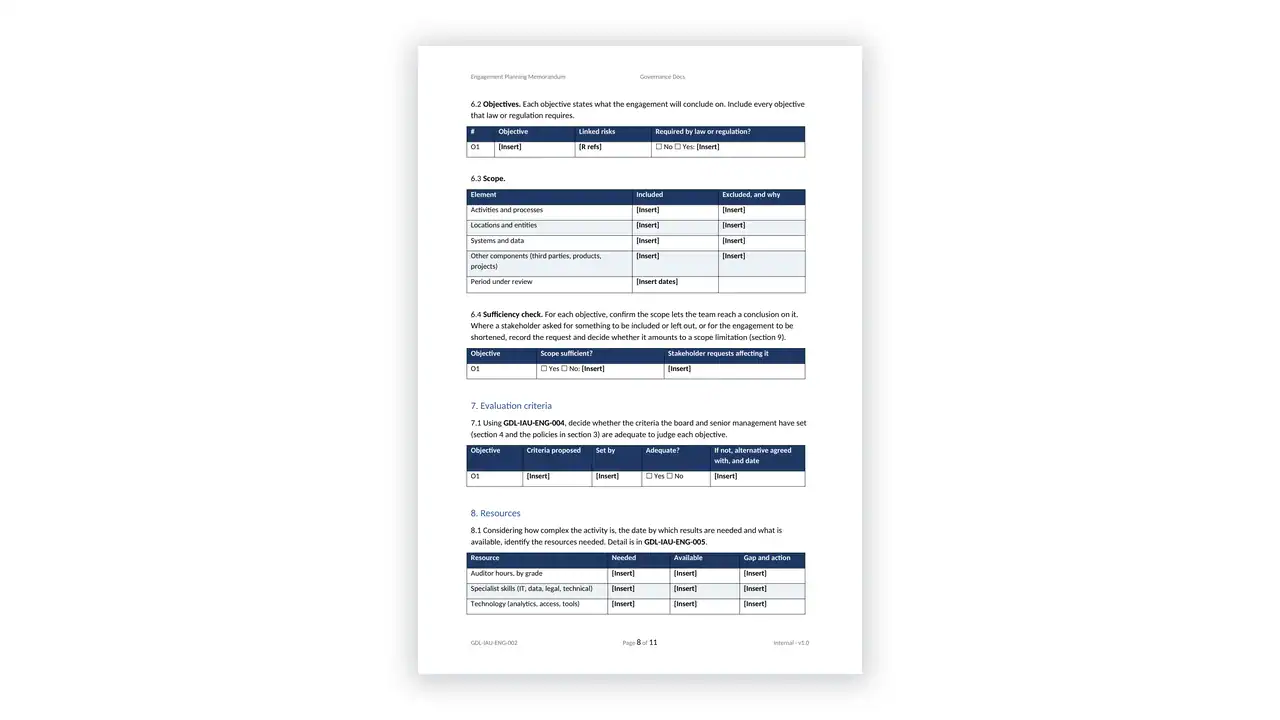
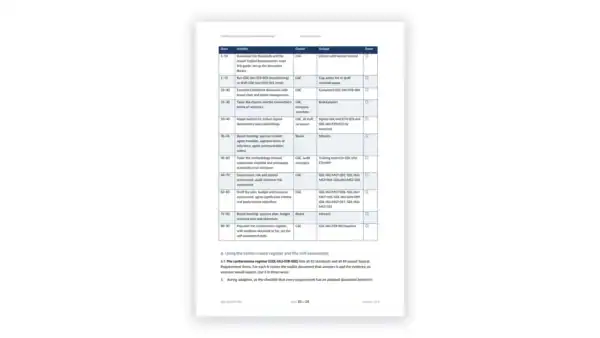
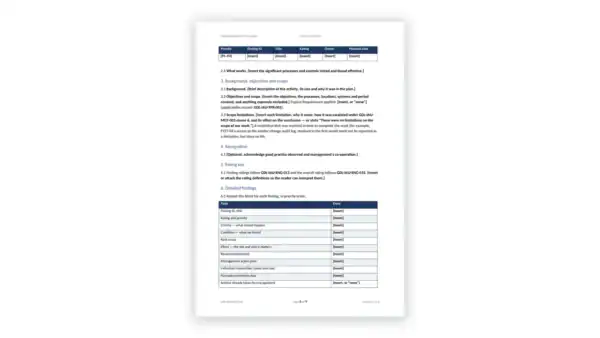
Section 04 runs the whole engagement: notification letter, planning memorandum with the engagement risk assessment, evaluation criteria guide, risk and control matrix, work program, information request list, walkthrough narrative, sampling workbook, test of controls workpaper, finding sheet, a likelihood-and-impact finding rating scale, recommendations and action plans, conclusion guide, closing meeting record, the final report for assurance and for advisory work, an action tracker and a follow-up procedure.
One worked example runs through them, so you can see how a finding moves from the risk and control matrix to the report and into follow-up.
The Topical Requirements reach into areas the rest of the catalogue covers in depth. The TPRM Toolkit is the third-party programme the Third-Party Topical Requirement audits. The ISO 22301 Toolkit is the continuity programme behind Organizational Resilience, and the ISO 27001 Toolkit and NIST CSF Toolkit are what the Cybersecurity audit tests against. For control frameworks, see the SOX Toolkit, COSO Toolkit and COBIT 2019 Toolkit.
The Internal Audit Toolkit is 60 Word documents and 27 Excel workbooks.
| # | Section | Documents |
|---|---|---|
| 00 | Start Here | 4 |
| 01 | Ethics and Professionalism | 13 |
| 02 | Governing the Internal Audit Function | 12 |
| 03 | Managing the Internal Audit Function | 23 |
| 04 | Performing Internal Audit Services | 21 |
| 05 | Public Sector Application | 1 |
| 06 | Topical Requirements | 10 |
| 07 | Plan Coverage Audit Programs | 3 |
00 Start Here
01 Ethics and Professionalism
02 Governing the Internal Audit Function
03 Managing the Internal Audit Function
04 Performing Internal Audit Services
05 Public Sector Application
06 Topical Requirements
07 Plan Coverage Audit Programs
The Internal Audit Toolkit is a set of 87 editable Microsoft Word and Excel templates for running an internal audit function under the IIA’s Global Internal Audit Standards (2024). It covers all 52 standards and every item of the four issued Topical Requirements, from the charter and audit plan to engagement working papers, reporting, follow-up and the quality assurance and improvement program.
No. The IIA publishes the Global Internal Audit Standards and the Topical Requirements free on theiia.org. The toolkit cites standard numbers and Topical Requirement item identifiers and describes each requirement in our own words, so you can use it alongside the IIA’s documents.
The Global Internal Audit Standards, 2024 edition, effective 9 January 2025, and the Cybersecurity, Third-Party, Organizational Behavior and Organizational Resilience Topical Requirements. It is not built on the 2017 IPPF, though it includes a workbook for moving from it.
No set of templates can. Conformance depends on how the function actually operates and is assessed by an independent external quality assessment. What the toolkit gives you is the documented charter, methodology, plans, working papers and quality program an assessor expects to see, a self-assessment workbook already loaded with every standard, and a register of where your evidence lives.
Yes. Documents that assume separate people for doing and reviewing work explain how a small or one-person function meets the same requirement — through a peer from another assurance team, a co-source provider or an external reviewer.
Yes. There is a separate charter for functions whose mandate is set in legislation and an implementation guide for applying the Standards in government settings.
Microsoft Word (.docx) and Microsoft Excel (.xlsx) — 60 and 27 respectively. Every file is editable and unprotected. Workbooks carry drop-down validation, frozen headers, filters, live summary formulas and worked example rows flagged for deletion.
Free articles that explain the requirements this toolkit covers.
 Internal Audit Toolkit – 87 Templates for the IIA Global Internal Audit Standards£74.11



Reviews
There are no reviews yet