
CART
No products in the cart.
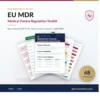
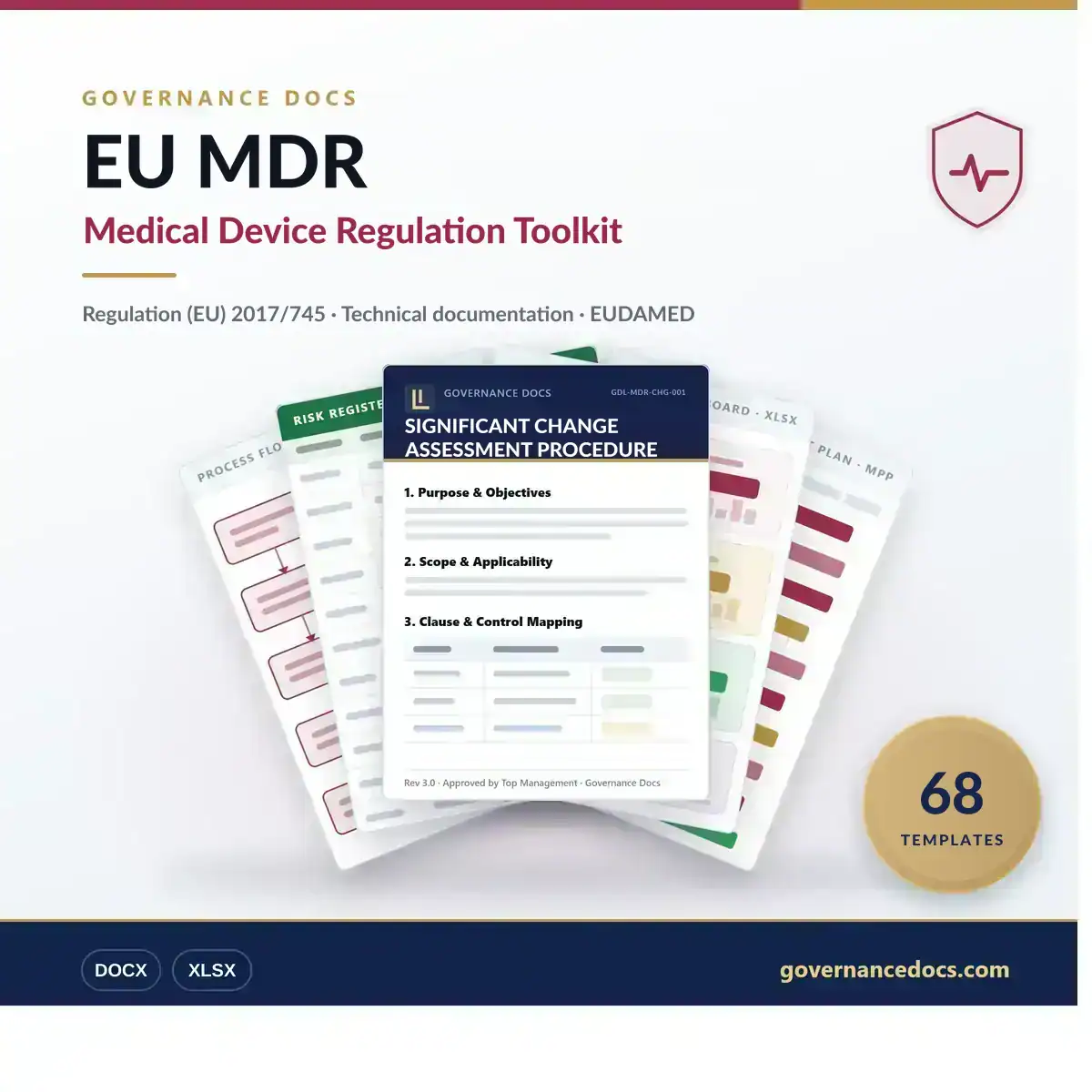
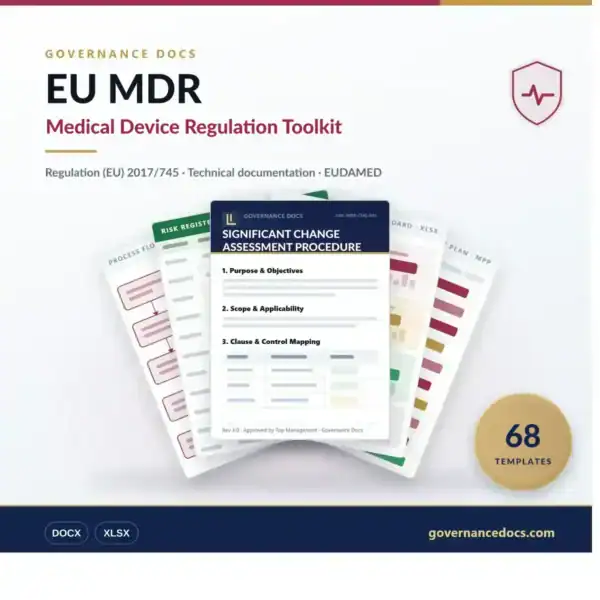
EU MDR Toolkit delivers 68 ready-to-use Microsoft Office templates covering Regulation (EU) 2017/745 as consolidated on 19 July 2026 — Annex II and Annex III technical documentation, the GSPR conformity checklist, classification, conformity assessment, clinical evaluation and PMCF, UDI and EUDAMED registration, post-market surveillance, PSUR and vigilance, labelling and the SSCP, and the Article 120 transition. Built for manufacturers who need a regulatory file a notified body can actually review.
$99.00
✓ In stock — instant download after checkout
The Medical Device Regulation is not a standard you implement once. It is a live instrument that has been amended eight times, consolidated eight times, and is served by 125 MDCG guidance documents and a harmonised standards list amended roughly twice a year.
That is why most MDR documentation packs are quietly out of date. This one is written against a dated text — Regulation (EU) 2017/745 as consolidated on 19 July 2026 — and every one of its 68 documents says so on its cover.
Under Commission Decision (EU) 2025/2371 and the six-month clock in Article 123(3)(d), four EUDAMED modules became mandatory on 28 May 2026: actor registration, UDI and device registration, notified bodies and certificates, and market surveillance.
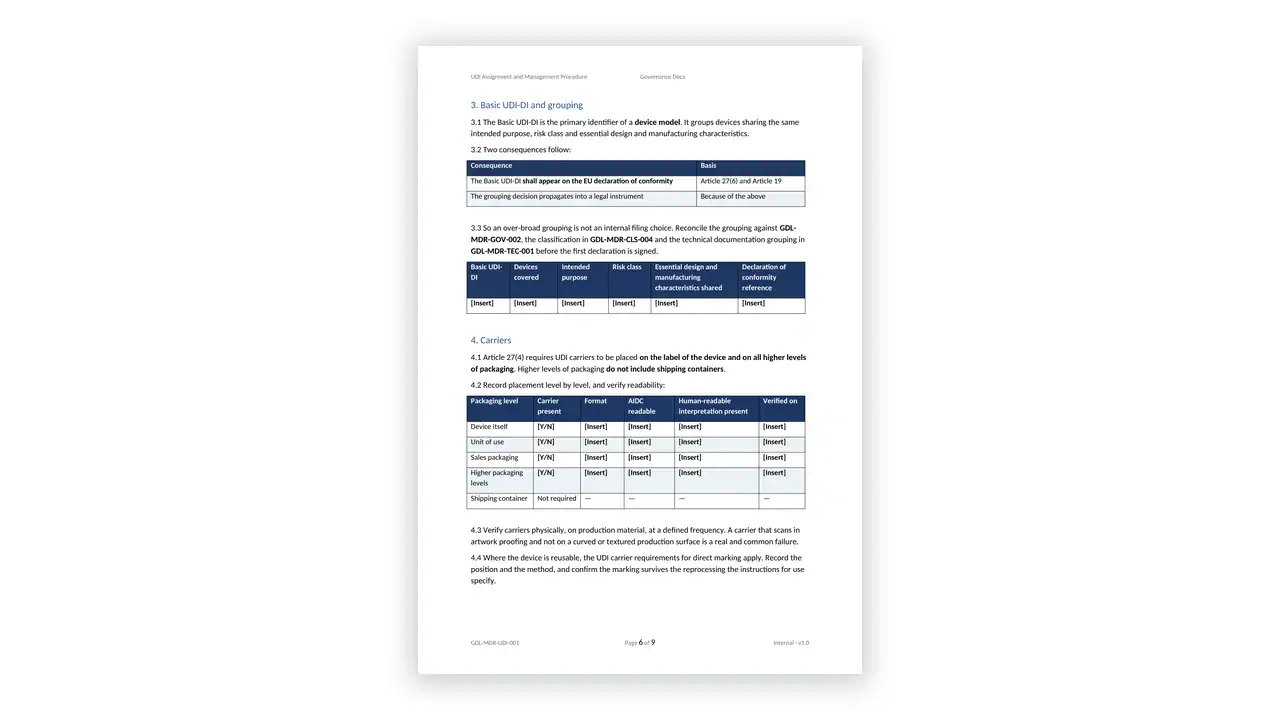
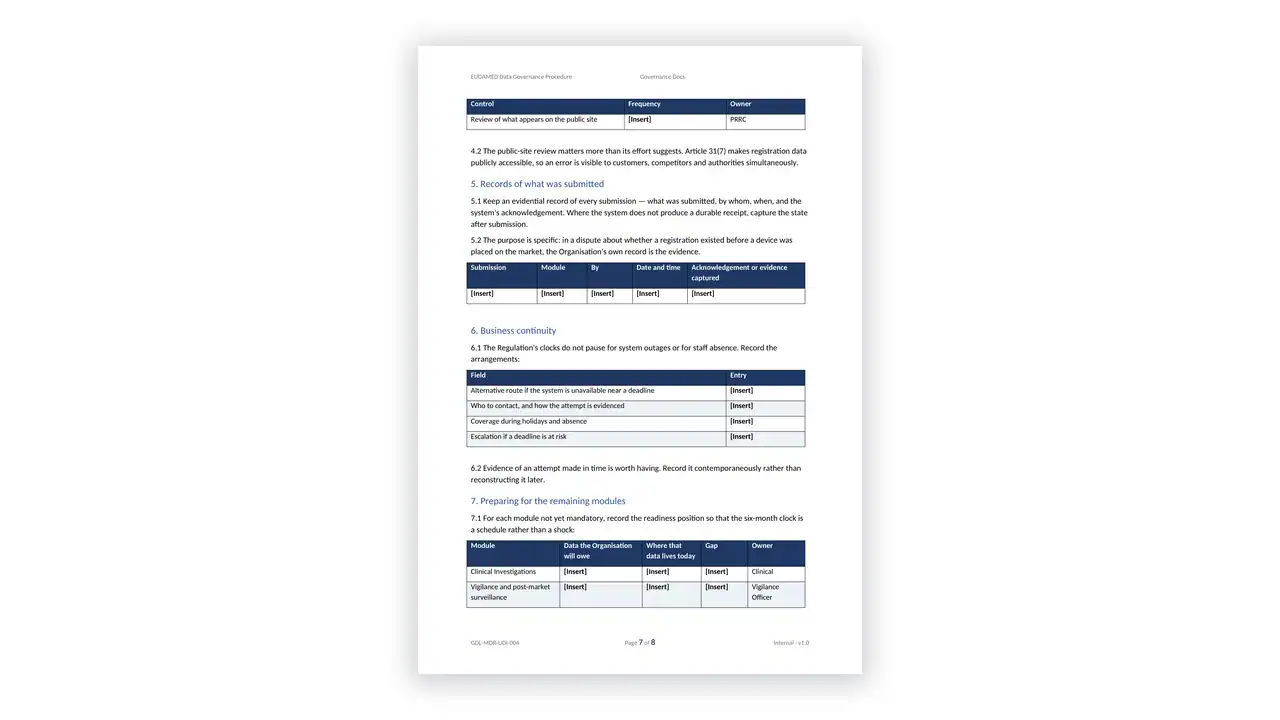
Three of those are direct manufacturer obligations, and they are live now. A manufacturer without a Single Registration Number is not preparing for something — Article 31(7) makes registration data publicly accessible, so the gap is visible to customers, competitors and competent authorities at the same time.
The toolkit treats it that way. GDL-MDR-UDI-002 opens by making you establish whether you are registered at all, and frames a “no” as a non-conformity with a remediation plan rather than a project.
Two Commission Delegated Regulations of 20 March 2026 took effect in the July consolidation, and both change what manufacturers have to do:
Both are reflected in the conformity assessment and clinical evaluation procedures — and, because such lists move, the toolkit points at one dated supplement rather than freezing a copy in forty documents.
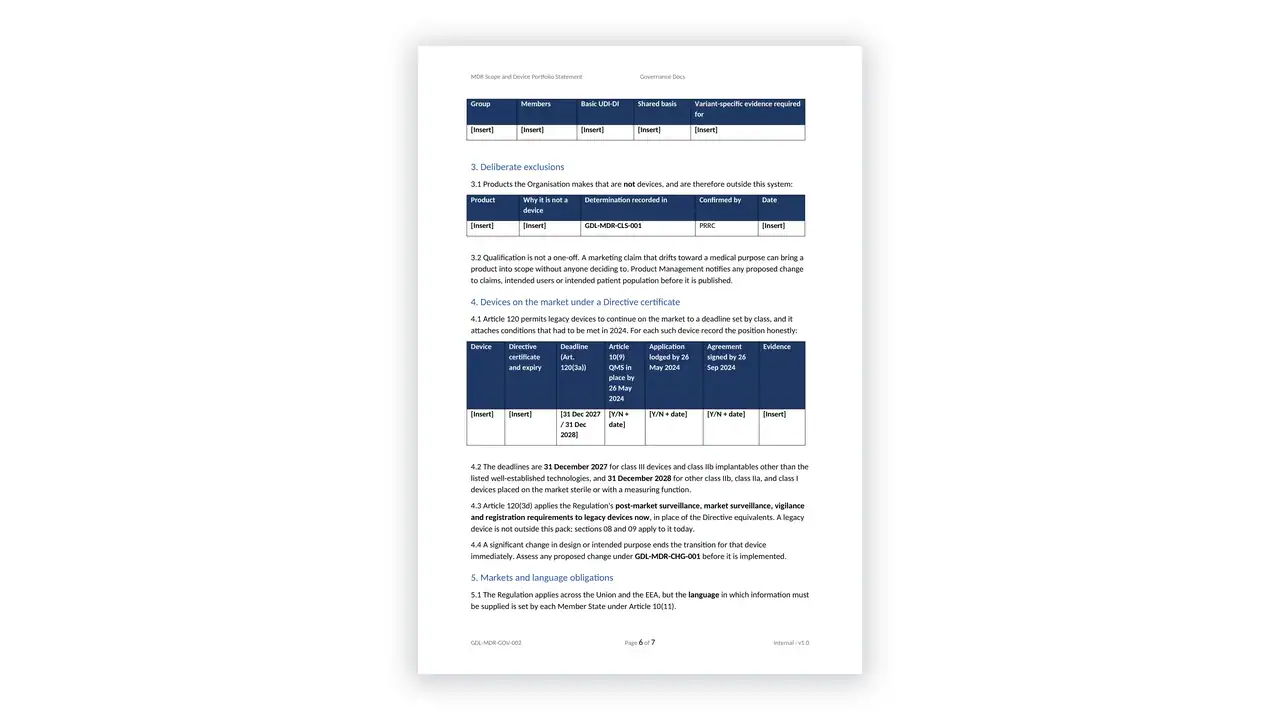
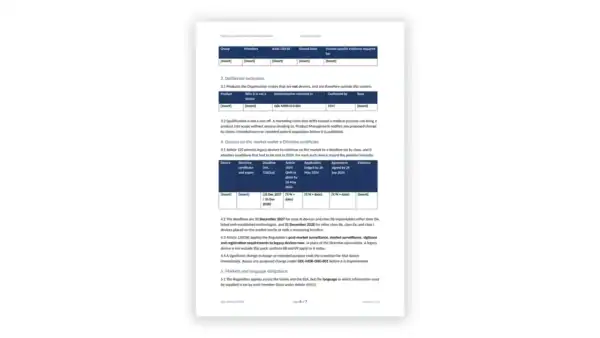
Article 120 lets legacy devices continue to 31 December 2027 (class III and most class IIb implantables) or 31 December 2028 (other class IIb, class IIa, class I sterile or measuring).
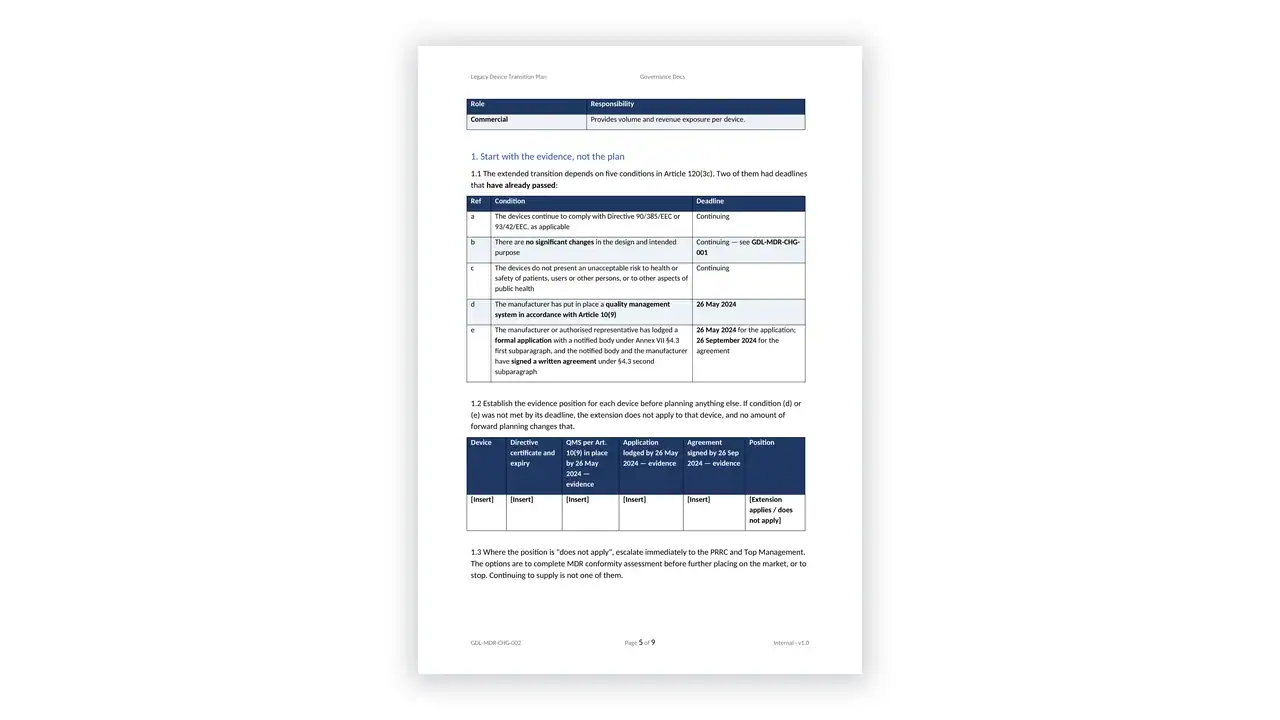
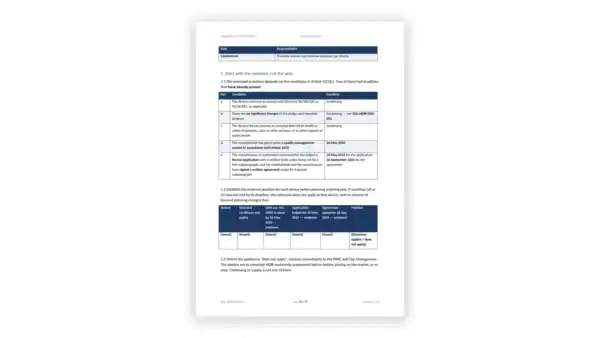
What is less often said is that the extension was conditional on things that had to happen in 2024: a quality management system meeting Article 10(9) and a formal notified body application by 26 May 2024, and a signed written agreement by 26 September 2024. Those dates have passed. If a condition was missed, the extension never applied to that device.
The toolkit’s transition tracker takes evidence references, not a Yes for each of the five conditions, and it carries a worked example of a device whose application cannot be evidenced — position, escalation, supply suspended. It also covers Article 120(3d), which applies MDR post-market surveillance, vigilance and registration to legacy devices *today*.
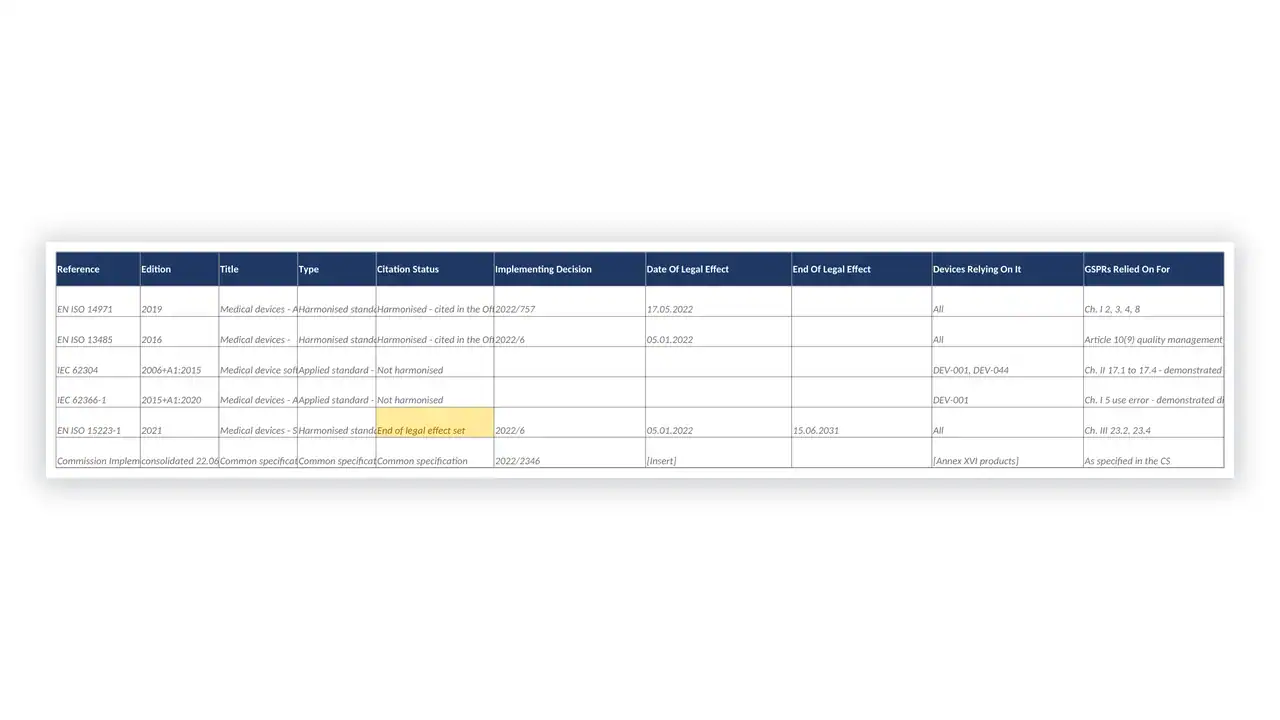
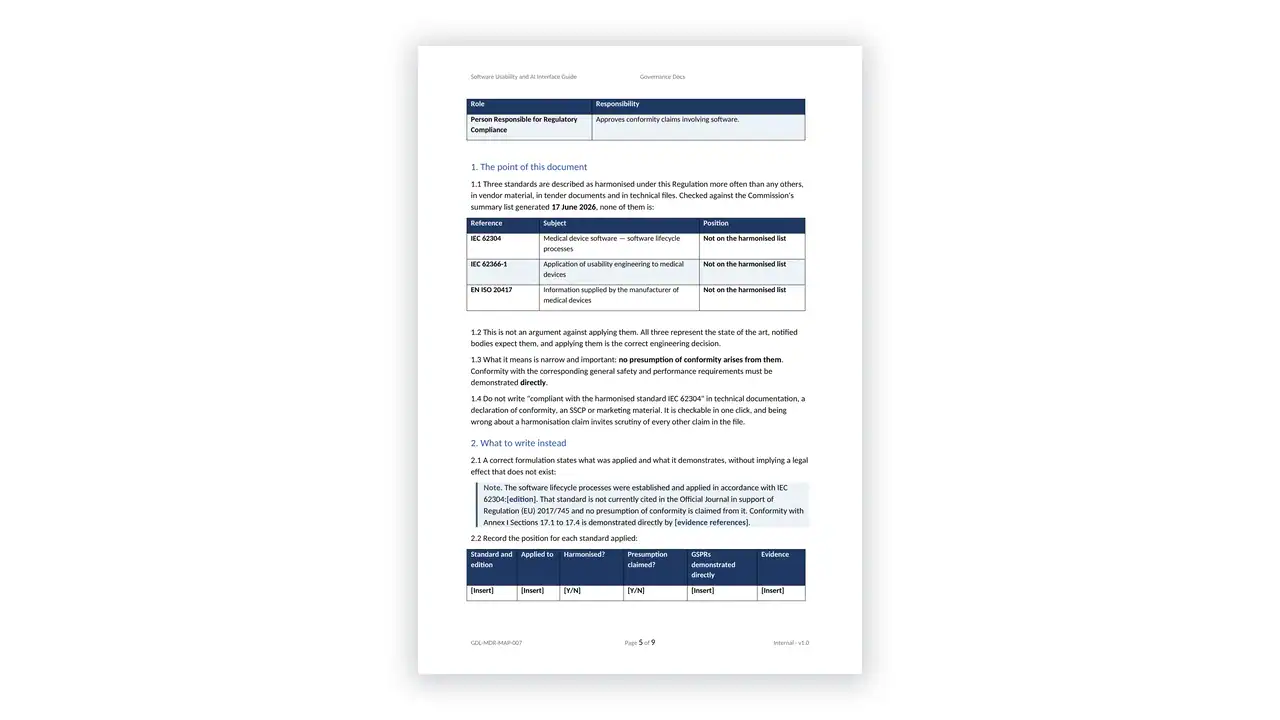
IEC 62304, IEC 62366-1 and EN ISO 20417 are described as harmonised under the MDR in a great deal of commercial material. Checked against the European Commission’s own summary list generated 17 June 2026, none of them is.
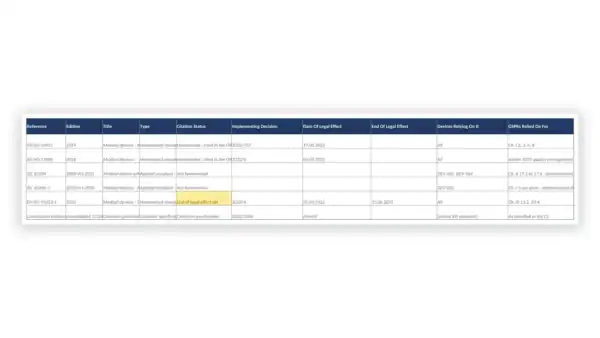
Applying them is still the right engineering decision — they are the state of the art and notified bodies expect them. What they do not give is a presumption of conformity, so conformity with the corresponding Annex I requirements has to be demonstrated directly. The toolkit gives you the correct form of words to use in a technical file instead of the wrong one, and a standards register whose primary column is whether a presumption is actually available.
68 documents — 53 Microsoft Word and 15 Microsoft Excel — across twelve sections, from the compliance policy through to the notified body evidence pack.
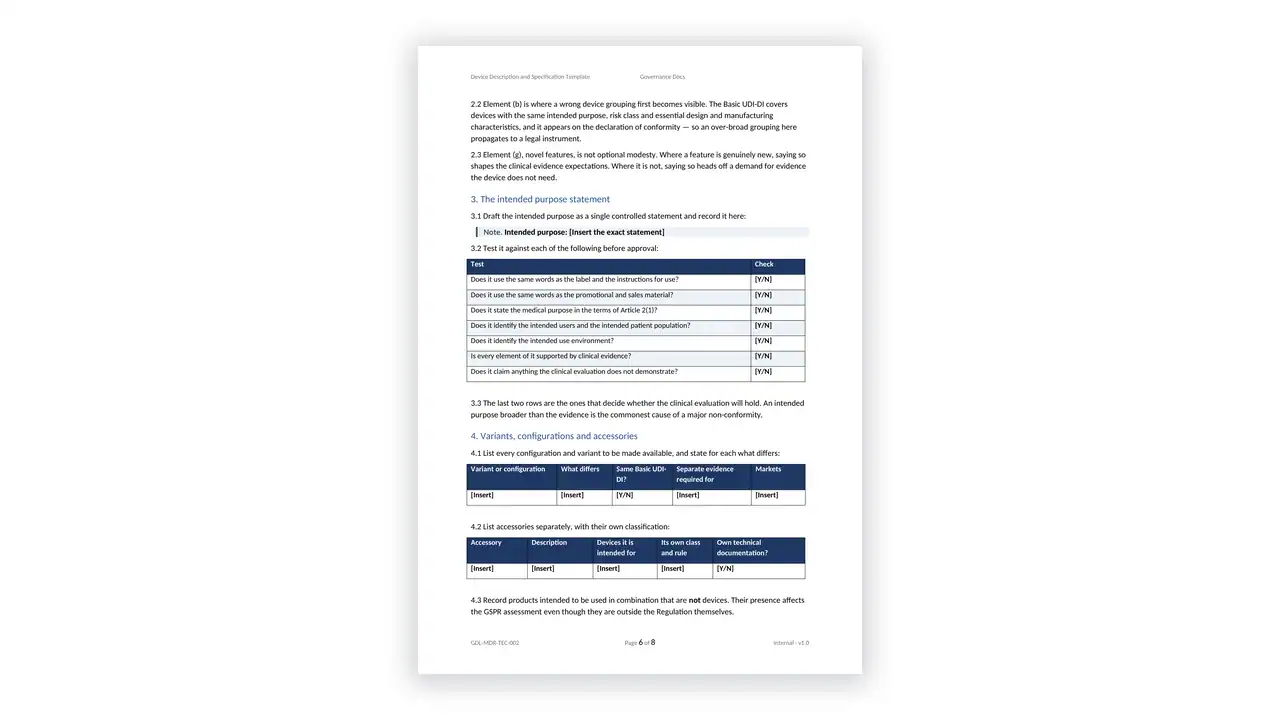
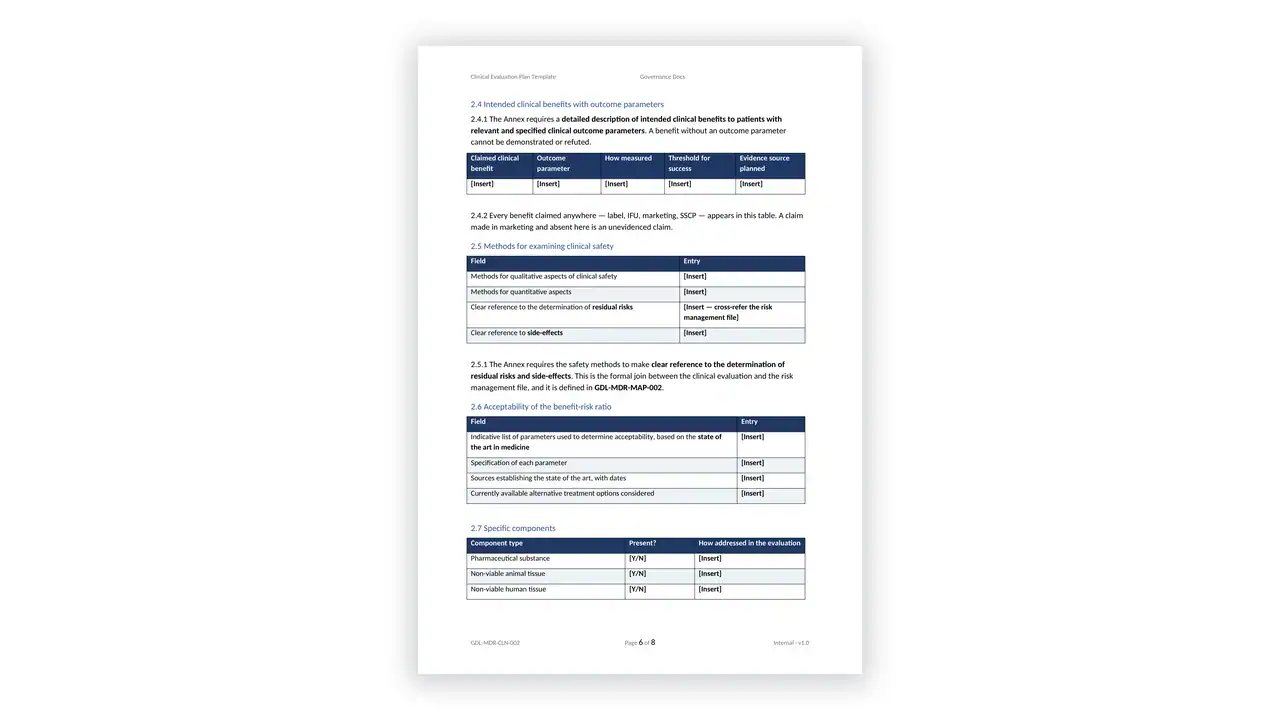
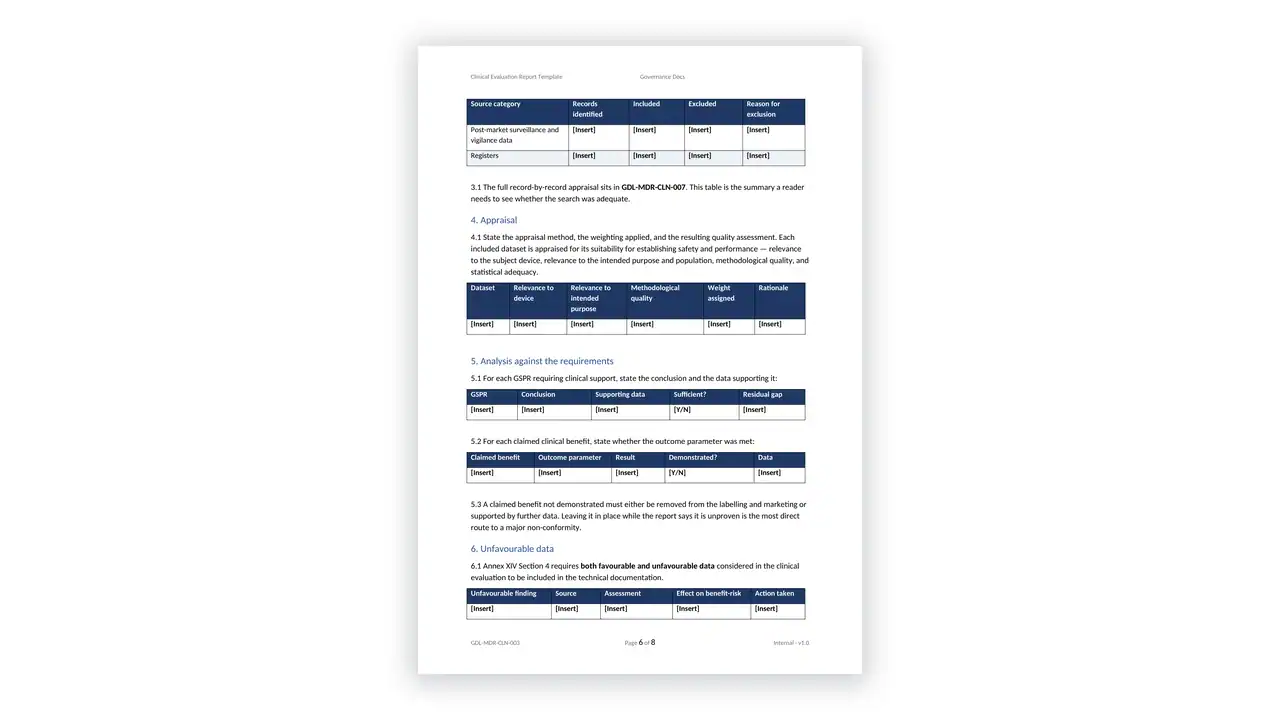
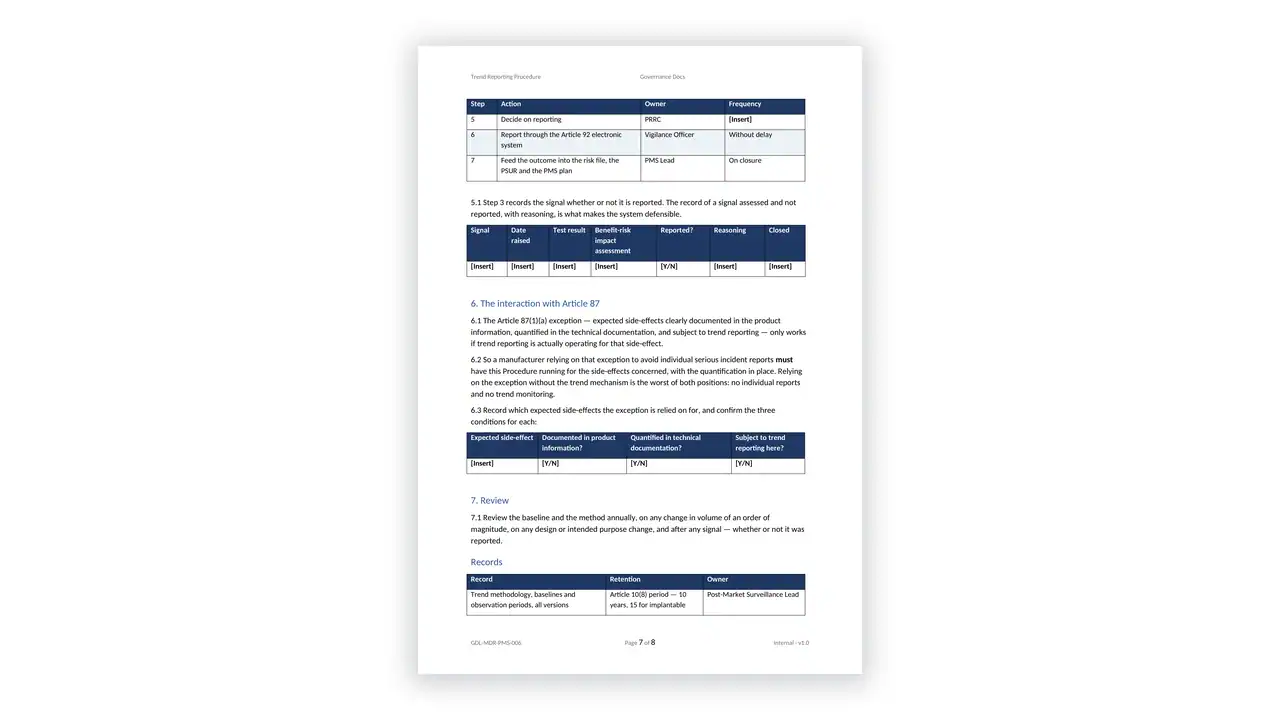
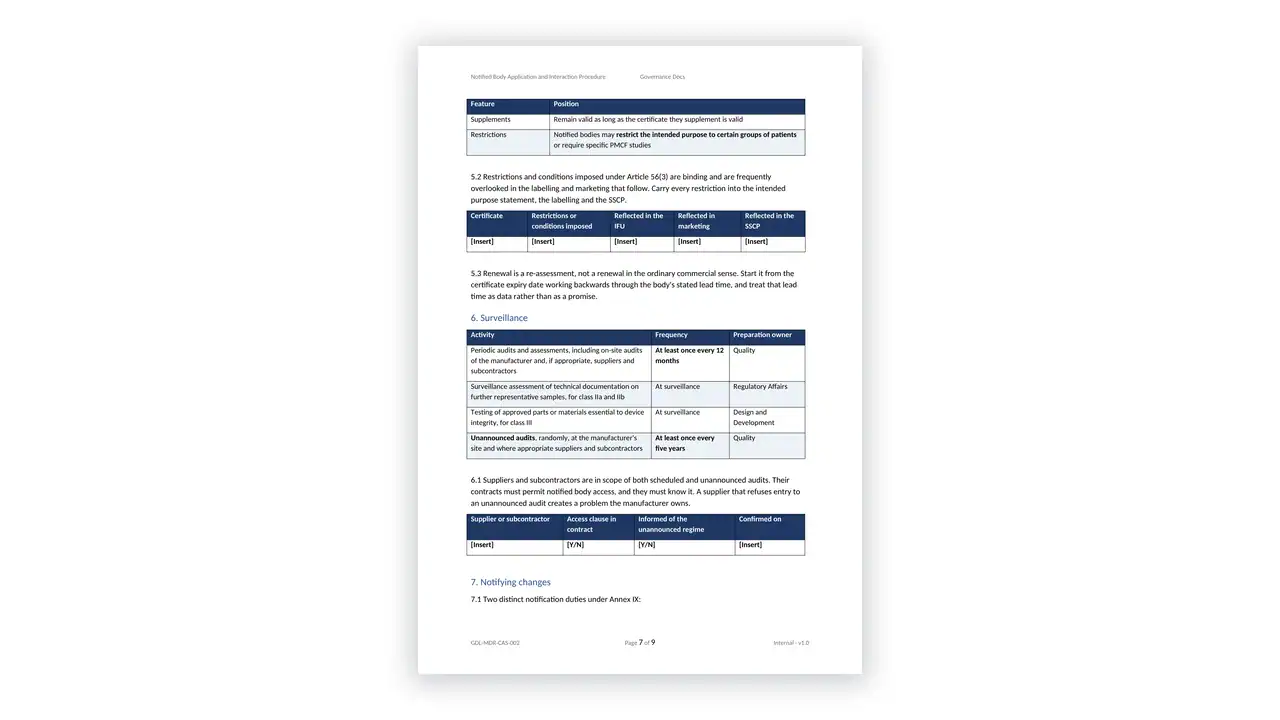
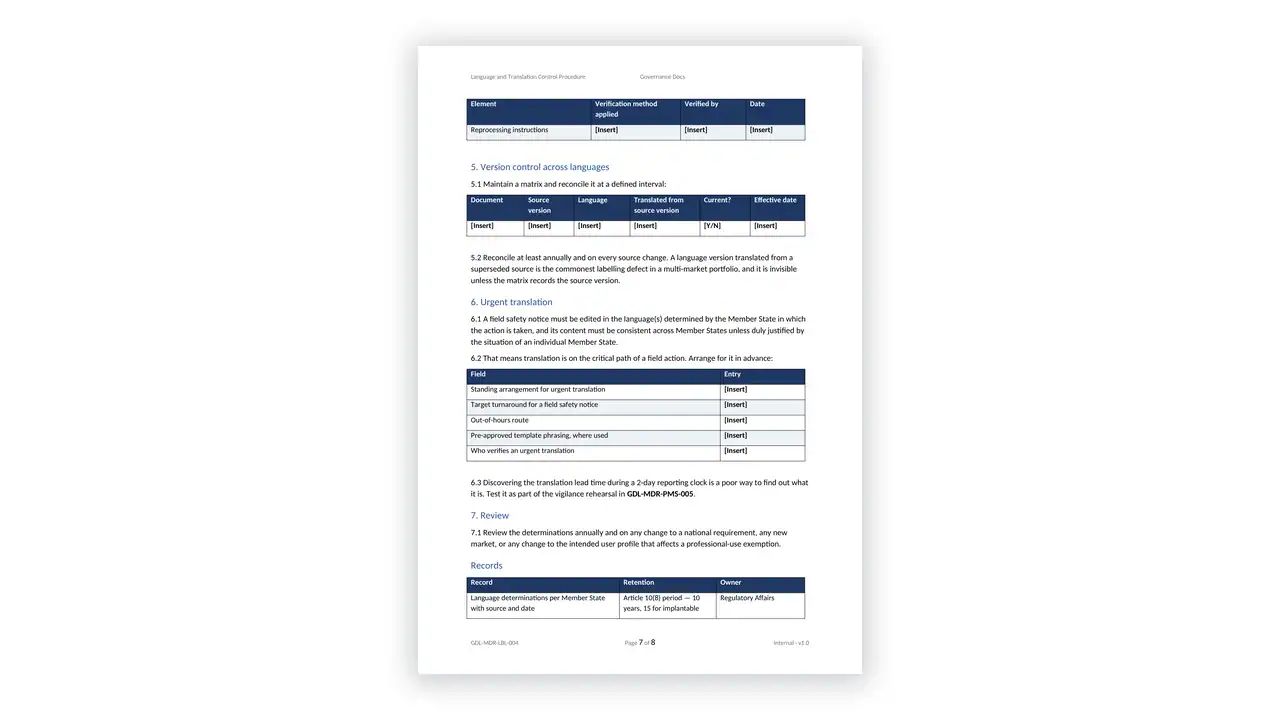
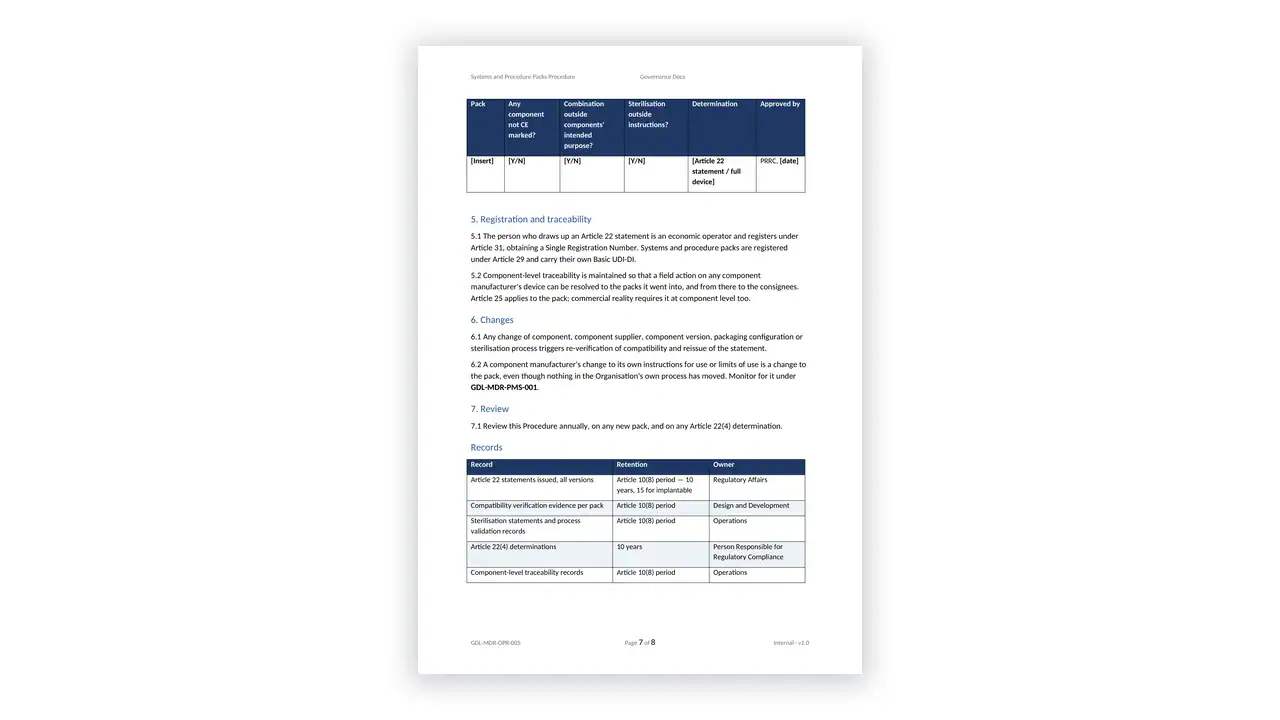
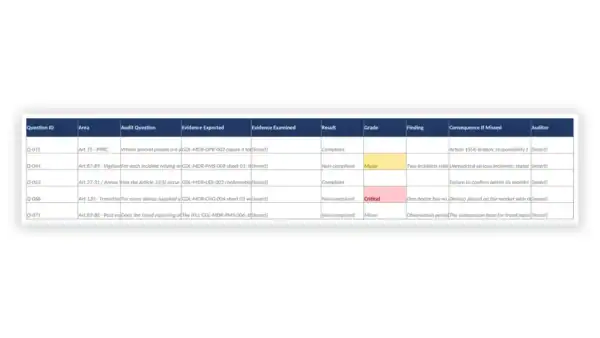
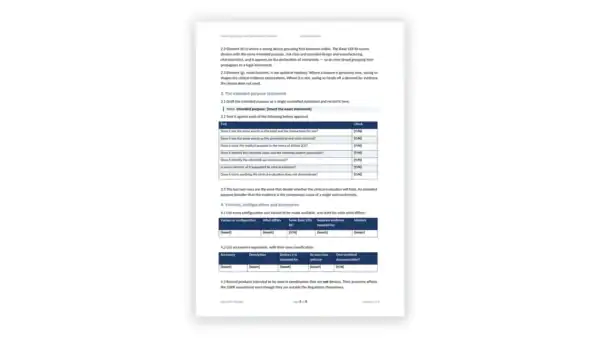
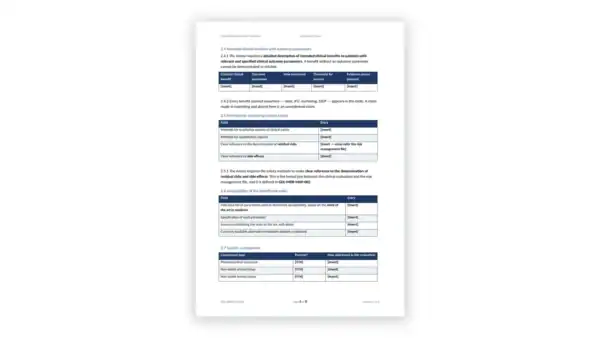
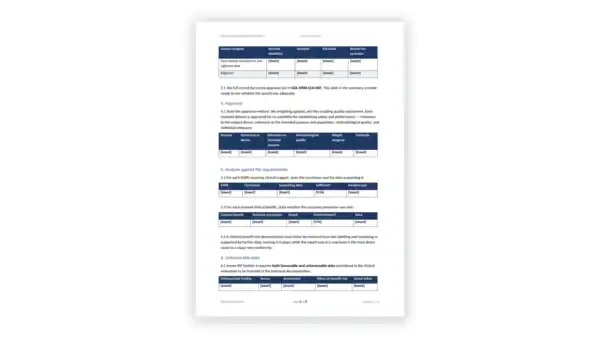
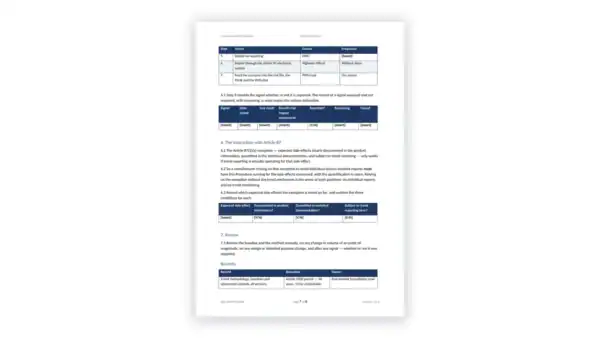
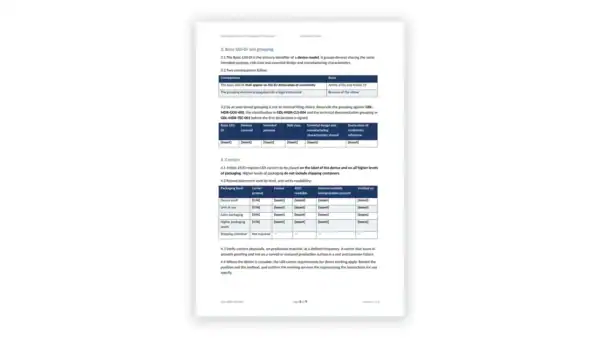
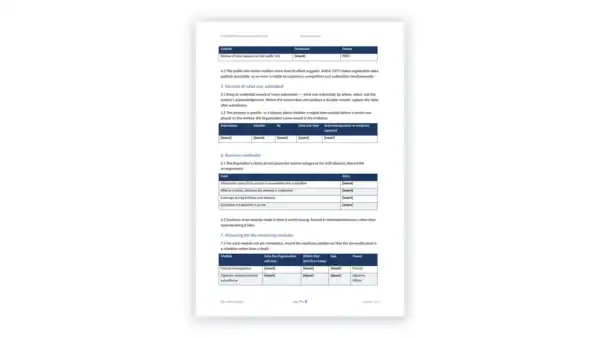
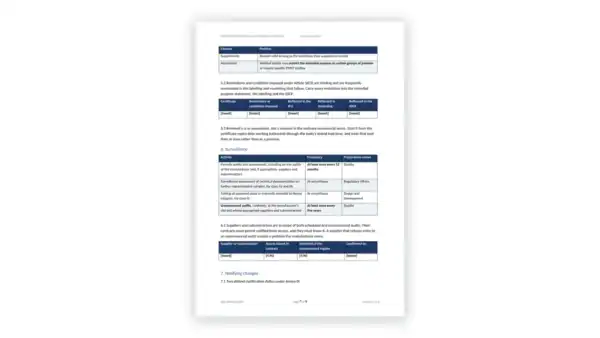
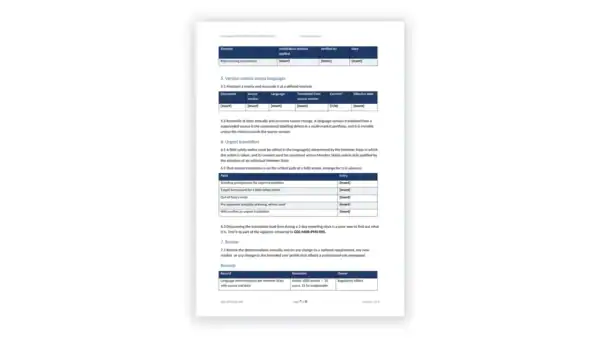
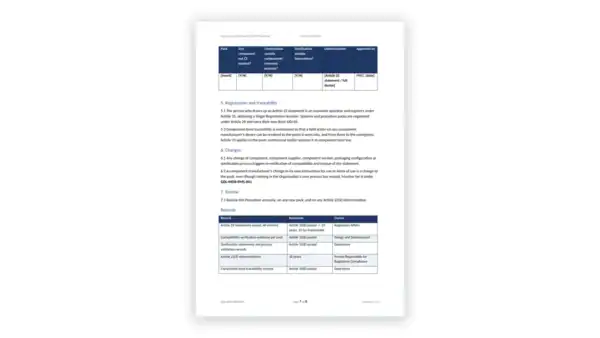
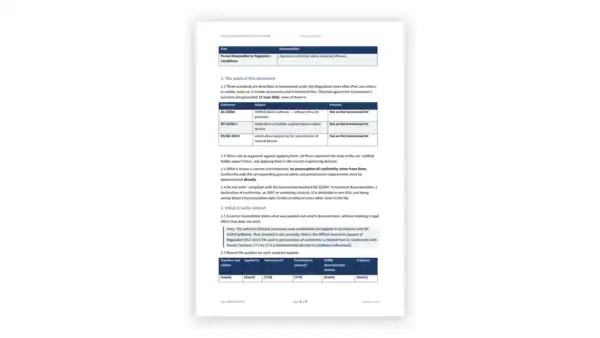
The Word documents carry a table of contents, document control fields, a definitions table, a roles table, a records table with Article 10(8) retention, and a related documents table. The workbooks carry an instructions sheet, controlled dropdowns, worked example rows, conditional formatting and a validation sheet.
The Regulation requires technical documentation per device. It also requires systems and procedures that run across the organisation. The toolkit separates the two and the register records which each document is: 26 organisation documents and 42 per-device documents.
That distinction matters more here than in a quality standard. A single portfolio-wide GSPR checklist is the commonest structural error in MDR files, and it makes the checklist evidence for nothing in particular.
The two heaviest sections are the ones a notified body opens first and a competent authority asks for: technical documentation (8 documents, structured to Annex II’s own six sections with Annex III kept properly separate) and post-market and vigilance (8 documents, with the 2-day, 10-day and 15-day reporting clocks, trend reporting methodology and the field safety notice).
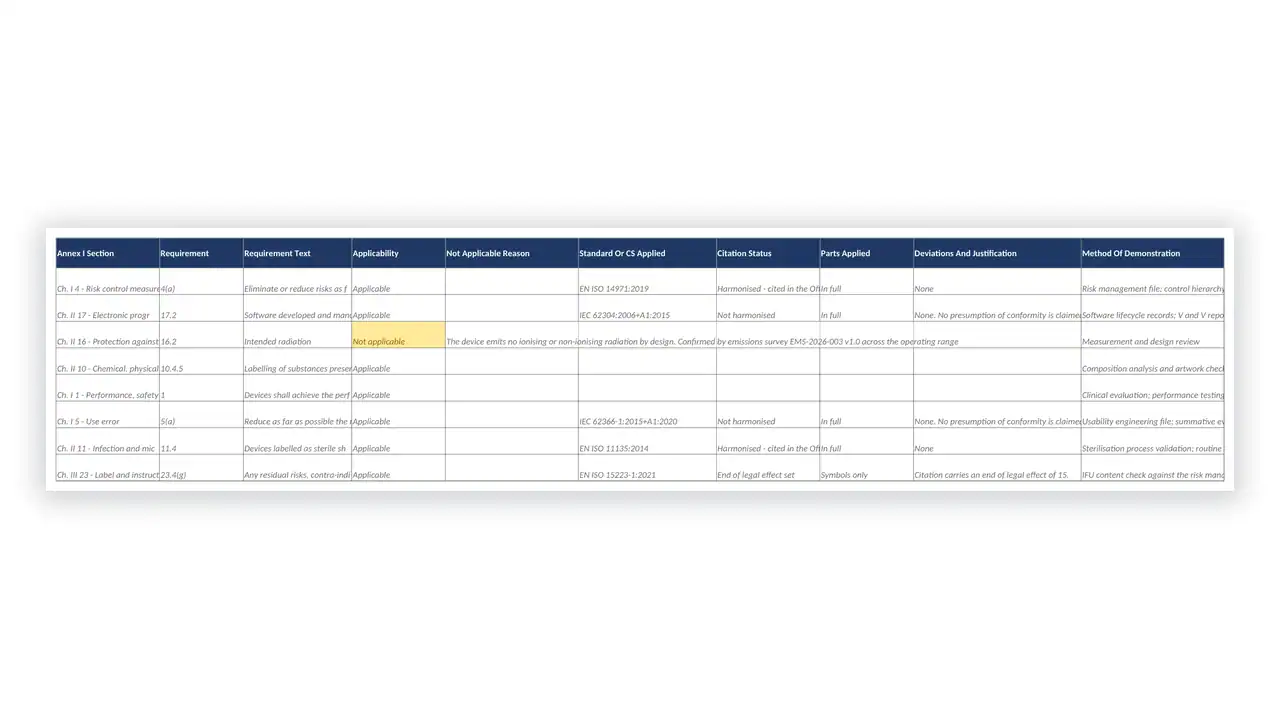
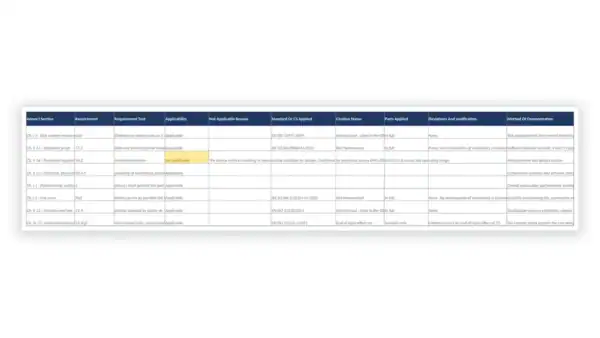
The GSPR conformity checklist ships all 23 Annex I requirements as a controlled list, and insists on the column that actually fails review: a specific evidence reference. “See design file” is not one.
| # | Section | Documents |
|---|---|---|
| 01 | Programme and Scope | 4 |
| 02 | Economic Operators | 6 |
| 03 | Qualification and Classification | 4 |
| 04 | Safety and Performance | 5 |
| 05 | Technical Documentation | 8 |
| 06 | Clinical Evaluation and PMCF | 7 |
| 07 | Conformity Assessment | 5 |
| 08 | UDI Registration and EUDAMED | 6 |
| 09 | Post-Market and Vigilance | 8 |
| 10 | Labelling and Transparency | 4 |
| 11 | Change and Transition | 4 |
| 12 | Mapping Audit and Evidence | 7 |
Consolidation date, the eight amendments, the transition deadlines, the harmonised standards list and its generation date, the MDCG index, the EUDAMED module status and the pending simplification proposal COM(2025) 1023 all live in a single Regulatory Currency Supplement, each entry with a verified-on field and a nine-step re-check procedure against primary sources.
Everything else in the pack defers to it. When the Regulation is next amended you update one document and let it drive the rest, instead of hunting a date through forty procedures and missing one.
The toolkit owns the regulatory file. It does not re-author the quality management system or the risk management file, and it says so.
Article 10(9) requires a quality management system; ISO 13485:2016 is the harmonised route to demonstrating it, and the toolkit includes a cross-reference matrix showing what the standard covers and — the useful column — what the Regulation adds on top. Annex I Section 3 requires a risk management system; EN ISO 14971:2019 is the harmonised standard, and the interface procedure defines what the file must contain for MDR purposes and the eight points where the Regulation goes further than the standard.
If you also need those, our ISO 13485 Toolkit covers the medical device quality management system and our ISO 14971 Toolkit covers the risk management file.
If your products are in vitro diagnostic devices rather than medical devices, this is the wrong pack: Regulation (EU) 2017/746 uses different classes, different classification rules and performance evaluation in place of clinical evaluation. Our EU IVDR Toolkit covers it.
For the background, our guide to the EU MDR covers what Regulation (EU) 2017/745 requires end to end — EUDAMED, the Article 120 transition conditions, and the standards that are not harmonised.
Simply add your organisation’s name, replace the bracketed placeholder values with your own detail, and implement the documented policies and procedures within your operational framework.
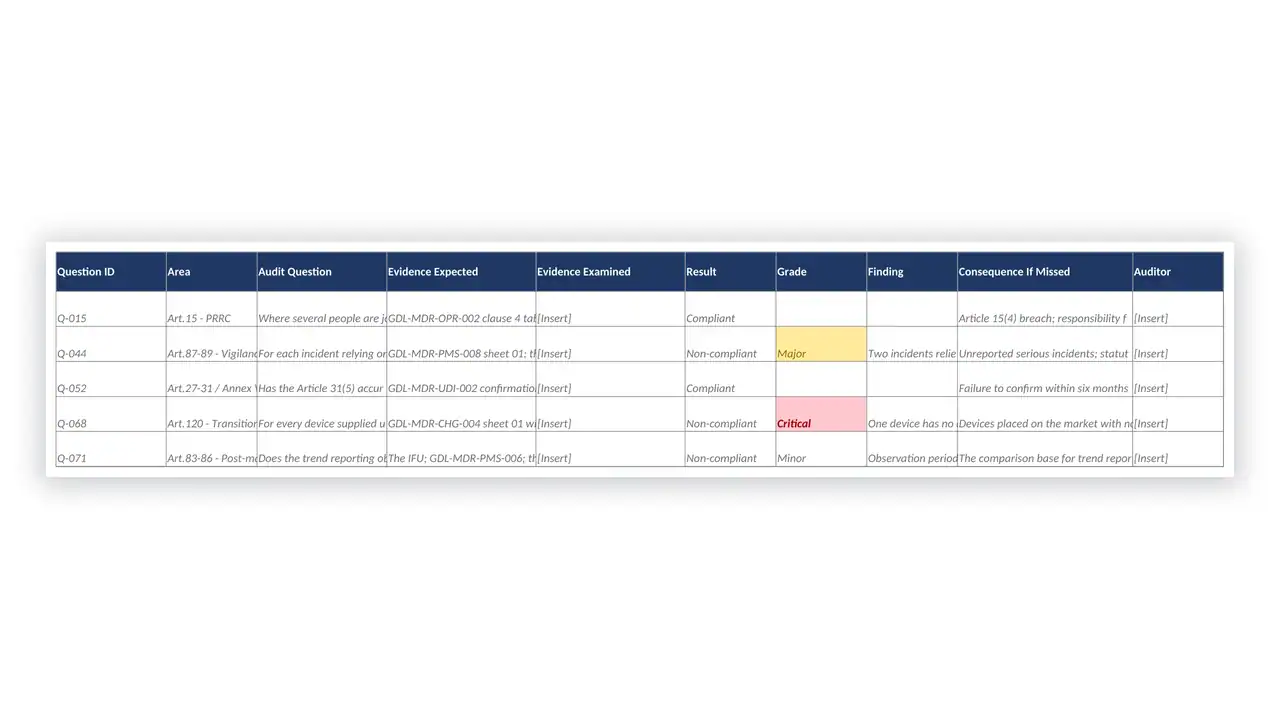
It is a set of 68 ready-to-edit documentation templates covering Regulation (EU) 2017/745 on medical devices — 53 Word documents and 15 Excel workbooks across twelve sections, from the compliance policy and economic operator obligations through classification, the GSPR checklist, Annex II and Annex III technical documentation, clinical evaluation and PMCF, conformity assessment, UDI and EUDAMED, post-market surveillance and vigilance, labelling and the SSCP, the Article 120 transition, and internal audit.
Regulation (EU) 2017/745 as consolidated on 19 July 2026 (CELEX 02017R0745-20260719). That includes all eight amendments to date, among them Regulation (EU) 2024/1860 which inserted the Article 10a supply-interruption obligation, Regulation (EU) 2025/2457 which added Category 1 endocrine disruptors to Annex I Section 10.4, and the two Commission Delegated Regulations of 20 March 2026. Every document states the consolidation date it was written against.
Yes, and as a live obligation rather than a forthcoming one. Four modules became mandatory on 28 May 2026 following Commission Decision (EU) 2025/2371. The toolkit covers actor registration and the Single Registration Number, device registration and UDI data submission, EUDAMED data governance and access control, and a module status log that tracks the remaining modules and the six-month clock each will start.
No. Article 10(9) requires a quality management system and Annex I Section 3 requires a risk management system; ISO 13485:2016 and EN ISO 14971:2019 are the harmonised routes to demonstrating both. This toolkit owns the regulatory file and includes bridge documents to each — a cross-reference matrix for the QMS and an interface procedure for the risk file — rather than duplicating them.
No. IEC 62304, IEC 62366-1 and EN ISO 20417 do not appear on the Commission’s list of harmonised standards for this Regulation, verified against the summary list generated 17 June 2026. They remain the state of the art and are expected by notified bodies, but no presumption of conformity arises from them. The toolkit explains what to write in a technical file instead, and tracks citation status per standard.
Yes. It covers the 31 December 2027 and 31 December 2028 deadlines, the five Article 120(3c) conditions — including the two whose deadlines passed in 2024 — the significant change test that ends a transition immediately, and Article 120(3d), which applies MDR post-market surveillance, market surveillance, vigilance and registration to legacy devices now.
It covers what the Regulation requires of them: Annex VIII Rule 11 classification with all six limbs, Annex I Section 17 on electronic programmable systems demonstrated directly, and a guide to the software, usability and artificial intelligence position including model change control and the interaction with other Union legislation. It is not an IEC 62304 or IEC 62366-1 implementation, and it says where those files belong.
53 Microsoft Word documents and 15 Microsoft Excel workbooks. The Word documents carry a table of contents, document control fields and a consistent structure; the workbooks include instruction sheets, controlled dropdown lists, worked example rows, conditional formatting and validation checks. Nothing is locked and no password is required.
No — and this is the one standard-shaped product where the answer is no. Regulation (EU) 2017/745 is published free of charge on EUR-Lex in all 24 official languages, so the toolkit quotes article and annex numbers directly and you can check any of them in one click. You may still want the harmonised standards themselves, which are sold by the standards bodies.
Implementing for clients? The Consultant Package bundles 70 toolkits — 6,100+ editable templates — under one firm-wide licence that covers unlimited client engagements. $1,399 one-time.
Free articles that explain the requirements this toolkit covers.

 Comprehensive EU MDR Toolkit – 68 Medical Device Regulation Templates$99.00



Reviews
There are no reviews yet