CART
Key Takeaways
Free gap assessment
Is your privacy work built on the 2025 edition?
Score the standalone privacy management system, free, with privacy risk measured as risk to the individual rather than to you.
ISO/IEC 27701 gives organizations a structured, certifiable way to govern that information: what you hold, why you hold it, who can reach it, how long you keep it, and how you prove all of it to a regulator or a customer. This guide explains what the standard requires, how a PIMS works in practice, and what certification involves.
ISO/IEC 27701 is the international standard for Privacy Information Management Systems (PIMS) — the requirements for establishing, implementing, maintaining and continually improving how an organization governs personally identifiable information (PII). It covers both PII controllers and PII processors, and it can be certified by an accredited body.
Until October 2025 it was written as an extension to ISO/IEC 27001 and ISO/IEC 27002, so it could only be certified alongside an existing ISO 27001 certificate. The 2025 edition changed that: ISO 27701 is now a standalone management system standard with its own clauses 4 to 10, and a PIMS can be certified on its own merits.
First published in August 2019 and substantially revised on 14 October 2025, the standard has been adopted worldwide by organizations strengthening their privacy controls, evidencing compliance with regulations such as the GDPR, and building trust with customers and stakeholders. Certificates issued against the 2019 edition remain valid until October 2028 — see our guide to what changed in ISO 27701:2025.
Put simply, ISO 27701 takes the management-system discipline that ISO 27001 applies to information security and applies it to privacy: defined scope, assessed risk, selected controls, documented evidence, audited and reviewed. Organizations that already run an ISMS can extend it; those that do not can now build a PIMS on its own.
With increasing regulatory pressures and growing concerns about data privacy worldwide, companies face complex challenges. Regulations such as GDPR, California Consumer Privacy Act (CCPA), and other national privacy laws demand strict data handling and protection measures. Non-compliance can result in hefty fines, reputational damage, and loss of customer trust.
ISO 27701 addresses these challenges by offering a globally accepted framework that helps organizations design, implement, maintain, and improve privacy information management practices. It sets out concrete controls and guidelines on how to manage PII processing securely, making it easier for organizations to demonstrate compliance with multiple legal frameworks simultaneously.
Moreover, the standard supports third-party risk management by defining privacy requirements for processors, controllers, and other stakeholders in the data supply chain. This comprehensive approach fosters transparency, accountability, and better governance across all entities handling sensitive personal data.
To understand how a PIMS works in practice, it helps to look at its core structure and components:
ISO 27701 follows the same harmonized management system structure as ISO 27001, ISO 9001 and the rest of the ISO family — clauses 4 to 10 covering context, leadership, planning, support, operation, performance evaluation and improvement. What it adds is privacy: requirements for PII controllers and PII processors, and a consolidated Annex A bringing the controller controls, the processor controls and the supporting information security controls into one place.
Because the structure is shared, an organization already running an ISO 27001 ISMS can extend it rather than start again — the risk process, internal audit programme and management review carry straight across. Since the 2025 edition, an organization without ISO 27001 can equally implement a PIMS on its own.
Organizations already certified under ISO 27001 have a clear path to adopt ISO 27701 by expanding their ISMS into a PIMS.
The standard defines clear roles and responsibilities for the management of PII, including the roles of:
– Data Controllers: Entities that determine the purposes and means of processing PII.
– Data Processors: Entities that process data on behalf of controllers.
This clarity ensures each stakeholder understands their obligations under privacy laws and how to manage PII securely.
ISO 27701 emphasizes a risk-based approach to privacy management. Organizations are required to identify and assess privacy risks associated with their data processing activities and implement appropriate controls to mitigate them.
The standard includes a comprehensive set of control objectives and associated controls tailored explicitly for privacy protection. These controls cover areas such as:
– Consent management
– Data minimization
– PII lifecycle management (collection, storage, usage, disclosure, and deletion)
– Privacy impact assessments
– Incident management related to privacy breaches
ISO 27701 requires robust documentation to demonstrate compliance, including policies, procedures, records of PII processing activities, risk assessments, and audit logs. This documentation serves as evidence during audits to confirm the effectiveness of the PIMS.
By integrating with ISO 27001, ISO 27701 offers a seamless privacy and security linkage, making it an outstanding framework for organizations navigating overlapping regulatory and operational risk landscapes.
A major benefit of ISO 27701 is its harmonization of privacy-specific requirements with broader information security controls. Privacy cannot be managed in isolation; it is inherently tied to how securely information systems operate. By aligning privacy risk management with existing security practices, ISO 27701 enables organizations to address both concerns through a unified management system.
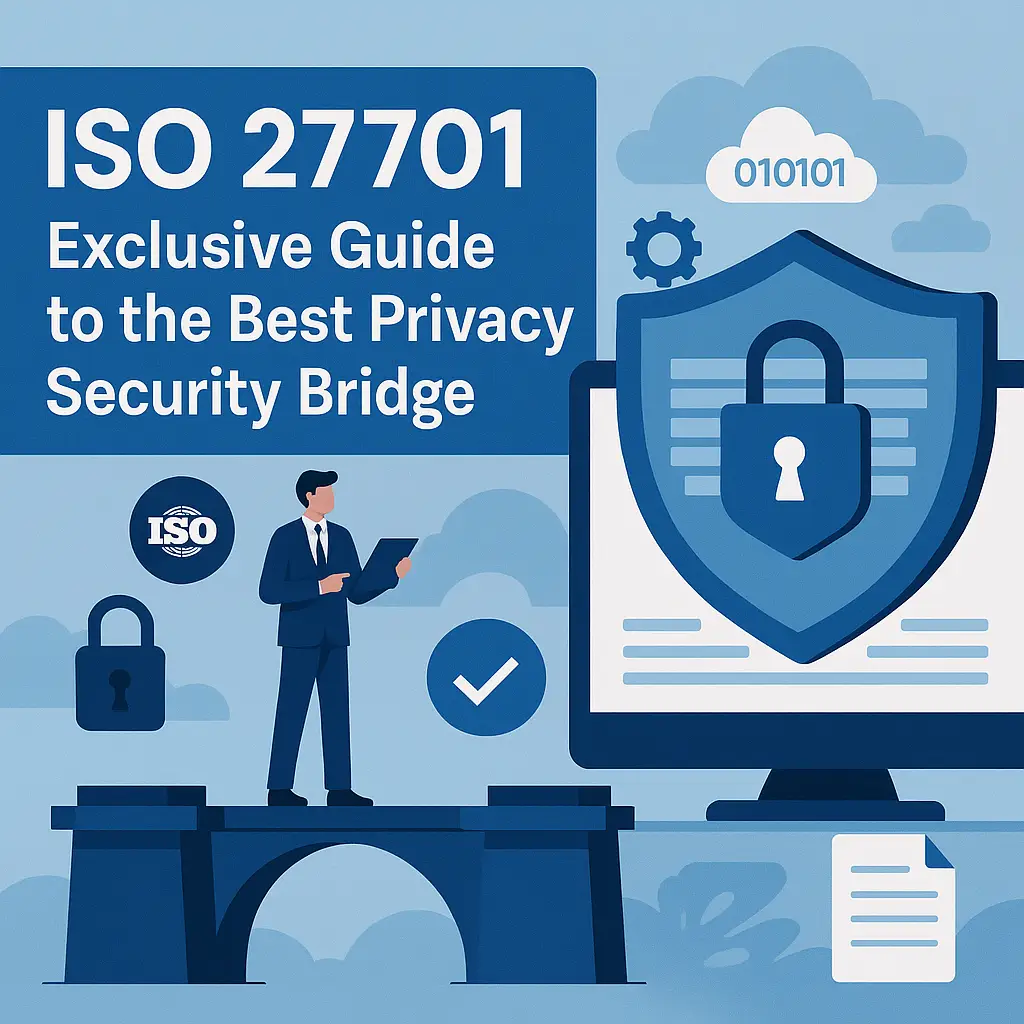
With numerous privacy regulations globally, organizations often struggle to comply with multiple legislations simultaneously. ISO 27701 acts as a bridge by providing a universally recognized set of practices that align with key regulatory principles such as lawfulness, fairness, transparency, purpose limitation, and data subject rights.
Adopting this standard can reduce the complexity and cost of compliance by overlapping multiple regulatory requirements into a coherent system.
Trust is invaluable in today’s data-driven world. Implementing ISO 27701 demonstrates to customers, business partners, and regulators that an organization takes privacy seriously and protects personal data responsibly. This can differentiate an organization from competitors, opening doors to new business opportunities, especially when dealing with privacy-conscious clients or regulated industries.
Successfully adopting ISO 27701 requires careful planning, commitment, and a step-by-step approach. Below is a structured roadmap:
Begin by evaluating existing privacy and security controls. Identify gaps in data handling, risk management, policies, and procedures aligned with ISO 27701 requirements.
Clearly outline which parts of the organization, processes, and systems will be covered by the Privacy Information Management System (PIMS). Set measurable objectives aligned with business goals and compliance needs.
Assign responsibilities to privacy officers, data controllers, data processors, and other relevant stakeholders. Ensure the roles align with ISO 27701’s stipulations.
Identify all PII processing activities, assess associated risks, and determine necessary controls based on the sensitivity of data and processing context.
Draft or revise privacy policies, consent forms, data retention schedules, incident response plans, and other necessary documentation as per ISO 27701 controls.
Apply appropriate security measures such as encryption, access controls, anonymization, or pseudonymization. Train staff to foster privacy awareness and compliance.
Establish mechanisms to continuously monitor privacy controls, detect incidents, measure performance, and conduct internal audits.
Organizations seeking formal recognition can pursue ISO 27701 certification by engaging accredited auditors to review their PIMS implementation.
While ISO 27701 offers a comprehensive framework, organizations may encounter obstacles during implementation:
Merging privacy controls into existing ISMS frameworks can be complex. To ease this, organizations should leverage tools and expertise specializing in both information security and privacy management.
Implementing the standard may require investments in technology, personnel, and training. Prioritize critical areas based on risk to optimize resource allocation effectively.
Privacy laws continue to evolve. ISO 27701 supports ongoing improvement, so establishing a robust process for legal monitoring and control updates is vital.
Privacy management spans legal, IT, HR, and compliance teams. Building strong communication channels and appointing privacy champions across departments can bridge gaps.
Organizations adopting ISO 27701 often report tangible advantages, such as:
– Enhanced alignment with GDPR and other privacy requirements
– Reduced risk of data breaches and associated penalties
– Increased customer confidence and marketability
– Streamlined oversight of third-party data processors
– Systematic approach to managing privacy incidents and data subject rights requests
No. ISO 27701 is a voluntary standard, not a law. What is mandatory is compliance with the privacy legislation that applies to you — the GDPR, the UK regime, CCPA and CPRA, and others. Certification is how you demonstrate to customers, regulators and procurement teams that your privacy governance is systematic and independently audited, rather than asserted.
ISO/IEC 27701:2025, published on 14 October 2025. It replaced the 2019 edition and made the standard standalone, so an ISO 27001 certificate is no longer required. If you hold a certificate against the 2019 edition it remains valid until October 2028 — our guide to ISO 27701:2025 vs 2019 covers the transition in detail.
A privacy information management system is the documented set of policies, processes, roles and records an organization uses to govern personally identifiable information and to prove that governance to a third party. It covers what data you hold, why, on what basis, who may access it, how long you keep it, how individuals exercise their rights, and how you evidence all of it.
No, and no standard can. GDPR compliance is a legal determination made by a supervisory authority against your specific processing. What ISO 27701 provides is a systematic, independently audited framework covering most of the operational obligations — records of processing, roles, rights handling, privacy by design. Treat it as the strongest available demonstration of good faith, not as a defence.
Expect a privacy policy, the PIMS scope, records of processing for the roles you perform, a privacy risk assessment and treatment plan, a Statement of Applicability, privacy impact assessment procedures, a data subject rights procedure, retention and disposal schedules, processor agreements, a breach response procedure, and the usual management-system records for competence, internal audit and management review.
Yes. Scope is yours to define, as with any management system, provided the boundary is defensible and clearly stated on the certificate. Customers do read the scope statement, so a certificate covering one product line will not reassure a buyer of a different one. Define the scope around the processing your customers actually care about.
In an era dominated by data-driven innovation and stringent privacy expectations, ISO 27701 offers a vital link between information security and privacy management. It empowers organizations to build resilient privacy programs within their existing security frameworks, fosters regulatory compliance, and establishes trust with stakeholders.
By adopting ISO 27701, businesses not only protect sensitive personal information but also enhance their operational integrity and competitive positioning. This exclusive guide underscores that investing in ISO 27701 is a strategic decision to bridge the privacy security gap effectively—ensuring robust protection now and adaptability for future challenges.
Skip the blank page. Download auditor-written, fully editable ISO 27701 documentation templates and adapt them to your organization in minutes.
If you are ready to move from reading to implementing, the ISO 27701 Toolkit gives you every policy, procedure and record template mapped to the standard — auditor-written, fully editable and ready to download from $99. Not sure it is the right fit? Our Which ISO Toolkit Do I Need? buyer’s guide compares options by goal and industry.
A consultant can be invaluable for complex or high-risk programmes, but they typically charge $150–$400 per hour and take days to weeks to engage. A documentation toolkit delivers 80–90% of the same ISO 27701 documentation instantly, for a one-time $99–$199 — and many teams buy the toolkit first, then use a consultant only for a final gap review or audit preparation. See our full toolkit vs. consultant comparison.

September 25, 2026
September 24, 2026
September 24, 2026
September 24, 2026
September 24, 2026

