
-
×
 ISO 22301 Toolkit - Comprehensive 75+ Templates
1 × $99.00
ISO 22301 Toolkit - Comprehensive 75+ Templates
1 × $99.00
Subtotal: $99.00

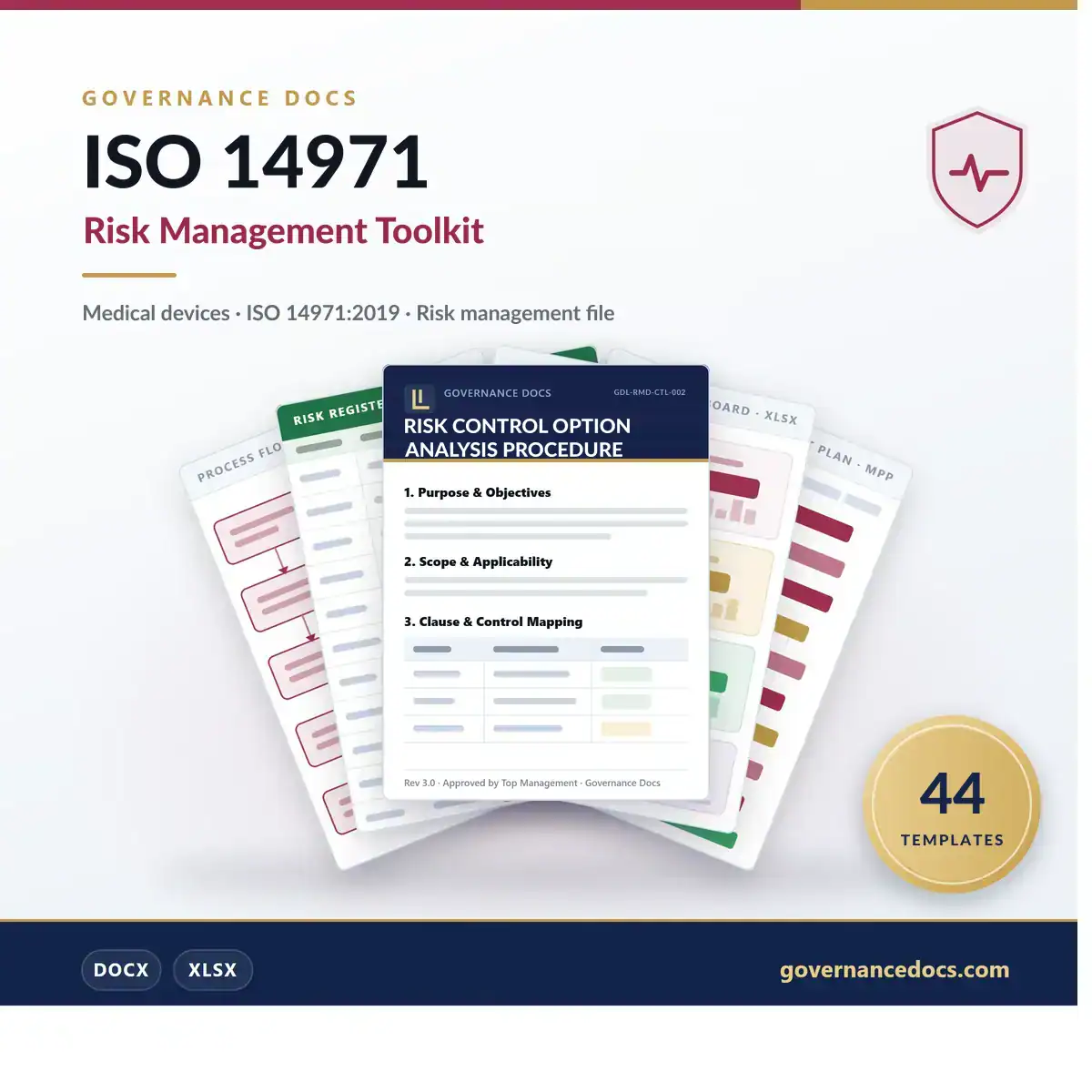
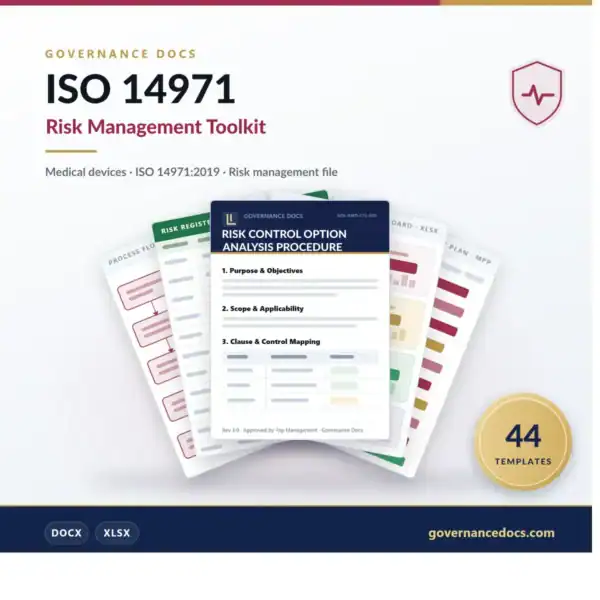
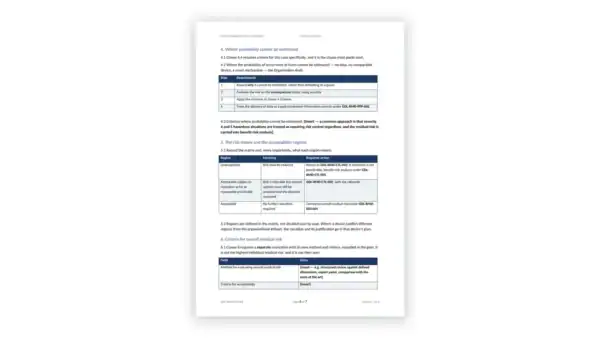
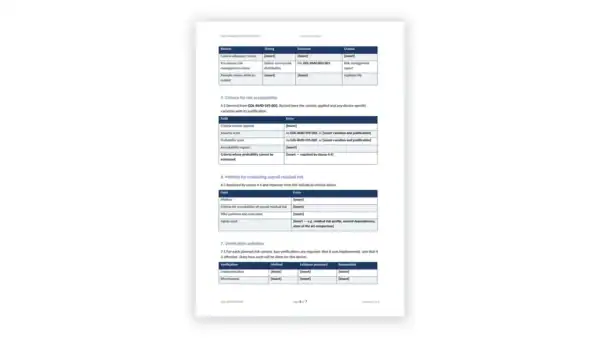
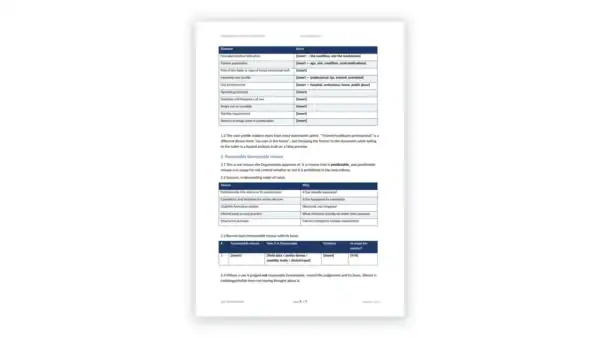
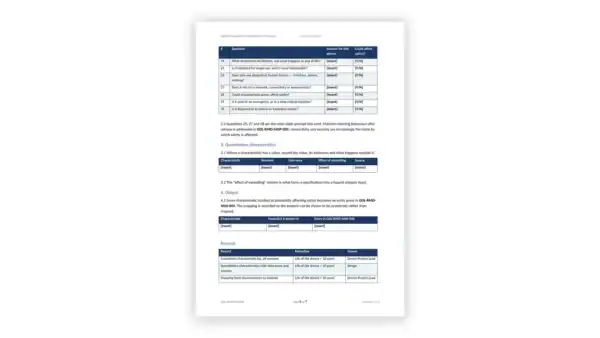
ISO 14971 Toolkit delivers 44 ready-to-use Microsoft Office templates covering every clause of ISO 14971:2019 — the risk management plan and file, intended use and misuse, hazard identification and estimation, the risk control hierarchy, benefit-risk analysis, overall residual risk, and the production and post-production loop. Built for medical device manufacturers who need a risk management file that survives review.
$99.00
✓ In stock — instant download after checkout
Every medical device manufacturer has to produce a risk management file. ISO 13485 clause 7.1 requires risk management throughout product realisation. EU MDR Annex I requires a risk management system and Annex II requires the plan and results in the technical documentation. FDA expects alignment with the standard. And the file is the first thing a notified body reviewer opens.
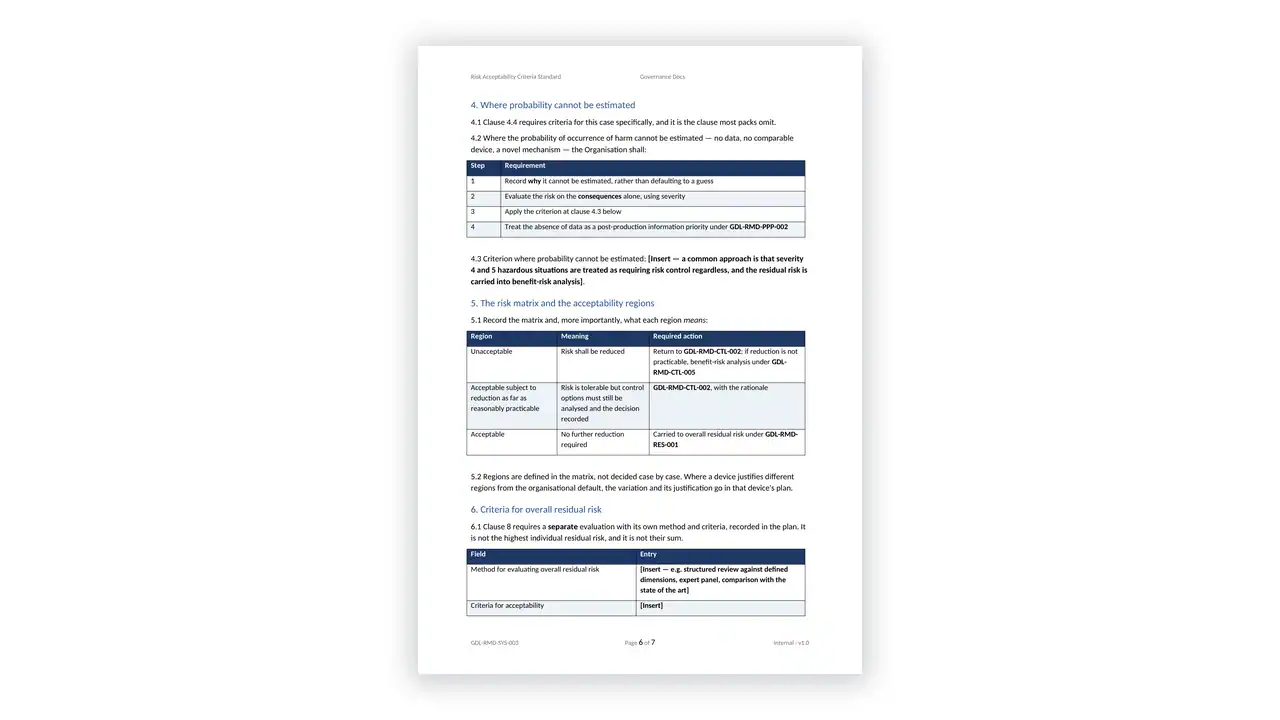
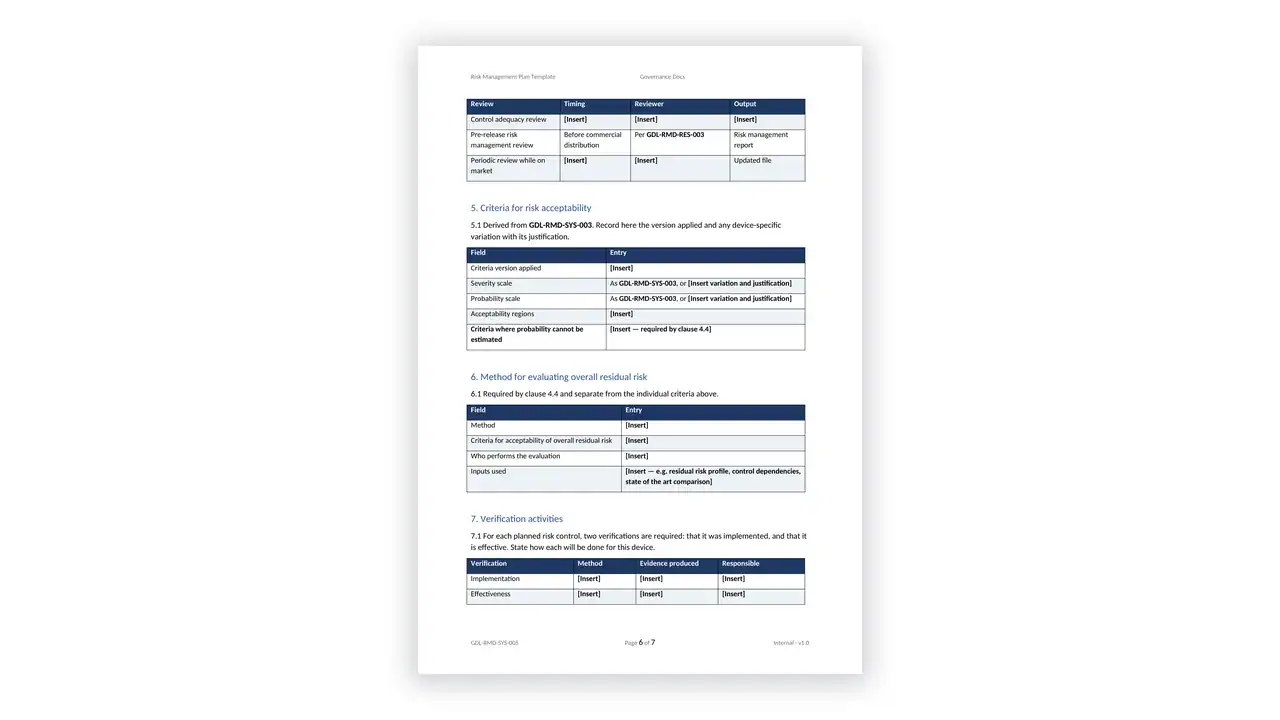
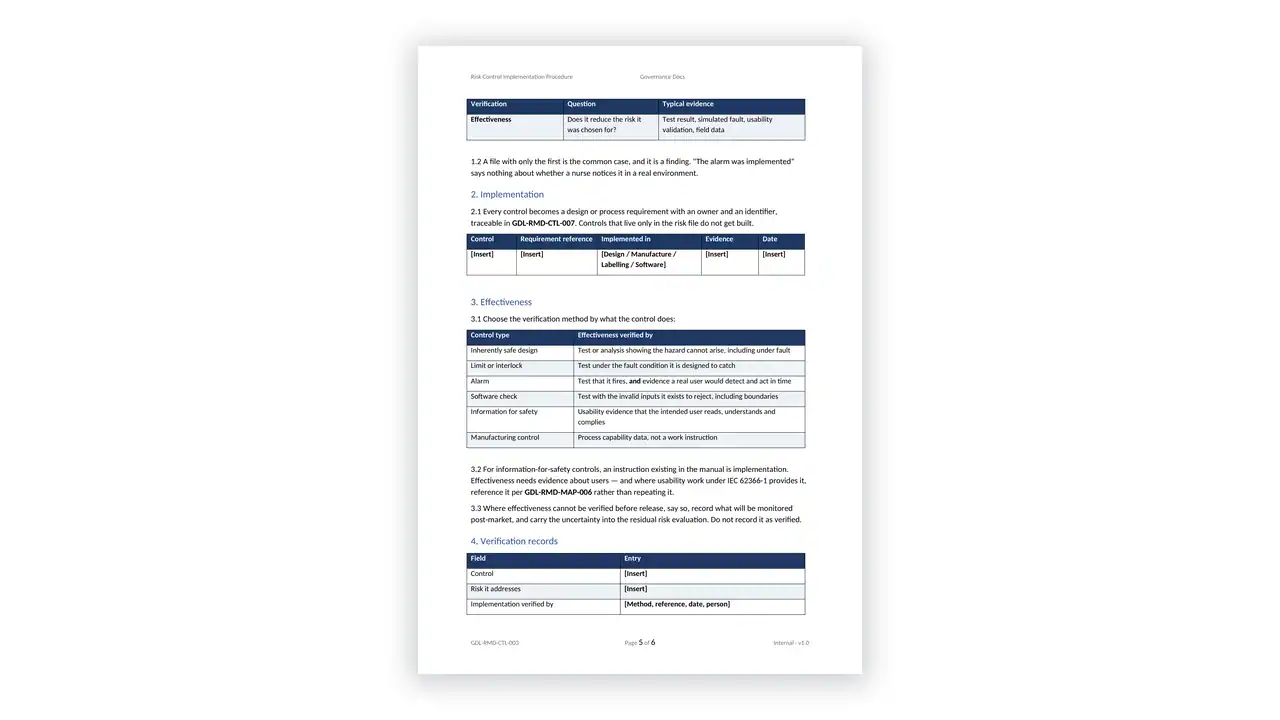
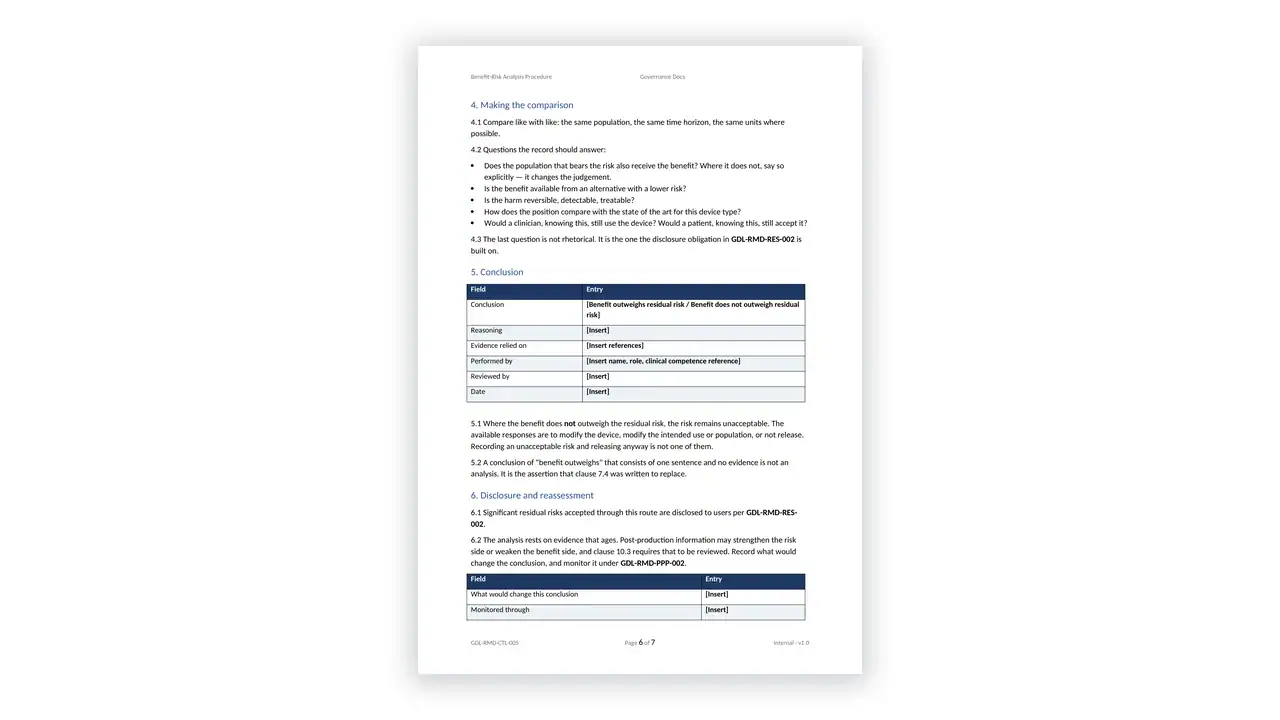
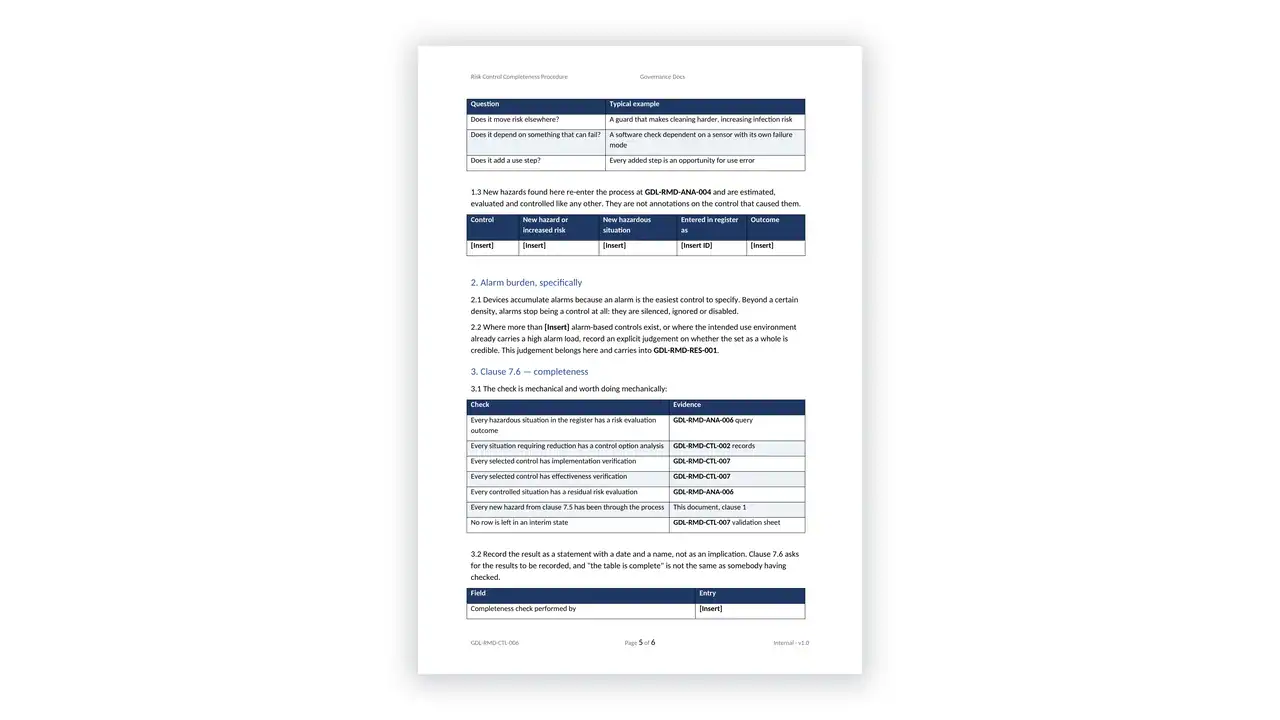
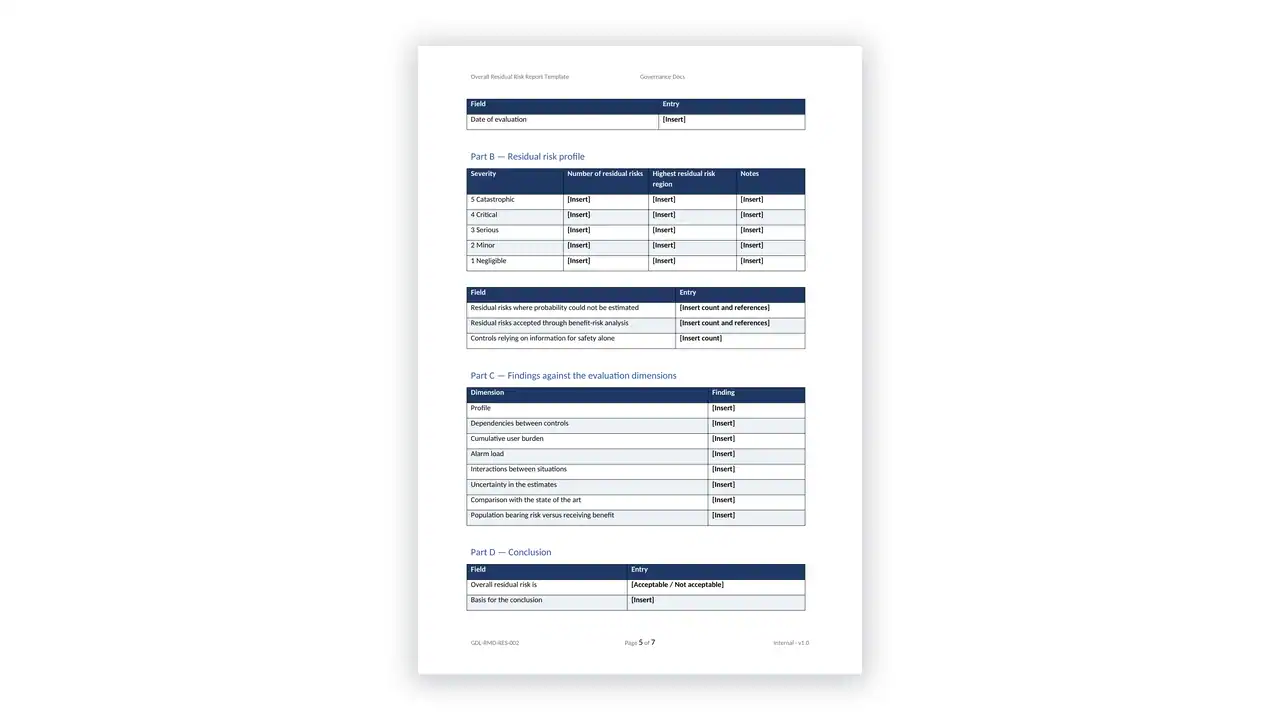
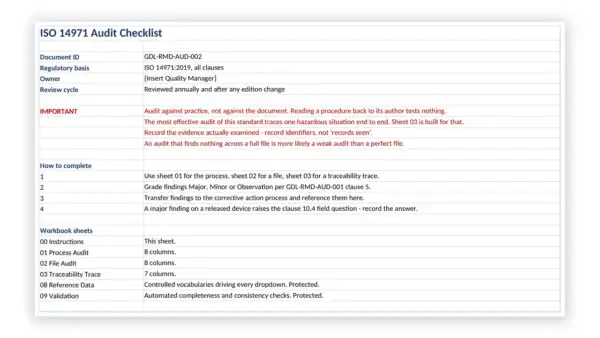
The ISO 14971 Toolkit is built around what that file actually has to demonstrate: traceability from each hazardous situation through to the residual risk evaluation, which is what clause 4.5 requires and what most files cannot produce.
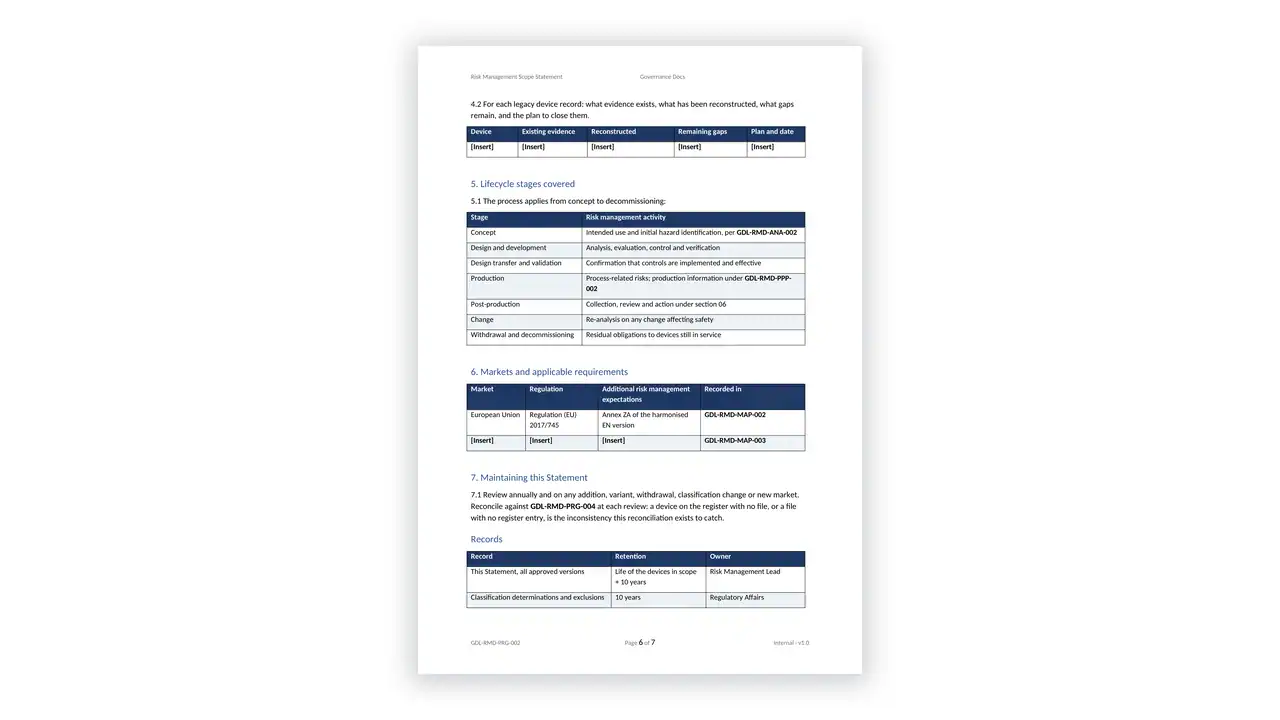
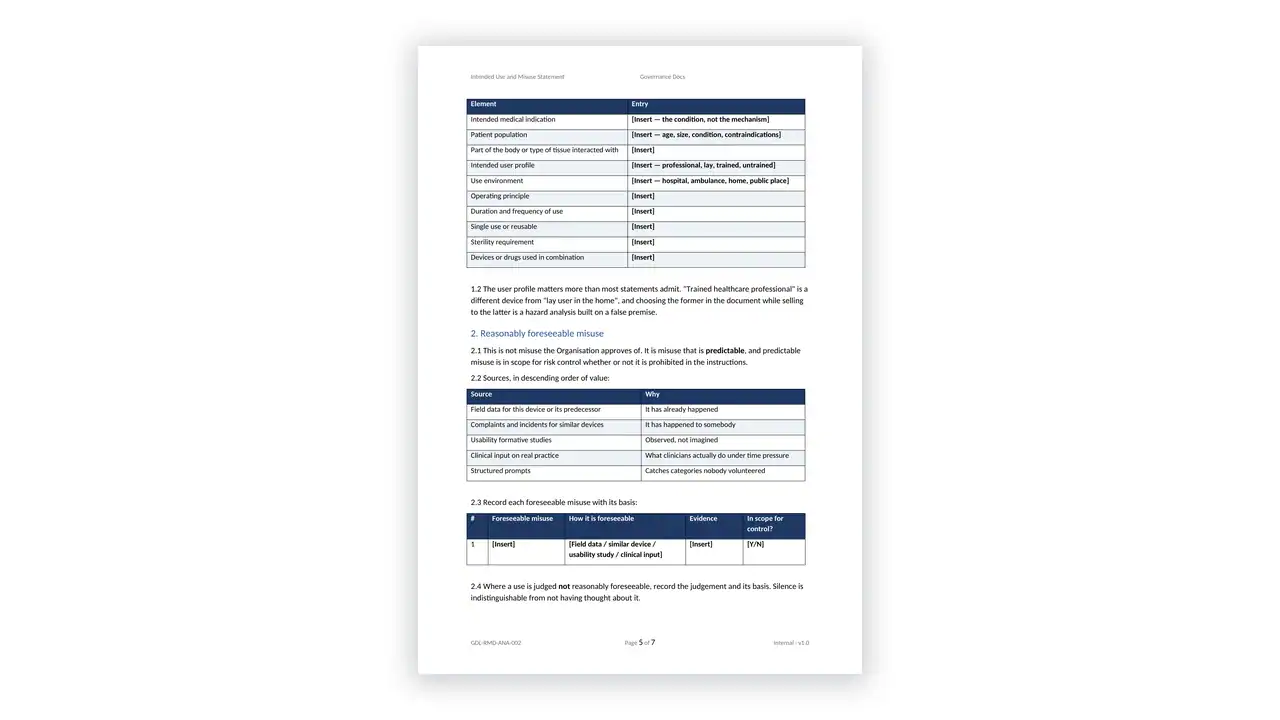
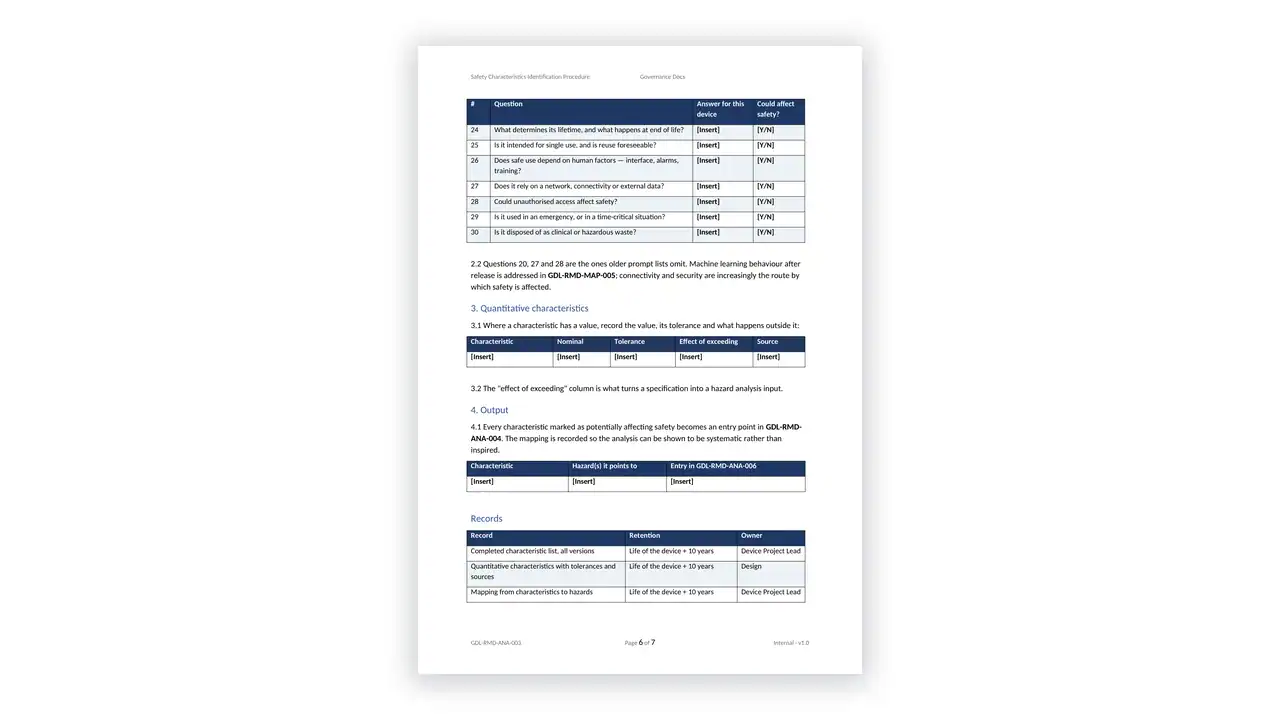
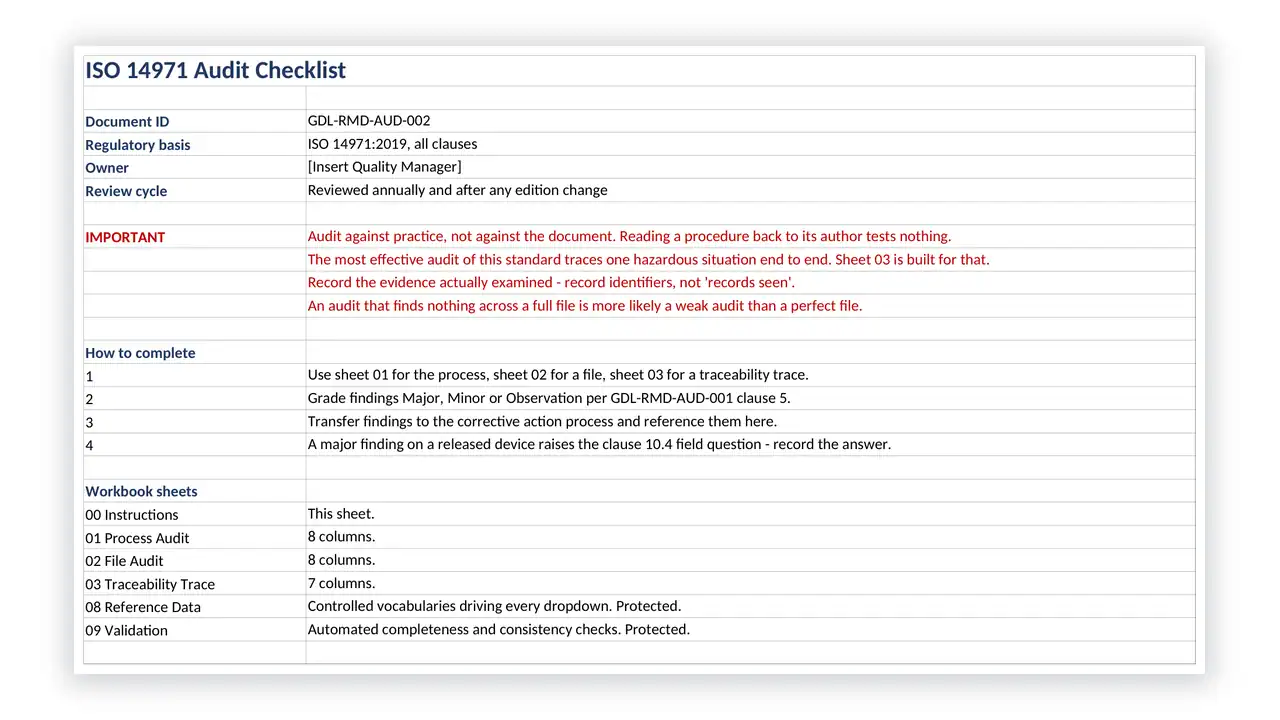
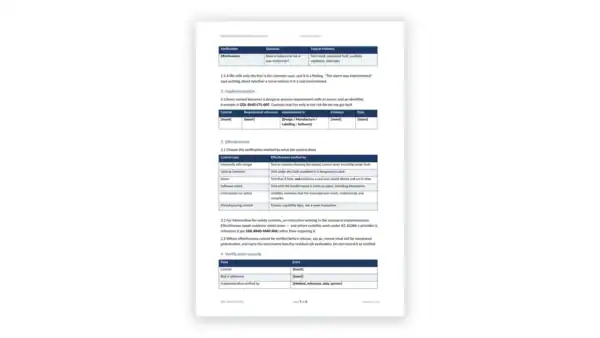
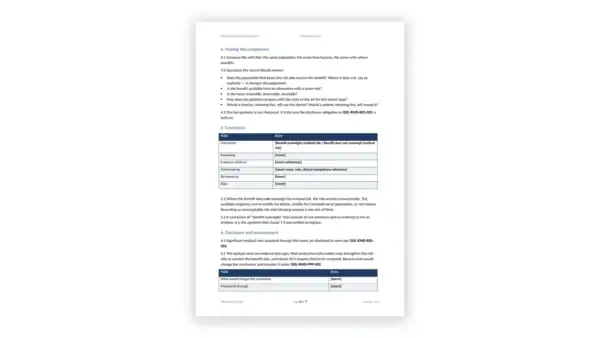
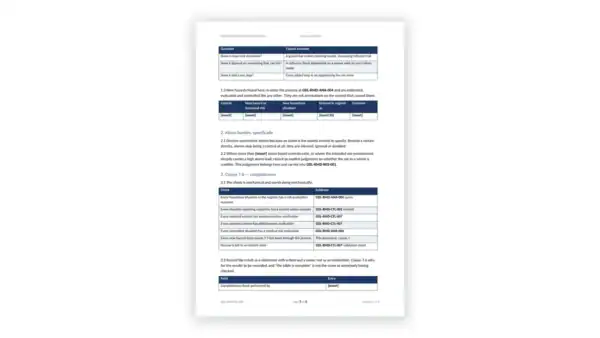
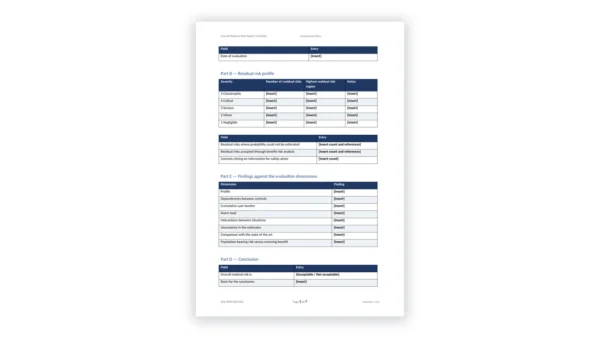
It contains 44 templates: 35 Word documents and 9 Excel registers, matrices and logs. Every document cites the clauses it implements, and every one is editable in Microsoft Office.
Risk management has two halves, and toolkits that ignore the distinction produce files that cannot be used. ISO 14971 requires a process applied across the organisation and a risk management file per device.
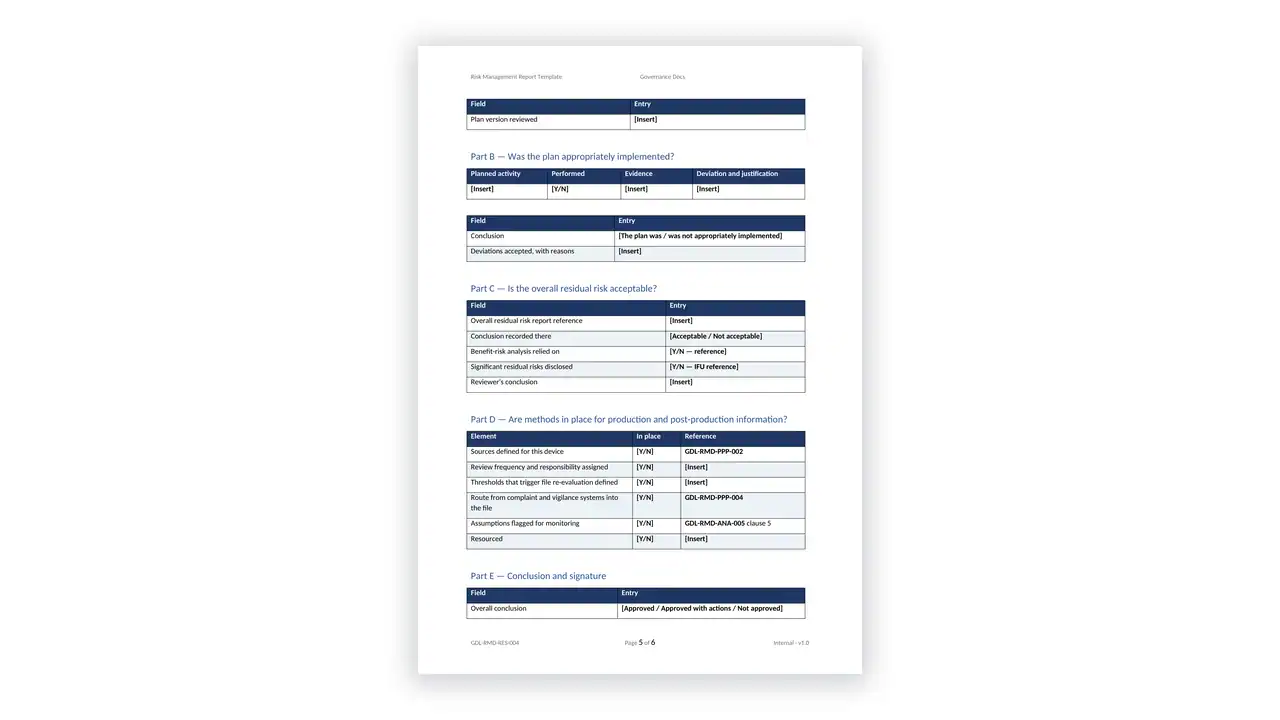
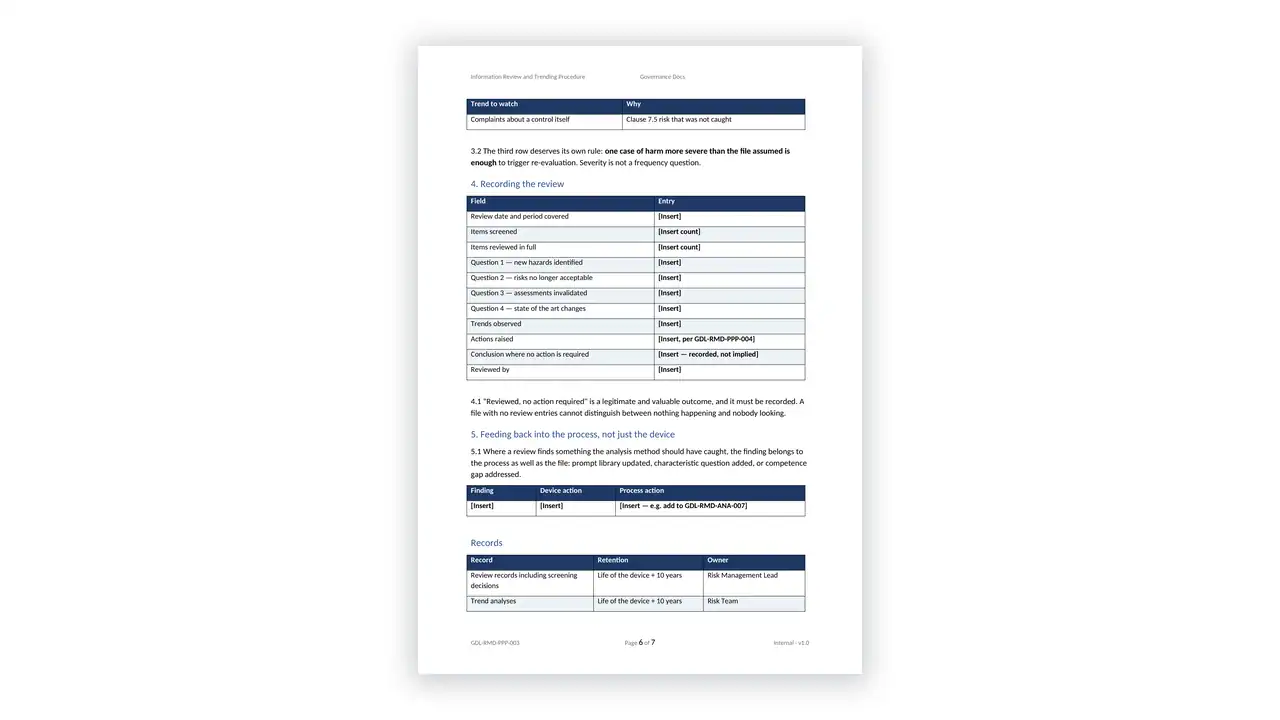
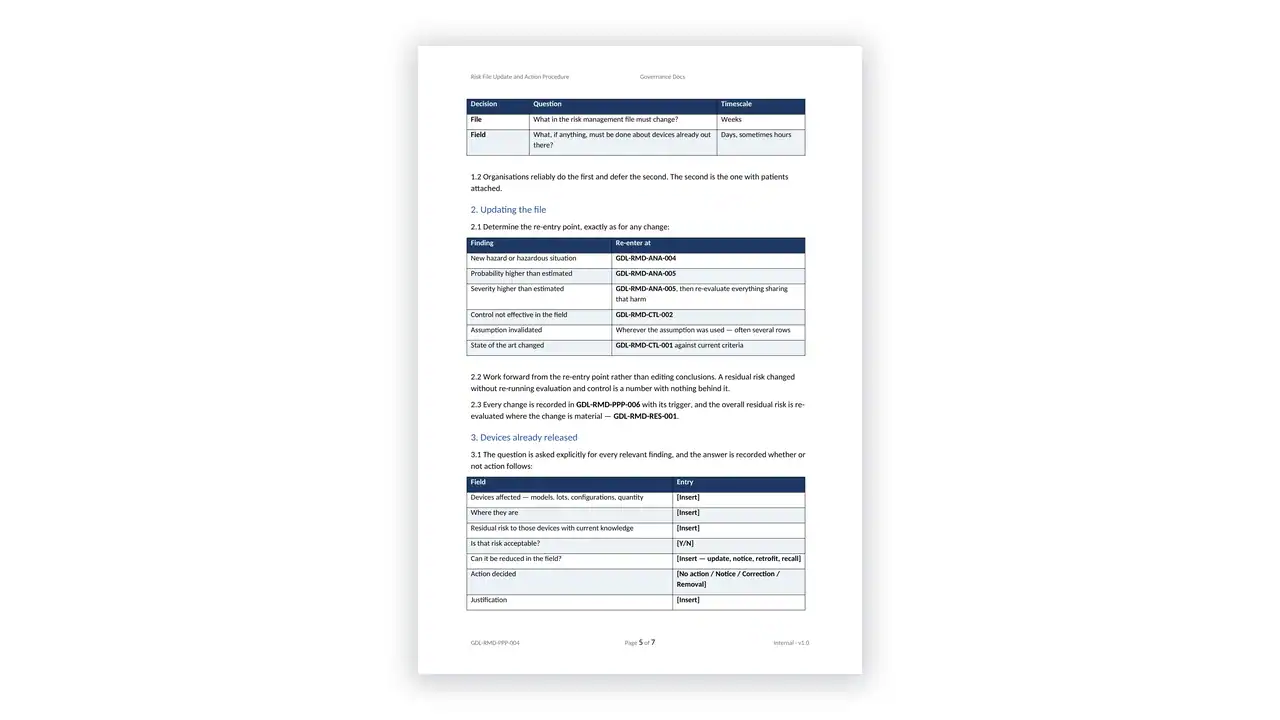
This toolkit marks every document as one or the other. Thirty are written once and applied to everything. Nine are instantiated for each device or device family — the plan, the intended use statement, the safety characteristics, the hazard analysis, the control traceability, the overall residual risk report, the risk management report, the post-production register and the change log. Five are both.
That single distinction prevents the most common structural error in this domain: one shared hazard analysis maintained across a whole portfolio, which cannot serve as evidence for any individual device.
Most risk management template packs are thin in the same four places, and all four are where files fail review:
ISO published ISO/TS 24971-2 in June 2026 — guidance on applying the ISO 14971 process to machine-learning enabled medical devices. It is the newest document in this area and no pack written before 2026 reflects it.
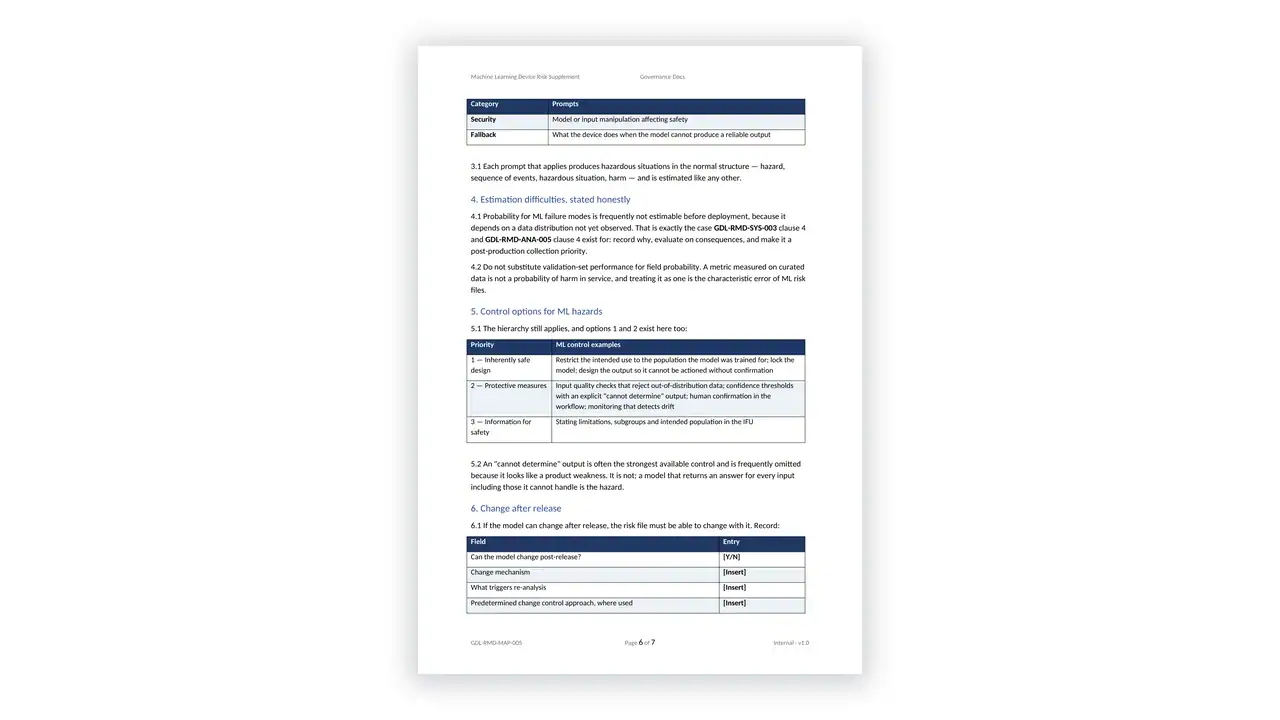
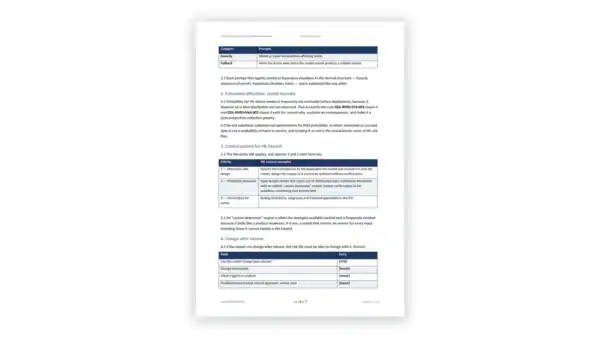
The toolkit includes a machine learning supplement covering the hazards specific to these devices: unrepresentative training data, subgroup performance, data and performance drift, automation bias, opacity, behaviour on out-of-distribution inputs, and change after release. Critically, it puts those hazards in the same hazard analysis as everything else, because a separate “AI risk assessment” produces a file that cannot be traced.
Suppliers routinely write “ISO 14971:2019/A11:2021” as though ISO published an amendment. It did not. ISO 14971:2019 is at edition 3 and was confirmed unchanged following systematic review in 2025.
A11:2021 is a CEN amendment to the European adoption. It adds the European foreword and Annex ZA, which maps the standard’s clauses to the General Safety and Performance Requirements in MDR Annex I and is what confers presumption of conformity. The technical requirements are identical.
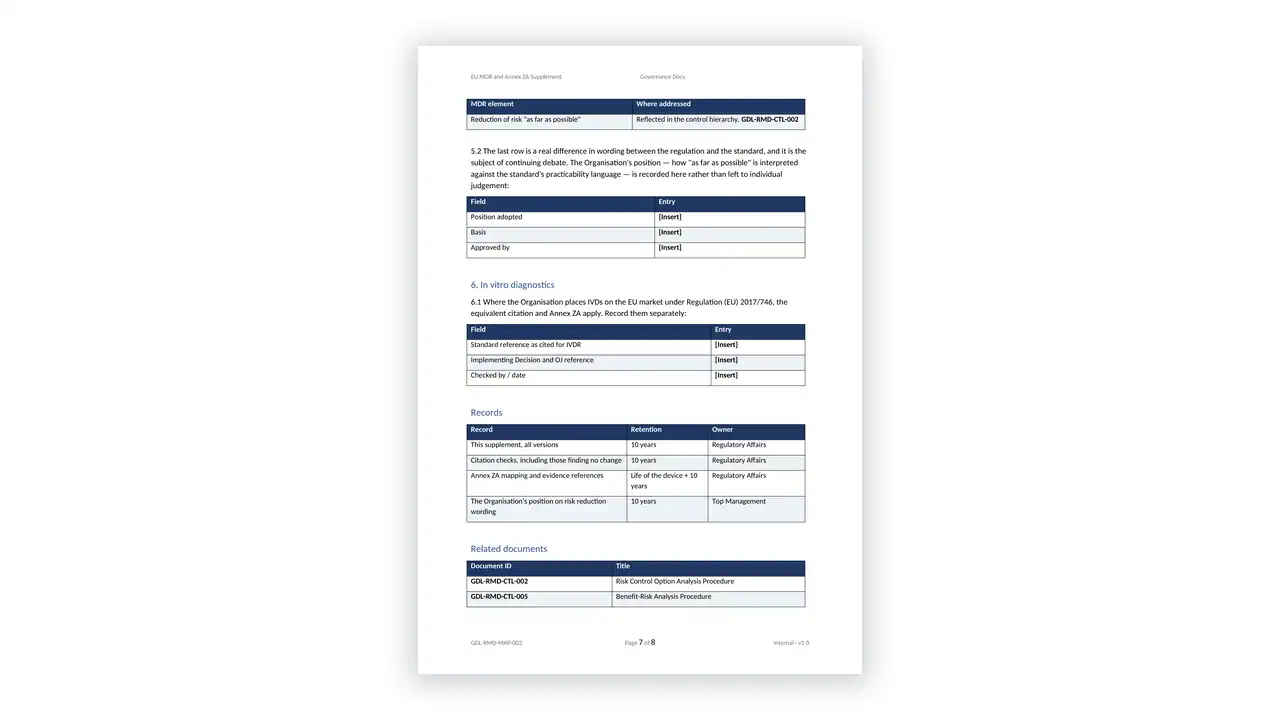
The toolkit’s EU supplement records that distinction, carries the Official Journal citation with its Implementing Decision and date, and includes a re-check field — because the harmonised standards list for the MDR has been amended roughly twice a year since 2021, and an undated conformity claim cannot be verified.
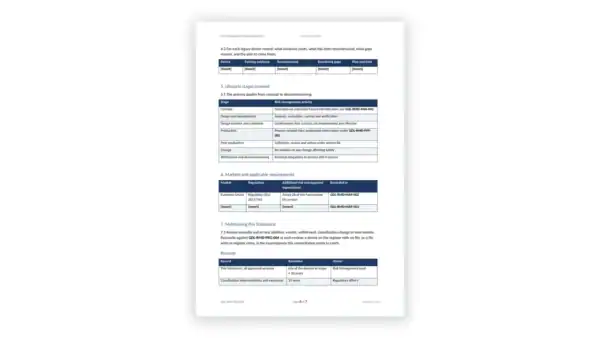
Risk management is not a standalone activity. The toolkit includes an integration guide mapping fourteen interfaces to ISO 13485 — design inputs, design review, verification, validation, transfer, purchasing, complaints, CAPA and management review — with one rule that prevents the usual mess: one record, one home. Where a record lives in the quality system, the risk file references it rather than copying it.
There is also a boundary note for IEC 62304 software lifecycle and IEC 62366-1 usability engineering, so those two files and this one reference each other instead of duplicating. Summative usability evaluation is often the only credible effectiveness evidence for an interface control, and the toolkit says where that evidence lands.
If you also need the quality system itself, our ISO 13485 Toolkit covers the medical device QMS that clause 7.1 sits inside.
Our guide to ISO 14971 explains what the risk management file has to demonstrate and the four places files reliably break.
Simply add your organisation’s name, replace the bracketed placeholder values with your own detail, and implement the documented policies and procedures within your operational framework.
It is a set of 44 ready-to-edit documentation templates covering every clause of ISO 14971:2019, the international standard for applying risk management to medical devices. It includes policies, procedures, registers, matrices and checklists across eight sections, from the risk management policy through to the assessment evidence pack.
ISO 14971:2019, the third edition. ISO reviewed and confirmed it in 2025, so it remains current with no revision in progress — the most settled of the medical device standards.
No, and this is widely misreported. ISO published no amendment. EN ISO 14971:2019/A11:2021 is a CEN amendment to the European adoption, adding the European foreword and Annex ZA — the mapping to EU MDR requirements that provides presumption of conformity. The technical requirements are unchanged. Manufacturers selling into the EU need the EN version with A11; the toolkit explains exactly why and what to check.
No. ISO 13485 is the quality management system; ISO 14971 is the risk management process that clause 7.1 of ISO 13485 requires. Most manufacturers need both, and the toolkit includes an integration guide so the two work together rather than duplicating each other.
It covers the risk management requirements that MDR relies on, and includes a supplement on Annex ZA, the Official Journal citation and the MDR elements that sit outside the risk file — technical documentation, post-market surveillance, PMCF and vigilance. It is not a full MDR documentation pack — for that, see the EU MDR Toolkit.
Yes. The toolkit includes a machine learning supplement reflecting ISO/TS 24971-2:2026, published in June 2026, covering training data, subgroup performance, drift, automation bias and change after release — integrated into the main hazard analysis rather than treated as a separate assessment.
35 Microsoft Word documents and 9 Microsoft Excel workbooks. The Word documents carry a table of contents, document control fields and a consistent structure; the workbooks include instruction sheets, controlled dropdown lists, worked example rows, conditional formatting and validation checks. Nothing is locked and no password is required.
Yes. This toolkit implements the standard; it does not reproduce it, and no toolkit legitimately can. Buy the standard from ISO or a national member body, and for the EU market obtain the EN version including the A11 amendment for Annex ZA.
 Comprehensive ISO 14971 Toolkit – 44 Risk Management Templates$99.00


Reviews
There are no reviews yet