Description
About the BSI C5:2026 Cloud Toolkit
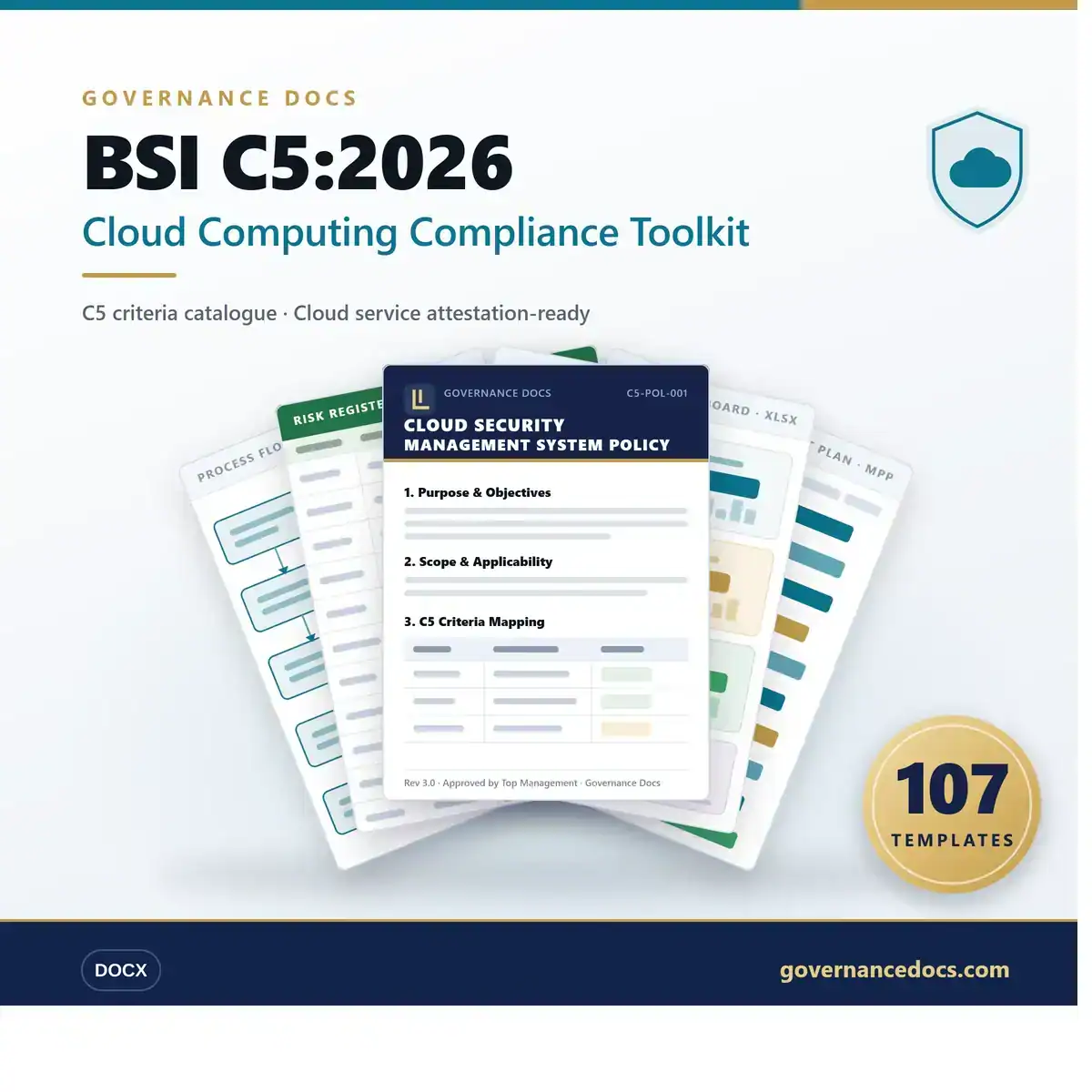
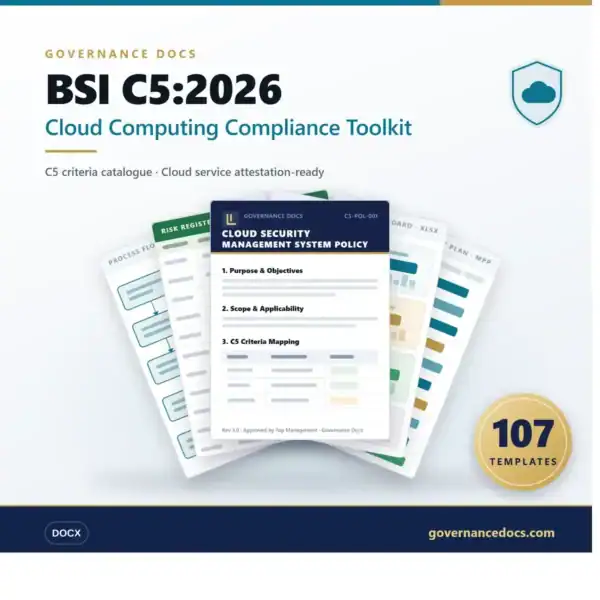
BSI C5 is how cloud providers prove their security to the German market: the Cloud Computing Compliance Criteria Catalogue, published by Germany’s Federal Office for Information Security, is assessed through an ISAE 3000 audit and increasingly expected by public-sector and enterprise buyers. This toolkit provides 107 templates aligned to the C5:2026 criteria — covering cloud security policies across every control area, organisation of information security, physical and operational controls, cryptography, and the audit-evidence records a C5 attestation examines. Each document is written to the C5 basic and additional criteria so your evidence lines up with how the audit is scoped. Everything is editable in Microsoft Office and ready to reflect your cloud service.
The Cloud Computing Compliance Criteria Catalogue (C5) is a framework developed by Germany’s Federal Office for Information Security (BSI) to establish minimum security requirements for cloud services — particularly those used by German federal authorities and regulated industries. C5:2026 is the current iteration of the catalogue, expanding on earlier versions to address evolving threats including supply chain risks, confidential computing, and sovereign cloud requirements. C5 attestation is increasingly required by German public sector bodies and heavily regulated sectors such as financial services, healthcare, and critical infrastructure operators procuring cloud services.
What is included in the toolkit?
- 107 documentation templates covering policies, procedures, standards, registers, checklists, matrices, and governance documents aligned to all 17 BSI C5:2026 domains
- All files provided in Microsoft Office format (.docx, .xlsx) — fully editable and customisable to your organisation’s cloud environment
- Instant download available immediately after purchase — no waiting, no shipping
107 BSI C5:2026 Documentation Templates
This C5 documentation package delivers comprehensive coverage of every domain required for BSI C5:2026 attestation, plus 10 cross-domain governance documents addressing audit procedures, gap analysis, continual improvement, data sovereignty, and confidential computing. Each template is structured for practical use, with clear headings, editable placeholder fields, and direct alignment to the specific criteria defined in the BSI C5:2026 catalogue.
Toolkit Structure
The toolkit is organised into the following document categories:
- Governance & Risk Management — 9 documents
- Security Policies & Human Resources — 10 documents
- Asset Management & Physical Security — 11 documents
- Cloud Operations & Vulnerability Management — 10 documents
- Identity & Access Management — 7 documents
- Cryptography & Communications Security — 11 documents
- Cloud Portability & Supply Chain Security — 10 documents
- Incident Management & Business Continuity — 13 documents
- Compliance & Investigative Request Management — 8 documents
- Product Security & Secure Development — 8 documents
- Cross-Domain & Audit Governance — 10 documents
List of Documentation Toolkit:
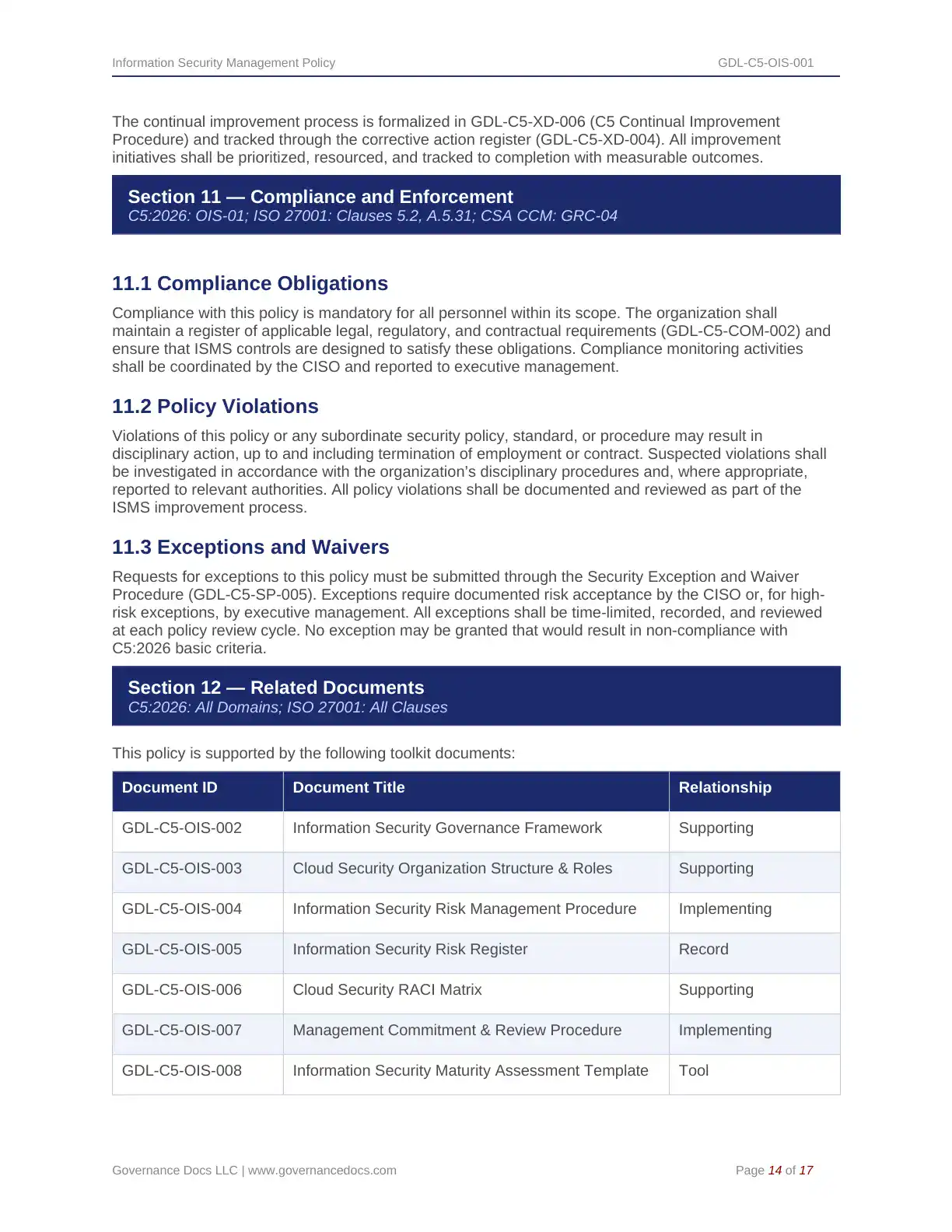
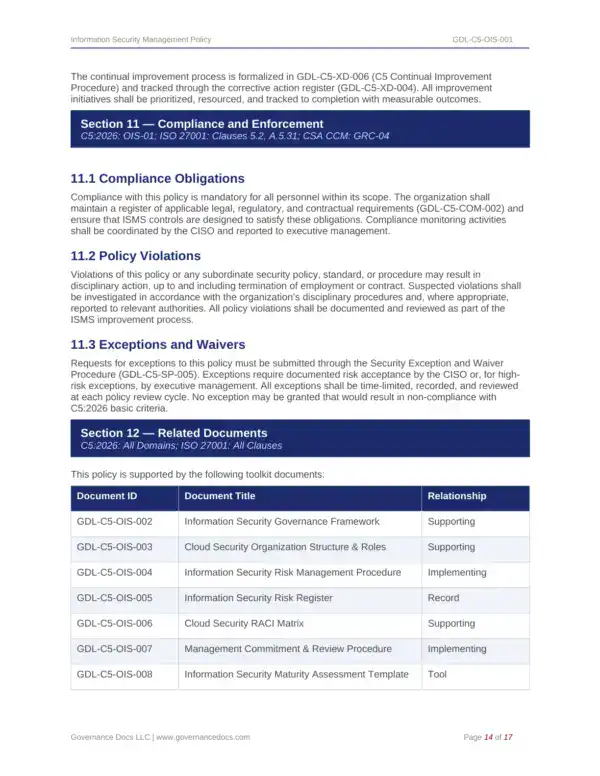
- Information Security Management Policy
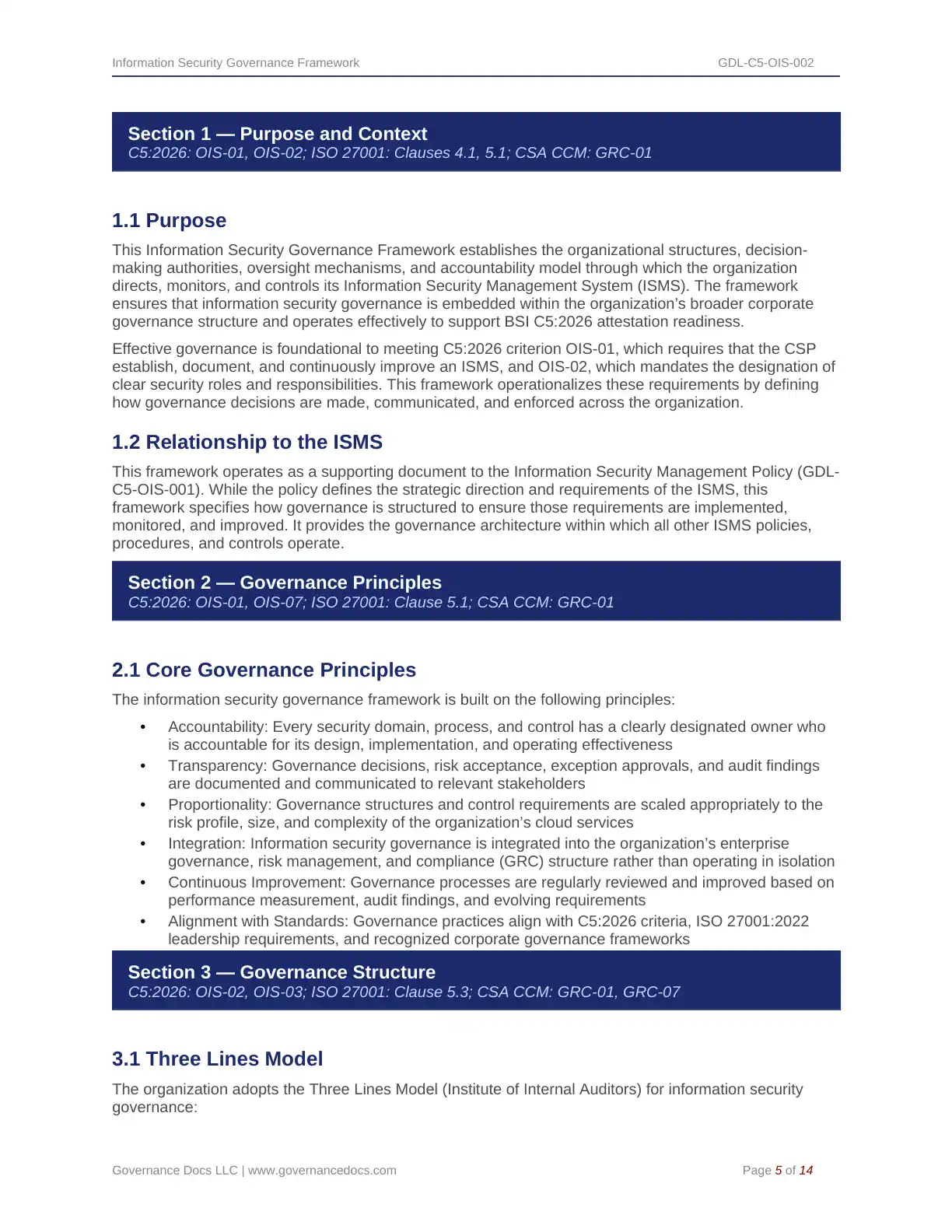
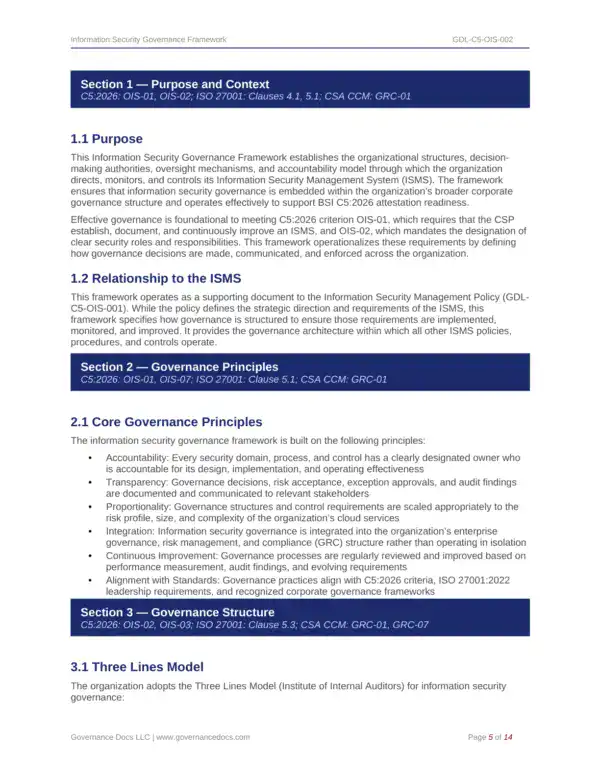
- Information Security Governance Framework
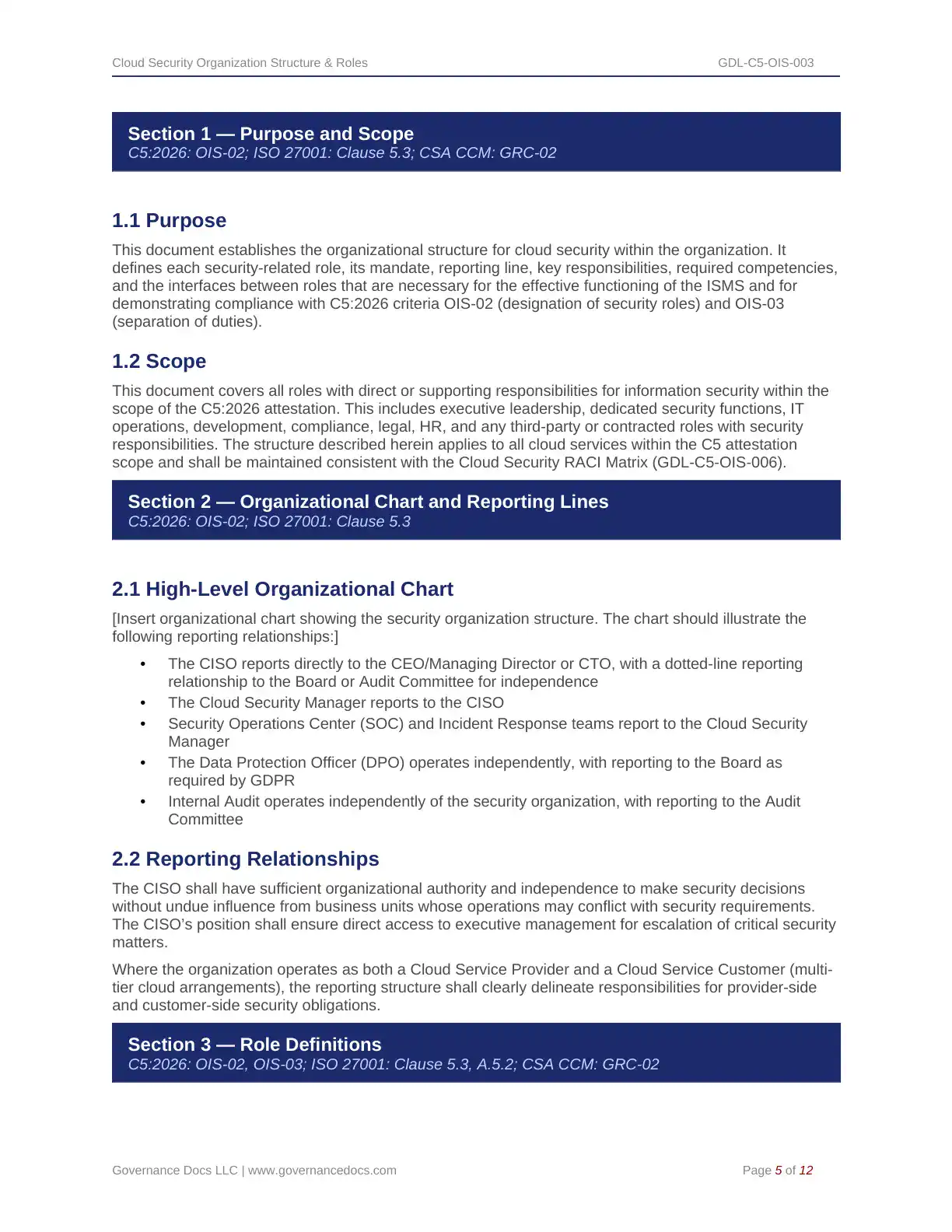
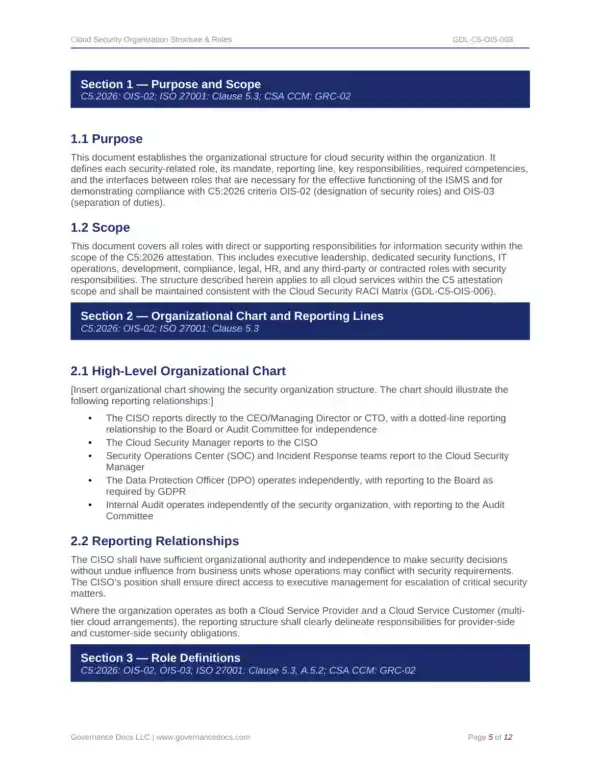
- Cloud Security Organization Structure & Roles
- Information Security Risk Management Procedure
- Information Security Risk Register
- Cloud Security RACI Matrix
- Management Commitment & Review Procedure
- Information Security Maturity Assessment Template
- Information Security Performance Metrics & KPI Register
- Security Policy Framework & Master Policy
- Acceptable Use Policy
- Security Policy Review & Communication Procedure
- Cloud Service Work Instructions Template
- Security Exception & Waiver Procedure
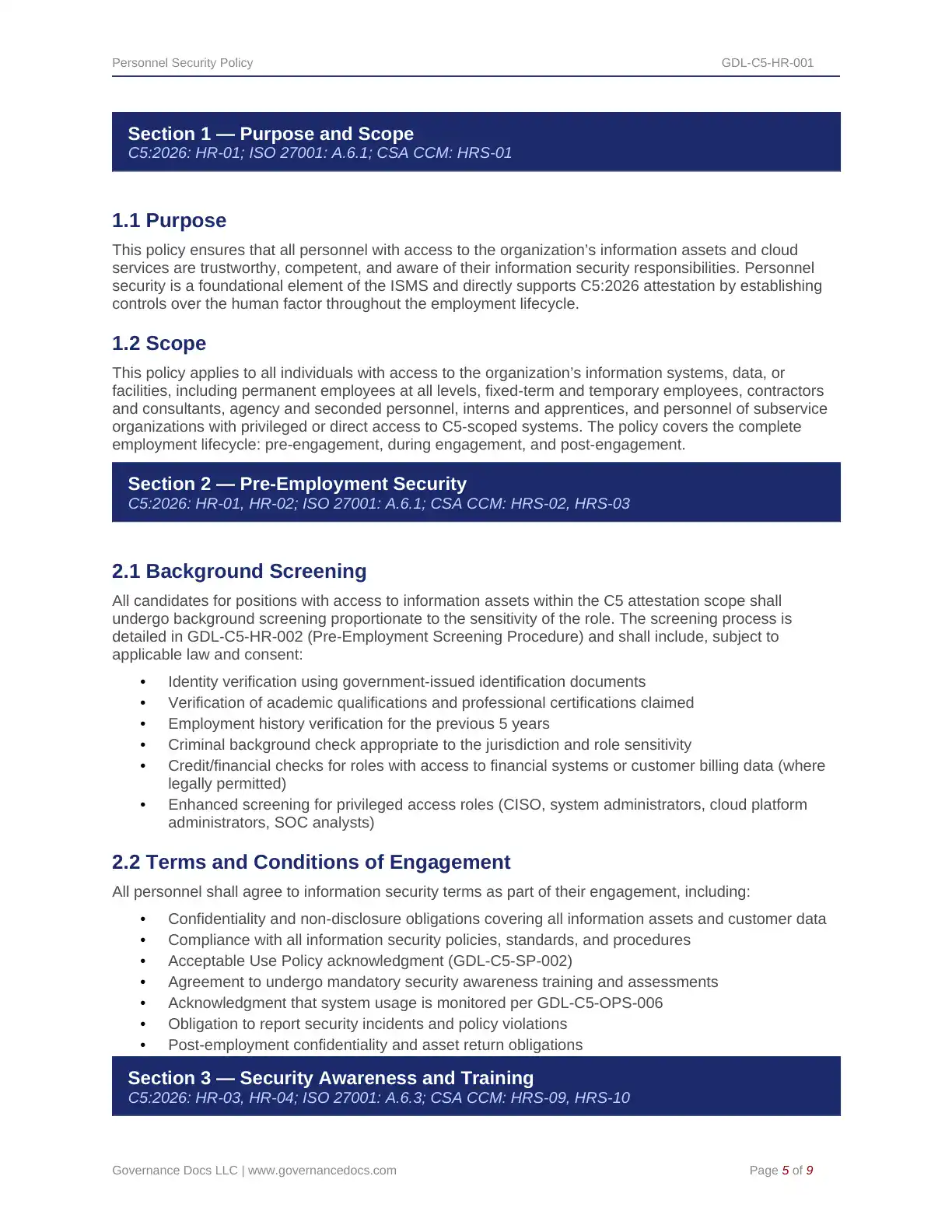
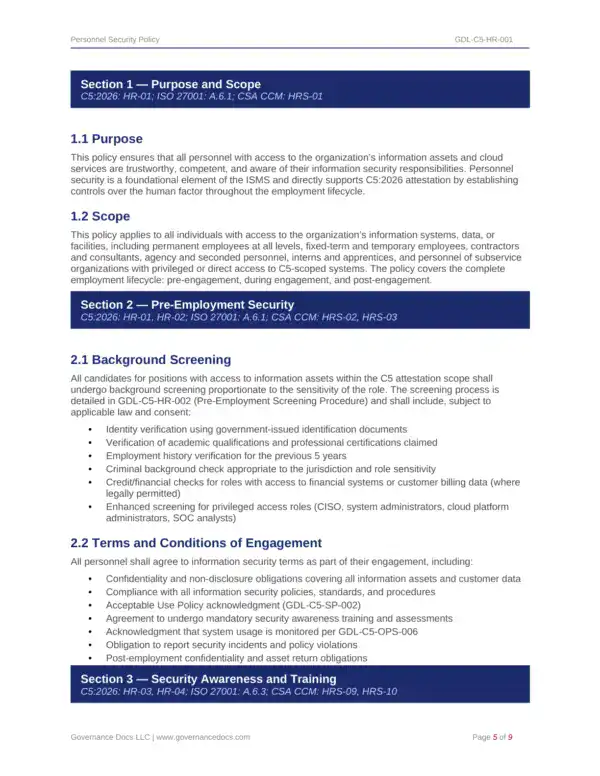
- Personnel Security Policy
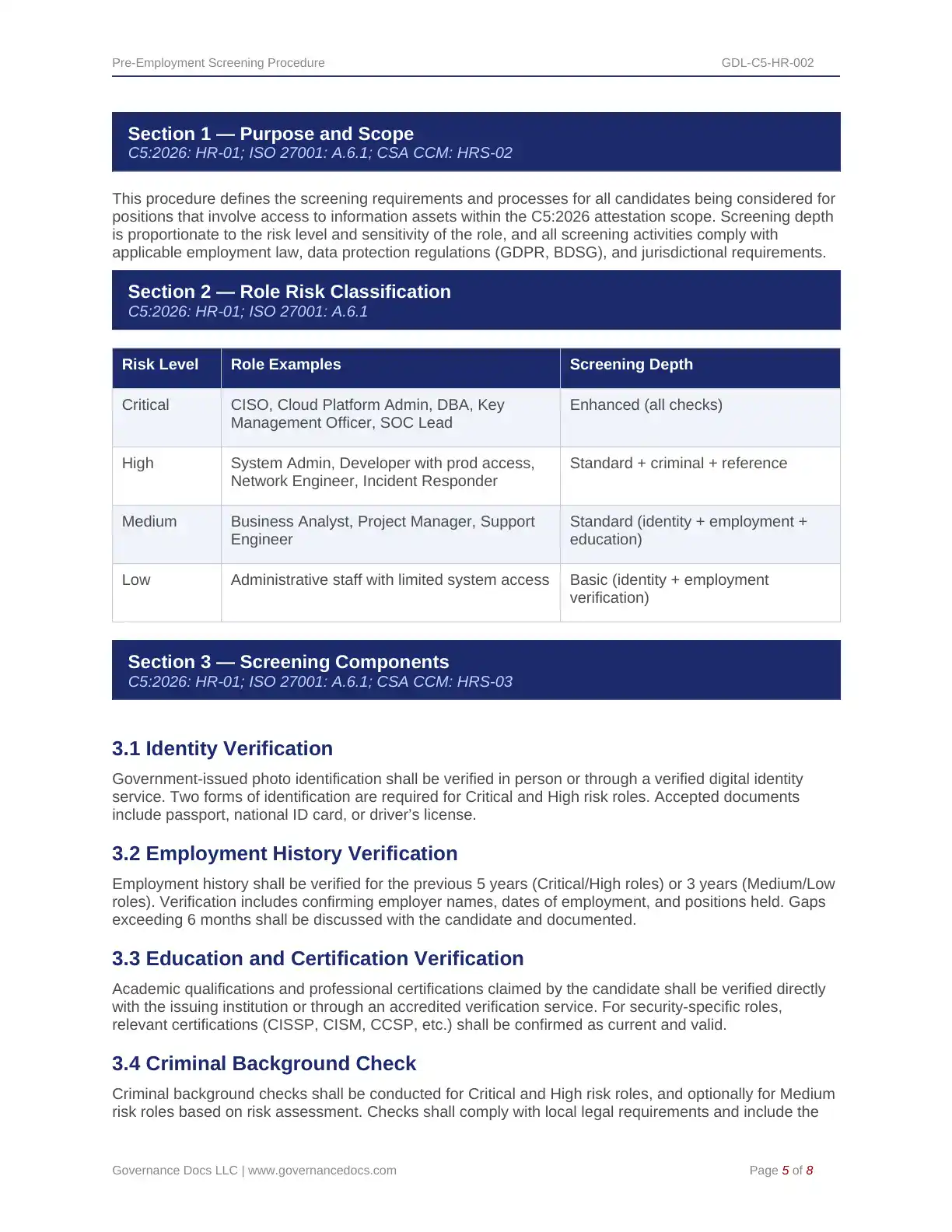
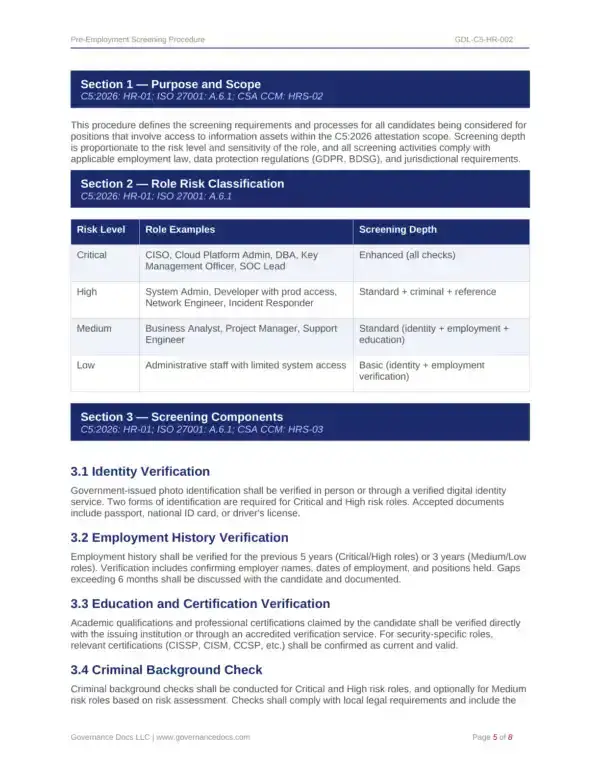
- Pre-Employment Screening Procedure
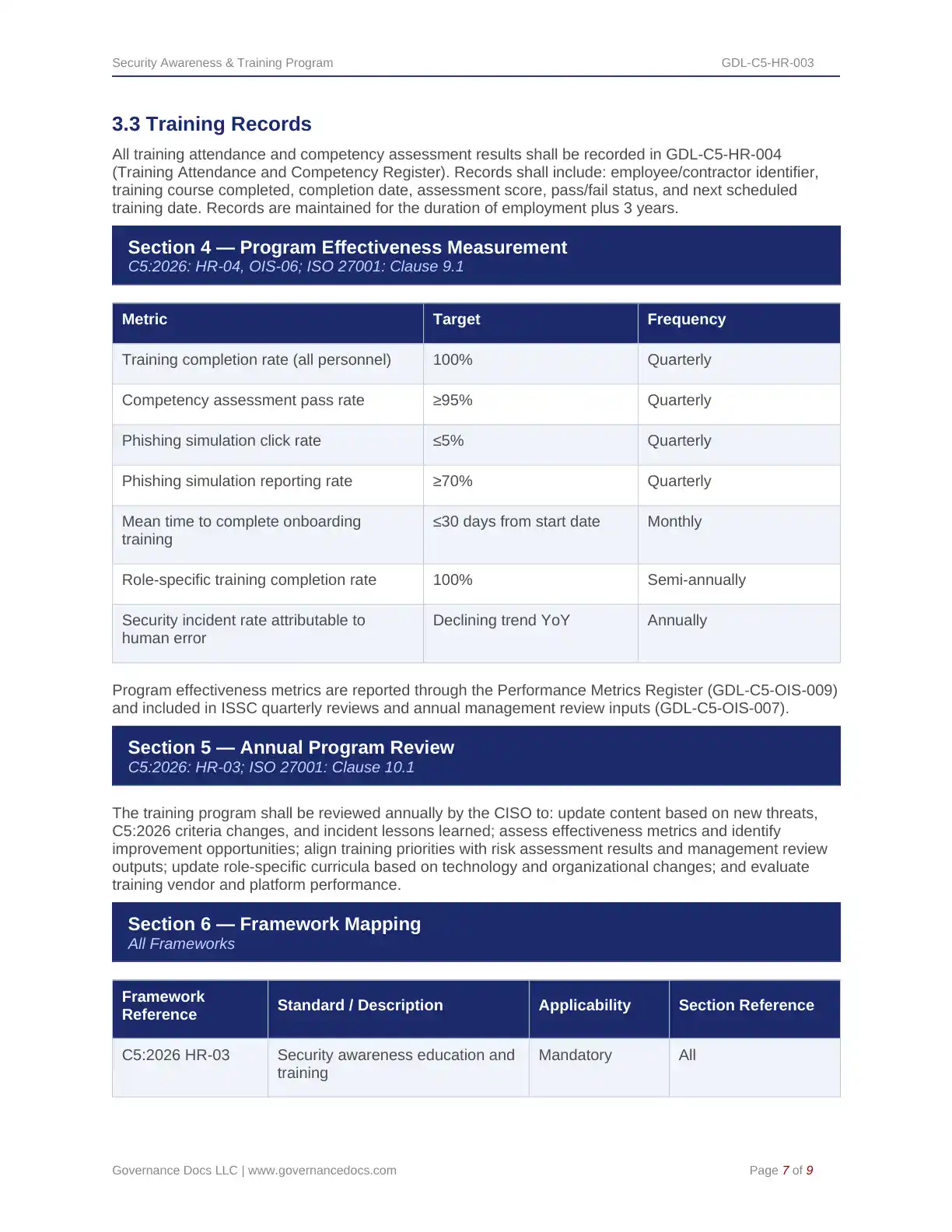
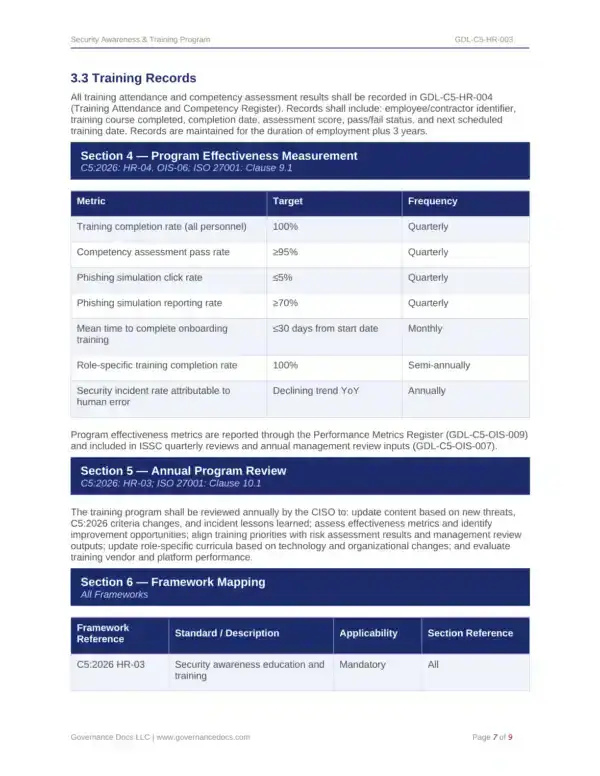
- Security Awareness & Training Program
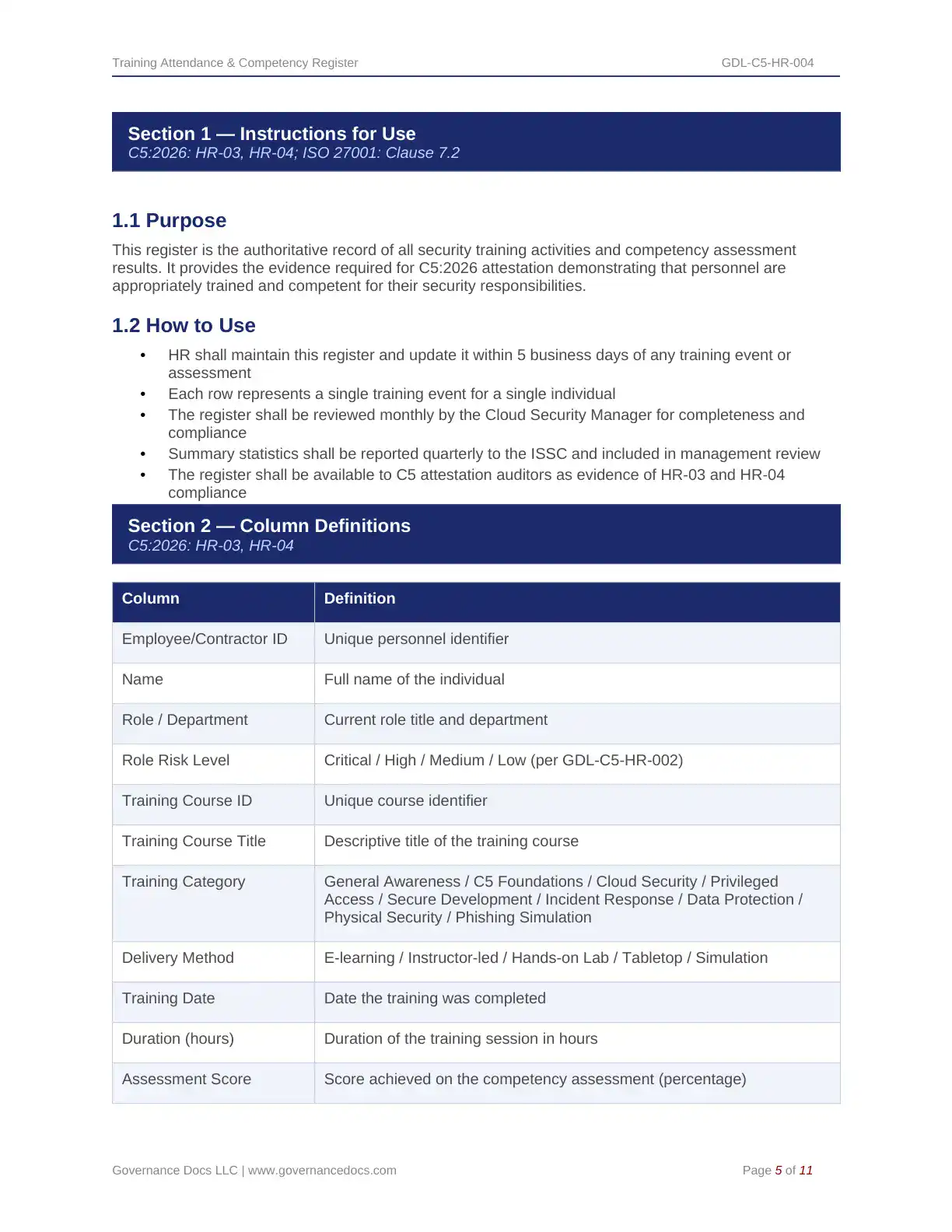
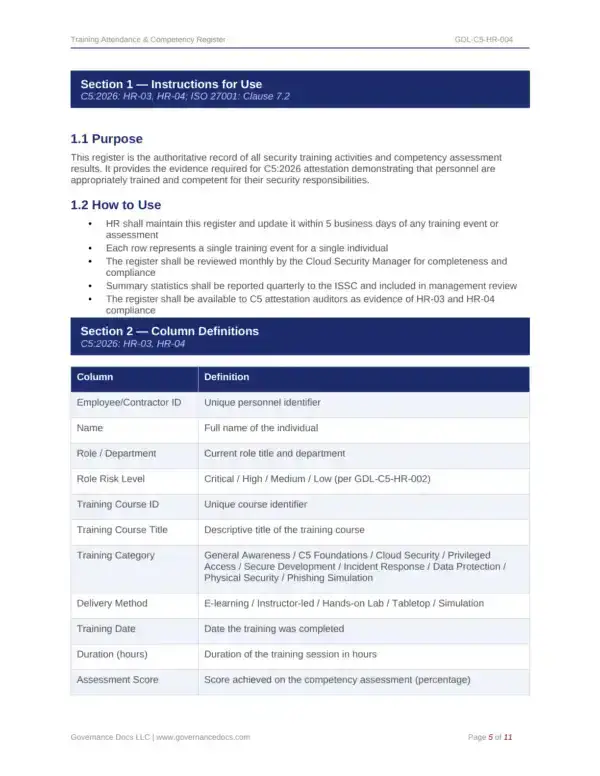
- Training Attendance & Competency Register
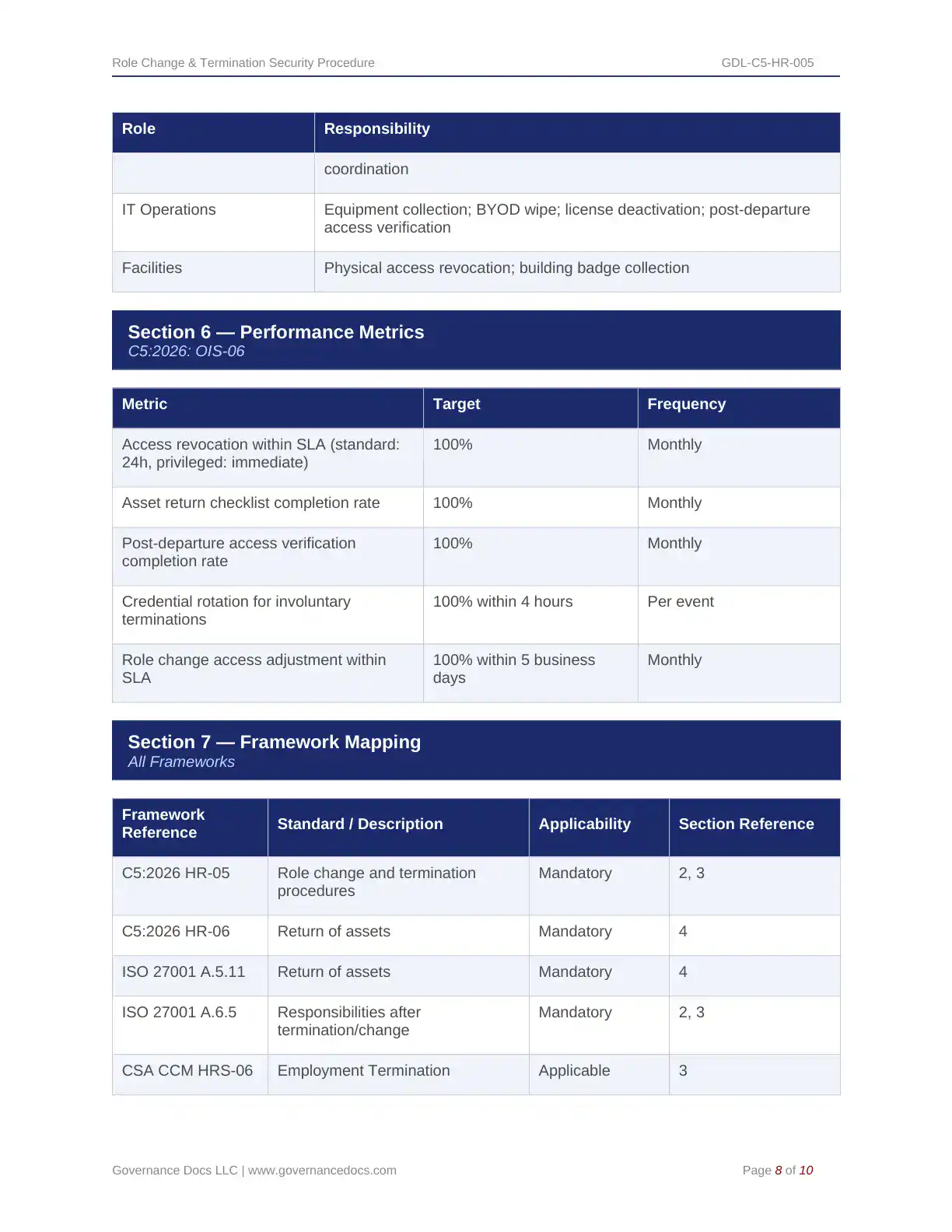
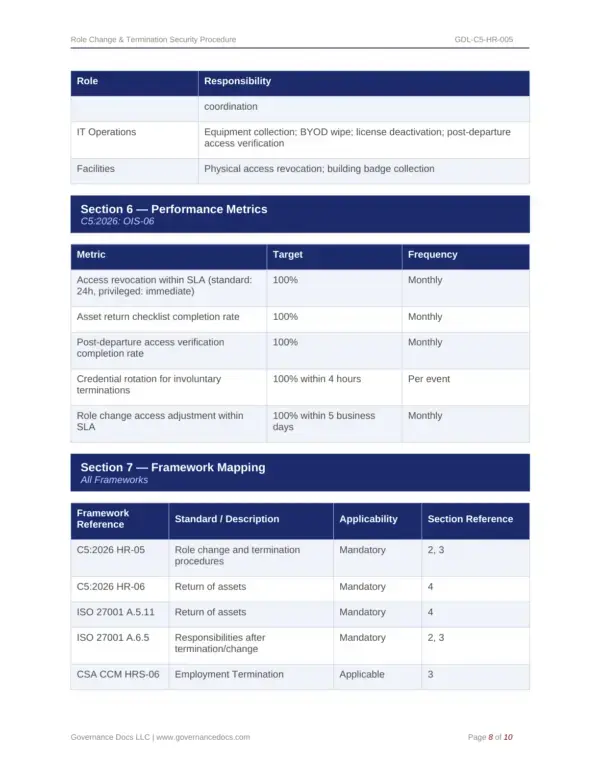
- Role Change & Termination Security Procedure
- Asset Management Policy
- Cloud Asset Inventory & Classification Procedure
- Asset Classification Matrix
- Media Handling & Disposal Procedure
- Asset Register Template
- Physical and Environmental Security Policy
- Data Center Physical Access Control Procedure
- Environmental Protection & Monitoring Procedure
- Equipment Security & Maintenance Procedure
- Visitor Management Procedure
- Physical Security Inspection Checklist
- Cloud Operations Security Policy
- Change Management Procedure
- Capacity Management Procedure
- Malware Protection Procedure
- Backup & Recovery Procedure
- Logging & Monitoring Procedure
- Clock Synchronization & Log Integrity Standard
- Vulnerability Management Procedure
- Patch Management Procedure
- Container Management & Security Procedure
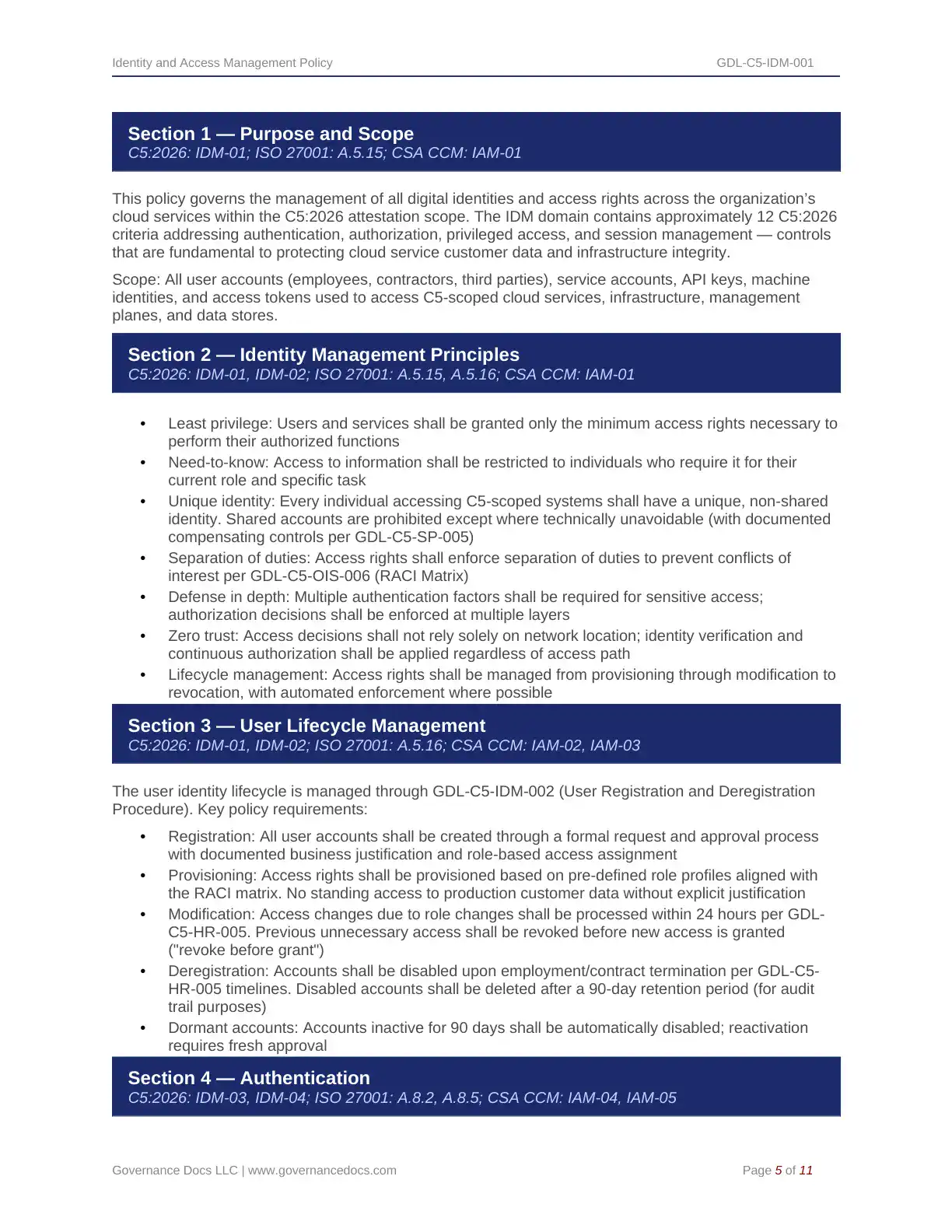
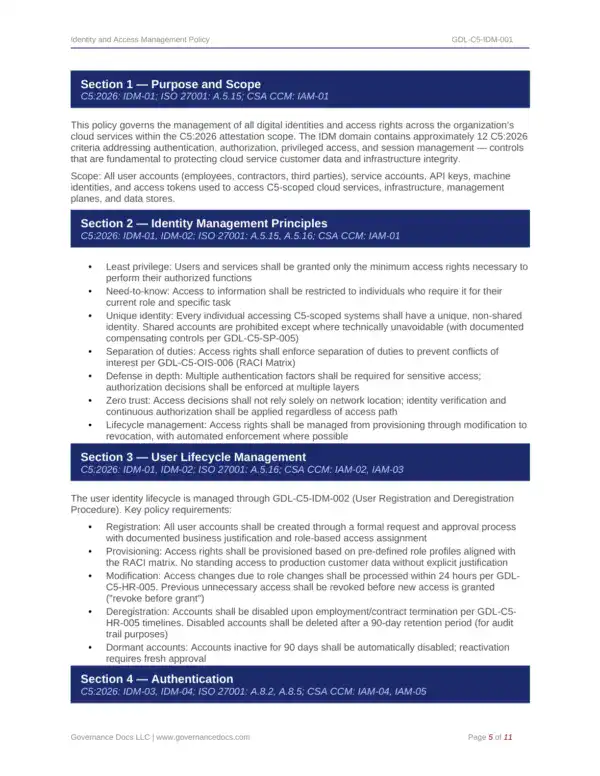
- Identity and Access Management Policy
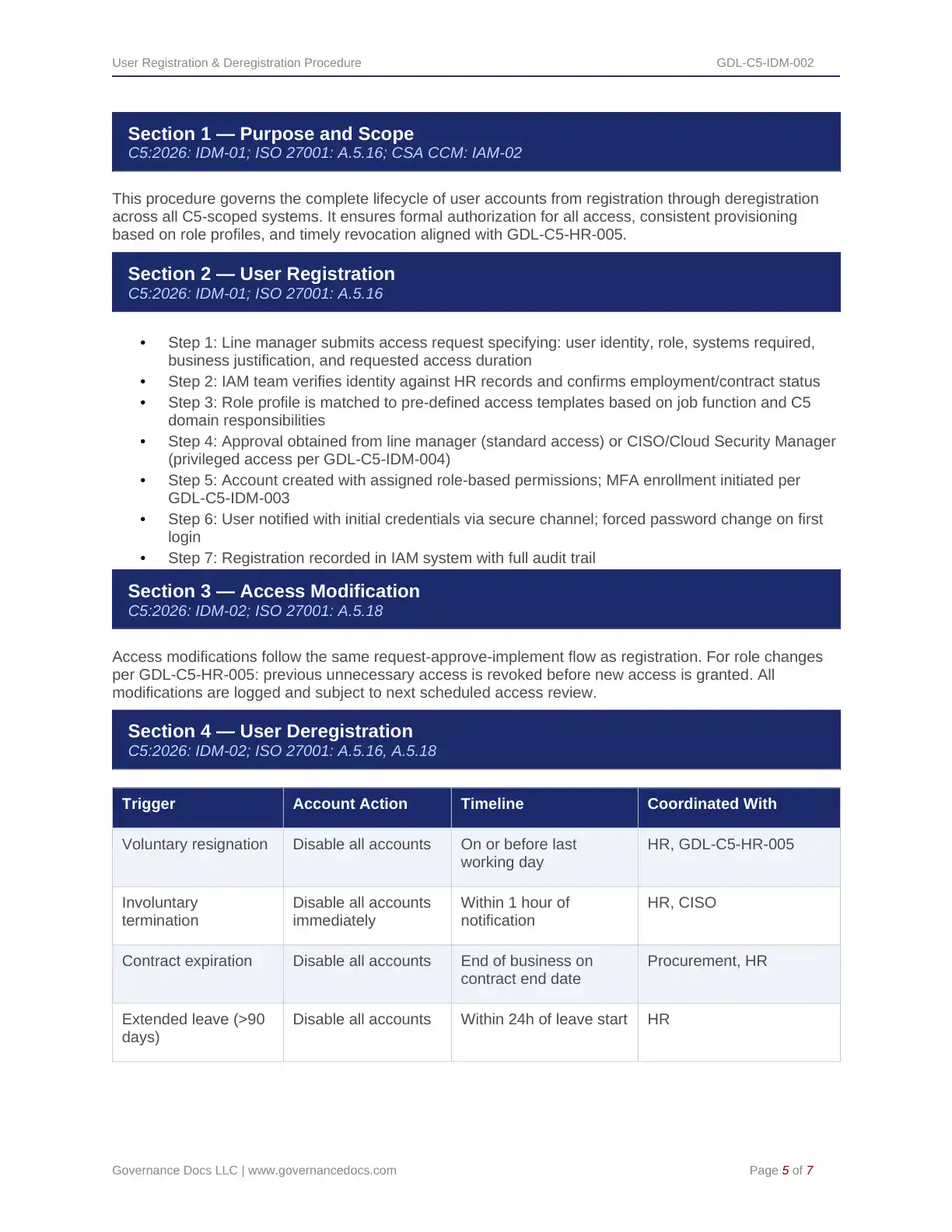
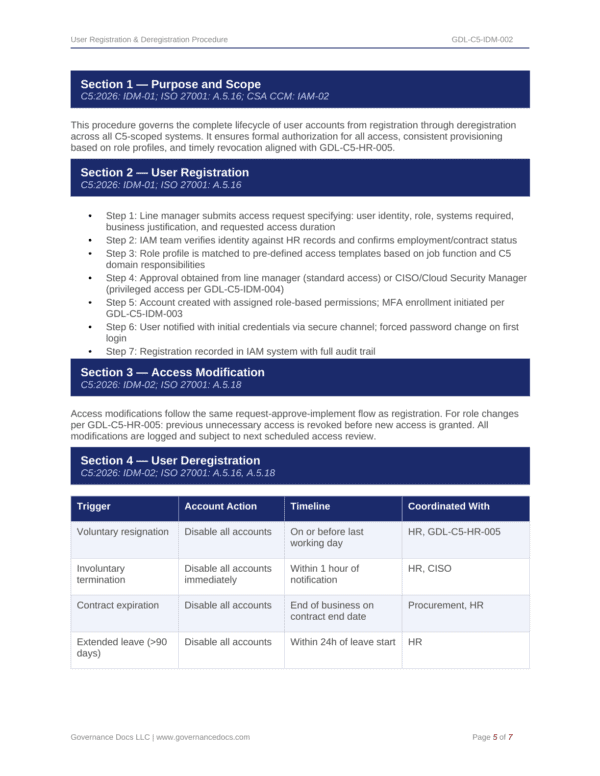
- User Registration & Deregistration Procedure
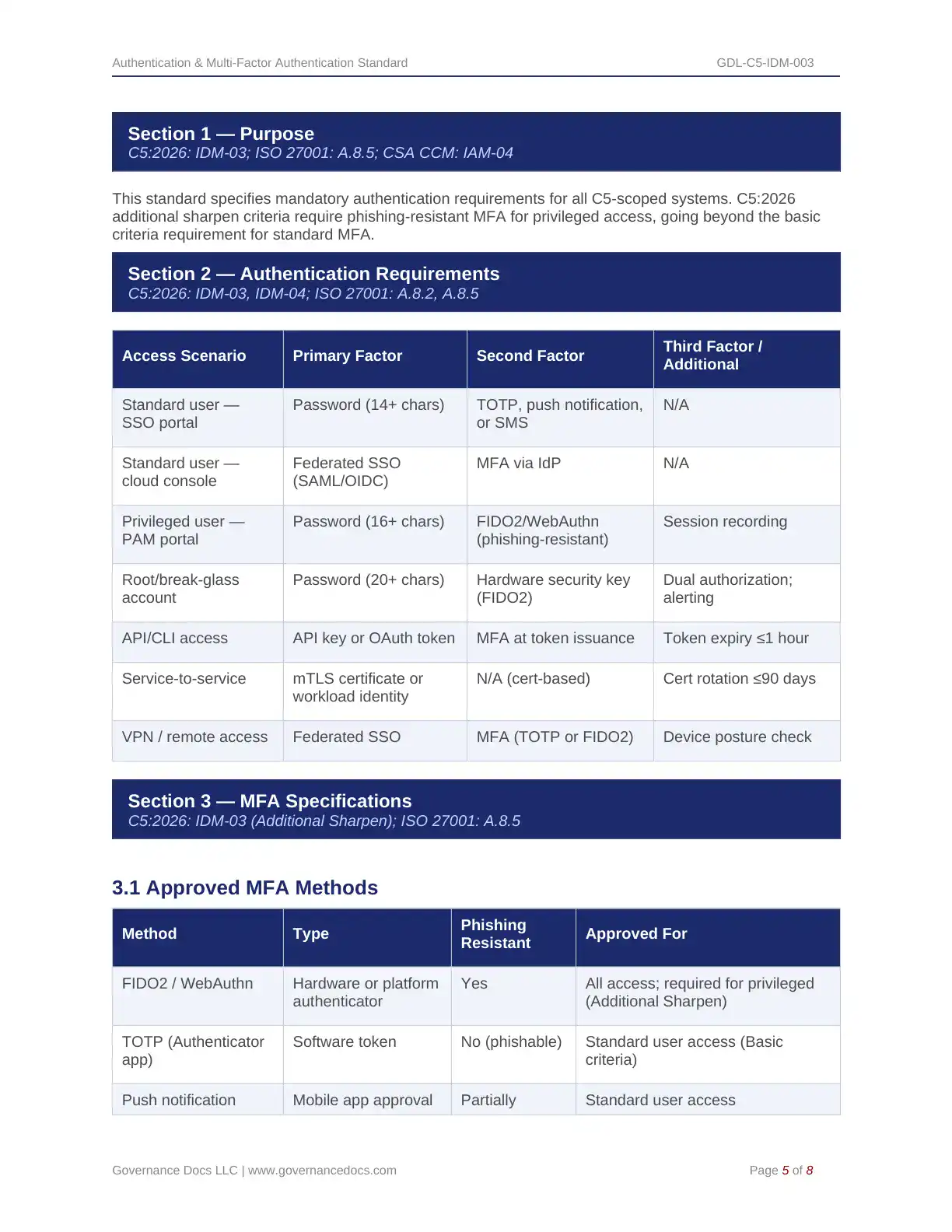
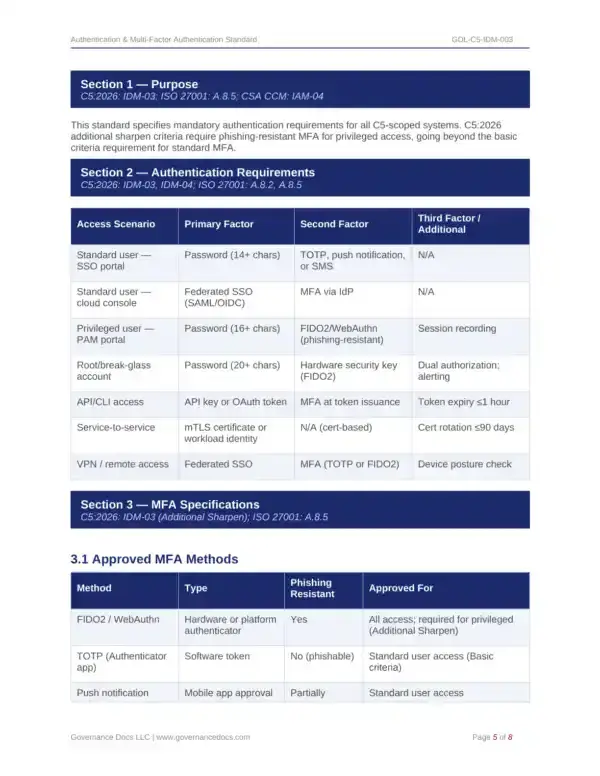
- Authentication & Multi-Factor Authentication Standard
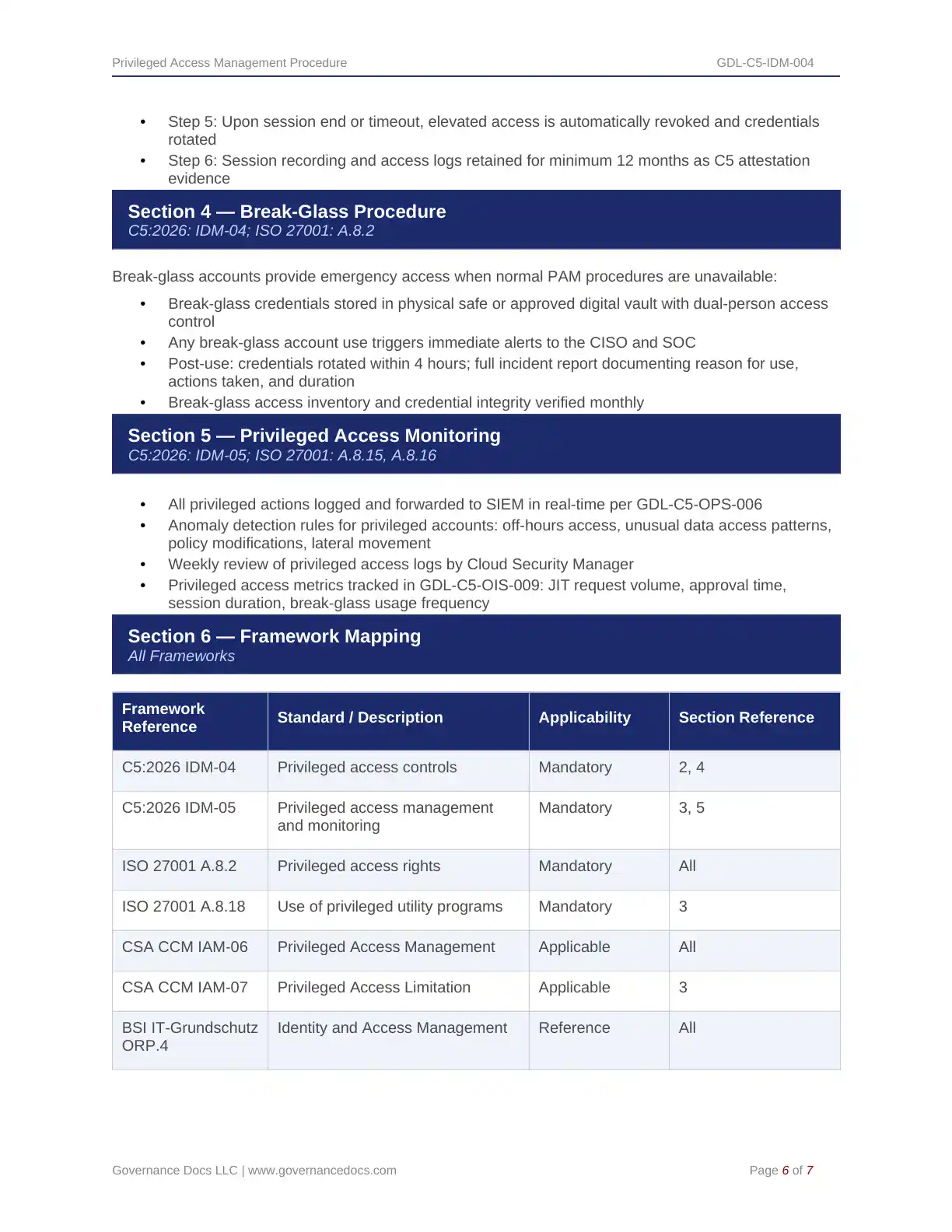
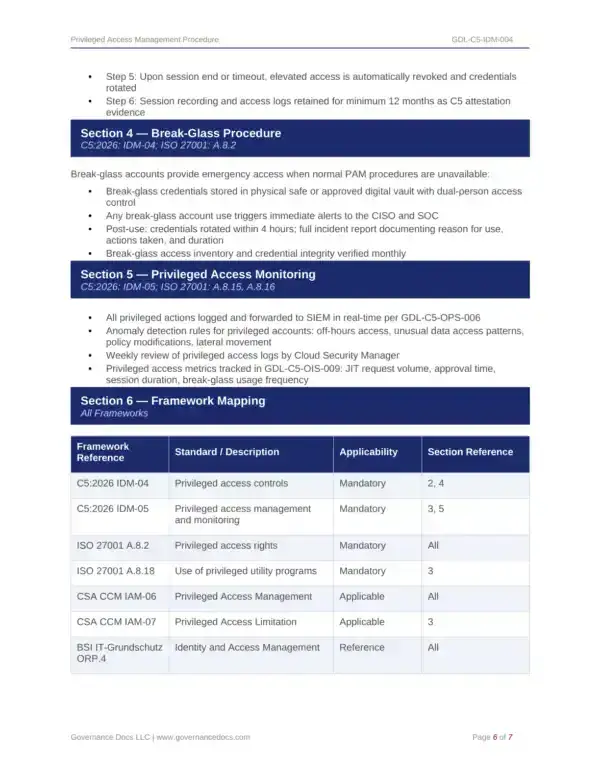
- Privileged Access Management Procedure
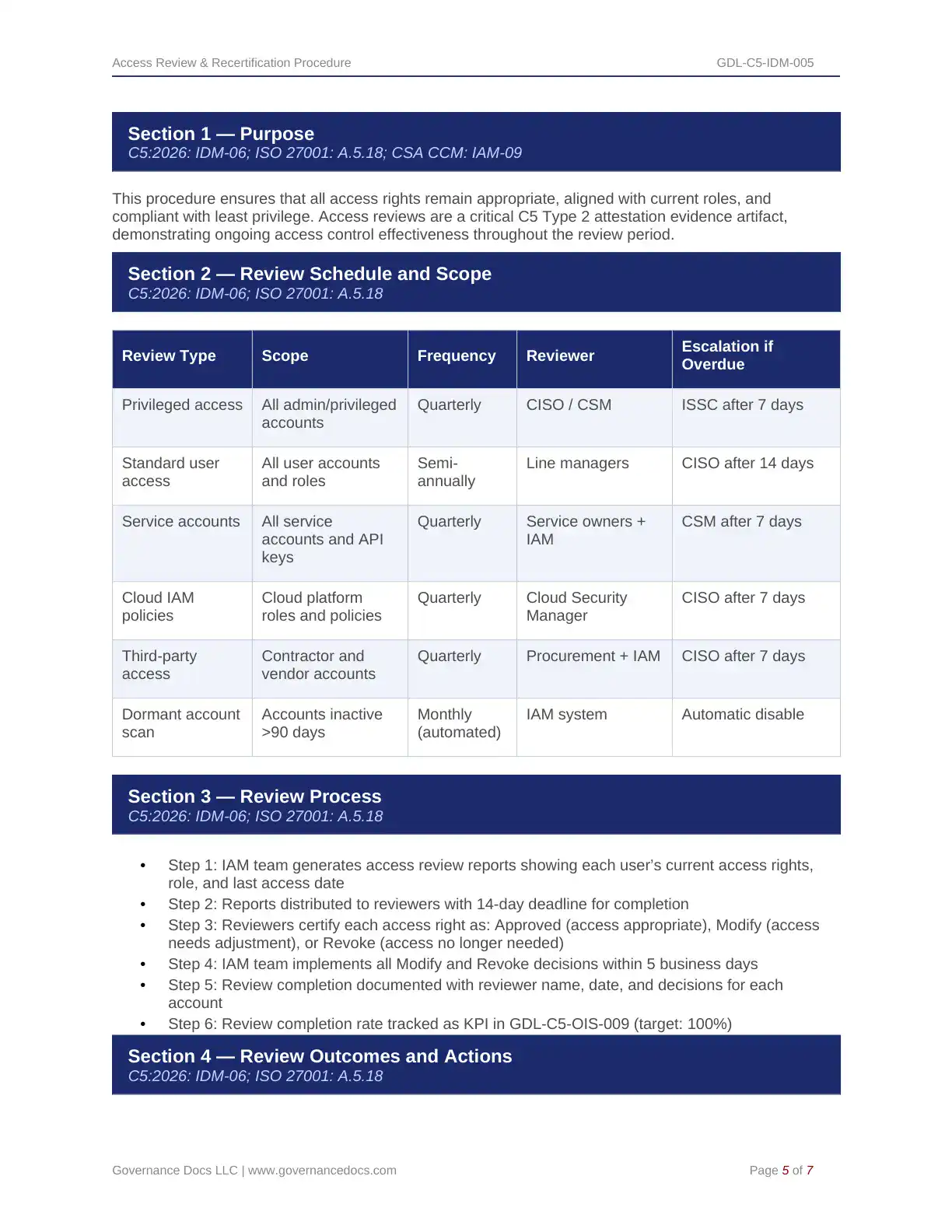
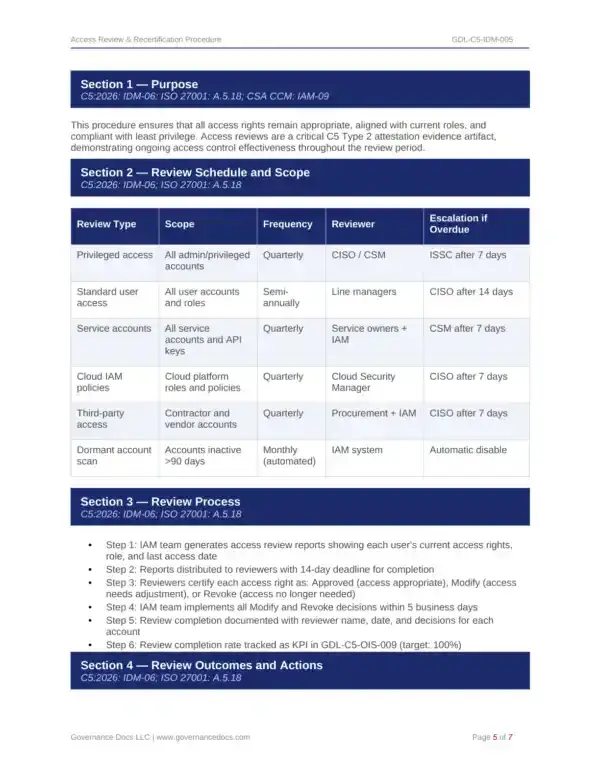
- Access Review & Recertification Procedure
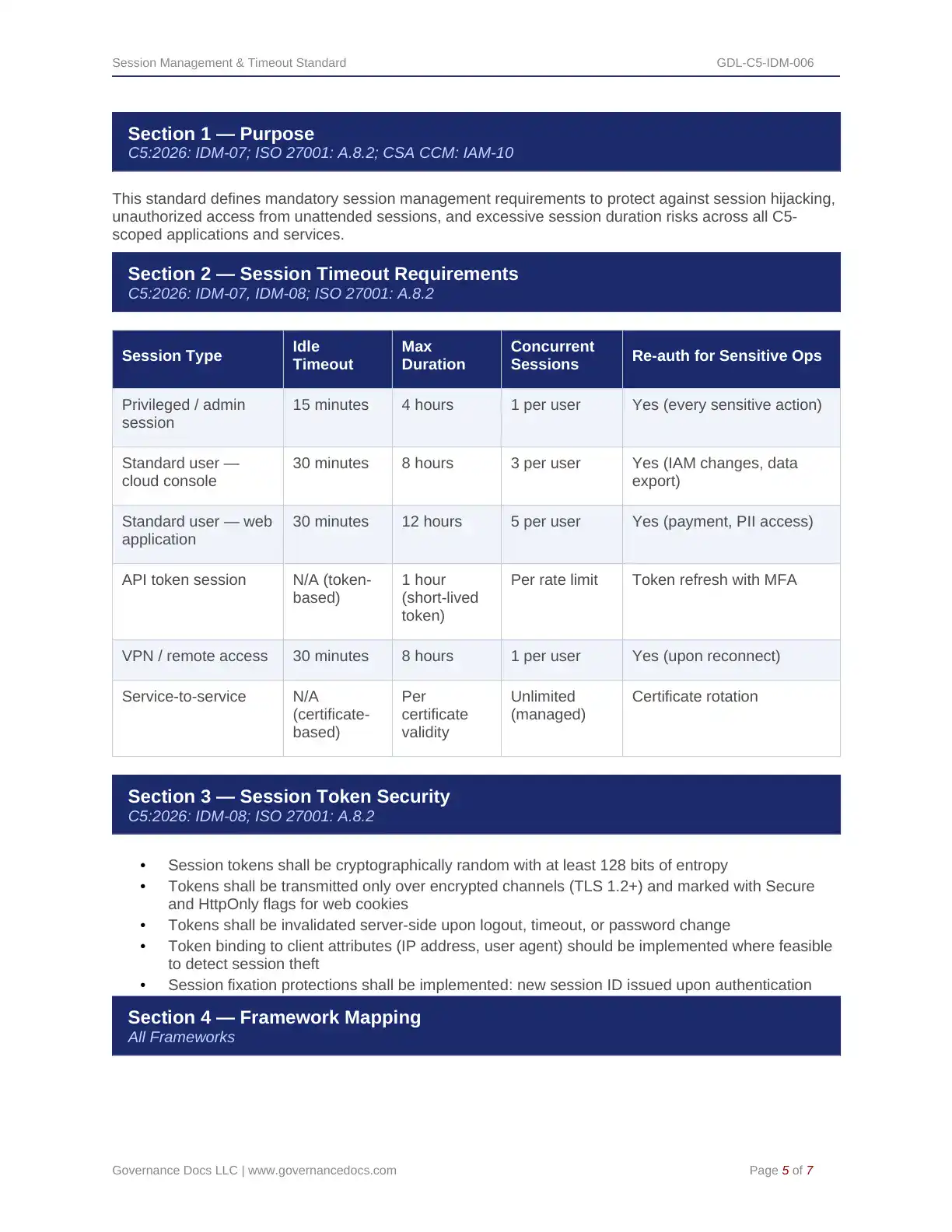
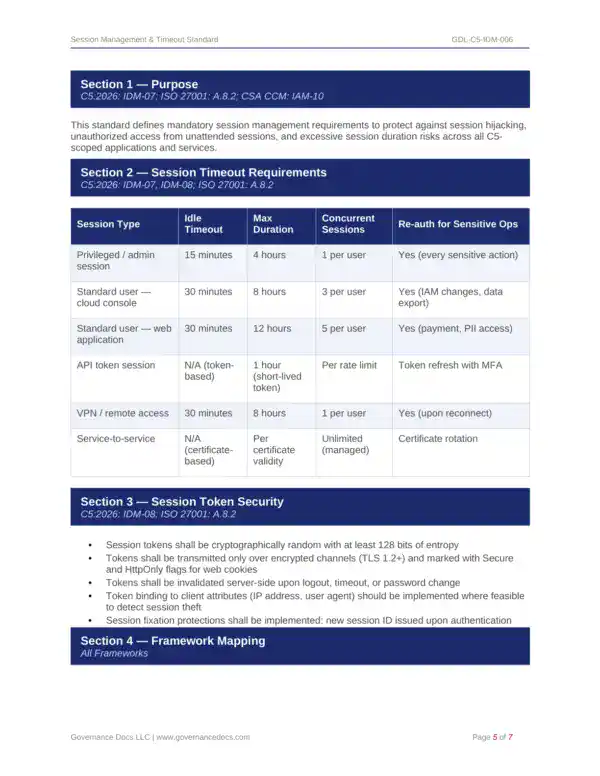
- Session Management & Timeout Standard
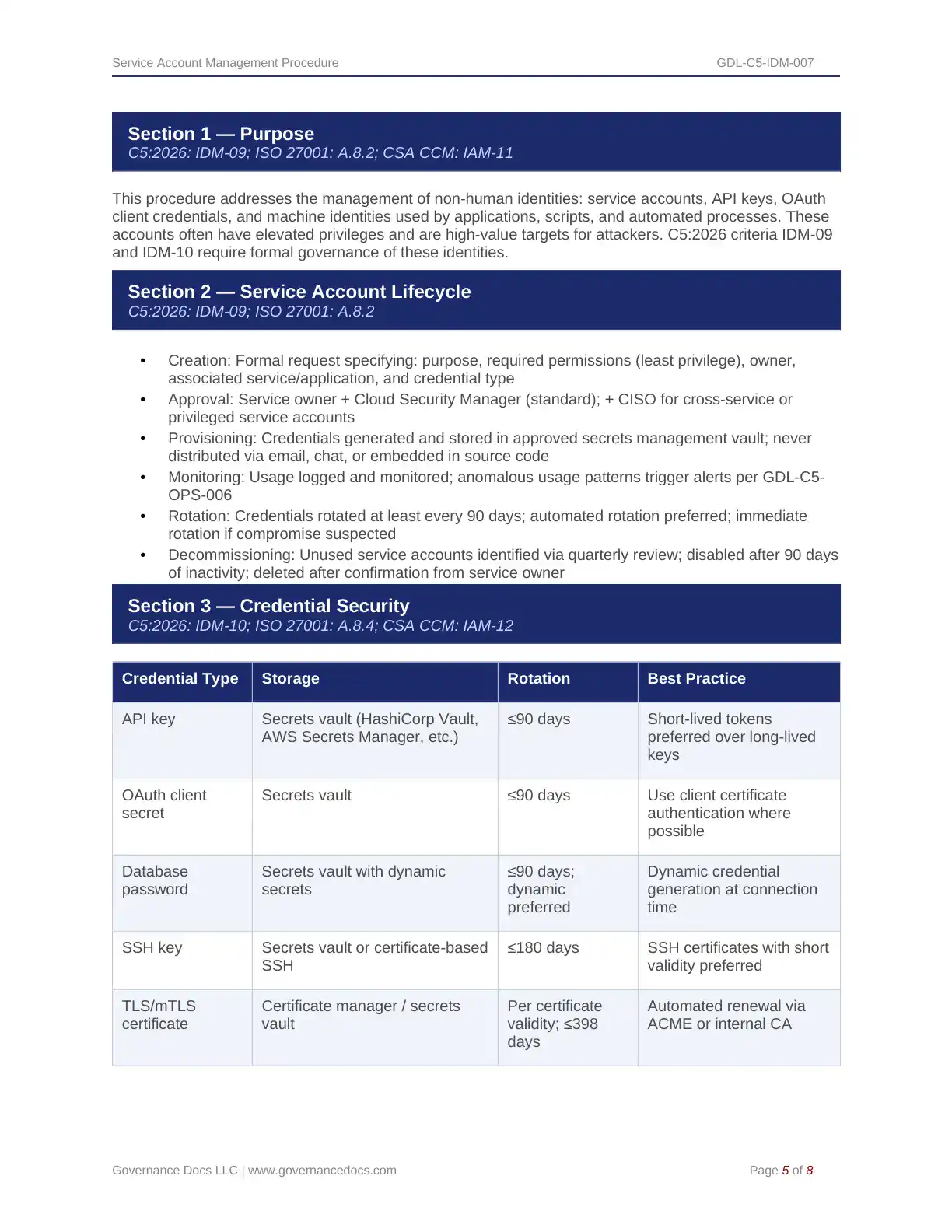
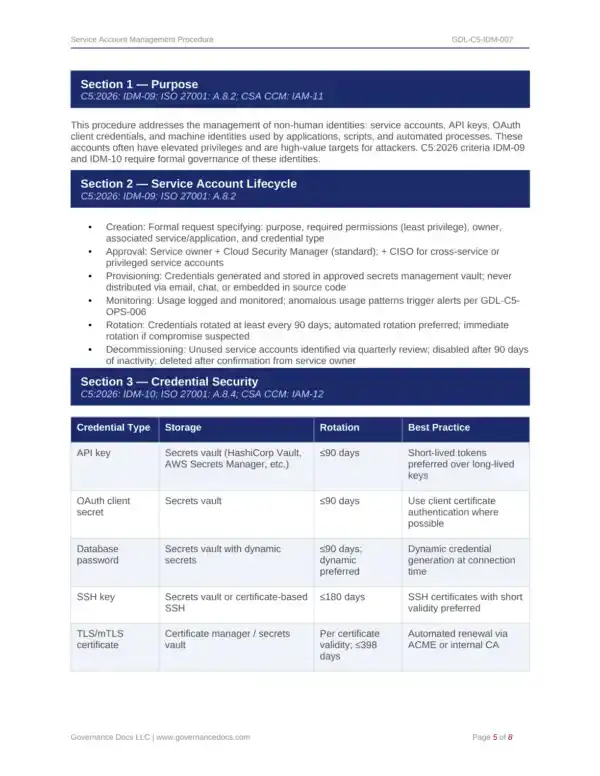
- Service Account Management Procedure
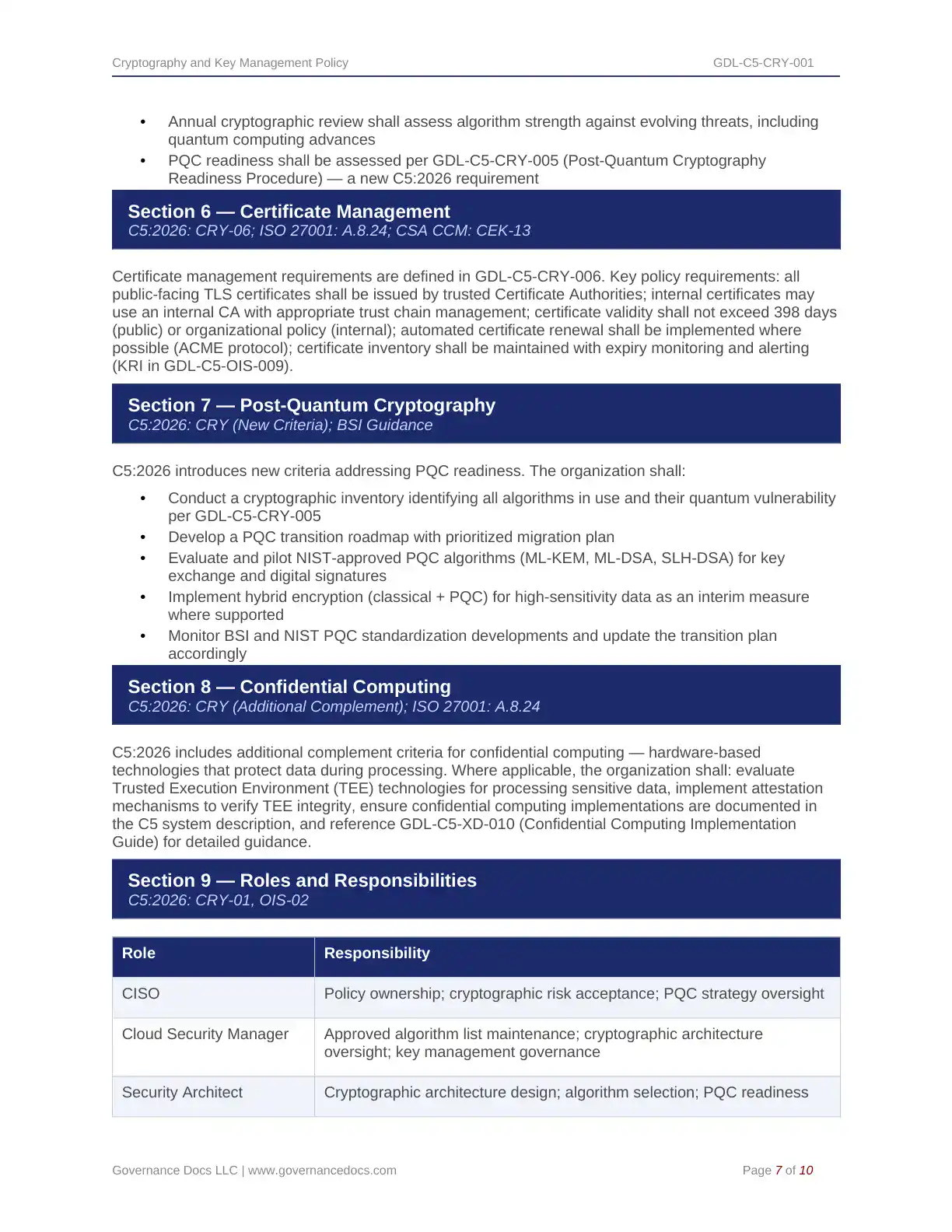
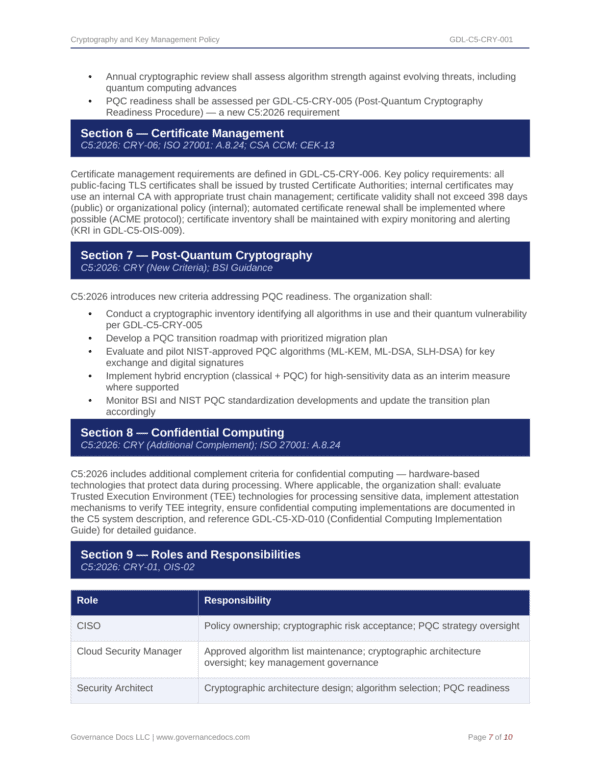
- Cryptography and Key Management Policy
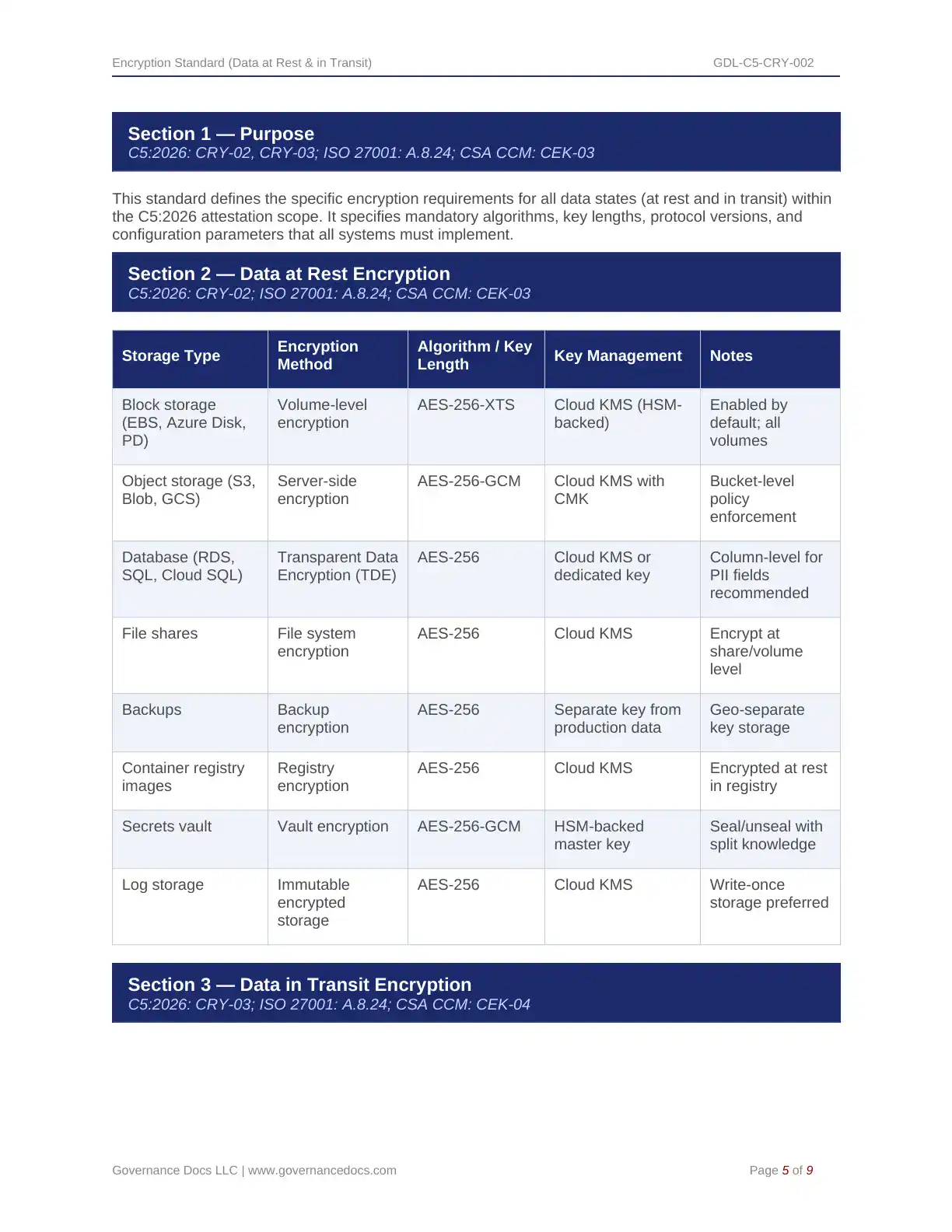
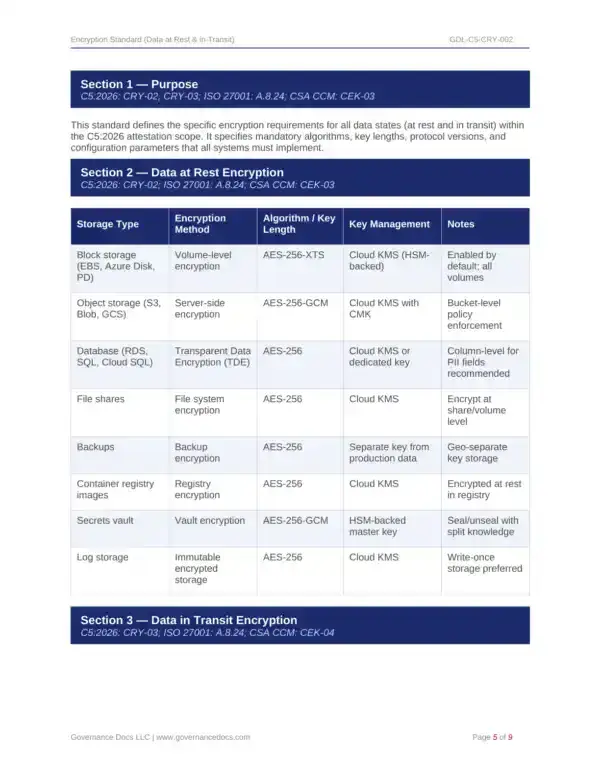
- Encryption Standard (Data at Rest & in Transit)
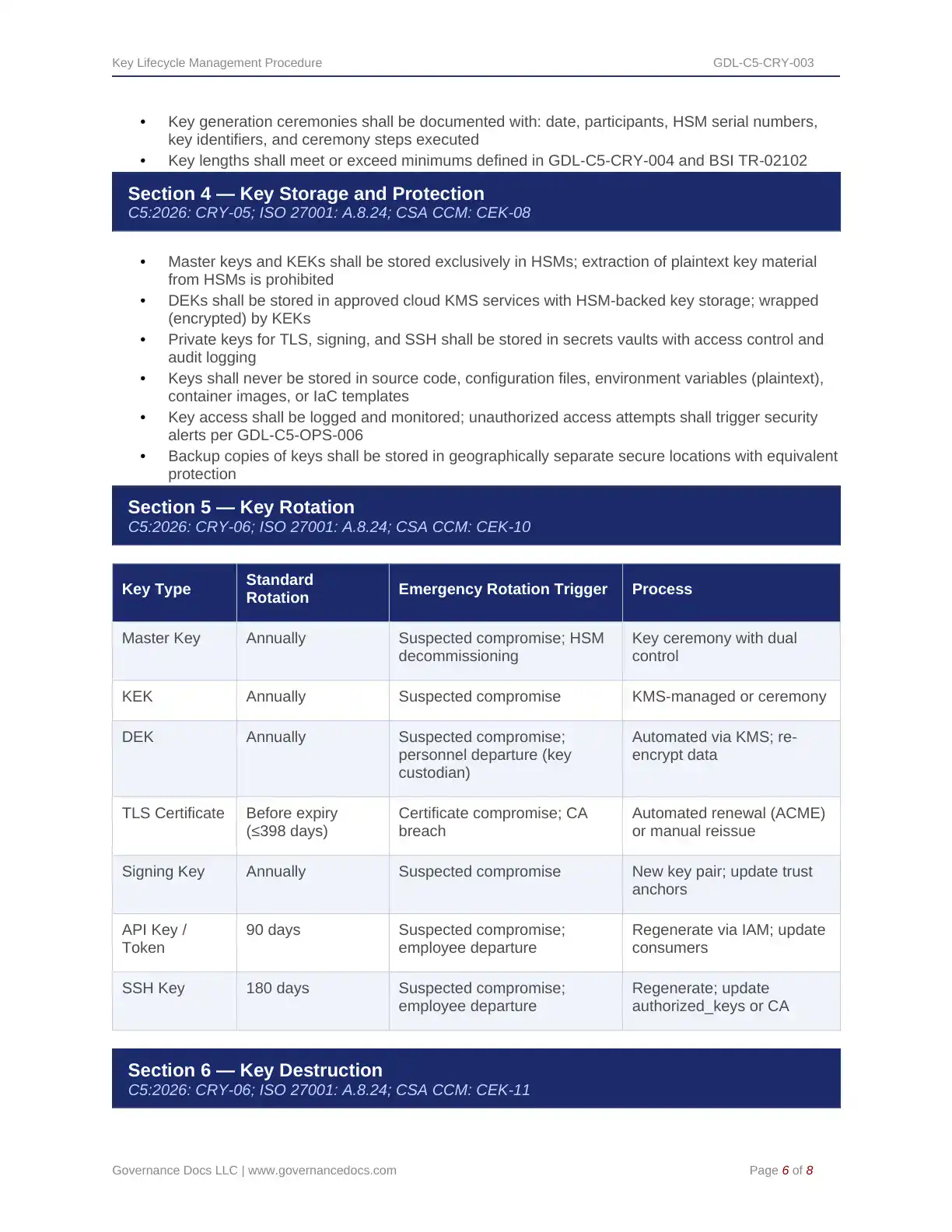
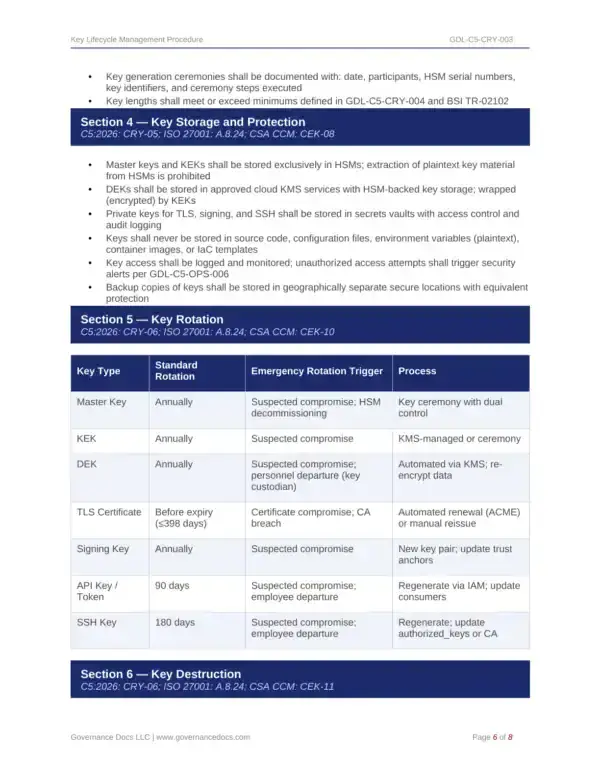
- Key Lifecycle Management Procedure
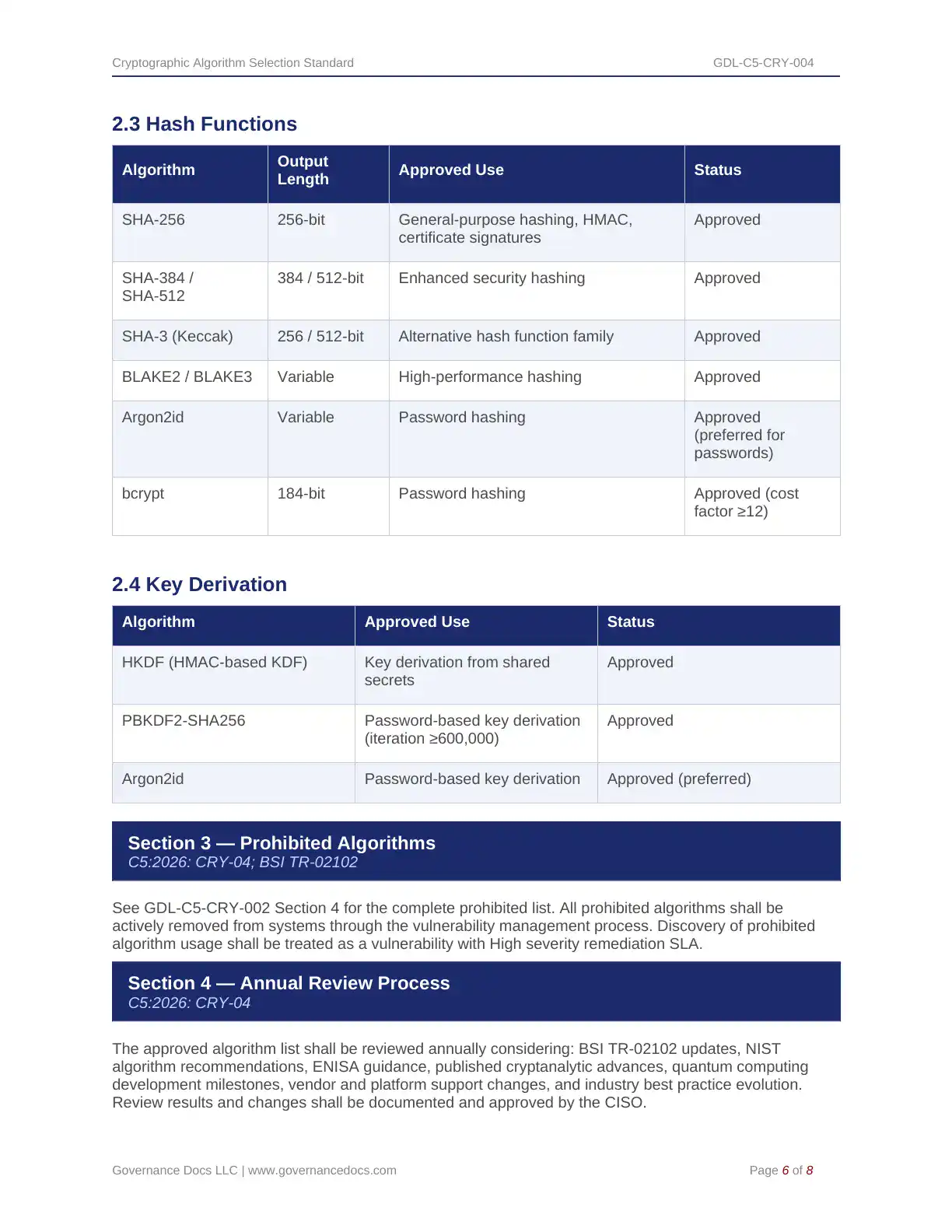
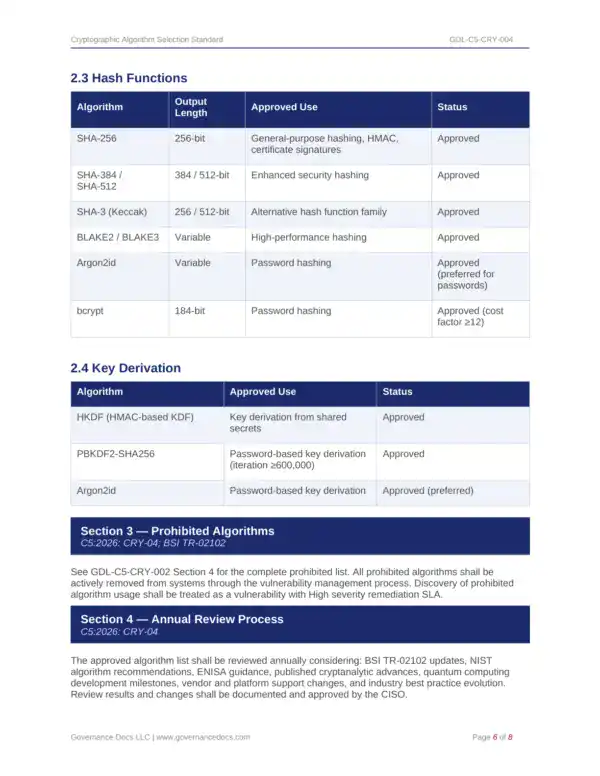
- Cryptographic Algorithm Selection Standard
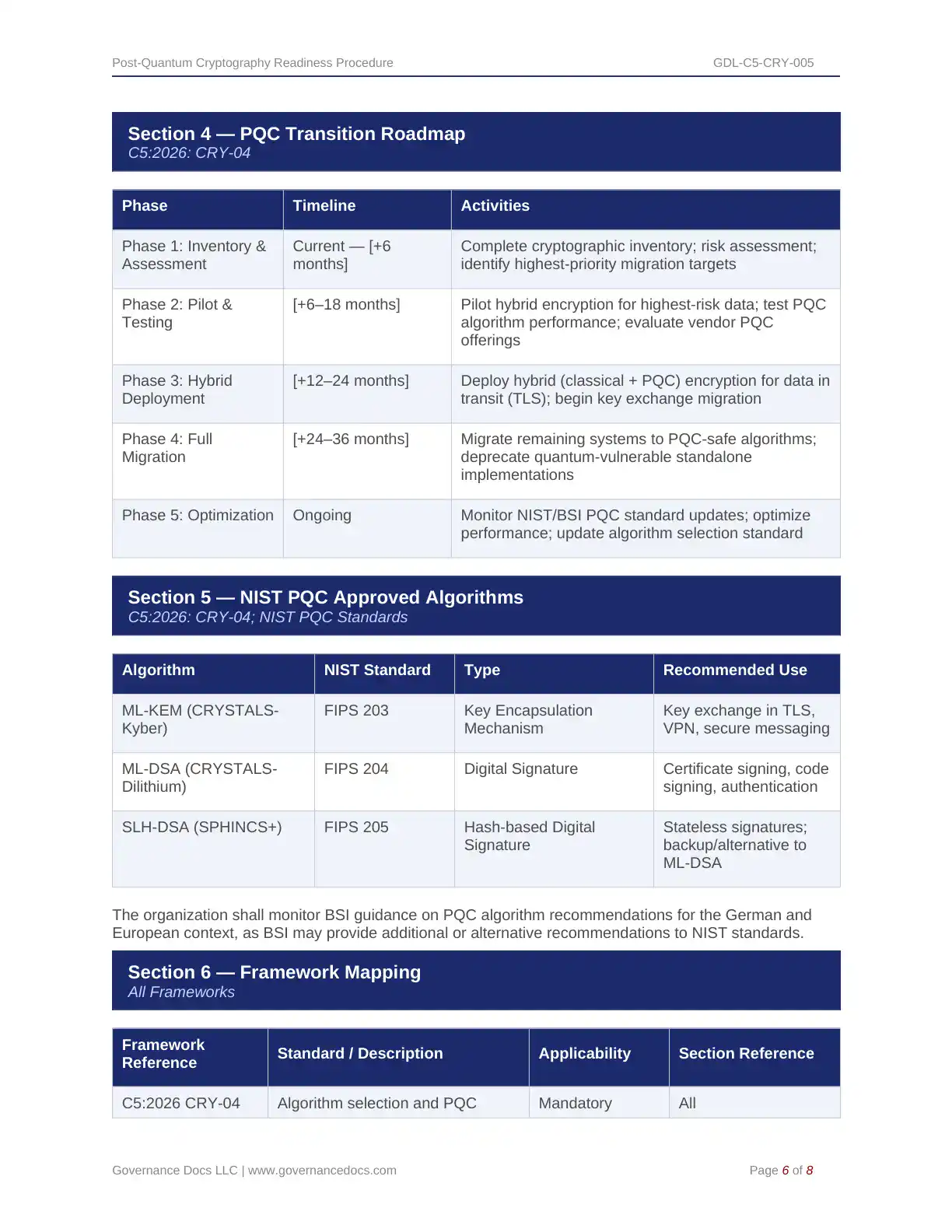
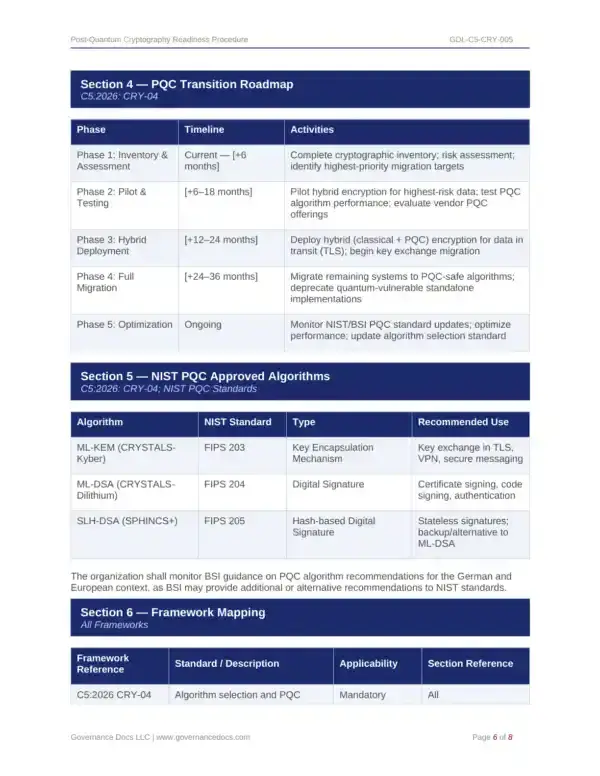
- Post-Quantum Cryptography Readiness Procedure
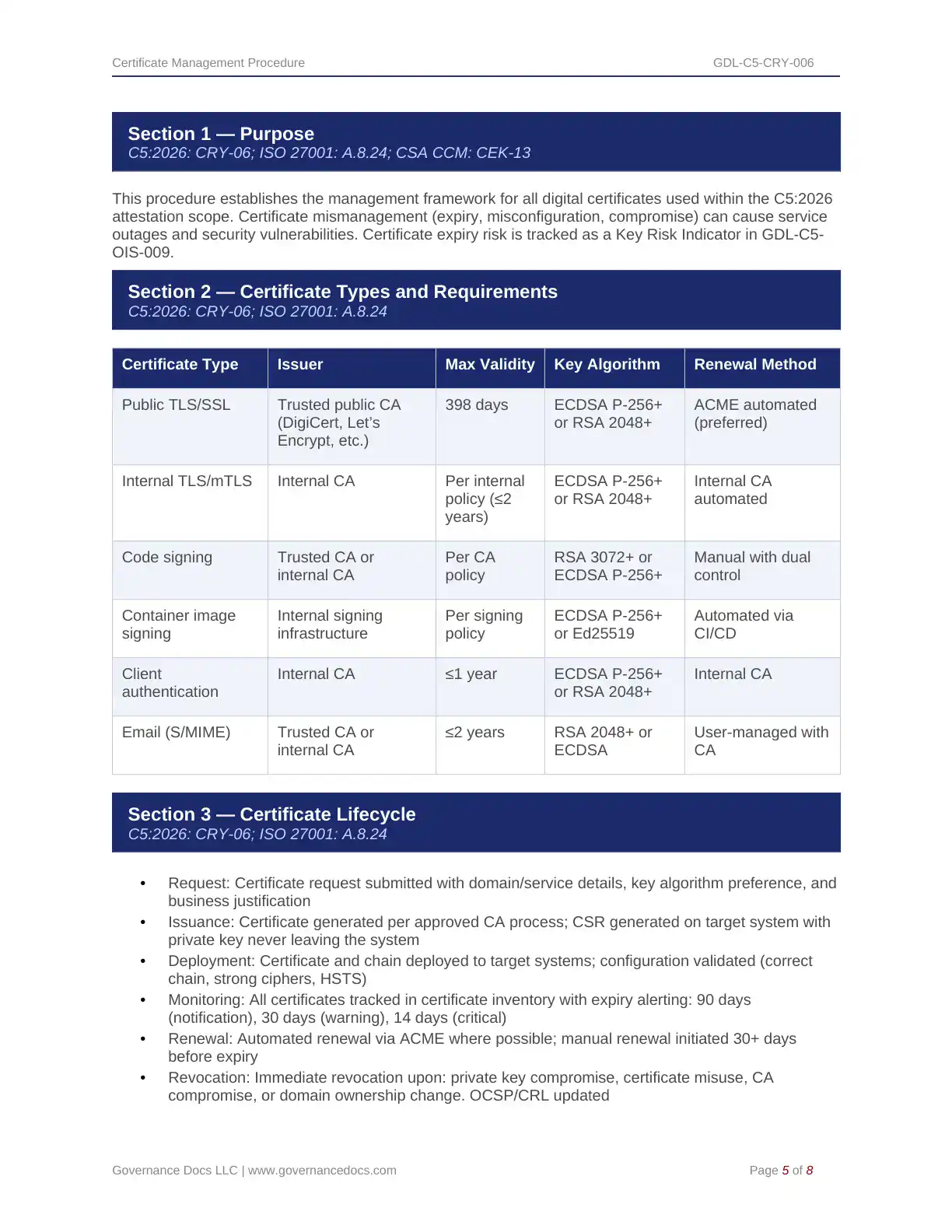
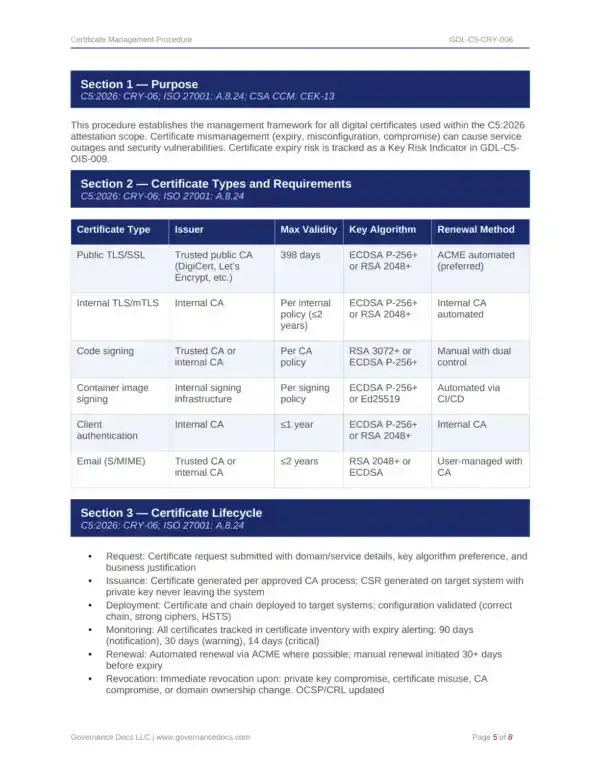
- Certificate Management Procedure
- Network Security Policy
- Network Segmentation & Firewall Management Procedure
- Secure Data Transfer & Communication Standard
- Remote Access & VPN Security Procedure
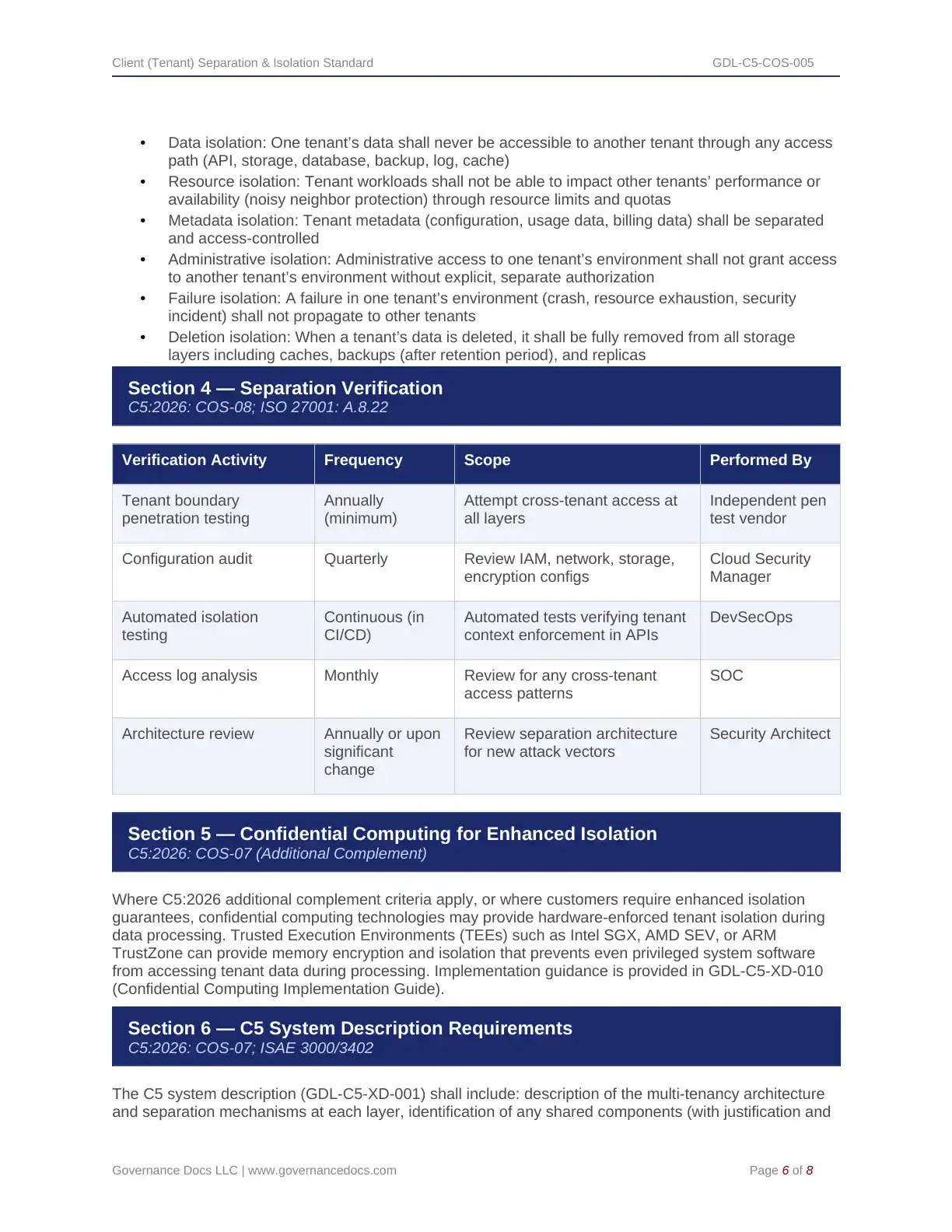
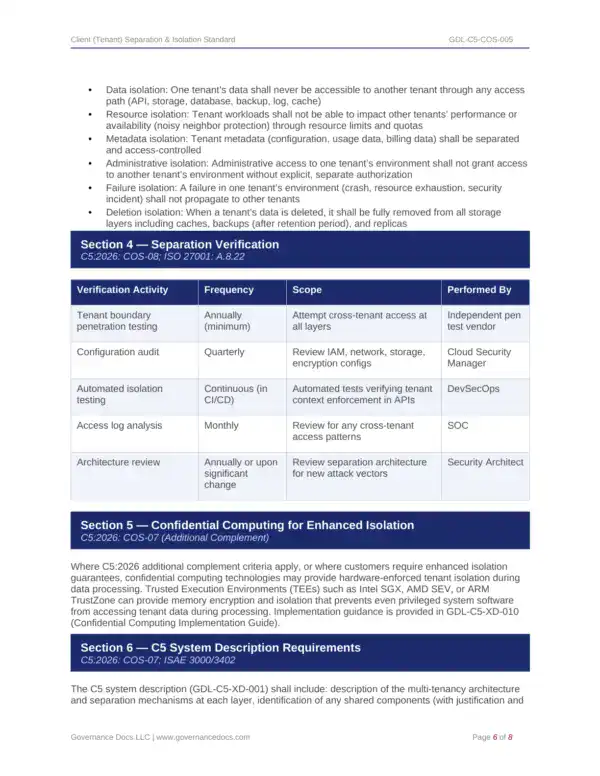
- Client (Tenant) Separation & Isolation Standard
- Data Portability and Interoperability Policy
- Service Migration & Exit Procedure
- API Standards & Interoperability Specification
- Data Export & Format Standard
- Procurement & Supply Chain Security Policy
- Subservice Organization Assessment Procedure
- Supplier Security Requirements Specification
- Supply Chain Risk Assessment Procedure
- Subservice Organization Register
- Software Bill of Materials (SBOM) Management Procedure
- Security Incident Management Policy
- Incident Detection & Classification Procedure
- Incident Response Procedure
- Incident Severity Classification Matrix
- Incident Notification & Escalation Procedure
- Incident Register
- Post-Incident Review & Lessons Learned Template
- Business Continuity Management Policy
- Business Impact Analysis (BIA) Procedure
- Disaster Recovery Plan
- BC/DR Testing & Exercise Procedure
- RTO/RPO Register & Requirements
- Redundancy & Resilience Architecture Standard
- Compliance Management Policy
- Legal & Regulatory Requirements Register
- Data Protection & Privacy Compliance Procedure
- C5 Attestation Readiness Checklist
- Regulatory Change Management Procedure
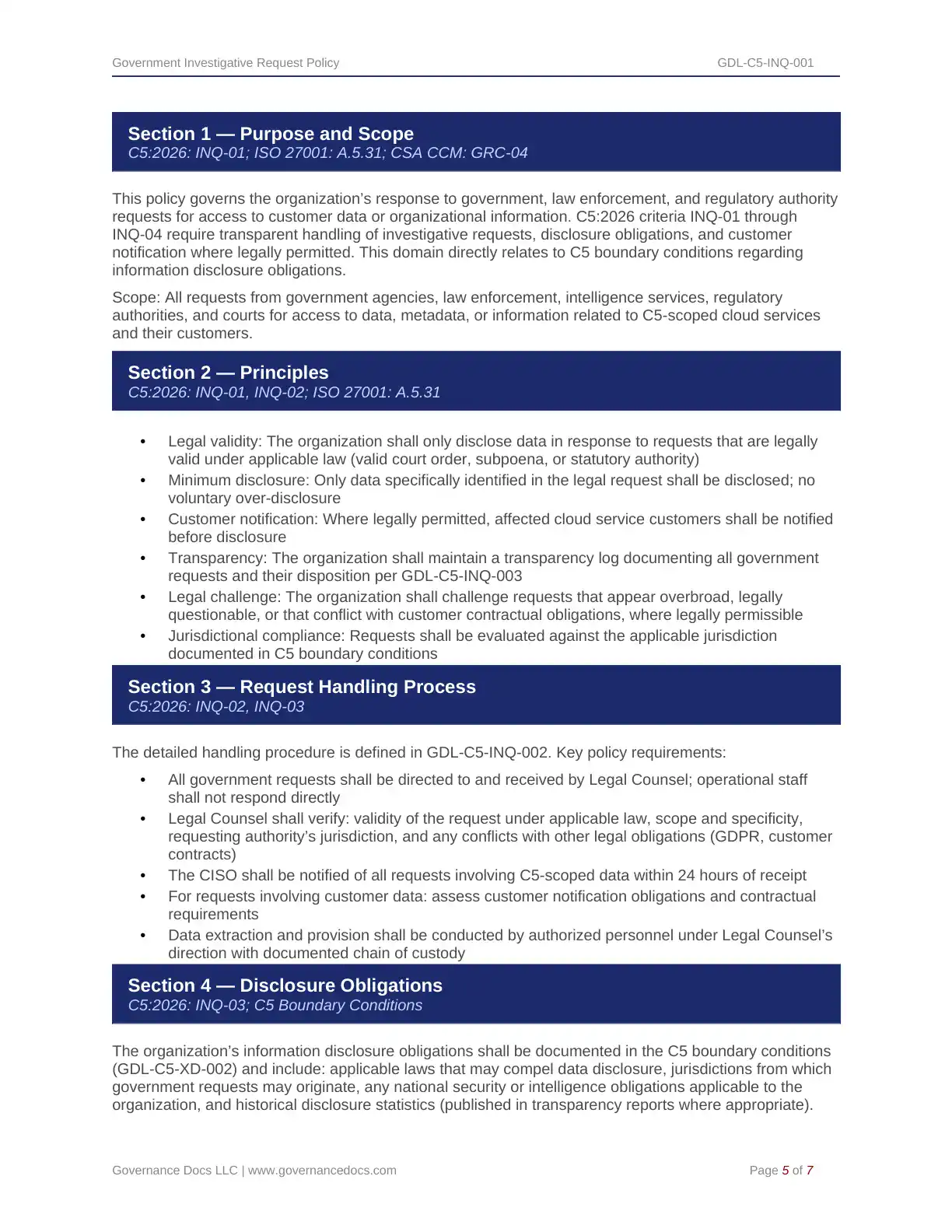
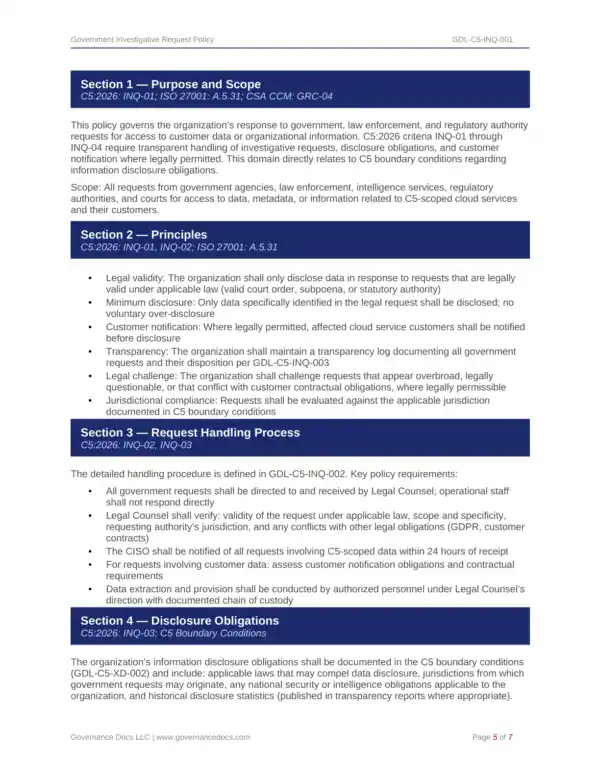
- Government Investigative Request Policy
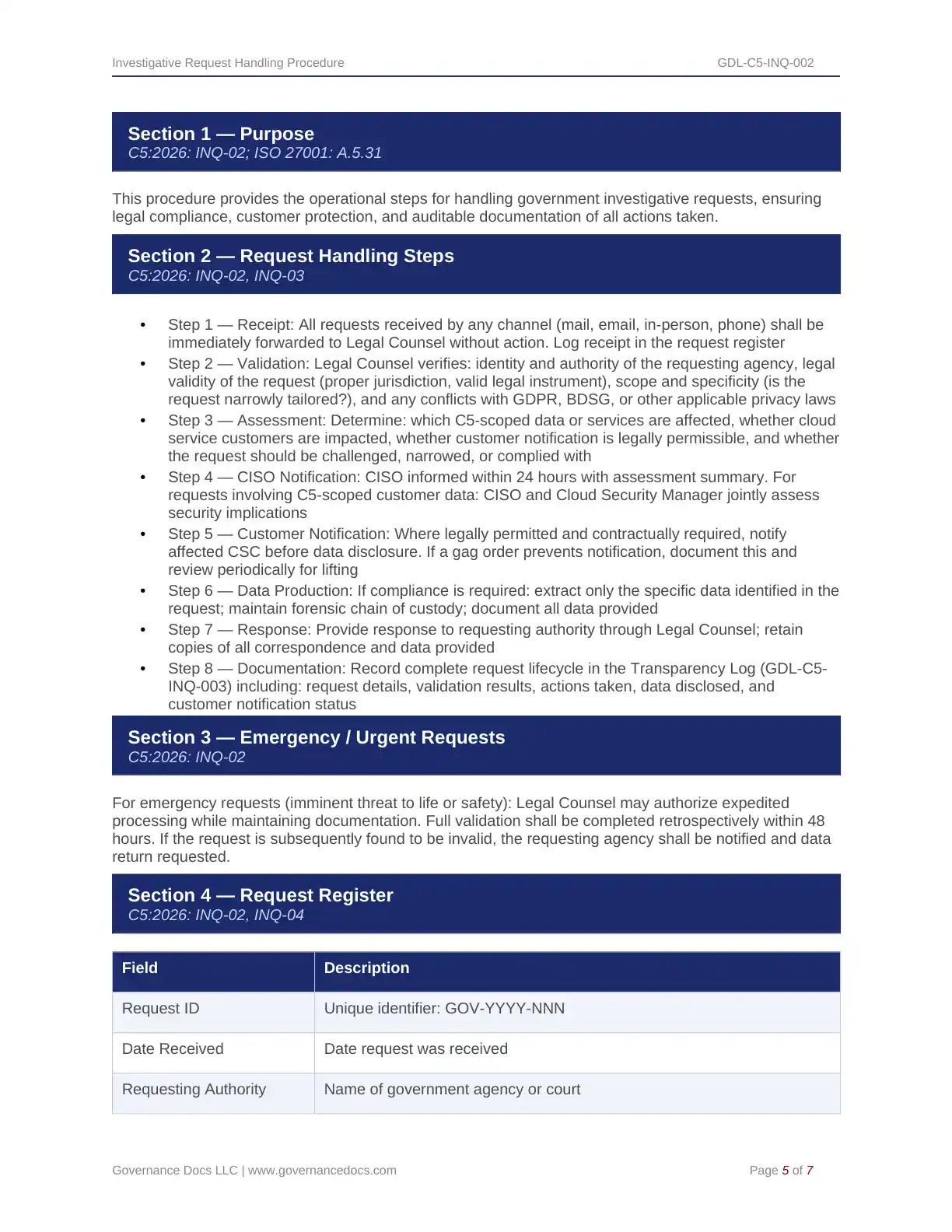
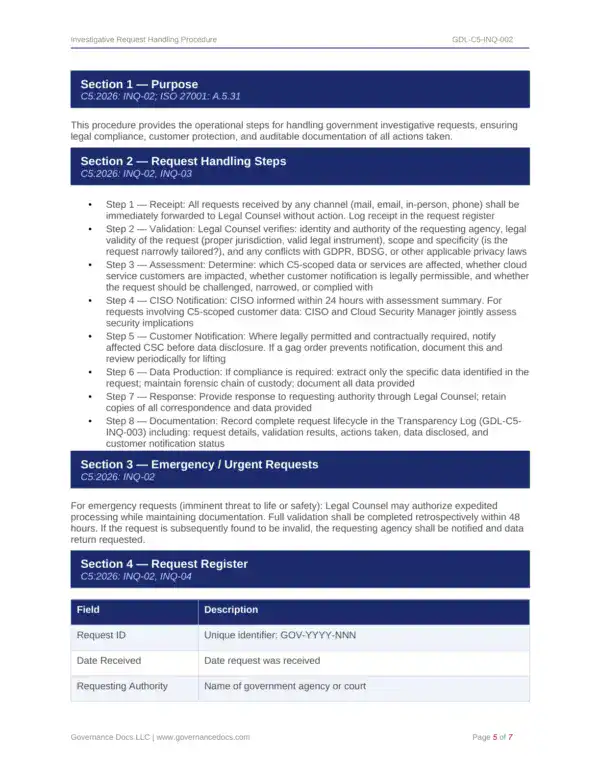
- Investigative Request Handling Procedure
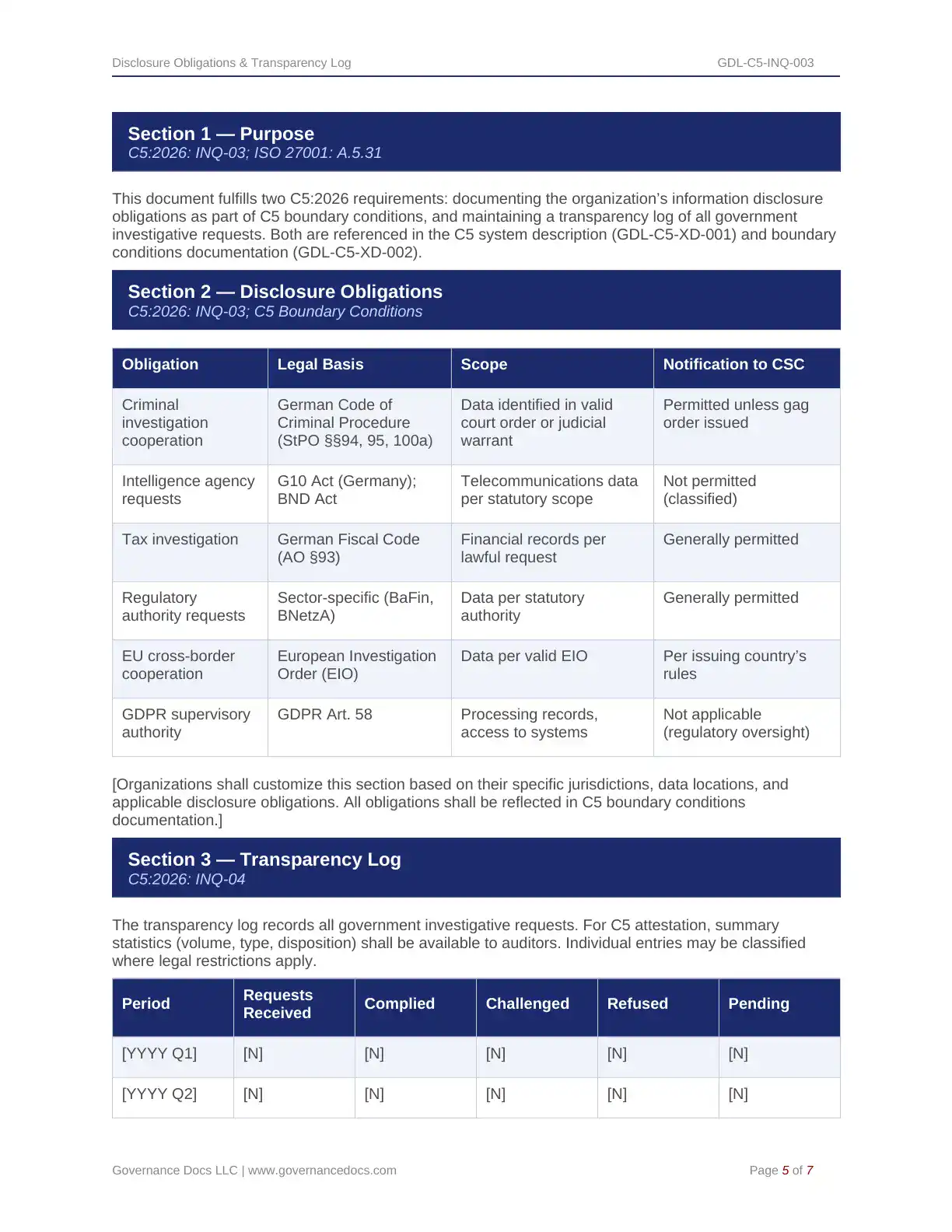
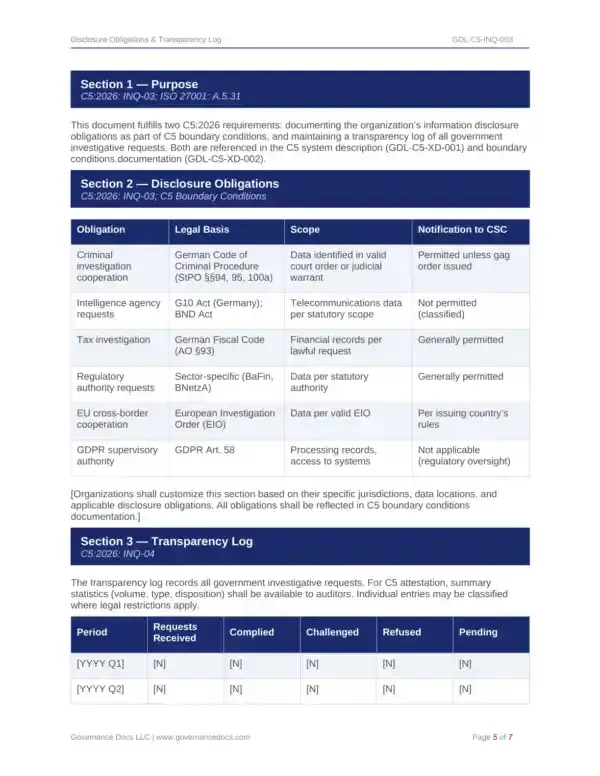
- Disclosure Obligations & Transparency Log
- Product Safety and Security Policy
- Vulnerability Disclosure & Response Procedure
- Penetration Testing Procedure
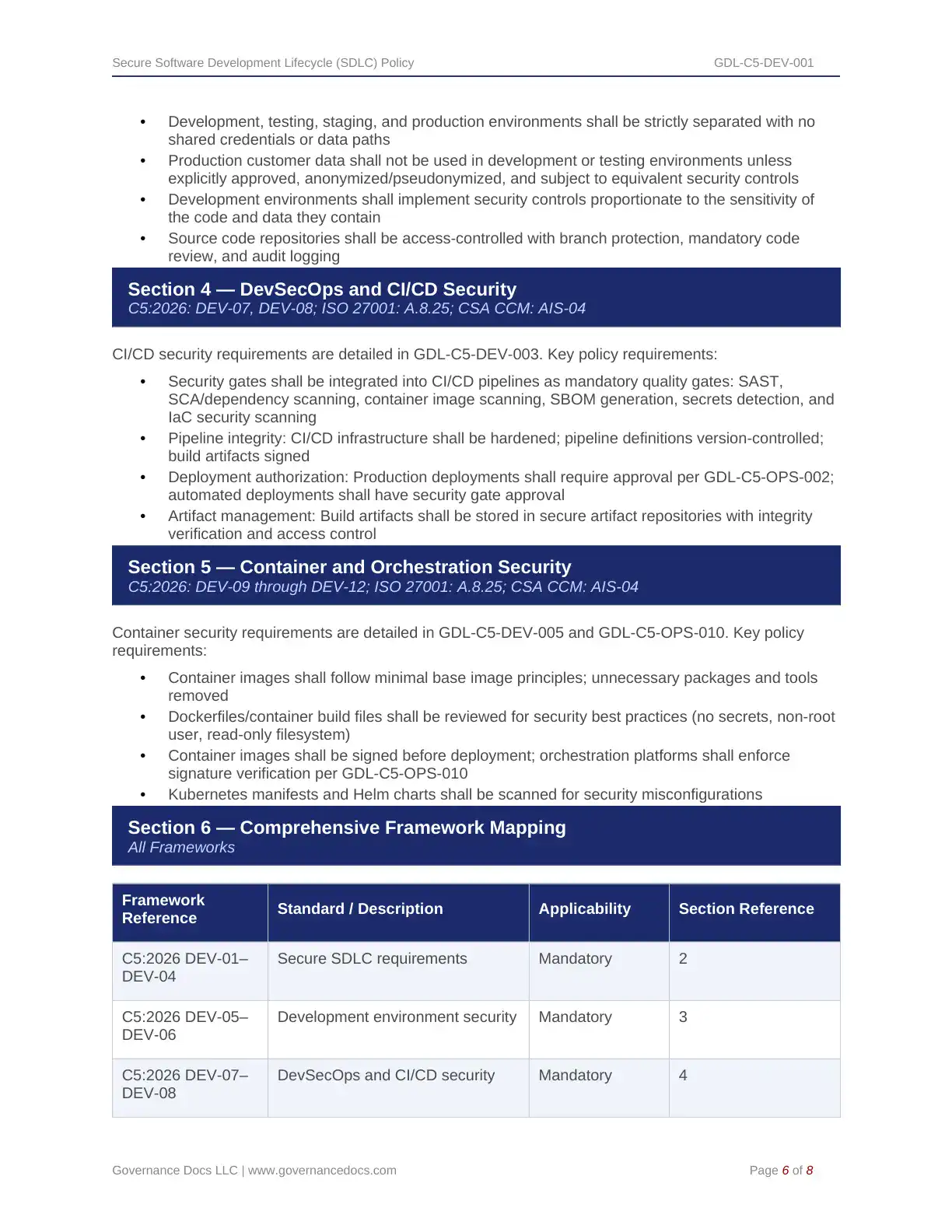
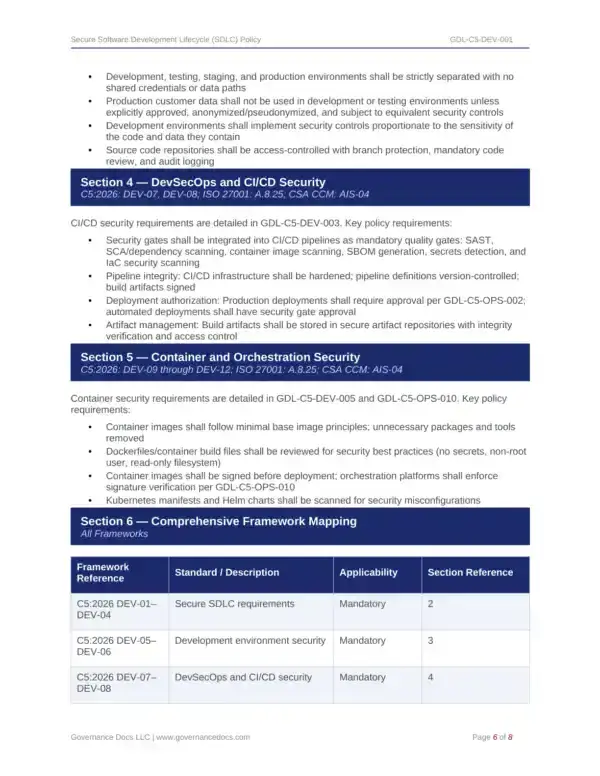
- Secure Software Development Lifecycle (SDLC) Policy
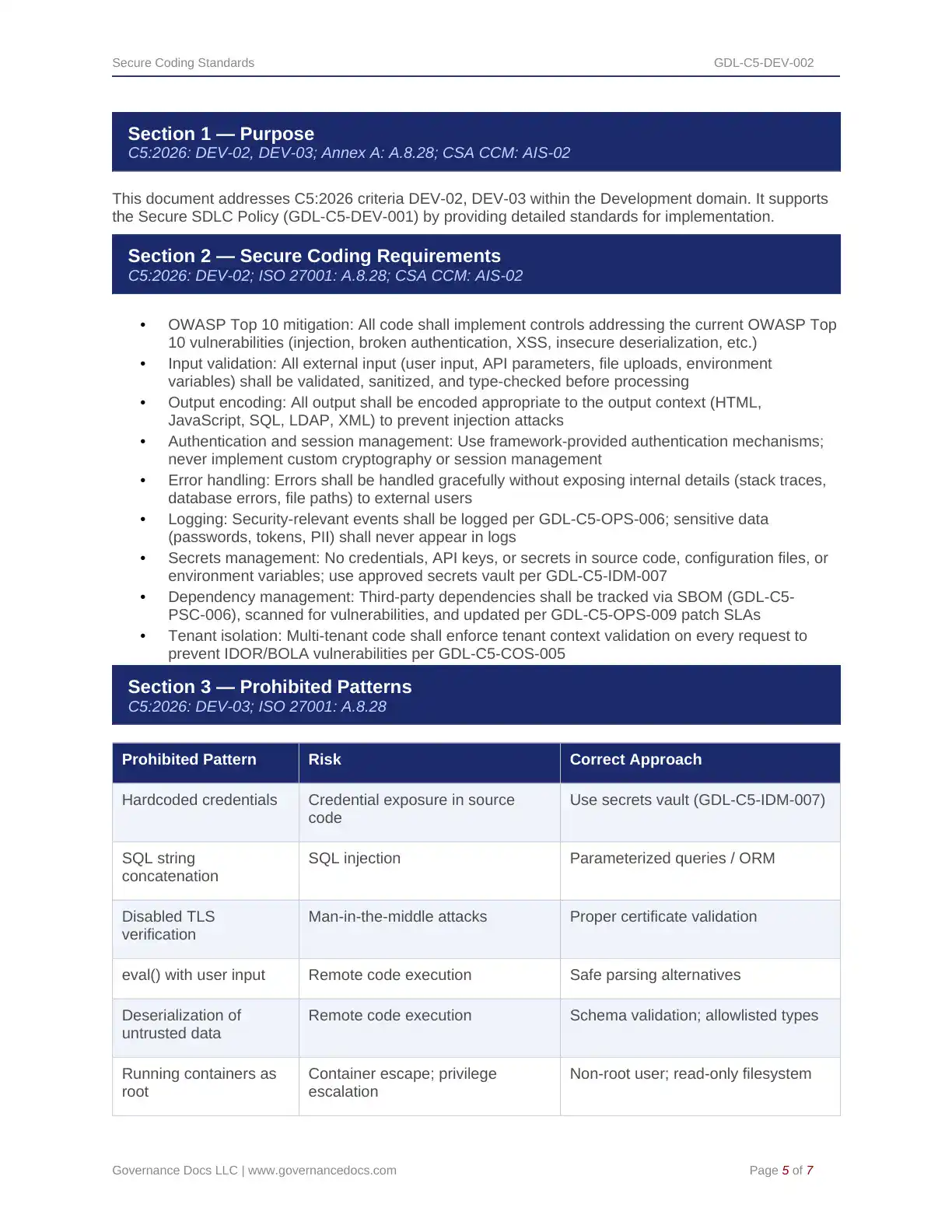
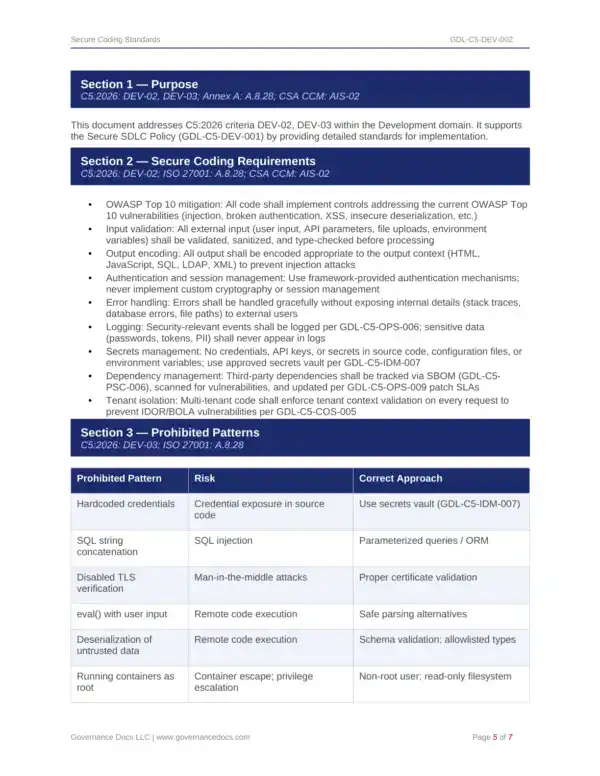
- Secure Coding Standards
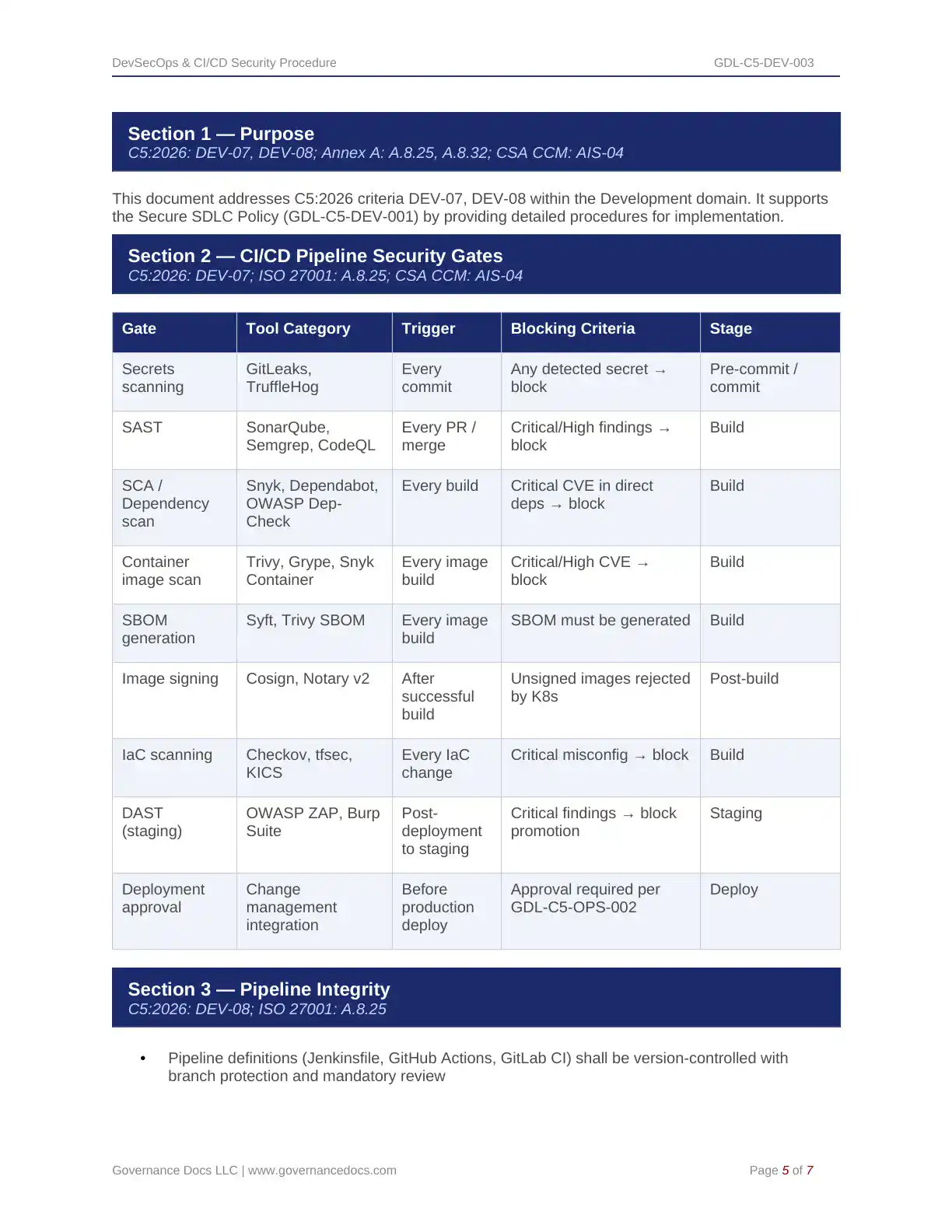
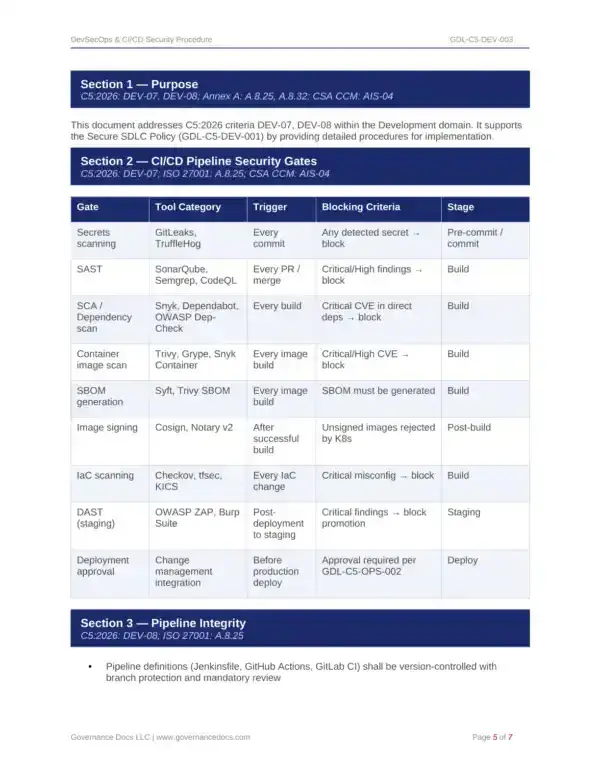
- DevSecOps & CI/CD Security Procedure
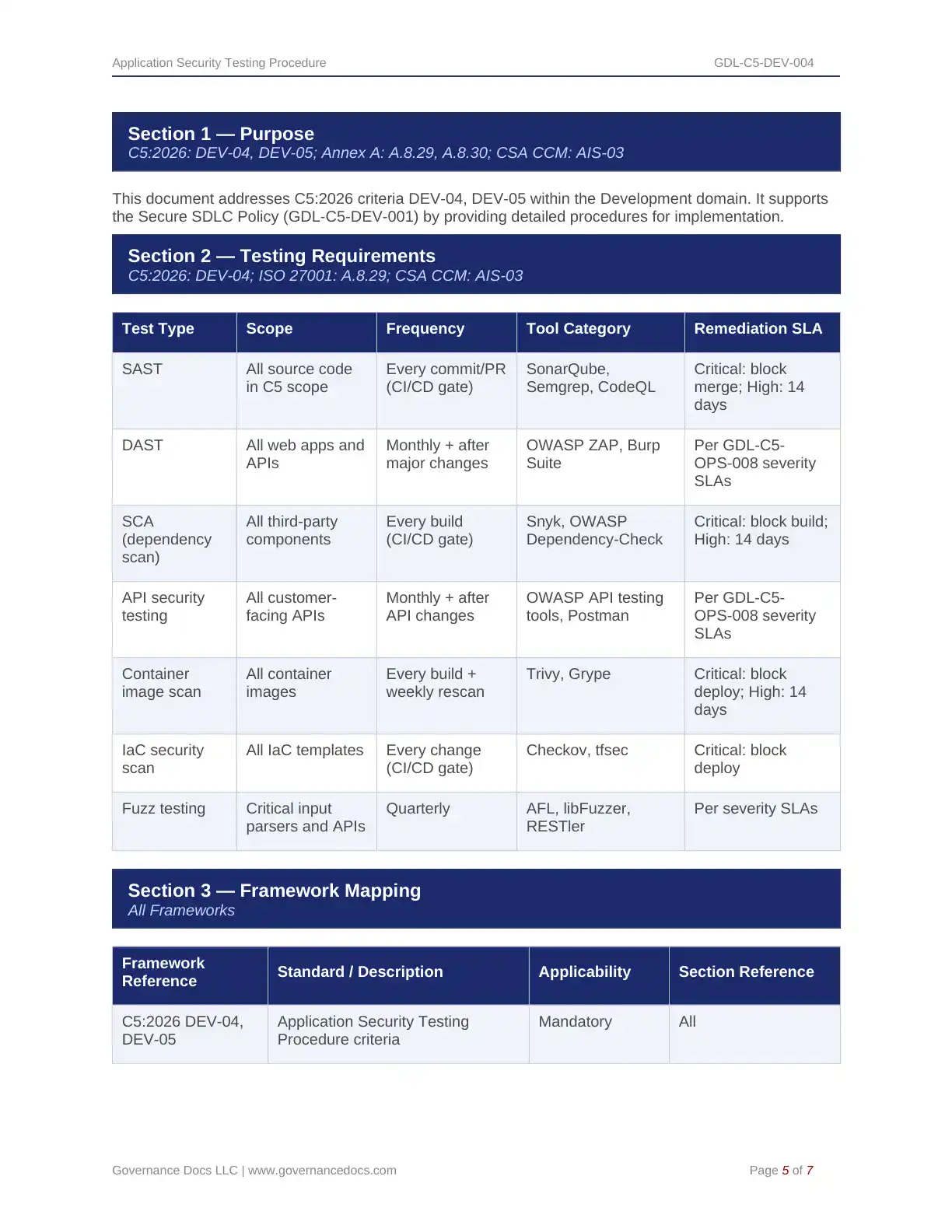
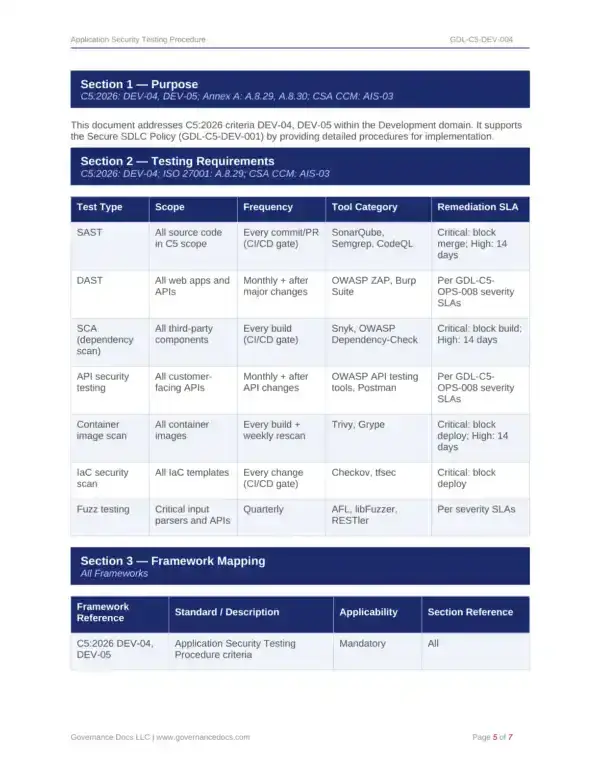
- Application Security Testing Procedure
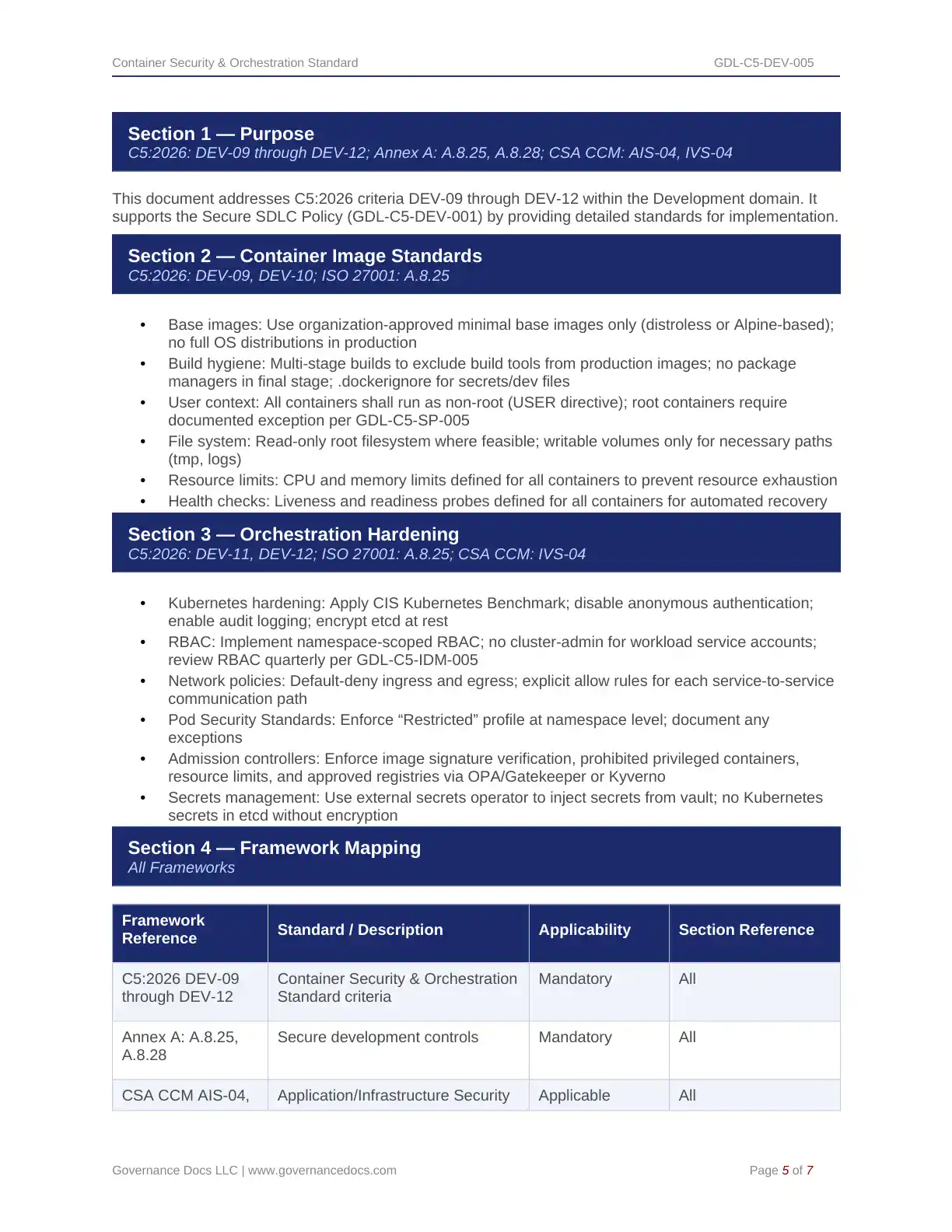
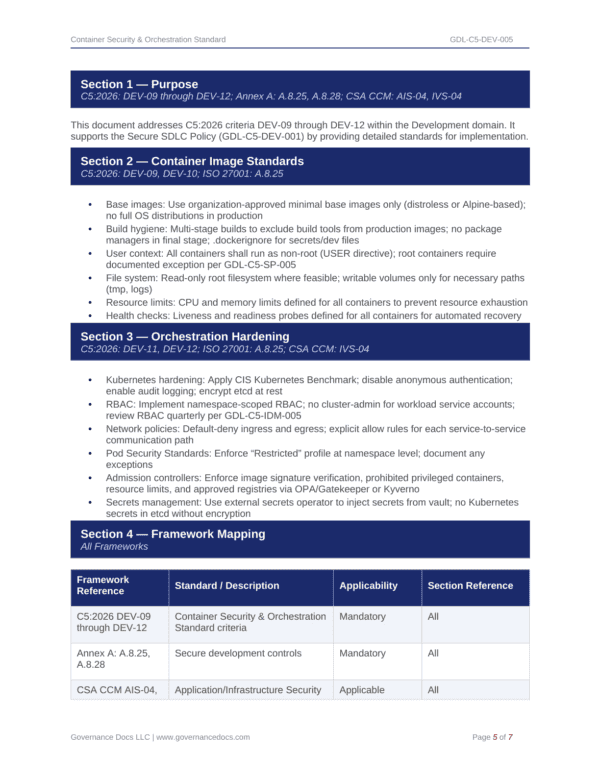
- Container Security & Orchestration Standard
- C5:2026 System Description Template
- C5 Boundary Conditions Documentation
- C5 Internal Audit Procedure
- C5 Audit Findings & Corrective Action Register
- C5 Management Review Procedure
- C5 Continual Improvement Procedure
- C5 Gap Analysis Workbook Template
- Data Location & Jurisdiction Register
- Cloud Service Sovereignty Compliance Procedure
- Confidential Computing Implementation Guide
BSI C5:2026 Compliance
This toolkit has been developed in alignment with the BSI Cloud Computing Compliance Criteria Catalogue (C5:2026), published by the German Federal Office for Information Security (BSI). Please verify this URL remains current on the BSI website before publishing.
Toolkit Structure
BSI C5:2026 Toolkit/
├── 1. ORGANISATION OF INFORMATION SECURITY — OIS/  — 9 documents
├── 2. SECURITY POLICIES AND WORK INSTRUCTIONS — SP/  — 5 documents
├── 3. HUMAN RESOURCES — HR/  — 5 documents
├── 4. ASSET MANAGEMENT — AM/  — 5 documents
├── 5. PHYSICAL SECURITY — PS/  — 6 documents
├── 6. REGULAR OPERATIONS — OPS/  — 10 documents
├── 7. IDENTITY AND ACCESS MANAGEMENT — IDM/  — 7 documents
├── 8. CRYPTOGRAPHY AND KEY MANAGEMENT — CRY/  — 6 documents
├── 9. COMMUNICATIONS SECURITY — COS/  — 5 documents
├── 10. PORTABILITY AND INTEROPERABILITY — PI/  — 4 documents
├── 11. PROCUREMENT AND SUPPLY CHAIN — PSC/  — 6 documents
├── 12. SECURITY INCIDENT MANAGEMENT — SIM/  — 7 documents
├── 13. BUSINESS CONTINUITY MANAGEMENT — BCM/  — 6 documents
├── 14. COMPLIANCE — COM/  — 5 documents
├── 15. MANAGING INVESTIGATIVE REQUESTS — INQ/  — 3 documents
├── 16. PRODUCT SAFETY AND SECURITY — PSS/  — 3 documents
├── 17. DEVELOPMENT — DEV/  — 5 documents
└── 18. CROSS-DOMAIN DOCUMENTS/  — 10 documents

Total: 107 documents
Full List of 107 Documents
Every document is an editable Microsoft Word (.docx) file with its own document-control block, version, classification and framework reference.
Frequently Asked Questions
What is included in the BSI C5:2026 Cloud Toolkit?
The toolkit includes 107 professionally developed documentation templates covering all 17 domains of the BSI C5:2026 catalogue, plus 10 cross-domain governance documents. Templates span policies, procedures, standards, registers, checklists, matrices, and audit governance tools — all provided in editable Microsoft Office (.docx, .xlsx) formats for immediate use after purchase.
Is this toolkit aligned with the latest version of the BSI C5 catalogue?
Yes. This toolkit is aligned with C5:2026, the most current version of the BSI Cloud Computing Compliance Criteria Catalogue. It incorporates requirements for emerging areas including post-quantum cryptography readiness, confidential computing, Software Bill of Materials (SBOM) management, and cloud service sovereignty — areas significantly expanded in C5:2026 compared to earlier versions.
Who can benefit from this C5 compliance toolkit?
This toolkit is designed for cloud service providers (CSPs) preparing for BSI C5 attestation, as well as their compliance managers, security teams, cloud architects, and data protection officers. It is equally valuable for GRC consultants and auditors supporting multiple cloud clients, and for regulated organisations in German financial services, healthcare, public sector, and critical infrastructure that need to assess or procure C5-attested cloud services.
How do I use the templates after purchase?
The 107 templates download immediately. Open each in Microsoft Office, tailor the policies and control documents to your cloud architecture and scope, and the audit-evidence records are ready to complete. The structure follows the C5:2026 criteria catalogue used in the attestation.
Can I use this toolkit for multiple clients or projects?
Yes. Cloud providers and C5 auditors reuse the toolkit across services and client engagements, adapting the control implementations to each environment. It suits teams pursuing C5 alongside ISO 27001 or SOC 2, since the control sets overlap substantially.
How long will it take to implement using this toolkit?
Documentation is assembled in weeks; the C5 attestation itself depends on the audit period the ISAE 3000 report covers (type 1 at a point in time, type 2 over several months). Providers already certified to ISO 27001 reach readiness fastest, as most C5 criteria map to existing controls.
What is the difference between a C5 Type I and Type II attestation?
A C5 Type I attestation confirms that a cloud service provider’s system description is fairly presented and that controls are suitably designed as of a specific date. A C5 Type II attestation goes further, confirming that controls operated effectively over a defined audit period (typically six or twelve months). This toolkit supports both attestation types by providing the policies, procedures, and registers required to demonstrate both design suitability and operational effectiveness to an auditor.
Does this toolkit cover BSI C5 requirements specific to German sovereignty and data location?
Yes. The toolkit includes dedicated cross-domain documents addressing data sovereignty, including the Data Location and Jurisdiction Register, the Cloud Service Sovereignty Compliance Procedure, and the Confidential Computing Implementation Guide. These documents directly support the transparency and location-related criteria in C5:2026 that are of particular importance to German public sector clients and regulated industries procuring cloud services.
How does BSI C5 relate to ISO 27001 and SOC 2?
BSI C5 is cloud-specific and builds on the control principles of ISO 27001 while extending them to address the unique risks of cloud service provision — including multi-tenancy, data portability, and governmental investigative request transparency. Many C5 domains map directly to ISO 27001 Annex A controls, meaning organisations already holding ISO 27001 certification will find significant overlap. SOC 2, by contrast, is a US-originated framework; C5 is the European — and specifically German — equivalent for cloud attestation.
Implementing for clients? The Consultant Package bundles 87 toolkits — 7,900+ editable templates — under one firm-wide licence that covers unlimited client engagements. $1,399 one-time.
Guides for the BSI C5:2026 Cloud Toolkit
Free articles that explain the requirements this toolkit covers.

 Comprehensive BSI C5:2026 Cloud Toolkit – 107 Compliance Templates$99.00



This toolkit is impressively thorough and makes complex cloud compliance tasks much easier to handle. The templates are clear, professional, and genuinely helpful.