
CART
No products in the cart.
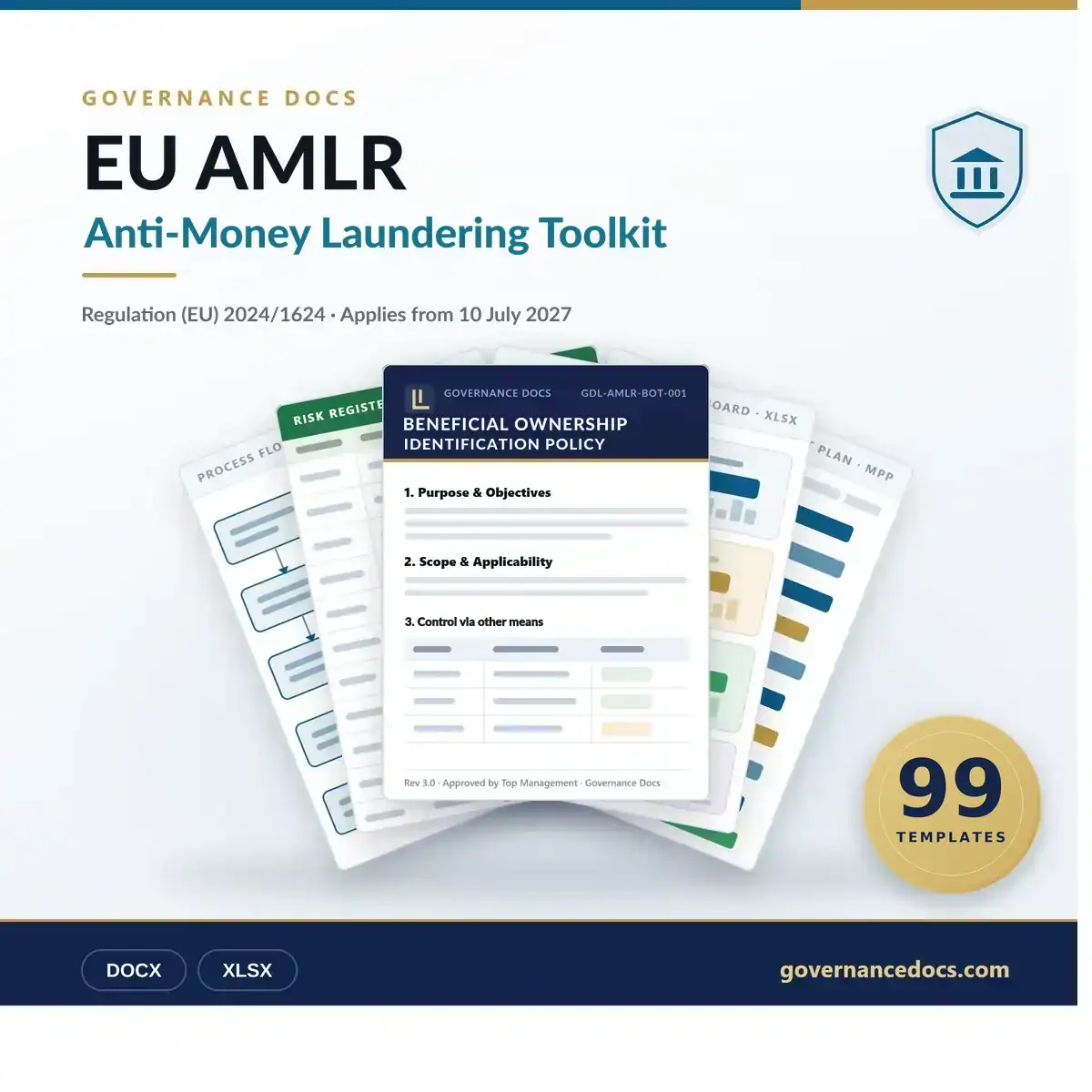
AML-CFT documentation toolkit for obliged entities under Regulation (EU) 2024/1624, the EU Anti-Money Laundering Regulation, which applies from 10 July 2027. 99 editable templates – 81 Word documents and 18 Excel workbooks – in 17 sections that follow the Regulation’s own chapter structure. Answers 76 of the 80 operative articles, with the 4 that carry no obliged-entity duty listed and reasoned. Includes the transfers of funds and crypto-assets regime that Articles 9(1) and 11(1) bring inside the AMLR framework. Instant download.
$99.00
✓ In stock — instant download after checkout
The EU AMLR Toolkit is a complete AML-CFT documentation set for Regulation (EU) 2024/1624, which applies from 10 July 2027. It is a Regulation, not a Directive: it applies directly in all 27 Member States, there is no national transposition to wait for, and the national rules that grew up around the previous Directive do not automatically carry forward.
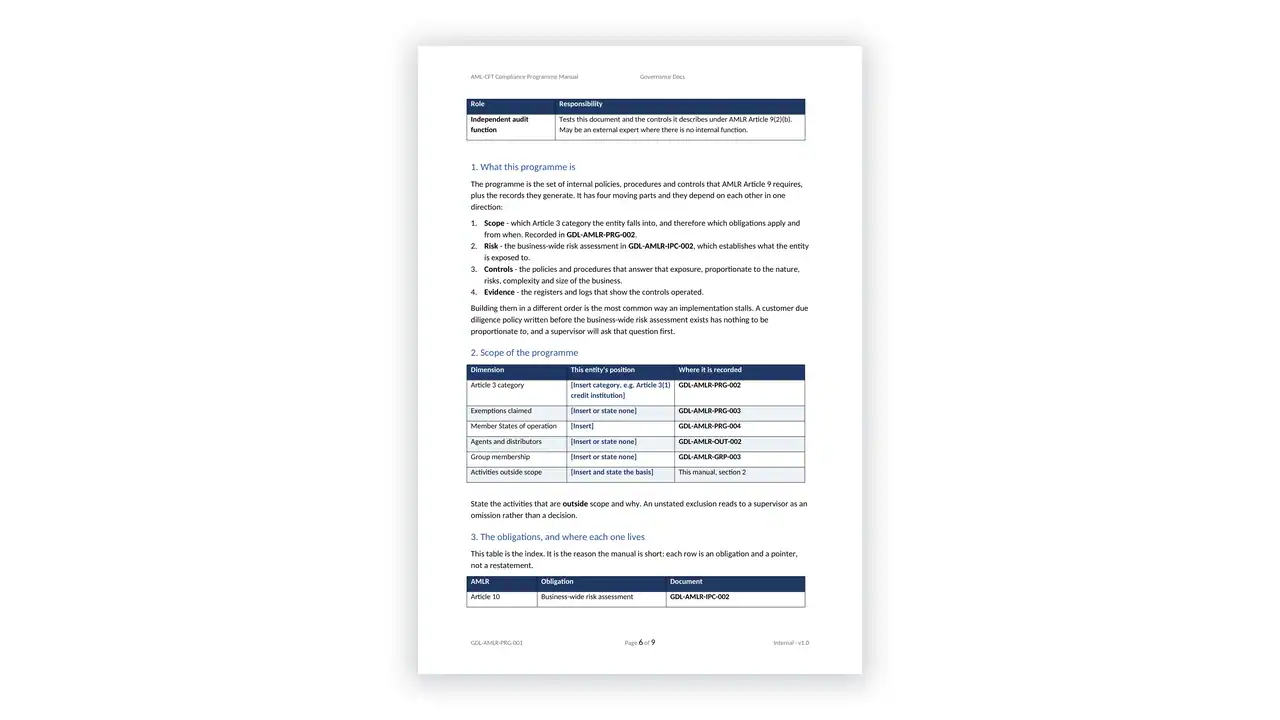
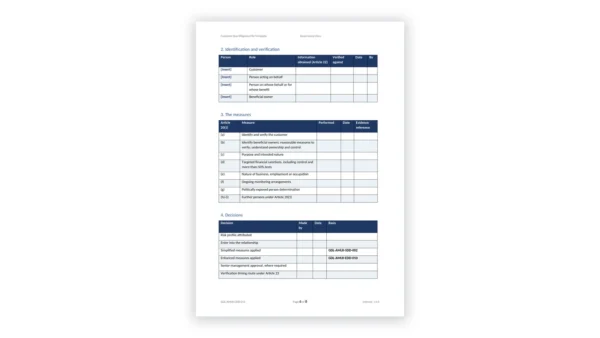
The EU AMLR Toolkit is 99 editable templates – 81 Microsoft Word documents and 18 Microsoft Excel workbooks – organised into 17 sections that follow the Regulation’s own chapter structure, so a supervisor working through Chapter III can be handed the matching section. The full text of the Regulation is published on EUR-Lex.
The EU AMLR Toolkit answers 76 of the 80 operative articles. The other 4 are mandates to AMLA or to Member States rather than duties on an obliged entity, and each one is listed with the reason rather than quietly omitted.
Chapter IX – Articles 81 to 89 – is out of scope, because it is addressed to Financial Intelligence Units, the EPPO, OLAF, the Commission and the co-legislators. Article 90 is covered by the EU AMLR Toolkit for its application dates. A pack claiming to cover all ninety articles is claiming to answer obligations that are not yours.
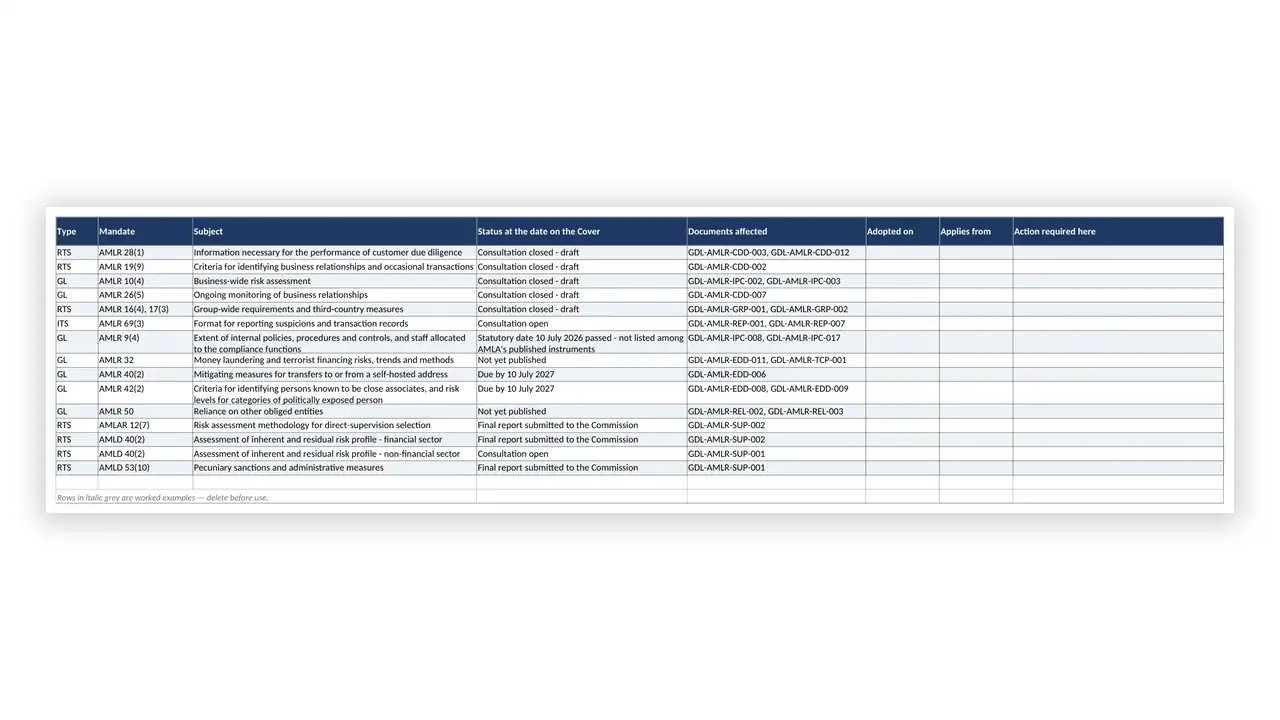
The Regulation mandates around two dozen regulatory technical standards, implementing technical standards and guidelines. Most carried a statutory deadline of 10 July 2026 and most were still in draft when this EU AMLR Toolkit was written – and the application date does not move because they are late. You can track their progress on the AMLA website.
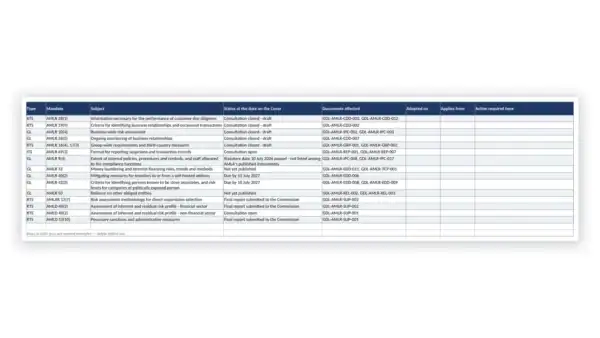
So every document rests on the Regulation itself. Where a Level 2 measure will add detail, the document says so, records the position the entity has taken in the meantime, and is structured to receive the final text. A Level 2 Measures Status Tracker lists each mandate, its status, the documents it affects and the action it will require.
That is a deliberate choice. A pack that states draft technical-standard content as though it binds is wrong on the day the final text lands, and wrong in a way that is expensive to unpick.
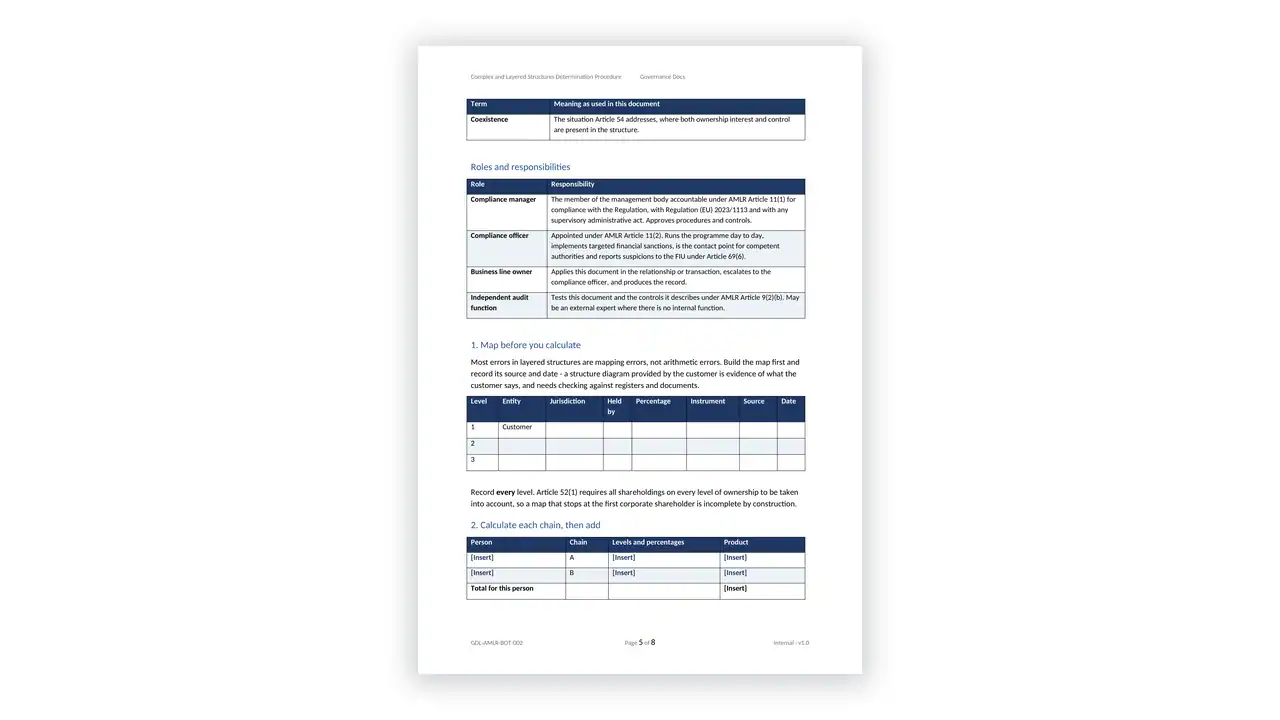
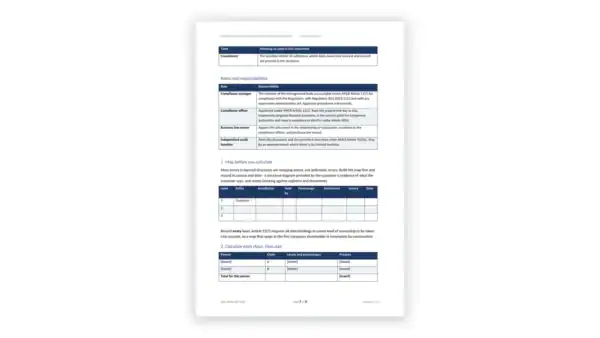
Article 11 requires two appointments, and they are not interchangeable. A compliance manager who is a member of the management body in its management function, accountable for compliance with this Regulation and with Regulation (EU) 2023/1113. And a compliance officer with sufficiently high hierarchical standing who runs the programme day to day, implements targeted financial sanctions, is the contact point for competent authorities and reports suspicions to the FIU under Article 69(6).
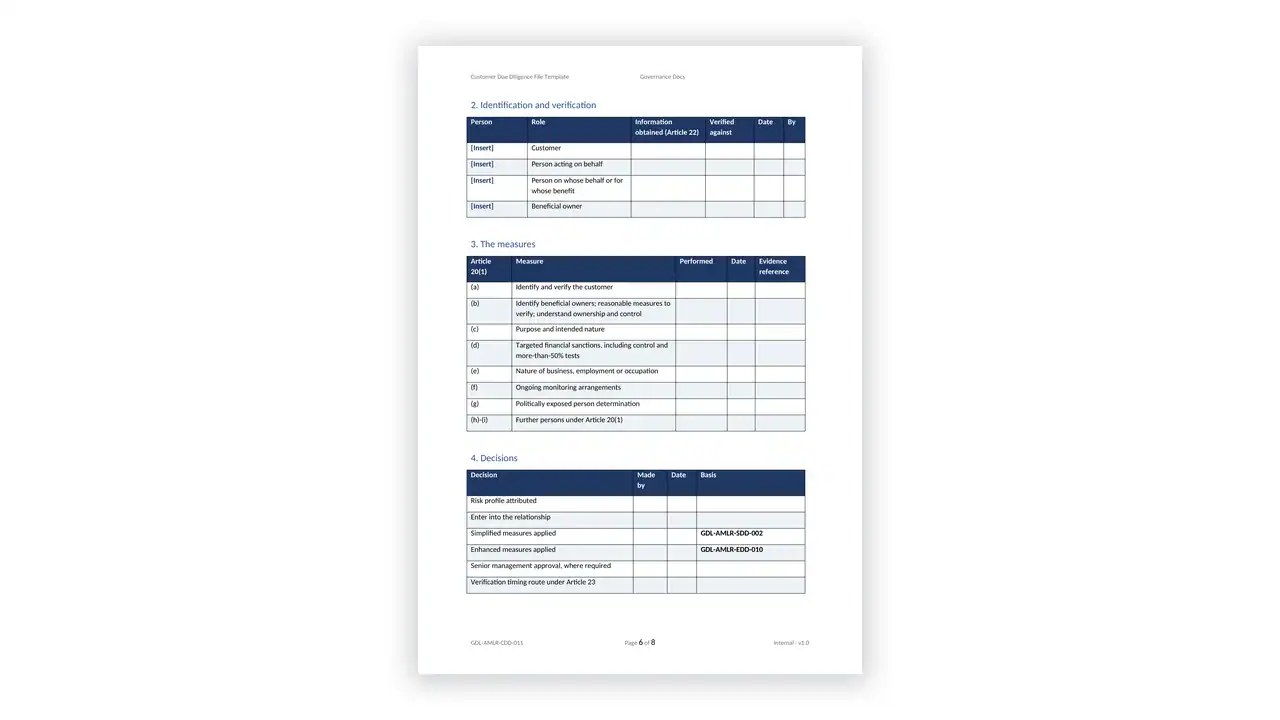
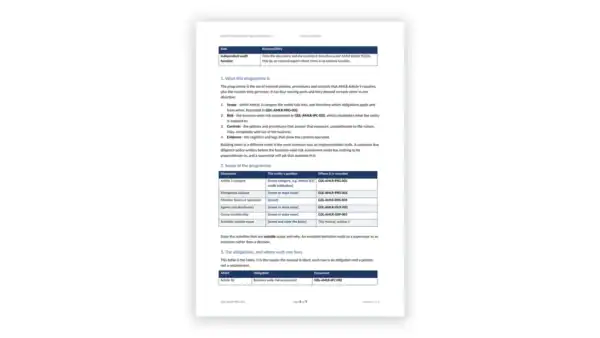
The EU AMLR Toolkit gives each role separate terms of reference, and carries the split through every document – including which of the two approvals under Article 9(2) each policy and procedure needs.
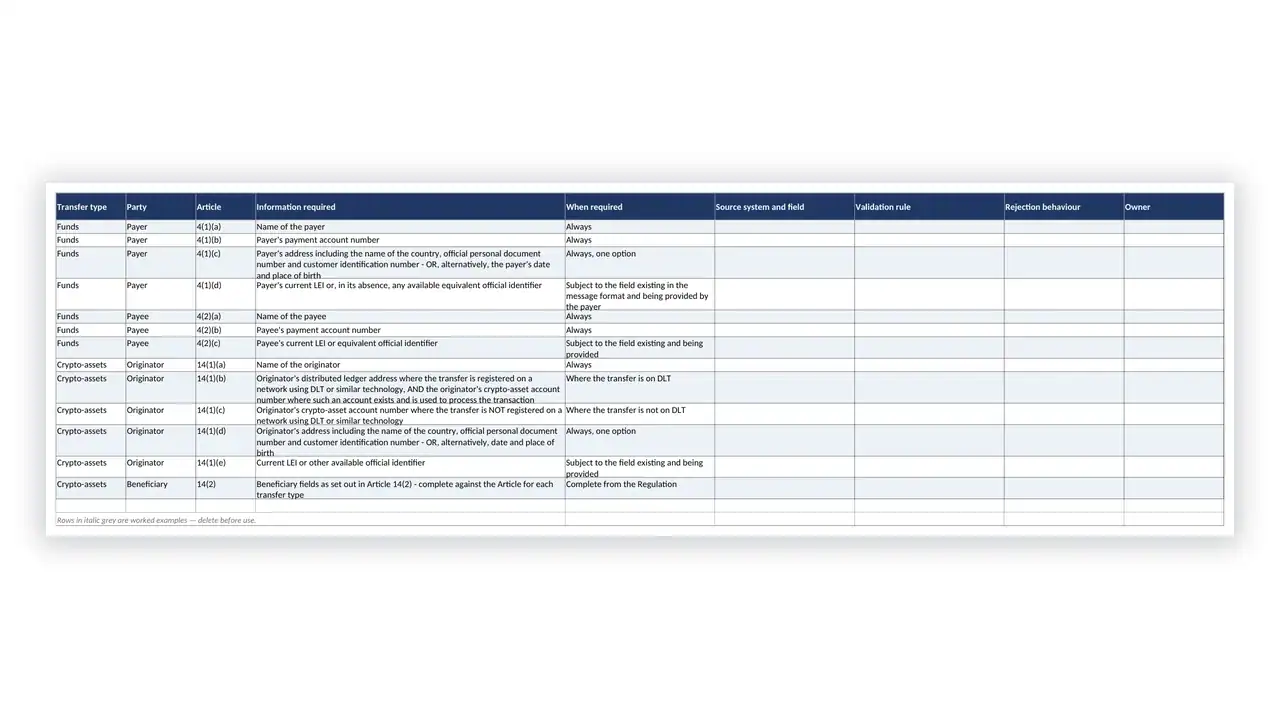
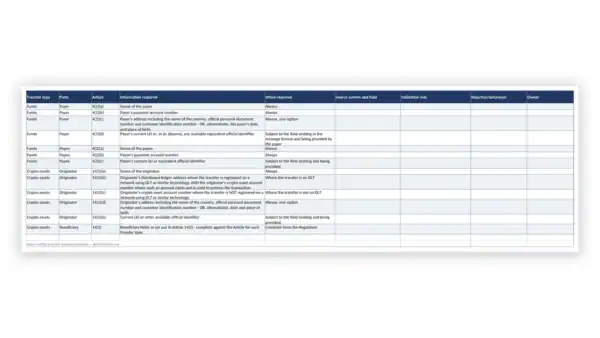
Articles 9(1) and 11(1) name Regulation (EU) 2023/1113 expressly: the internal policies must ensure compliance with it, and the compliance manager is accountable for it. So the information that must accompany transfers of funds and transfers of crypto-assets is part of this framework, with the Article 4 and Article 14 field sets set out in full.
It is also the part that is already live, unlike AMLR itself.
Not as an afterthought. The Regulation gives them their own provisions, and the EU AMLR Toolkit follows: Article 37 correspondent relationships for crypto-asset services, Article 40 measures for transfers to and from self-hosted addresses, the Article 39(2) duty to detect attempts by shell institutions to use the entity’s accounts, and the anonymity-enhancing coin limb of Article 79. Firms already authorised under the markets regime will want the MiCA Toolkit alongside it.
Three of the EU AMLR Toolkit workbooks ship seeded from the Regulation rather than empty.
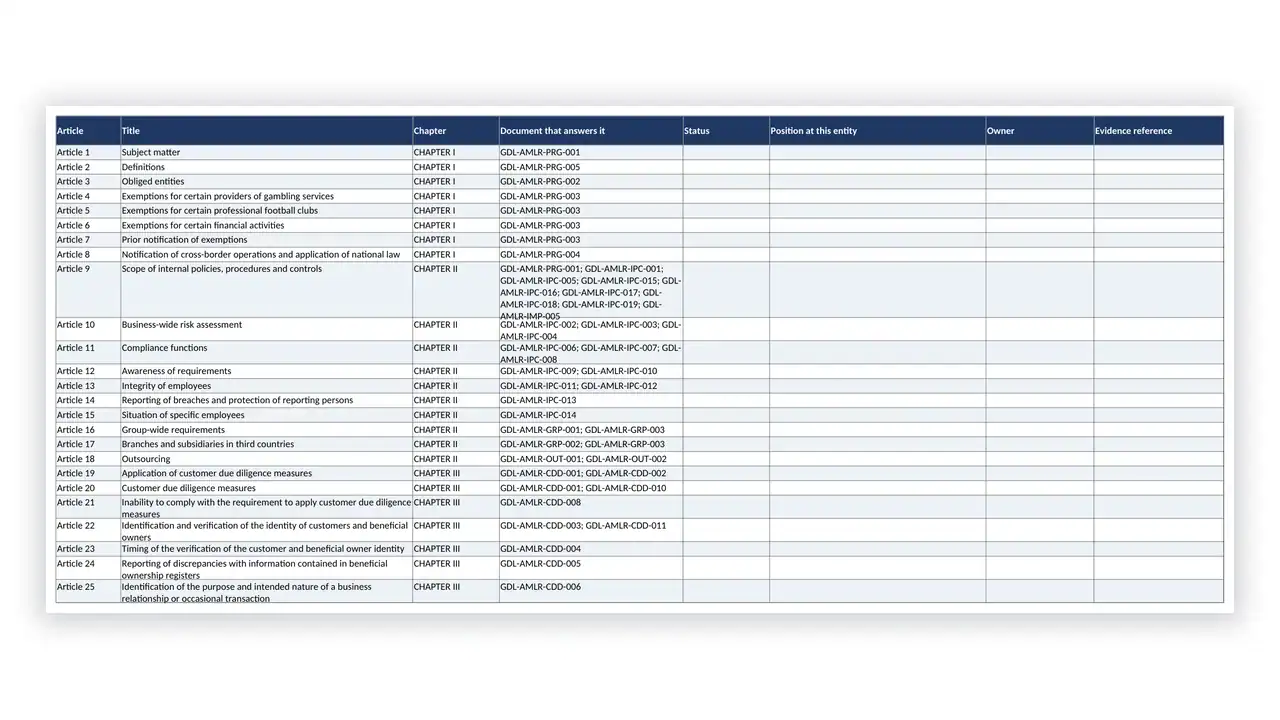
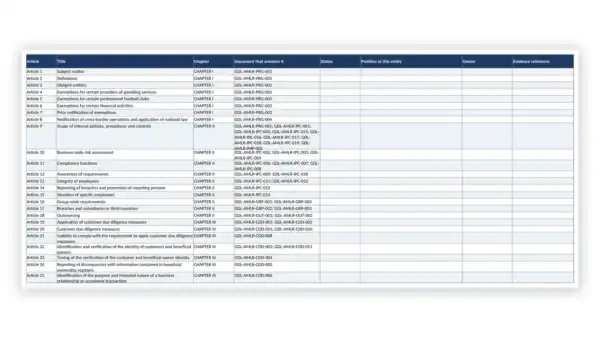
The Article-by-Article Compliance Register opens with every one of the 80 operative articles already listed, each with the document that answers it – and the 4 with no obliged-entity duty flagged with the reason.
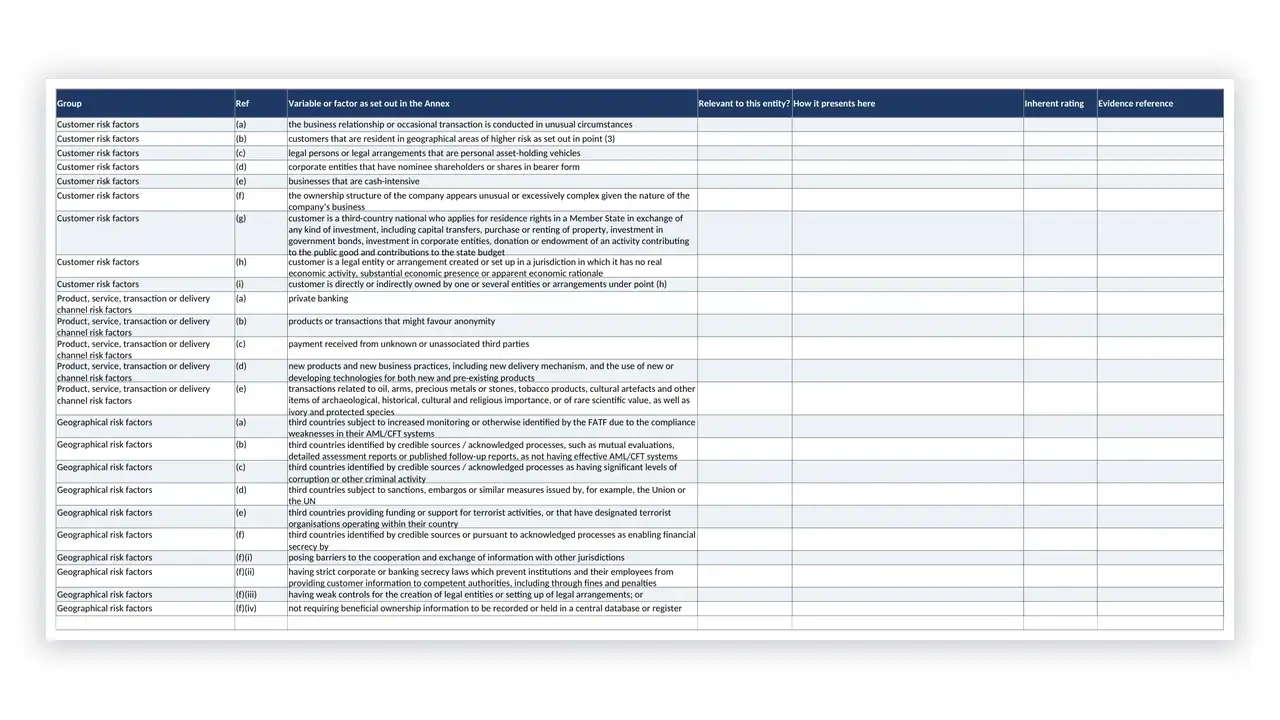
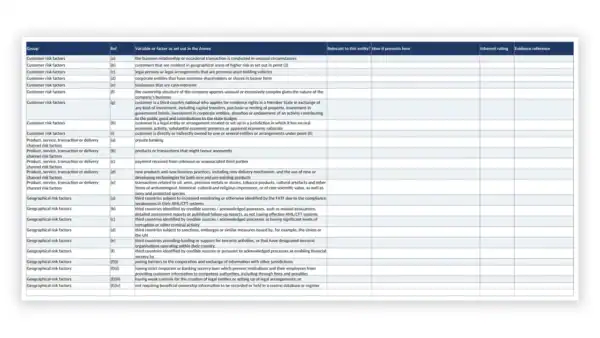
The Business-Wide Risk Assessment Workbook opens with the Annex I risk variables and the Annex II and Annex III risk factors already entered, group by group.
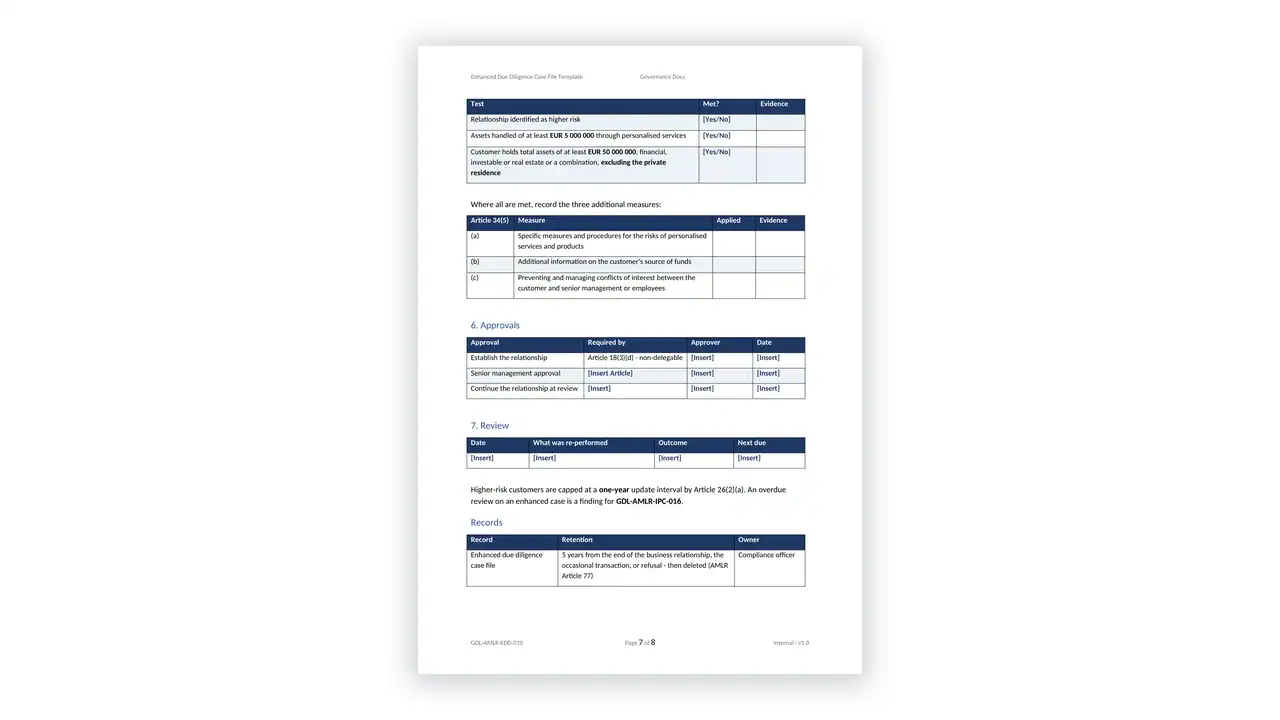
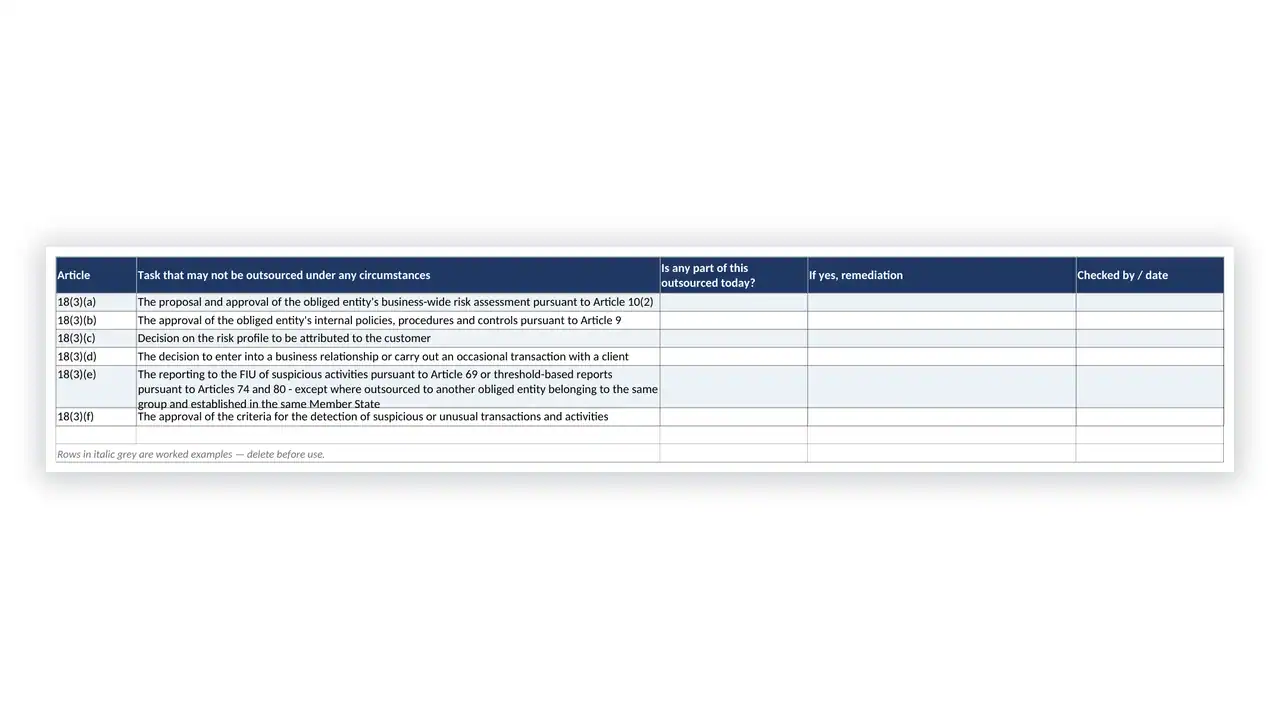
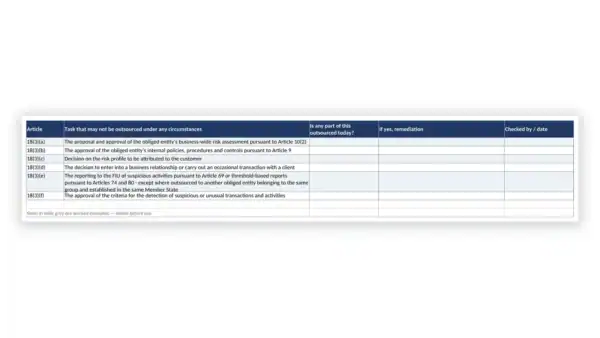
The Outsourcing Register opens with the six tasks Article 18(3) says may not be outsourced under any circumstances, so the first thing the EU AMLR Toolkit does there is stop you.
The detail in the EU AMLR Toolkit comes from reading the Articles, not a summary of them. A few of the things that produces:
Financial-sector obliged entities rarely carry one obligation at a time. The EU AMLR Toolkit is built to sit alongside the DORA Toolkit for digital operational resilience, the NIS2 Toolkit where the entity is also an essential or important entity, and the Basel III Toolkit for prudential risk. Personal data processed under Articles 76 and 77 is handled with the GDPR Toolkit.
| Section | Documents | Basis in the Regulation |
|---|---|---|
| S01 Programme foundation and scope | 5 | AMLR Chapter I, Articles 1-8 |
| S02 Internal policies and controls | 19 | AMLR Chapter II Section 1, Articles 9-15 |
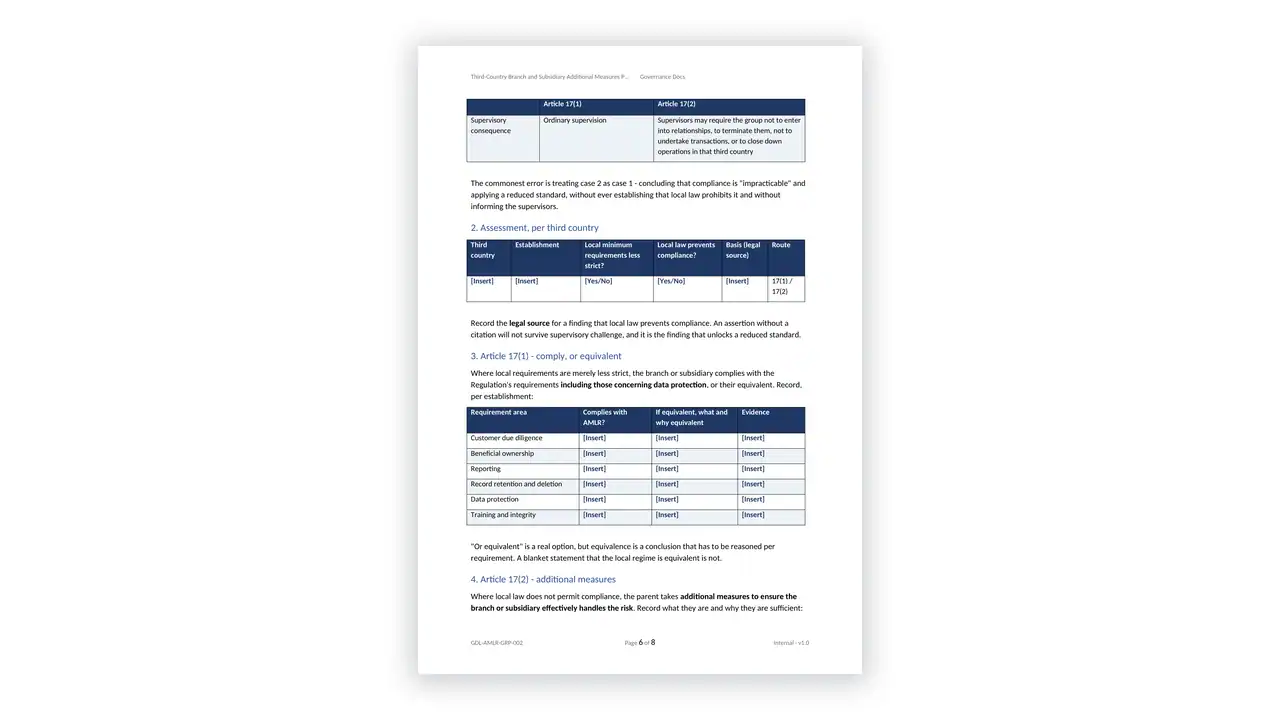
| S03 Group-wide requirements | 3 | AMLR Chapter II Section 2, Articles 16-17 |
| S04 Outsourcing | 2 | AMLR Chapter II Section 3, Article 18 |
| S05 Customer due diligence – general | 12 | AMLR Chapter III Section 1, Articles 19-28 |
| S06 Third-country policy | 3 | AMLR Chapter III Section 2, Articles 29-32, 35 |
| S07 Simplified due diligence | 2 | AMLR Chapter III Section 3, Article 33 |
| S08 Enhanced due diligence | 11 | AMLR Chapter III Section 4, Articles 34-46 |
| S09 Sector specifics and reliance | 4 | AMLR Chapter III Sections 5-6, Articles 47-50 |
| S10 Beneficial ownership transparency | 10 | AMLR Chapter IV, Articles 51-67 |
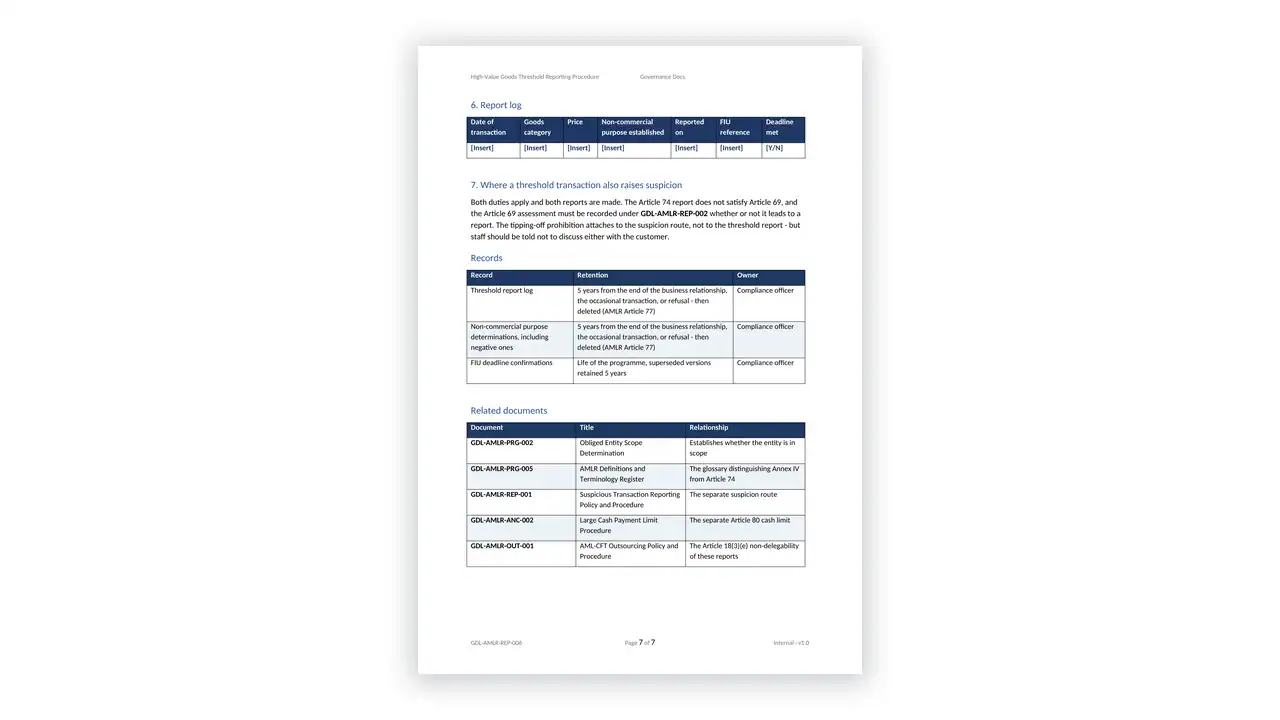
| S11 Reporting obligations | 7 | AMLR Chapter V, Articles 69-74 |
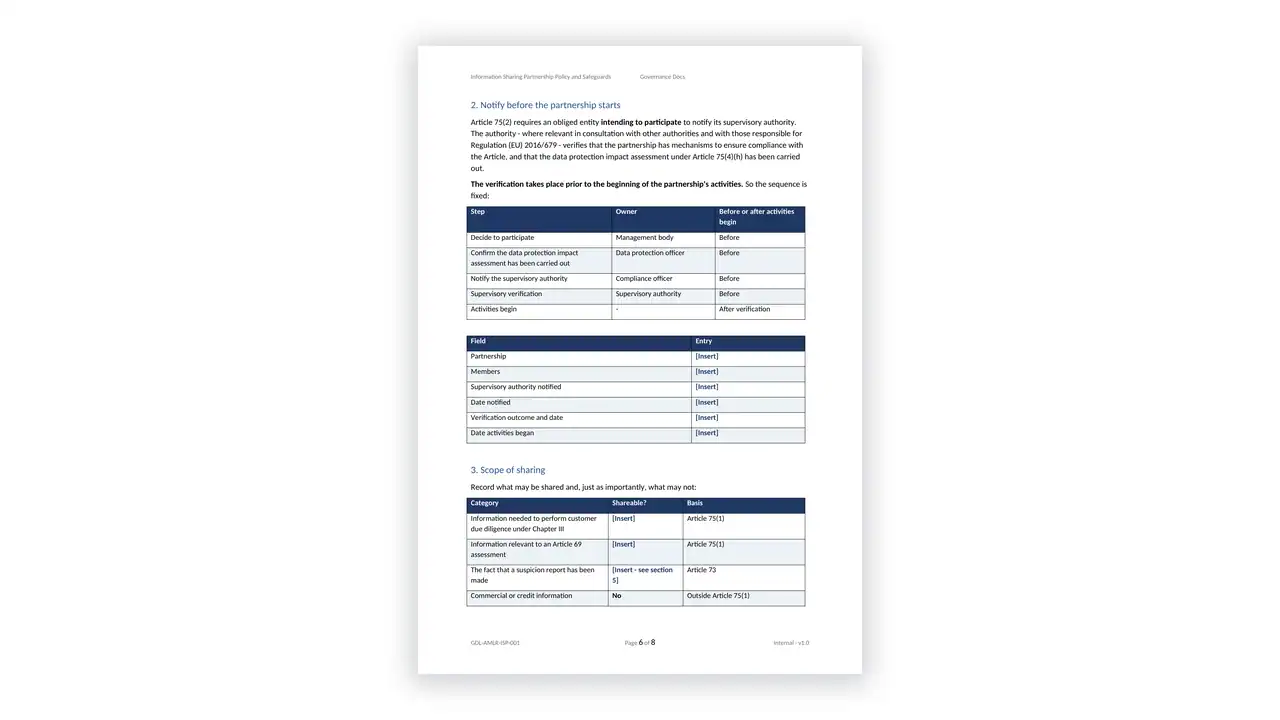
| S12 Information sharing partnerships | 2 | AMLR Chapter VI, Article 75 |
| S13 Data protection and record retention | 4 | AMLR Chapter VII, Articles 76-78 |
| S14 Anonymous instruments and cash limits | 2 | AMLR Chapter VIII, Articles 79-80 |
| S15 Transfers of funds and crypto-assets | 4 | Regulation (EU) 2023/1113, required by AMLR Articles 9(1) and 11(1) |
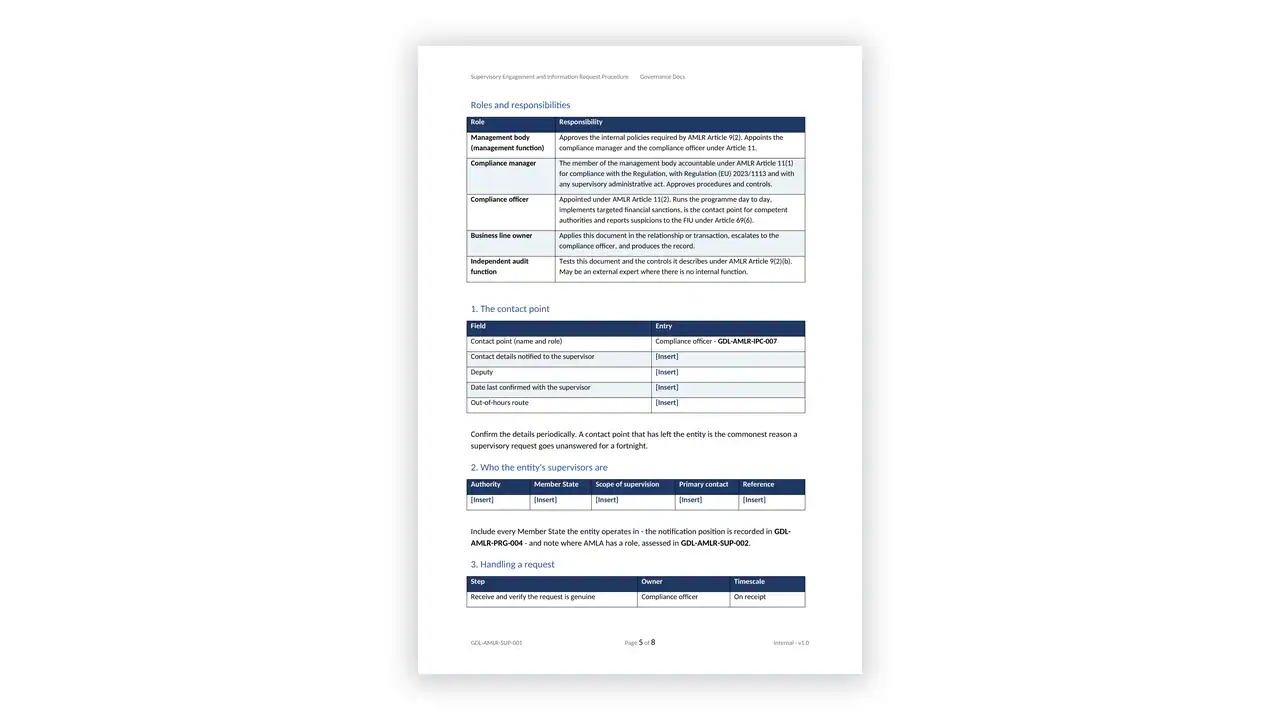
| S16 Supervision readiness | 3 | Regulation (EU) 2024/1620 (AMLAR) and Directive (EU) 2024/1640 |
| S17 Implementation and transition | 6 | AMLR Article 90 – application from 10 July 2027 |
S01 Programme foundation and scope
S02 Internal policies and controls
S03 Group-wide requirements
S04 Outsourcing
S05 Customer due diligence – general
S06 Third-country policy
S07 Simplified due diligence
S08 Enhanced due diligence
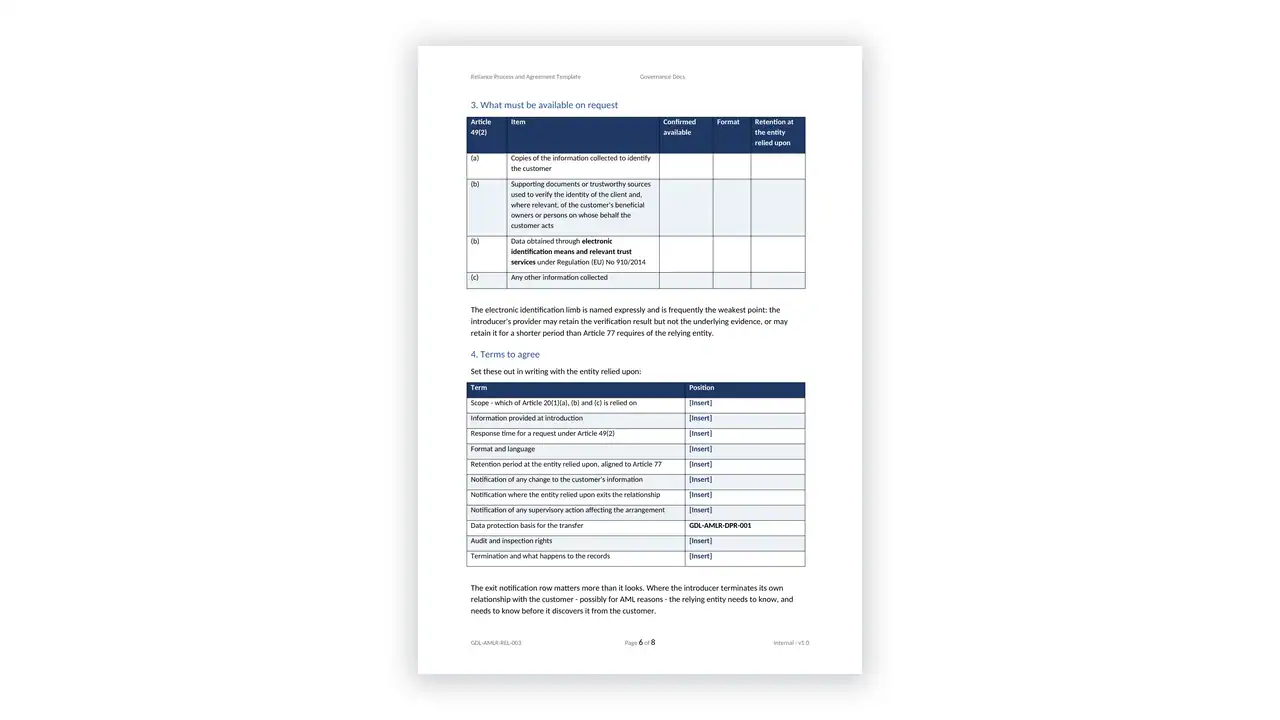
S09 Sector specifics and reliance
S10 Beneficial ownership transparency
S11 Reporting obligations
S12 Information sharing partnerships
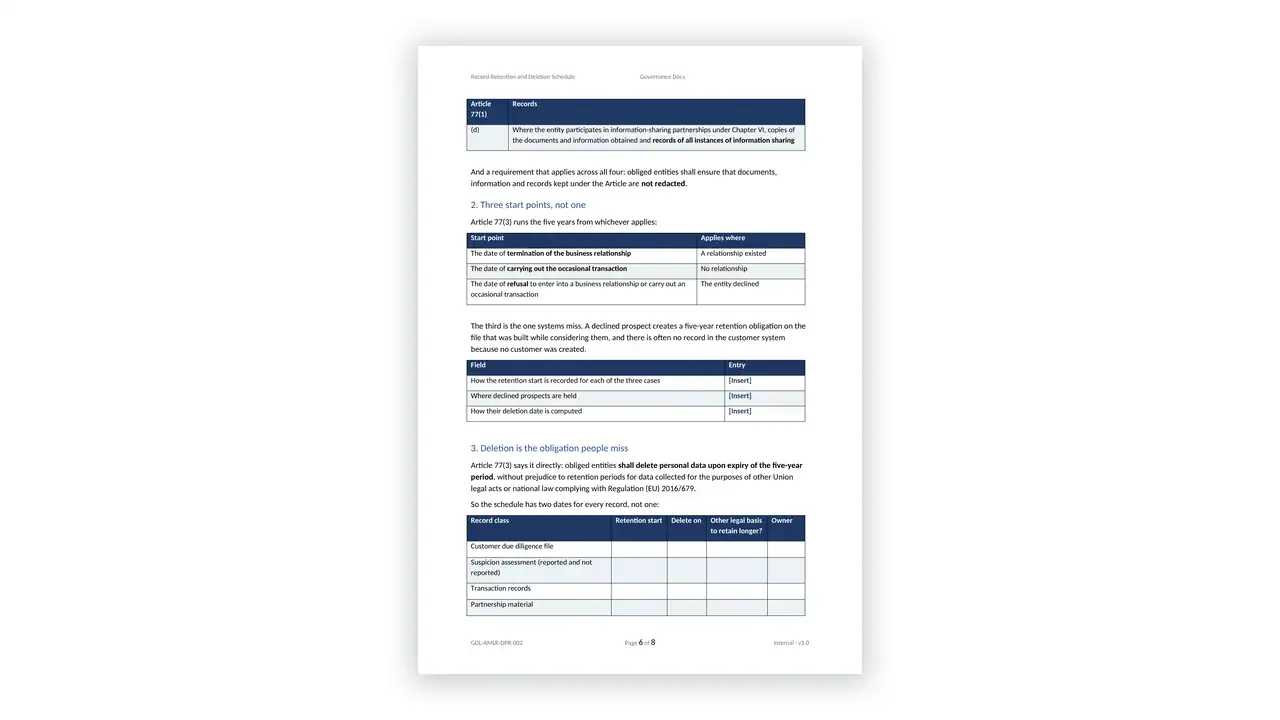
S13 Data protection and record retention
S14 Anonymous instruments and cash limits
S15 Transfers of funds and crypto-assets
S16 Supervision readiness
S17 Implementation and transition
Free articles that explain the requirements this toolkit covers.
 EU AMLR Toolkit – 99 AML Compliance Templates$99.00



Reviews
There are no reviews yet