
CART
No products in the cart.
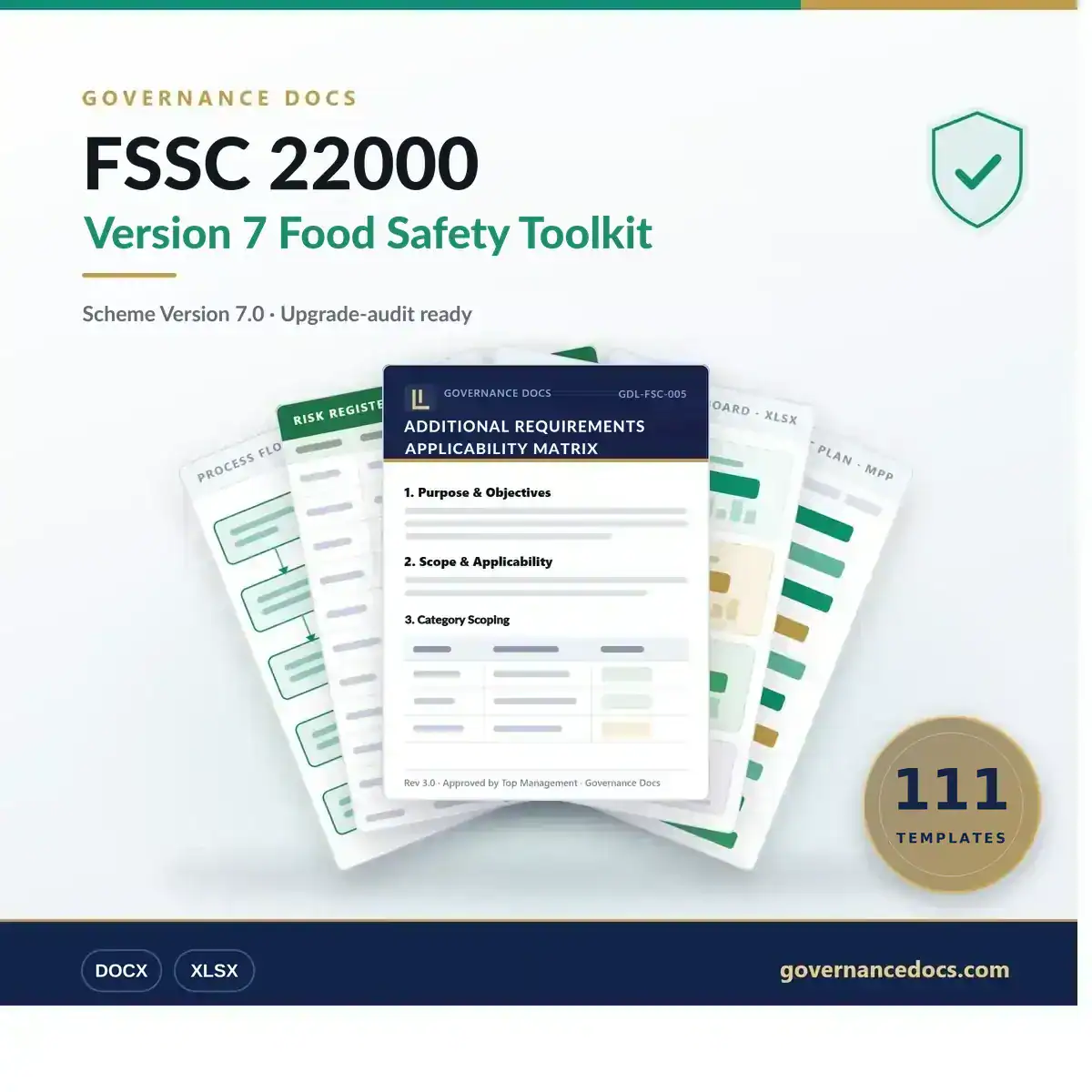
The FSSC 22000 Toolkit delivers 111 ready-to-use Microsoft Office templates written to Version 7.0 of the Scheme, published May 2026 — 80 Word documents and 31 Excel workbooks covering all 66 lettered FSSC Additional Requirements across the 18 requirement groups, the ISO 22000:2018 management system, and the prerequisite programme layer. Every document states the food chain categories it applies to, because 13 of the 18 groups carry category conditionality and implementing one you do not carry costs you at the audit. Built for the Version 7 upgrade window that opens 1 May 2027.
$99.00
✓ In stock — instant download after checkout
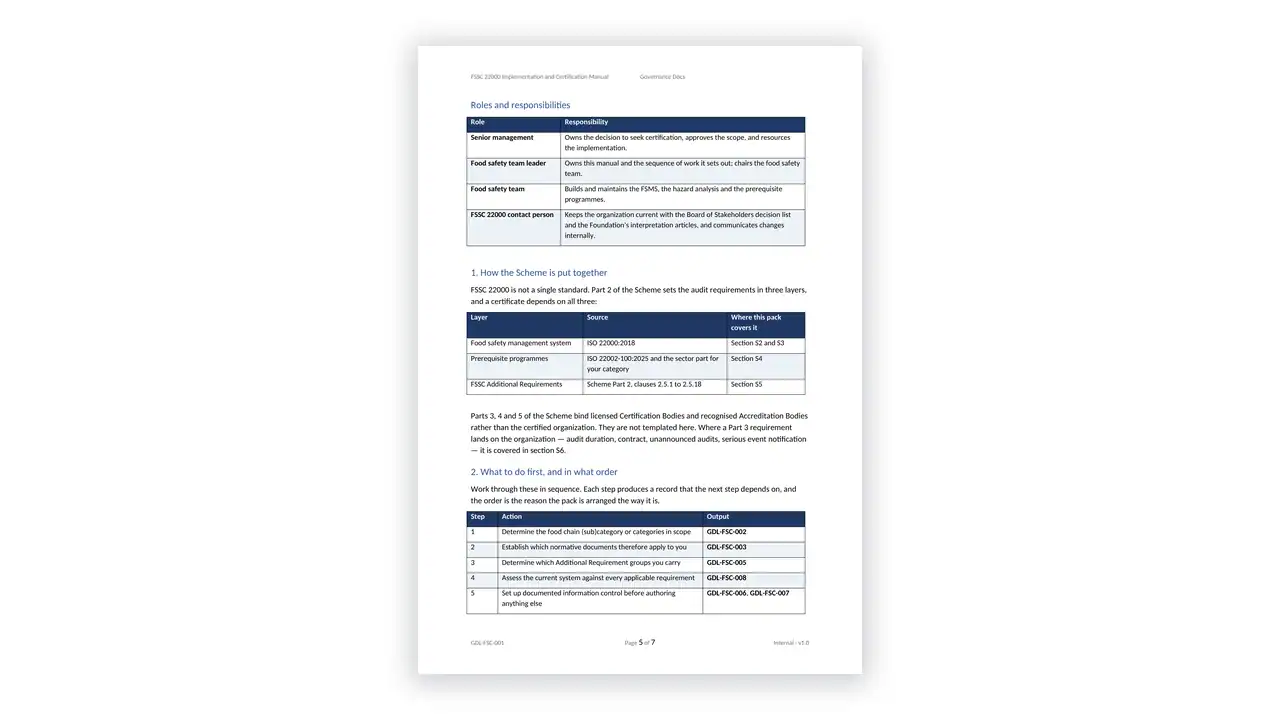
FSSC 22000 is not a standard. It is a certification Scheme built from three layers, and Part 2 of the Scheme says so in three clauses: ISO 22000:2018, the applicable prerequisite programme standard for your food chain category, and the FSSC 22000 Additional Requirements. A certificate depends on all three, and most documentation on the market covers one of them.
The FSSC 22000 Toolkit is built on that three-layer structure rather than on a generic management system template, and it is written to Version 7.0 of the Scheme, published May 2026.
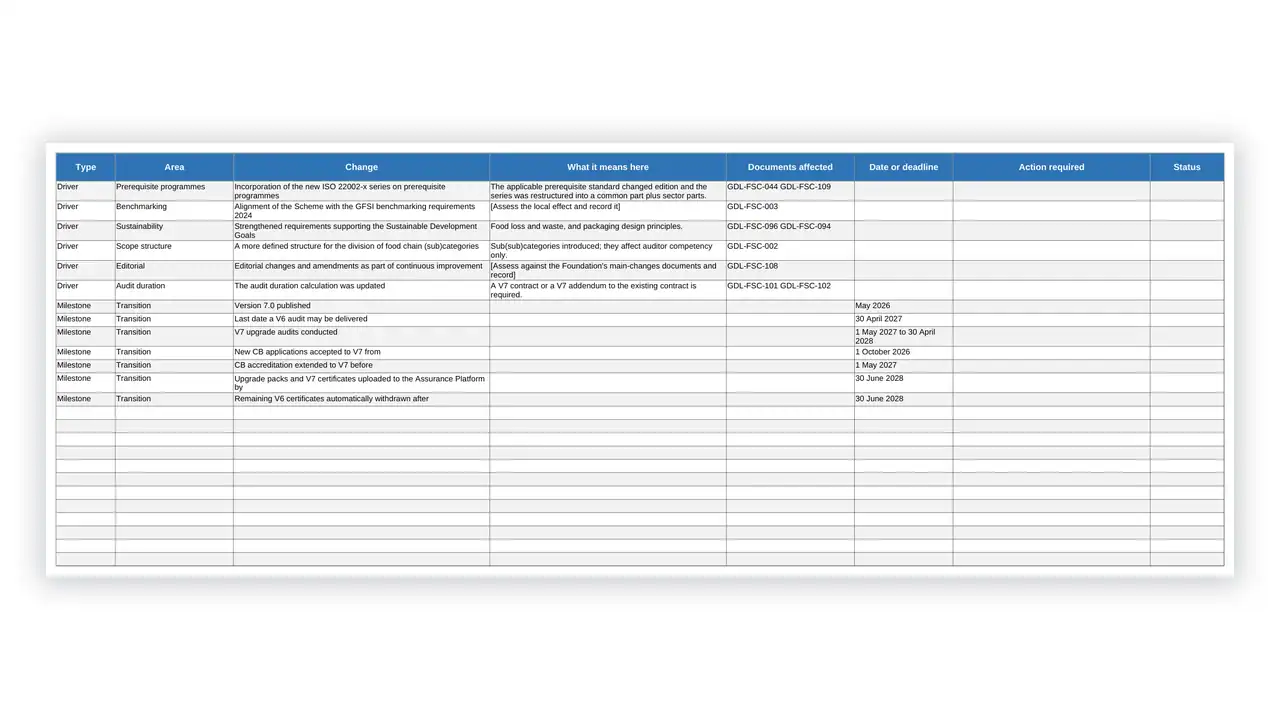
The Foundation has fixed the transition dates, and they are four separate clocks anchored to different events — not one deadline.
| Milestone | Date |
|---|---|
| Version 7.0 published | May 2026 |
| Last date a V6 audit may be delivered | 30 April 2027 |
| V7 upgrade audits conducted | 1 May 2027 to 30 April 2028 |
| New CB applications accepted to V7 from | 1 October 2026 |
| CB accreditation extended to V7 before | 1 May 2027 |
| Upgrade packs and V7 certificates uploaded to the Assurance Platform by | 30 June 2028 |
| Remaining V6 certificates automatically withdrawn after | 30 June 2028 |
Every certified site in the world has to be audited against Version 7 inside a twelve-month window — which is what the FSSC 22000 Toolkit is built for — and has to have rebuilt its documentation before that window opens. Certificates still on Version 6 after 30 June 2028 are withdrawn automatically and disappear from the public register.
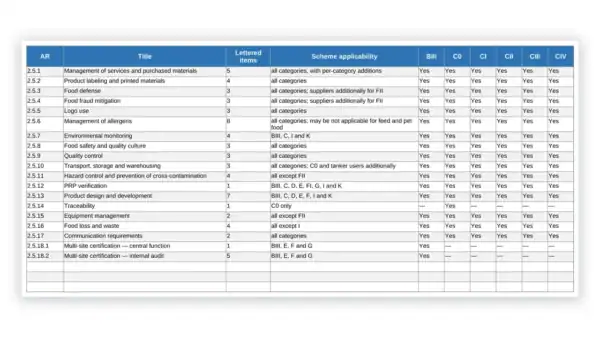
This is the single most expensive thing to get wrong, in both directions. Part 2 clause 2.5 sets 18 Additional Requirement groups containing 66 lettered requirements. 8 of the 18 groups are scoped to particular food chain categories by their own heading, and 5 more say “all food chain categories” but carry category-conditional requirements inside them — 13 of 18 in all.
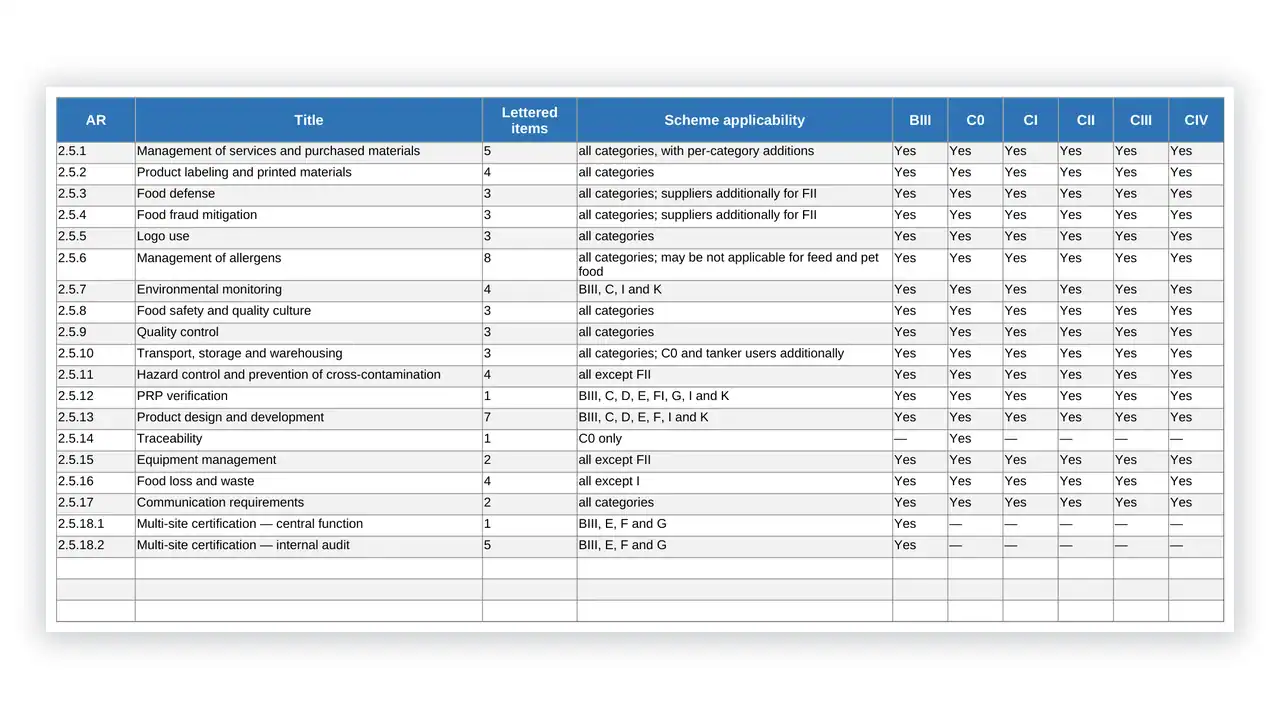
Environmental monitoring applies to eight of the thirteen categories. Traceability of edible carcass parts applies to primary conversion only. Food loss and waste applies to everyone except packaging manufacturers. Product design and development applies to everyone except transport and storage. Multi-site internal audit requirements apply to five categories. Subcategory FII carries no prerequisite programme standard at all.
Adopting a group your category does not carry commits you to evidence an auditor will then expect to see. Omitting one you do carry is a nonconformity.
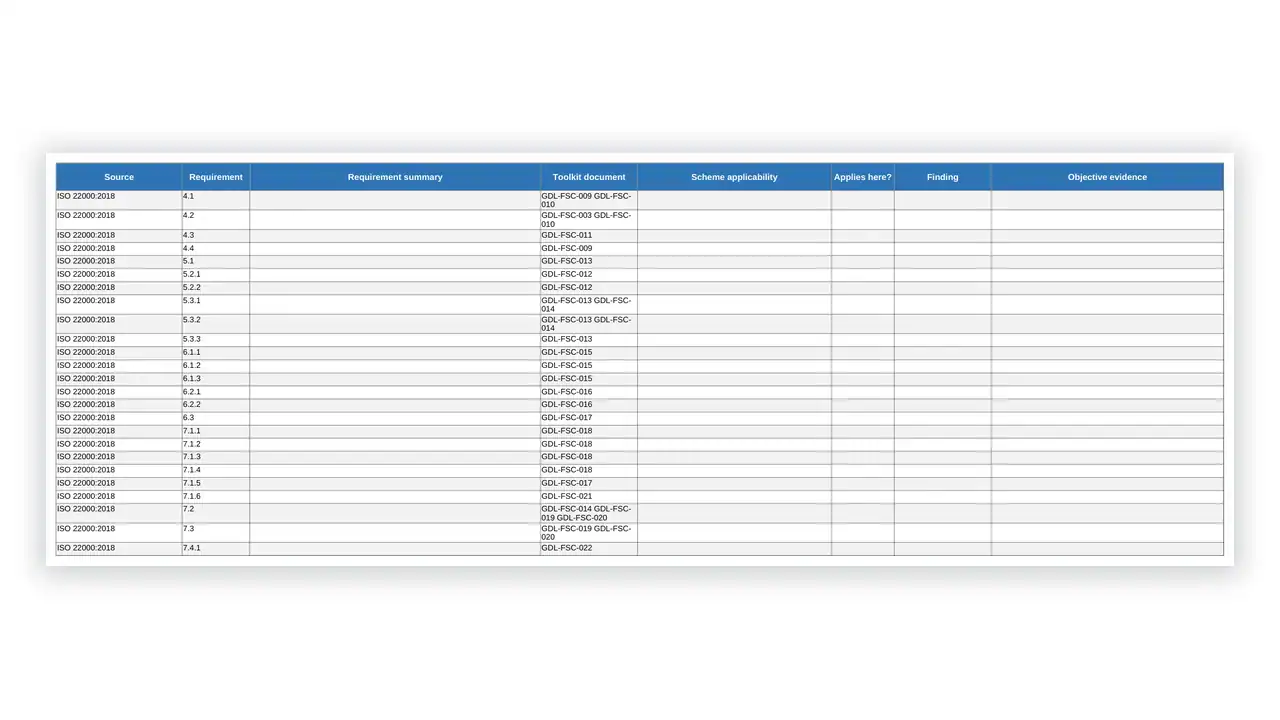
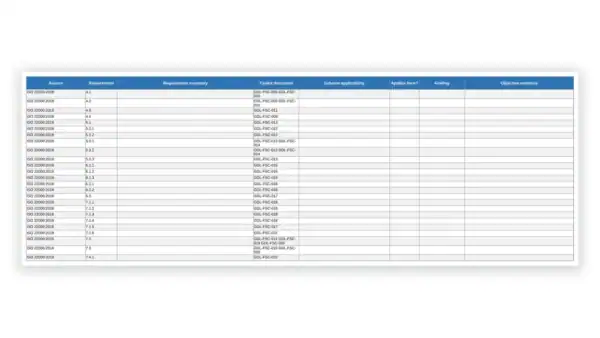
So every document in the FSSC 22000 Toolkit states on its face which of the 13 food chain (sub)categories it is written for, and the FSSC 22000 Toolkit opens with an applicability matrix generated from the Scheme’s own wording — 18 groups against 13 categories, with a column for your determination and a column for the reasoning. Recording why a group does not apply is what turns an empty folder into a defensible decision.
The ISO 22002 prerequisite programme series was reissued in 2025 and renumbered. The Scheme cites ISO 22002-1:2025 clause 10 for the procurement of animals, fish and seafood, and clause 12 for lairage inspection. Under the withdrawn 2009 edition those clause numbers meant cross-contamination and pest control respectively.
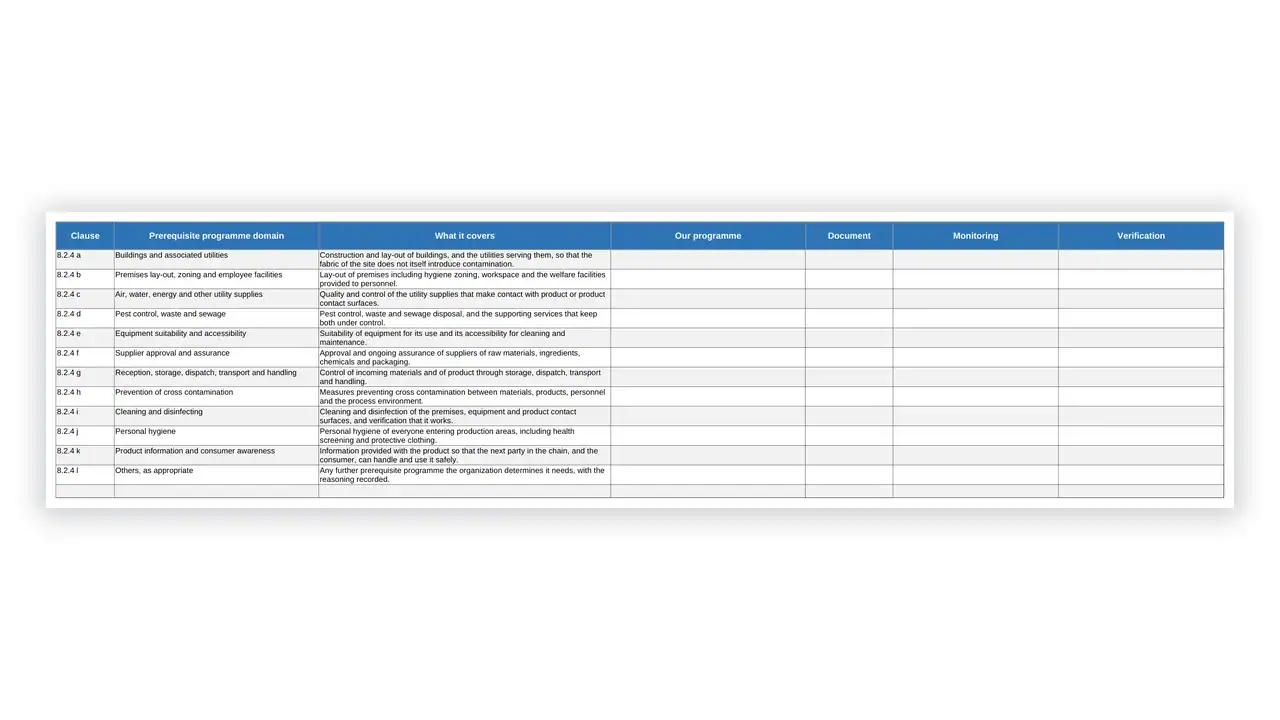
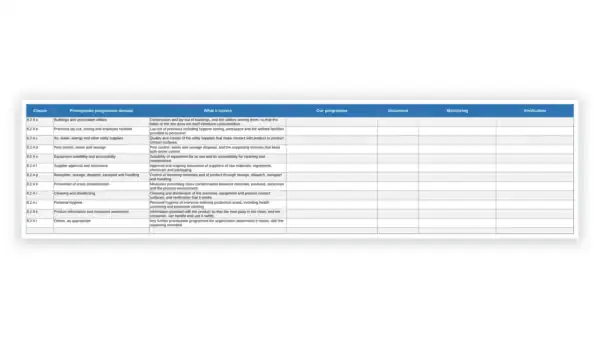
The FSSC 22000 Toolkit therefore does not map to ISO 22002 clause numbers. The prerequisite programme section is keyed instead to ISO 22000:2018 clause 8.2.4 (a) to (l) — the twelve prerequisite programme considerations the standard itself sets out — and names the ISO 22002 domains without clause numbers. Two clause numbers appear anywhere in the FSSC 22000 Toolkit, 16.2 and 16.3 for food defence and food fraud, because the Scheme’s own text states them.
Two documents in the FSSC 22000 Toolkit give you the worksheet to complete that clause mapping yourself from your licensed copy, and explain what to look for. It is an afternoon’s work and only the holder of the standard can do it correctly. An FSSC 22000 Toolkit that printed 2025 clause numbers it had not read would look more complete and be worth less.
The FSSC 22000 Toolkit is arranged in 7 sections following the Scheme’s own structure, not a generic ISO layout. The FSSC 22000 Toolkit build fails if any of the 66 lettered Additional Requirements, any of the twelve prerequisite programme considerations, or any of the 84 leaf clauses of ISO 22000:2018 is left without a document — 66 + 12 + 84 = 162 requirement keys in total. That is a check we run on every build, not a claim we make.
| # | Section | Documents |
|---|---|---|
| S1 | Scheme Foundation | 8 |
| S2 | FSMS | 19 |
| S3 | Hazard Control | 16 |
| S4 | Prerequisite Programmes | 17 |
| S5 | Additional Requirements | 40 |
| S6 | Certification Readiness | 6 |
| S7 | V6 to V7 Transition | 5 |
The FSSC 22000 Toolkit is 80 Word documents and 31 Excel workbooks.
The FSSC 22000 Toolkit workbooks are not empty grids. Eight of them are generated from the same requirement data that produced the documents, so they cannot disagree with the pack:
13 categories, pre-populated from the Scheme’s applicability wording;
prerequisite programme domain and all 66 lettered Additional Requirements, each naming the document in the pack that answers it;
answers the audit and the readiness check from one requirement set;
clause 8.2.4 considerations;
Introduction;
of the 13 categories;
and which depend on your certification body.
If you hold ISO 22000 today, the FSMS layer is largely familiar. What is not familiar is the Additional Requirements layer, and it is most of the work:
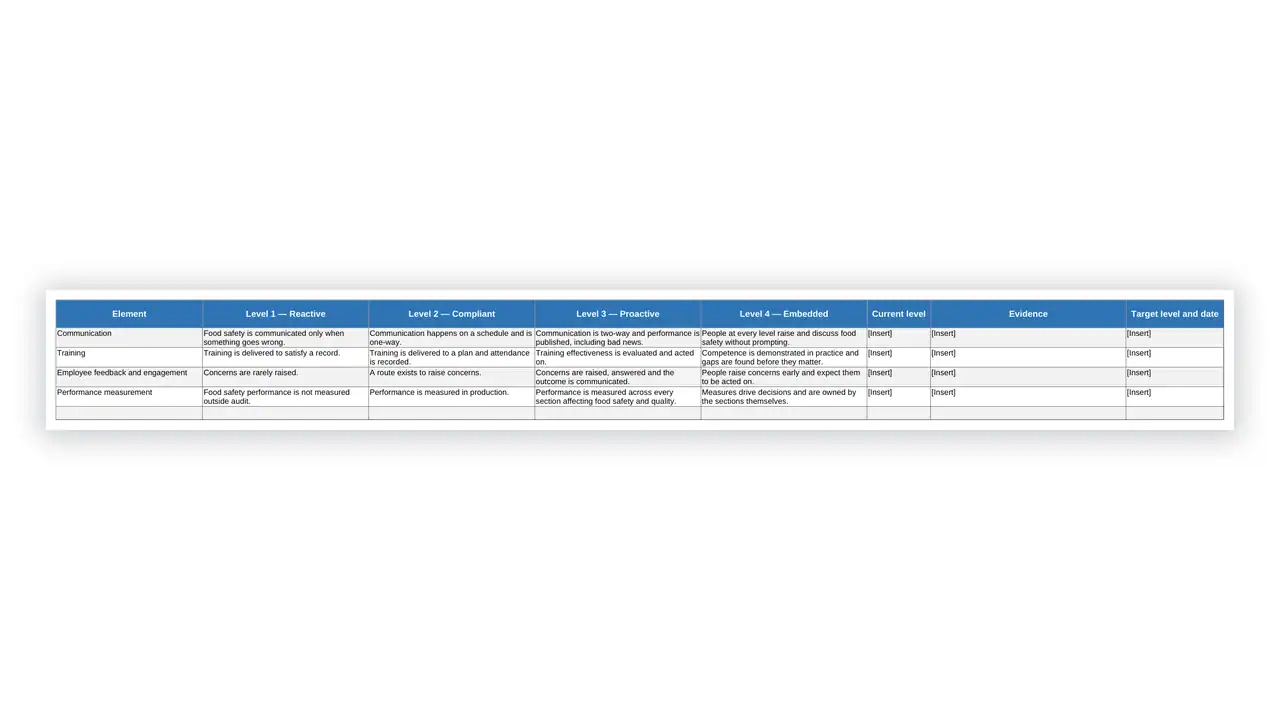
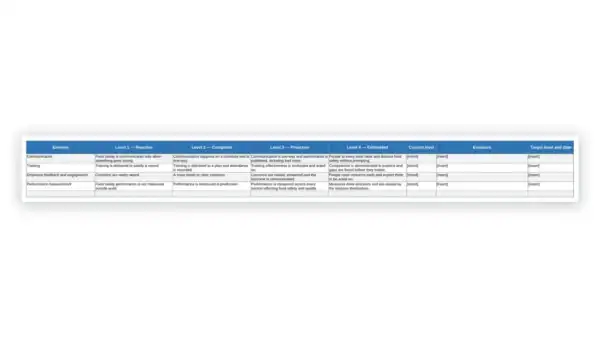
Food safety and quality culture — objectives set by senior management covering communication, training, employee feedback and engagement, and performance measurement across all sections of the organization, supported by a documented plan with targets and timelines. The FSSC 22000 Toolkit includes a culture maturity assessment and a ten-question engagement survey mapped to the four required elements.
Quality control inside a food safety system — a quality policy and quality objectives, quality parameters for every product in scope, product release addressing quality control and testing, quality results analysed into management review, and quality elements inside the internal audit scope. A food safety internal audit programme that does not cover quality parameters, product release and quantity control does not meet the Scheme however well it meets ISO 22000.
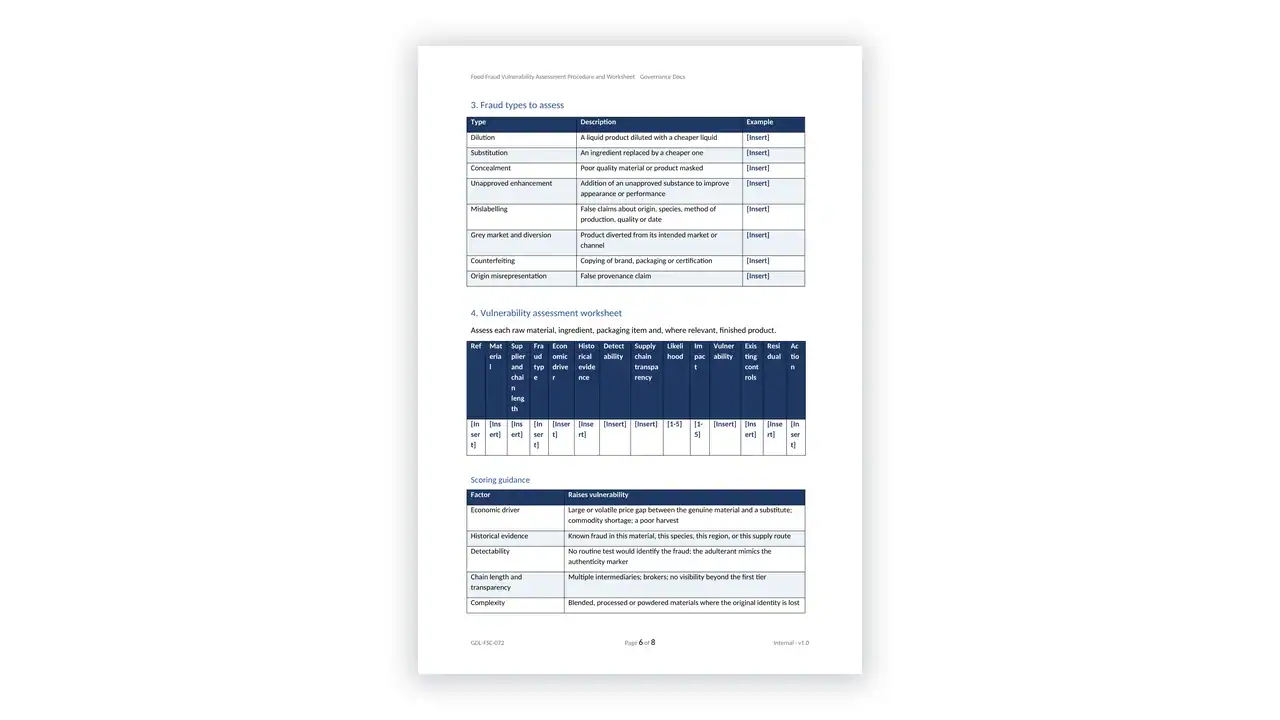
Food defence and food fraud as separate disciplines — different motivations, different assessments, different plans, and under Version 7 both sit in the prerequisite standard as well as in the Additional Requirements. The FSSC 22000 Toolkit keeps them apart, with competence records for the personnel producing each, because the Scheme names that competence requirement explicitly.
Environmental monitoring with a documented effectiveness evaluation — not just a sampling schedule, but a documented procedure evaluating the effectiveness of all controls preventing contamination from the manufacturing environment, with the five review triggers the Scheme sets.
Artwork and print control in six named parts — artwork approval, change and obsolescence, print run approval against a master sample, in-run error detection, segregation of print variants, and reconciliation of unused printed material. That last one is arithmetic: an unexplained shortfall of printed labels means labels are somewhere they should not be.
Serious event notification within three working days — from the commencement of the event, not from the point you finish investigating. The FSSC 22000 Toolkit includes the decision route, the criteria, and the communication log.
We sell three packs in this space and it is worth being direct about which you need.
| If you are | Buy |
|---|---|
| Certifying to FSSC 22000, or upgrading to Version 7 | FSSC 22000 Toolkit |
| Certifying to ISO 22000 alone, with no GFSI scheme | ISO 22000 Toolkit |
| Building a HACCP system without a management system standard | HACCP Toolkit |
The FSSC 22000 Toolkit is a superset. It contains the ISO 22000 management system layer and the hazard control system, and then the two layers the other packs do not have: the prerequisite programme structure and the 18 Additional Requirement groups. If you are going for FSSC certification you need this one, and you do not need the other two as well.
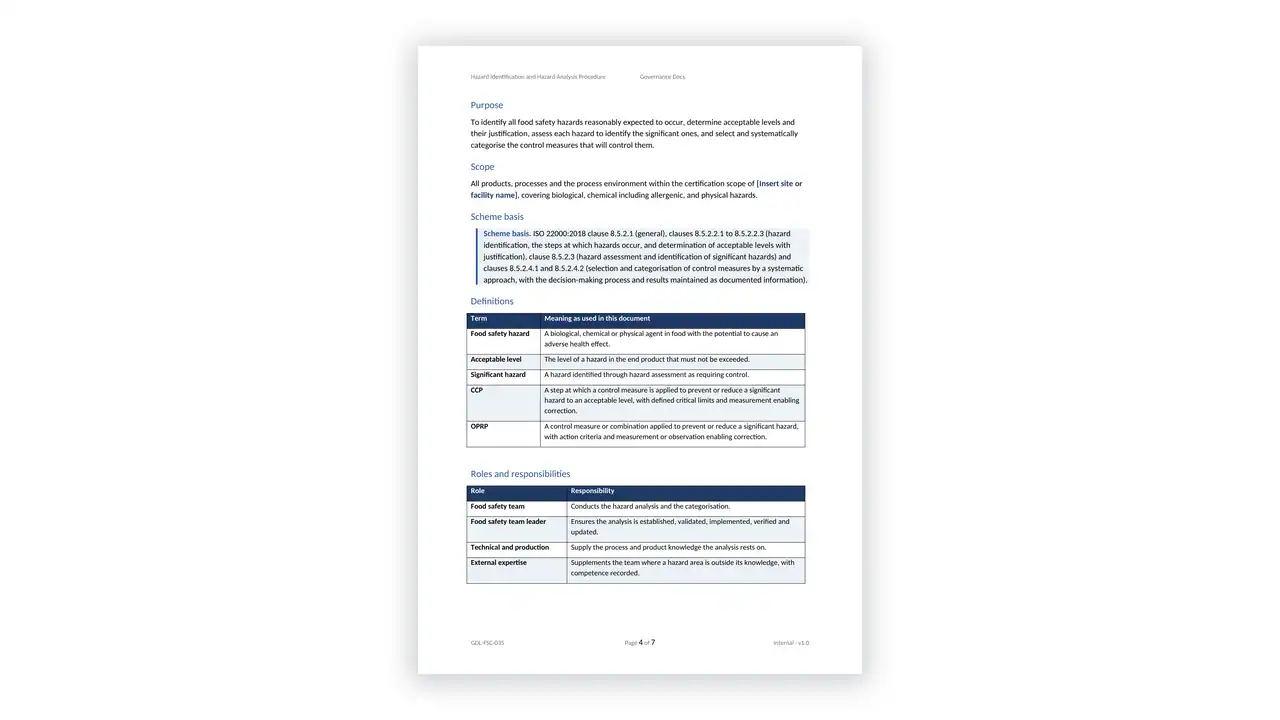
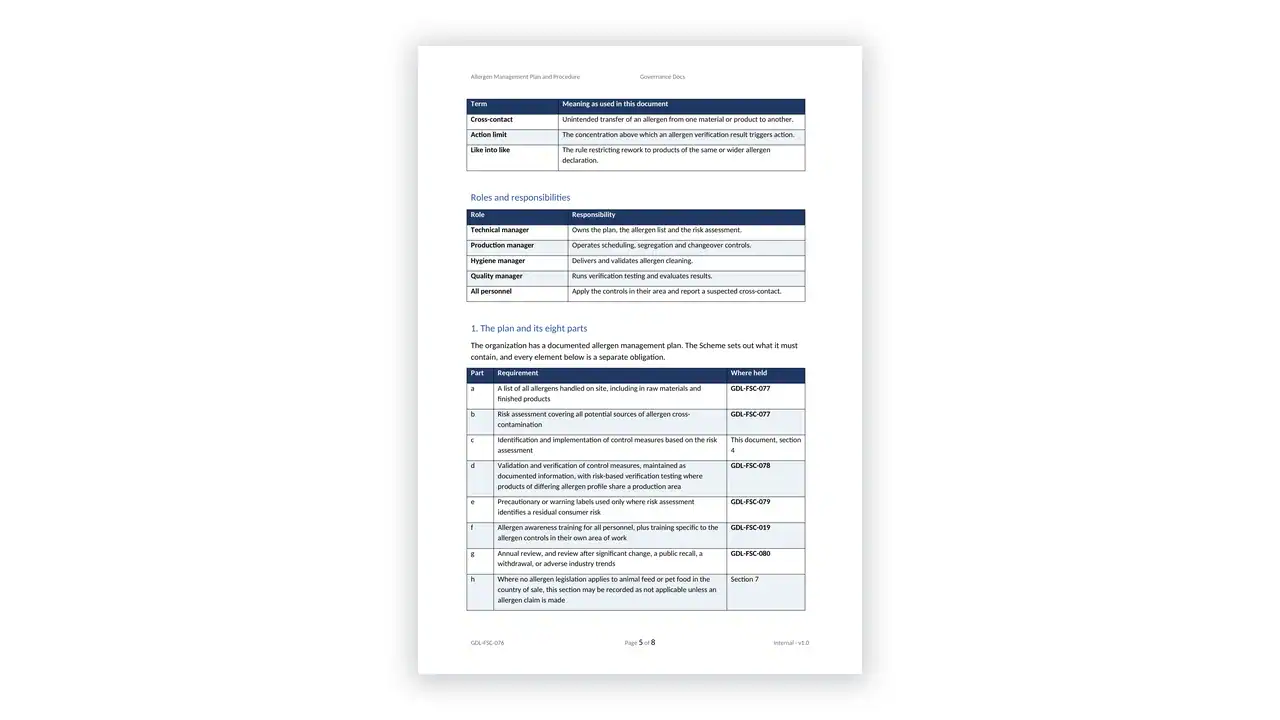
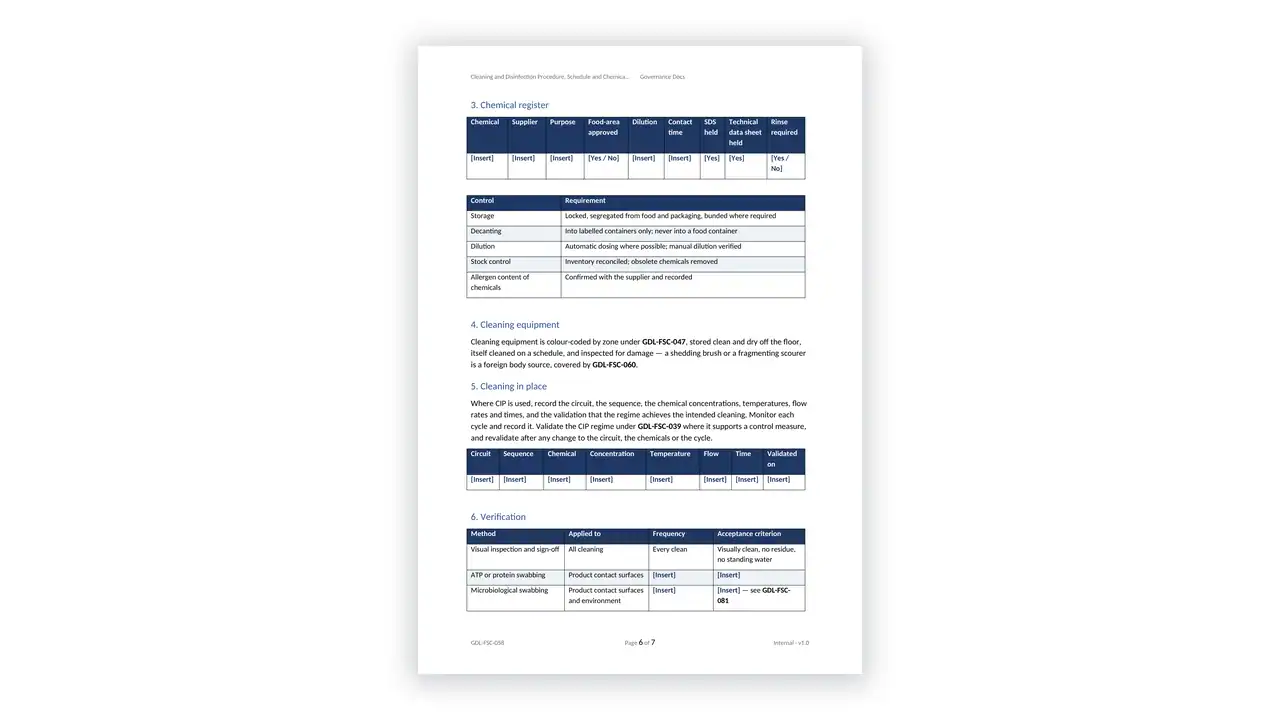
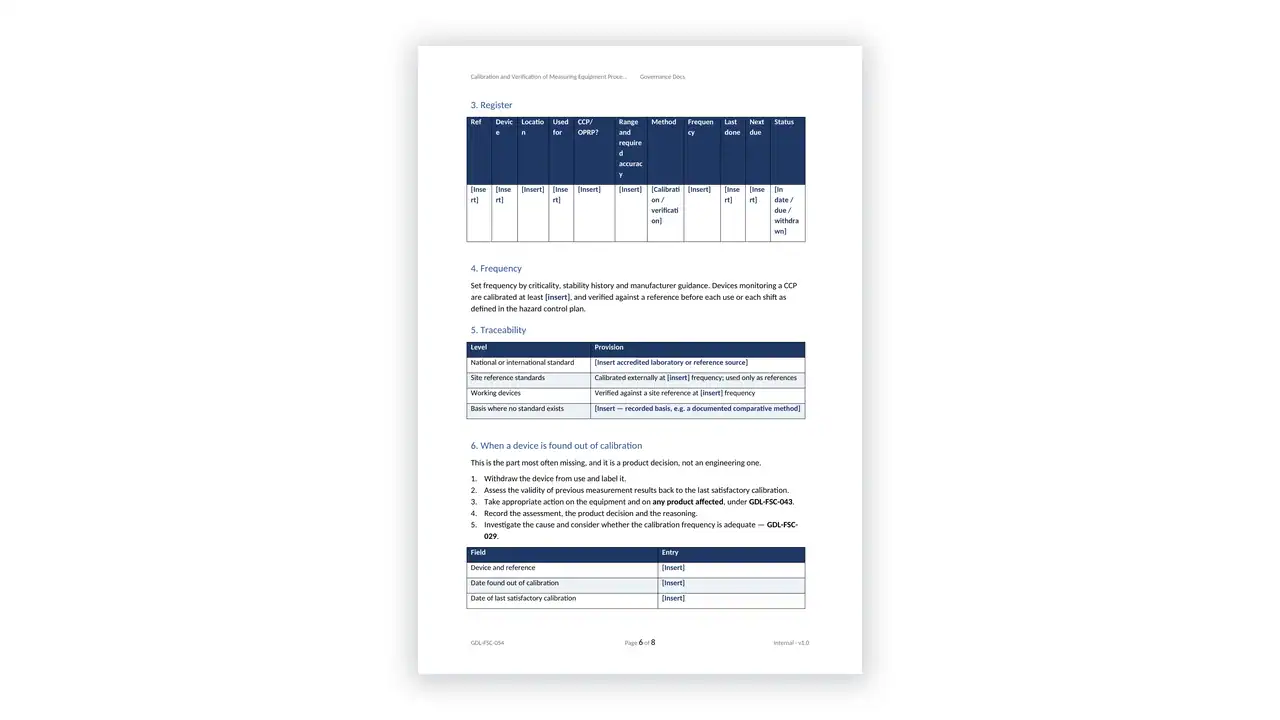
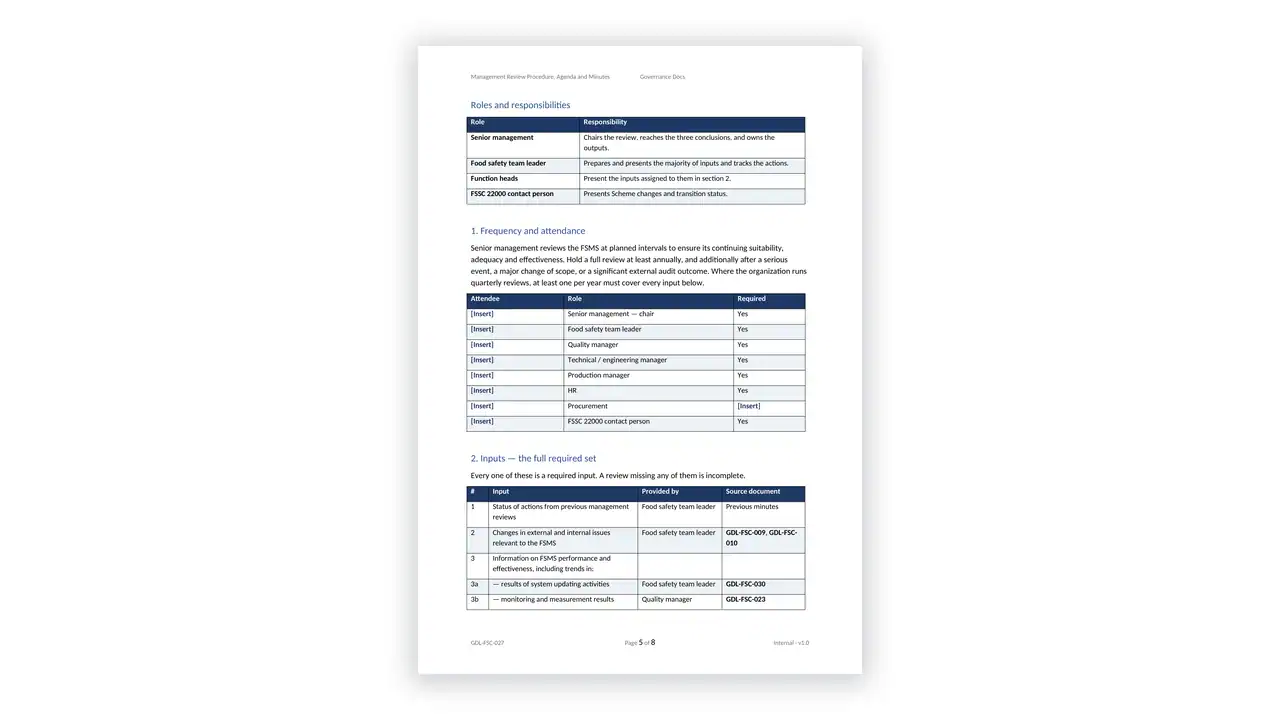
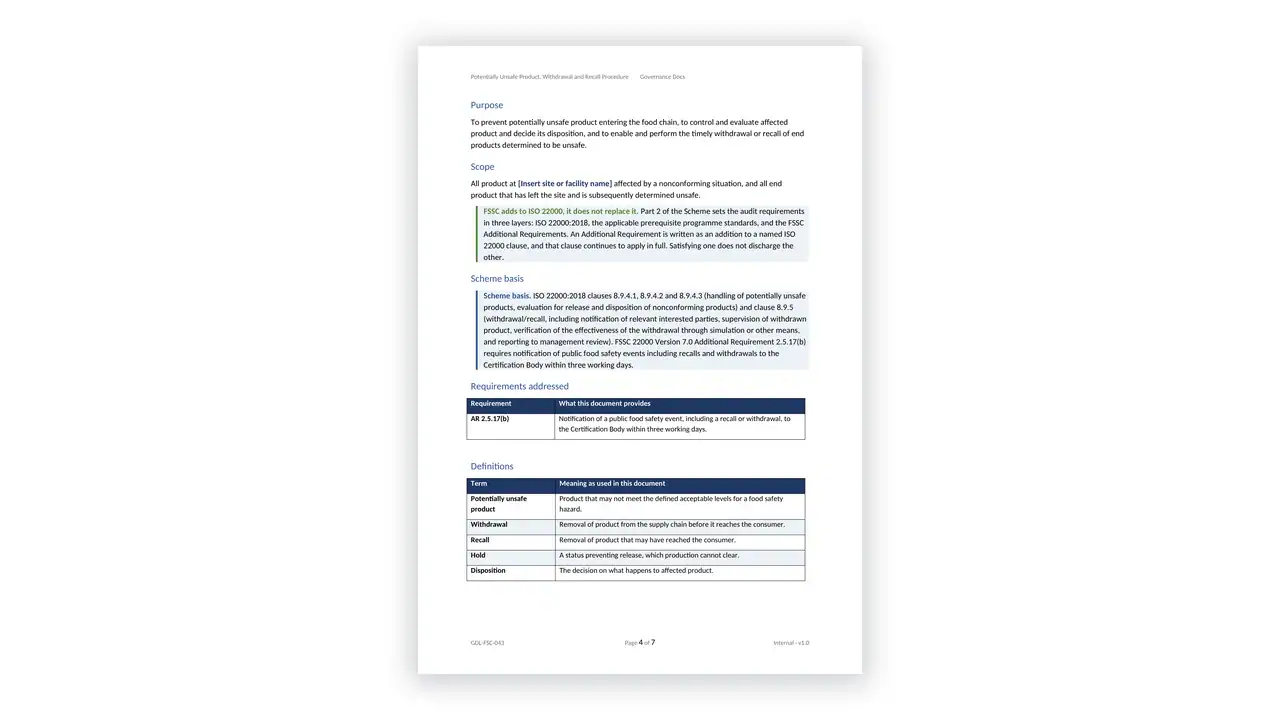
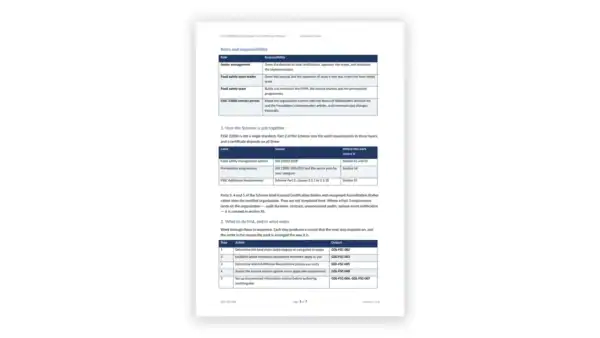
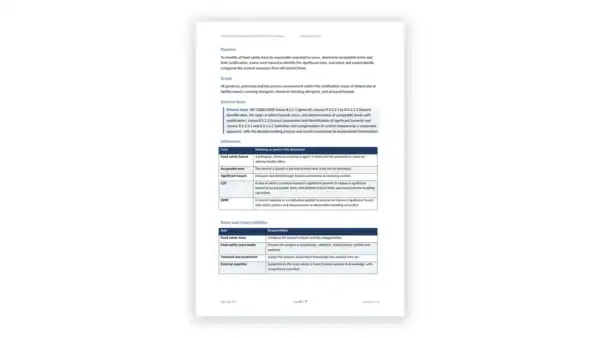
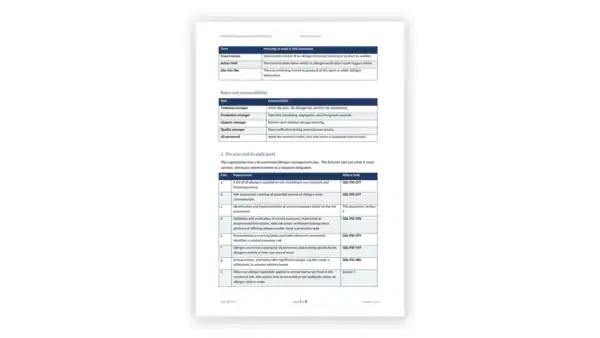
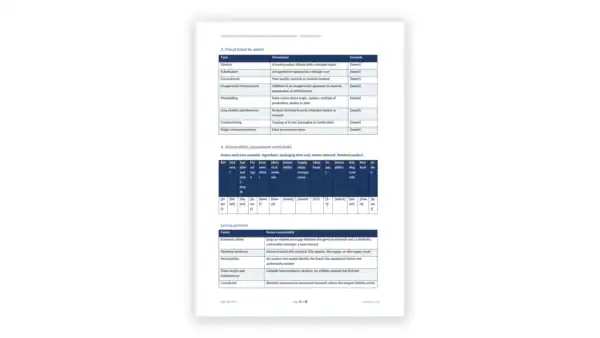
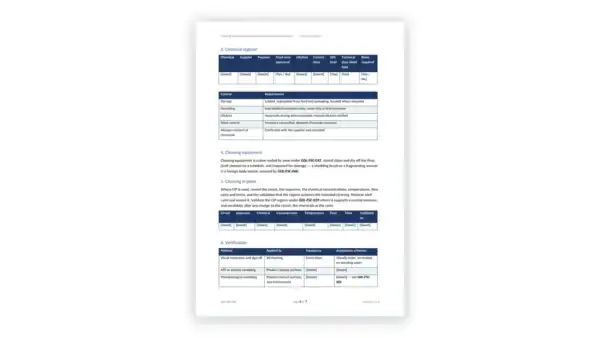
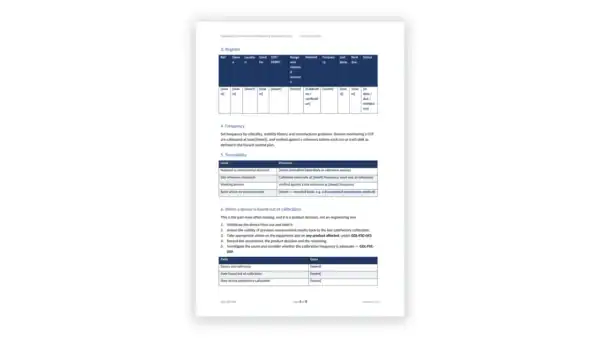
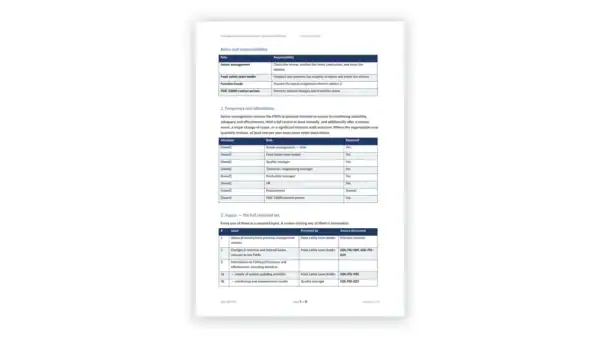
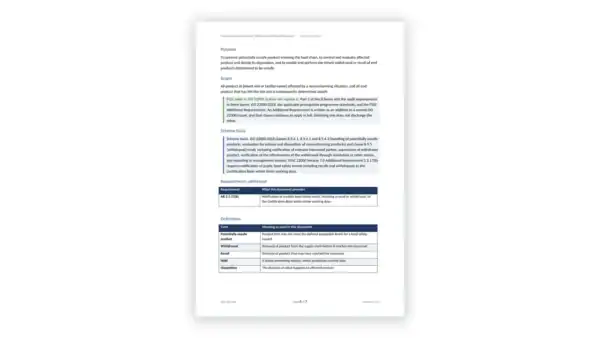
Each FSSC 22000 Toolkit Word document opens with a Requirements addressed table listing the requirement identifiers it satisfies and what it provides for each, and a Scheme basis callout naming the exact clause. You can hand any single document to an auditor and they can see immediately what it is for and which categories it applies to.
S1 — Scheme Foundation (8 documents)
S2 — FSMS (19 documents)
S3 — Hazard Control (16 documents)
S4 — Prerequisite Programmes (17 documents)
S5 — Additional Requirements (40 documents)
S6 — Certification Readiness (6 documents)
S7 — V6 to V7 Transition (5 documents)
The FSSC 22000 Toolkit is a set of 111 editable Microsoft Word and Excel templates for food safety management system certification — 80 documents and 31 workbooks across 7 sections, written to Version 7.0 of the Scheme published May 2026. It covers the ISO 22000:2018 management system, the hazard control system, the prerequisite programme layer, and all 66 lettered requirements across the 18 FSSC Additional Requirement groups, plus certification readiness and the Version 6 to Version 7 transition.
Version 7.0, published May 2026 — the current version. This matters more than usual right now. Audits against Version 6 may be delivered until 30 April 2027; upgrade audits against Version 7 are conducted from 1 May 2027 to 30 April 2028; and any certificate still on Version 6 after 30 June 2028 is withdrawn automatically. A great deal of the FSSC material available online still describes Version 6.
The Scheme itself, no. The ISO standards, yes. The FSSC 22000 Scheme documents — Parts 1 to 5, the five Annexes, the Board of Stakeholders decision list and the Upgrade Process — are published free of charge by the Foundation at fssc.com, and you should download them.
ISO 22000:2018 and the applicable part of the ISO 22002 series are licensed ISO standards sold by ISO and by national standards bodies, and you need your own copies to implement the system and be audited against it. The FSSC 22000 Toolkit cites clause identifiers and states in our own words what each requires; it does not reproduce the text of any standard, and no toolkit that respects ISO copyright can.
No, and that is deliberate. The ISO 22002 series the FSSC 22000 Toolkit rests on was reissued in 2025 and renumbered — the Scheme cites clause numbers that meant something different in the withdrawn edition. Rather than print clause numbers we had not verified, the prerequisite programme section is keyed to ISO 22000:2018 clause 8.2.4 (a) to (l), the twelve prerequisite programme considerations the standard sets out, and names the ISO 22002 domains without numbers. Two documents give you the worksheet to complete the clause mapping from your own licensed copy.
No toolkit can. Certification requires an audit by a Certification Body licensed by the Foundation, and the audit tests what you implement and can evidence, not what documents you hold. What the FSSC 22000 Toolkit gives you is specific: it is the documented information the Scheme requires you to hold, structured on the Scheme’s own three layers, so the work becomes drafting decisions rather than drafting documents.
The management system layer will look familiar and you may already satisfy much of it. The work is the other two layers. Of the 18 Additional Requirement groups, most sites moving from ISO 22000 to FSSC find they have nothing at all for food fraud, food safety and quality culture, quality control, environmental monitoring, food loss and waste, product design and development, equipment purchase specification, artwork control, logo use, and serious event notification. That is what the FSSC 22000 Toolkit is mostly made of.
All 13 (sub)categories in Part 1 Table 1 — BIII, C0, CI, CII, CIII, CIV, D, E, FI, FII, G, I and K. Every document names the categories it applies to, and the applicability matrix tells you which of the 18 requirement groups your categories carry. Category-conditional documents — carcass traceability, post-slaughter chilling, recycled packaging input, the feed and lairage addenda, the FII supplier assurance record — are included and clearly marked, so a site outside those categories records the exclusion and moves on.
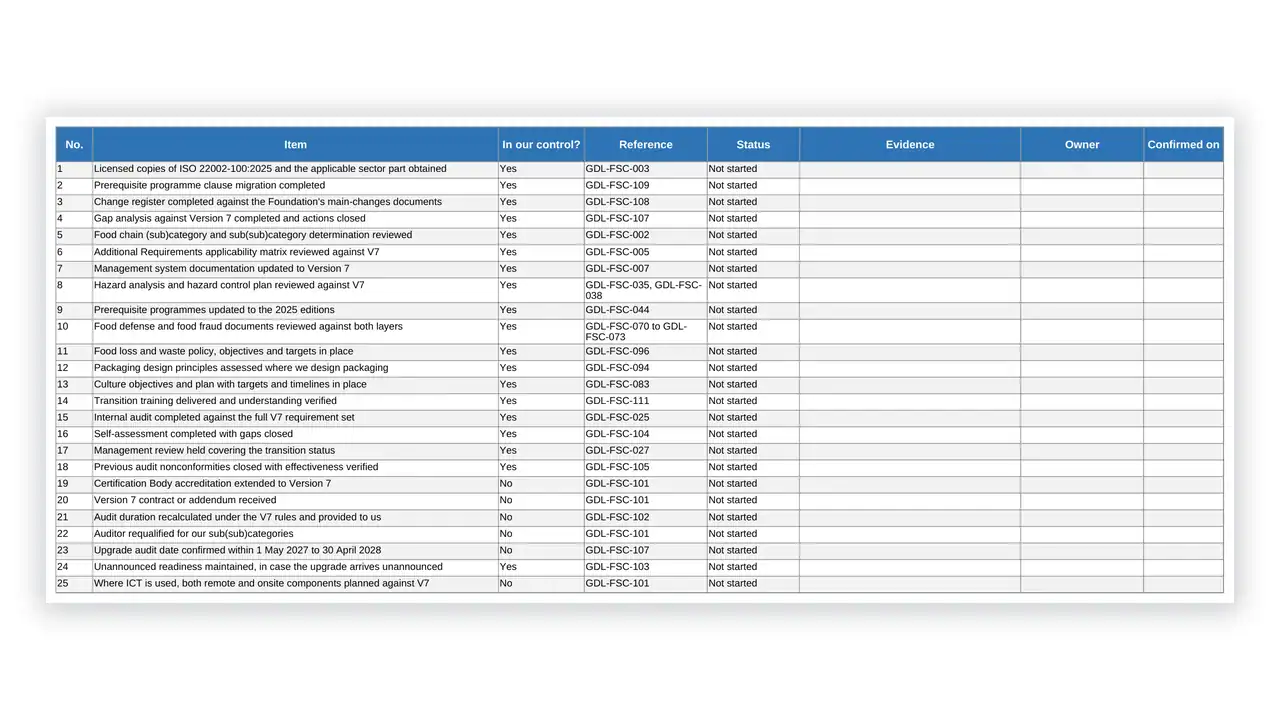
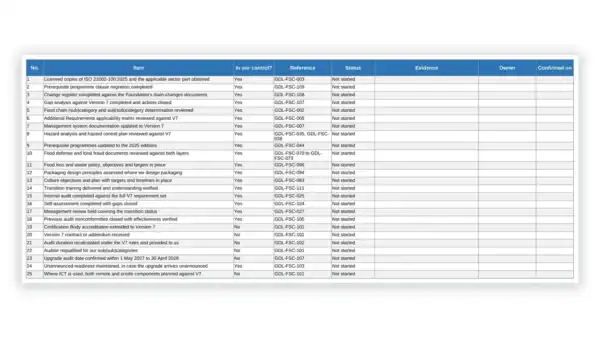
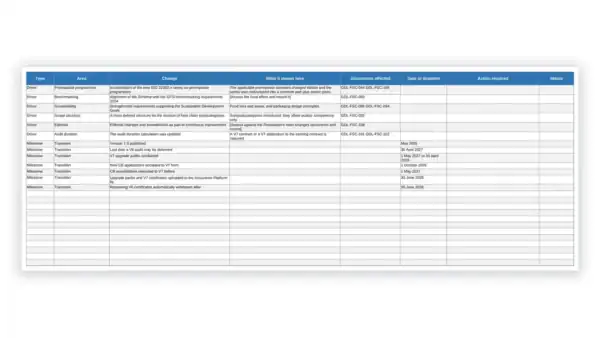
Yes. The final section of the FSSC 22000 Toolkit is five documents built for the transition: a gap analysis and twelve-step transition plan against the dated milestones, a change register, an ISO 22002 2009-to-2025 migration map, a 25-item upgrade audit readiness checklist, and a transition training brief with delivery and understanding records. The readiness checklist separates the items in your control from the ones that depend on your certification body — its accreditation extension, the V7 contract or addendum, the recalculated audit duration and auditor requalification — because those are the ones sites discover late.
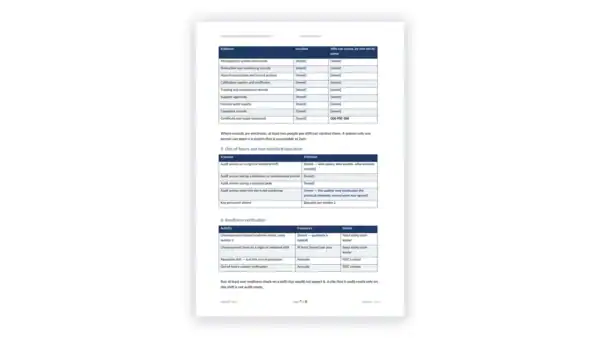
Yes, where it applies. Three FSSC 22000 Toolkit documents cover the central function statement, the multi-site internal audit procedure and programme, and the internal auditor and technical reviewer competence record — including the work experience, education and training criteria the Scheme fixes and the annual performance monitoring and calibration. Those requirements apply to four food chain categories; the applicability matrix tells you whether they apply to you.
The FSSC 22000 Toolkit ships Microsoft Word (.docx) and Microsoft Excel (.xlsx) — 80 and 31 respectively. They open in Word, Excel, LibreOffice and Google Workspace. Everything is editable; nothing is locked or protected.
The FSSC 22000 Toolkit opens with a recommended sequence: determine your food chain category, establish which normative documents apply, determine which Additional Requirement groups you carry, gap-analyse, then build. Sites already running ISO 22000 typically work through the Additional Requirements layer over a few months. Sites starting from nothing should plan a longer programme — and if you are upgrading, work backwards from your upgrade audit date rather than forwards from today.
Free articles that explain the requirements this toolkit covers.
 Comprehensive FSSC 22000 Toolkit – 111 Food Safety Templates$99.00



Reviews
There are no reviews yet