
-
×
 HIPAA Toolkit - Comprehensive 160+ Templates
1 × $99.00
HIPAA Toolkit - Comprehensive 160+ Templates
1 × $99.00 -
×
 ISO 42001 Toolkit - Comprehensive AI Governance Templates
1 × $199.00
ISO 42001 Toolkit - Comprehensive AI Governance Templates
1 × $199.00
Subtotal: $298.00
 HIPAA Toolkit - Comprehensive 160+ Templates
1 × $99.00 ISO 42001 Toolkit - Comprehensive AI Governance Templates
1 × $199.00
HIPAA Toolkit - Comprehensive 160+ Templates
1 × $99.00 ISO 42001 Toolkit - Comprehensive AI Governance Templates
1 × $199.00 Subtotal: $298.00
Compliance documentation toolkit for payment stablecoin issuers under the GENIUS Act, Public Law 119-27, which takes effect on 18 January 2027. 126 editable templates – 98 Word documents and 28 Excel workbooks – in 18 sections that follow the Act’s own structure: reserves, redemption, the monthly report and CEO/CFO certification, the six Bank Secrecy Act elements, lawful orders, application, supervision, State pathway, custody and insolvency. Every one of the Act’s 112 operative provisions is mapped to the document that answers it. Built on the enrolled statute; every implementing rule is tracked, none is stated as binding. Instant download.
$99.00
✓ In stock — instant download after checkout
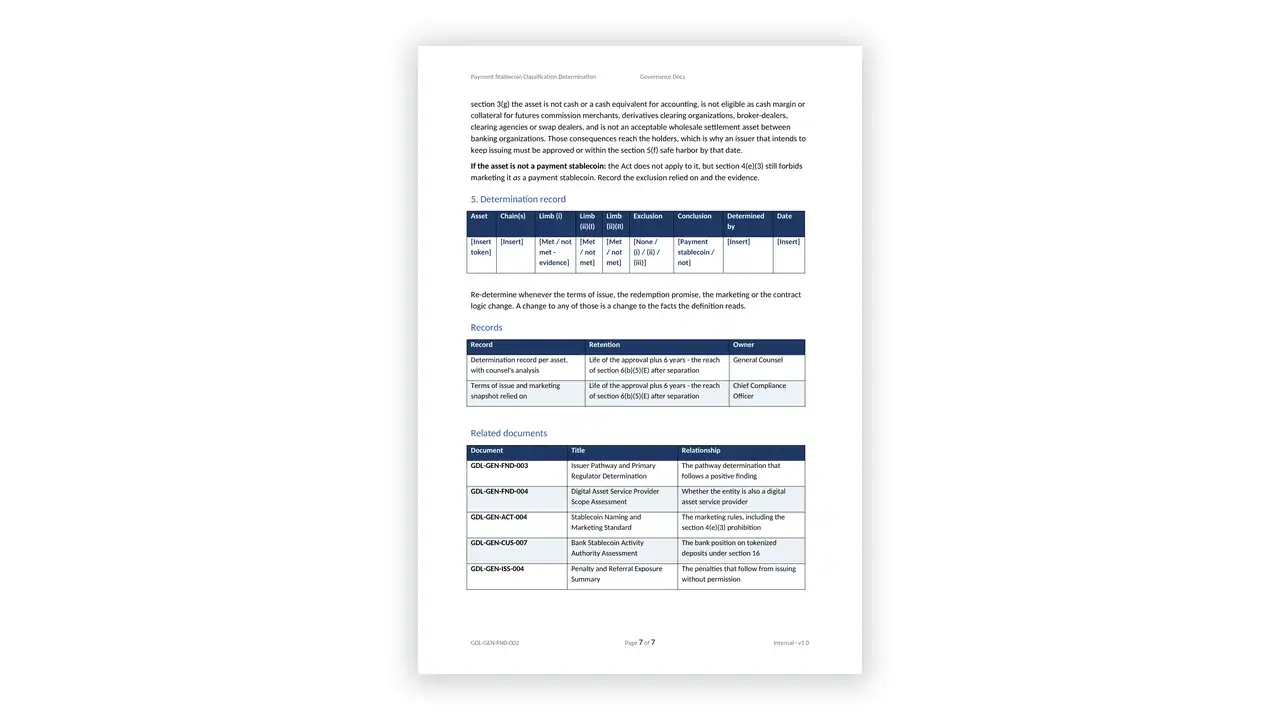
The GENIUS Act Toolkit is a complete compliance documentation set for permitted payment stablecoin issuers under the Guiding and Establishing National Innovation for U.S. Stablecoins Act – Public Law 119-27, signed on 18 July 2025 and taking effect on 18 January 2027. From that date, only a permitted payment stablecoin issuer may issue a payment stablecoin in the United States, and section 4 tells it how.
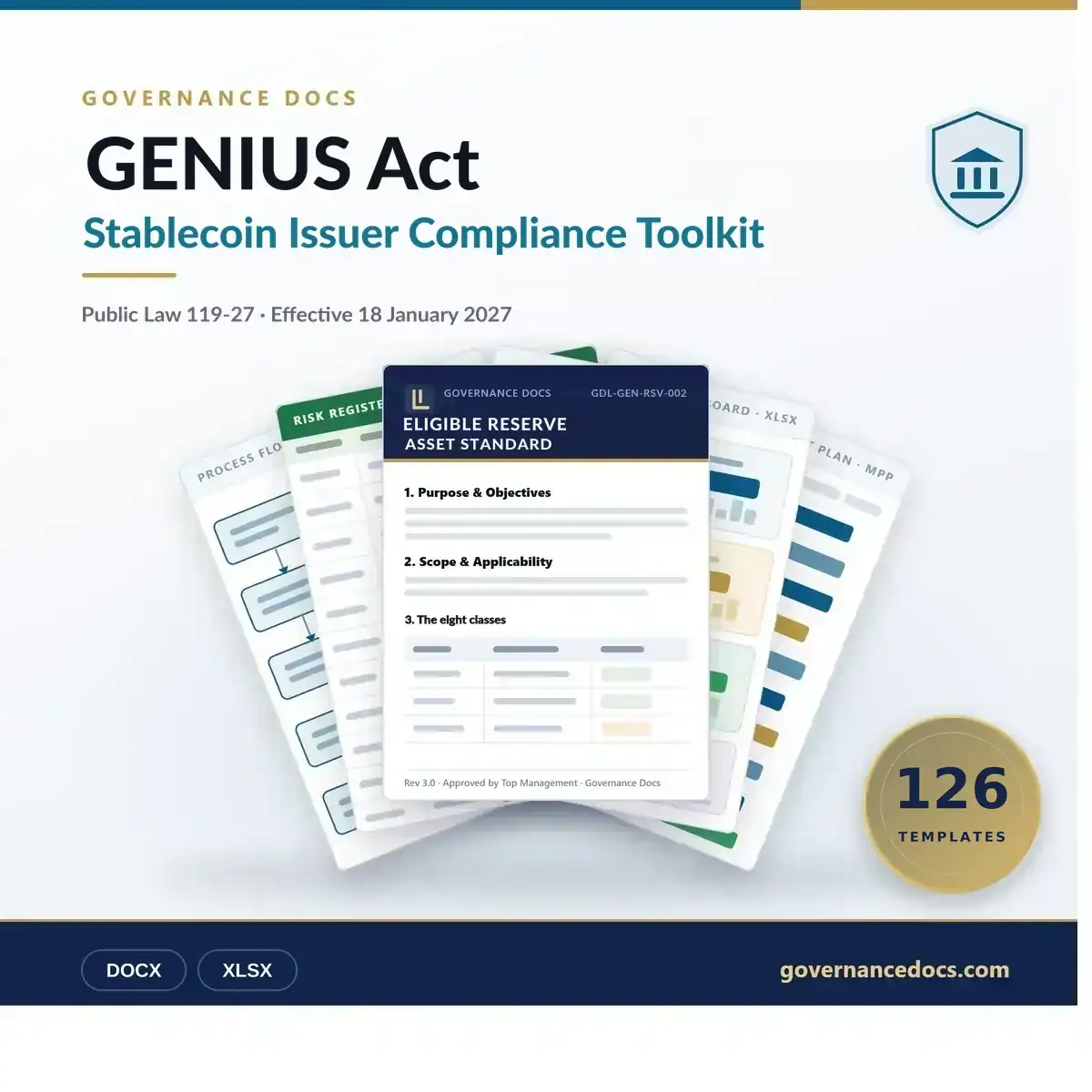
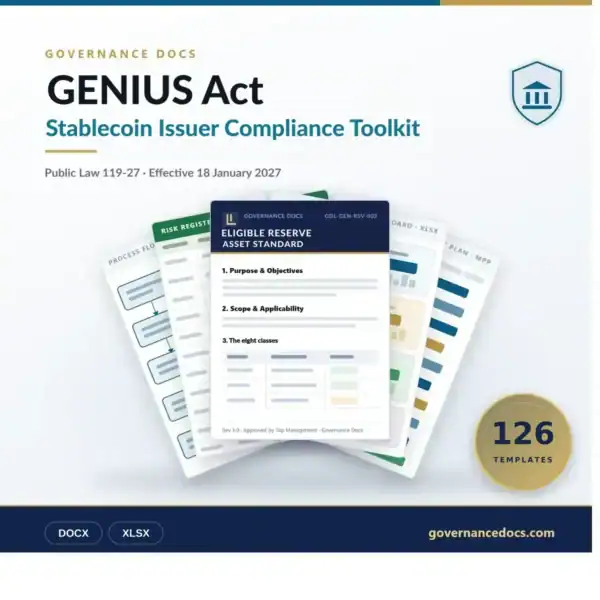
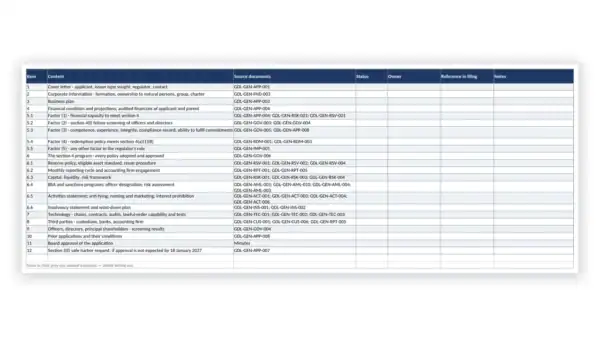
The GENIUS Act Toolkit is 126 editable templates – 98 Microsoft Word documents and 28 Microsoft Excel workbooks – organised into 18 sections that follow the Act’s own structure, so an examiner working through section 4(a) can be handed the matching section. The enrolled text is published by the Government Publishing Office.
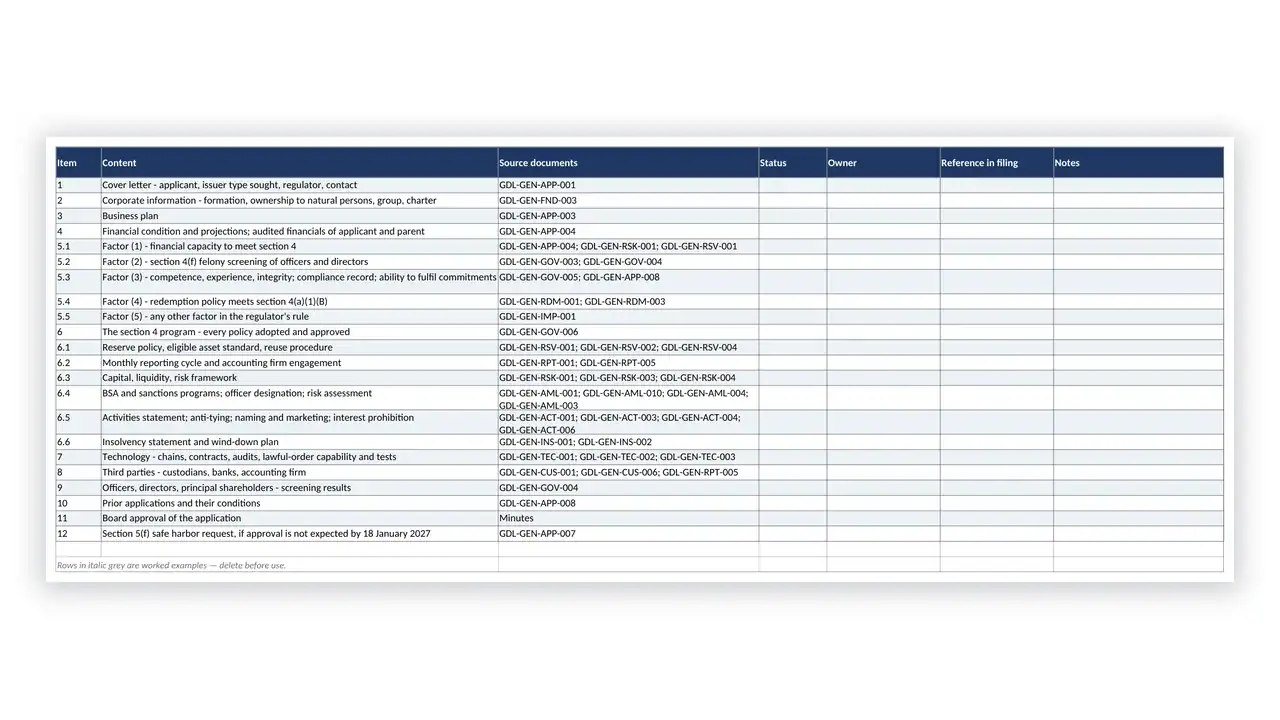
The Act has 20 sections. The GENIUS Act Toolkit reads them at the level an obligation actually lives – the subsection – and maps every one of the 112 operative provisions to the document that answers it: 67 provisions that bind an issuer, applicant, State issuer, service provider, custodian, foreign issuer, bank or non-financial public company; 22 rules of construction and definitions carried by the scope documents; and 22 mandates on the regulators, Treasury and the Stablecoin Certification Review Committee, tracked in a rulemaking watch so that nothing the Act asks of an agency is assumed to have happened.
A build script asserts that map before a single GENIUS Act Toolkit document is packaged. If a provision is unclaimed, the build fails.
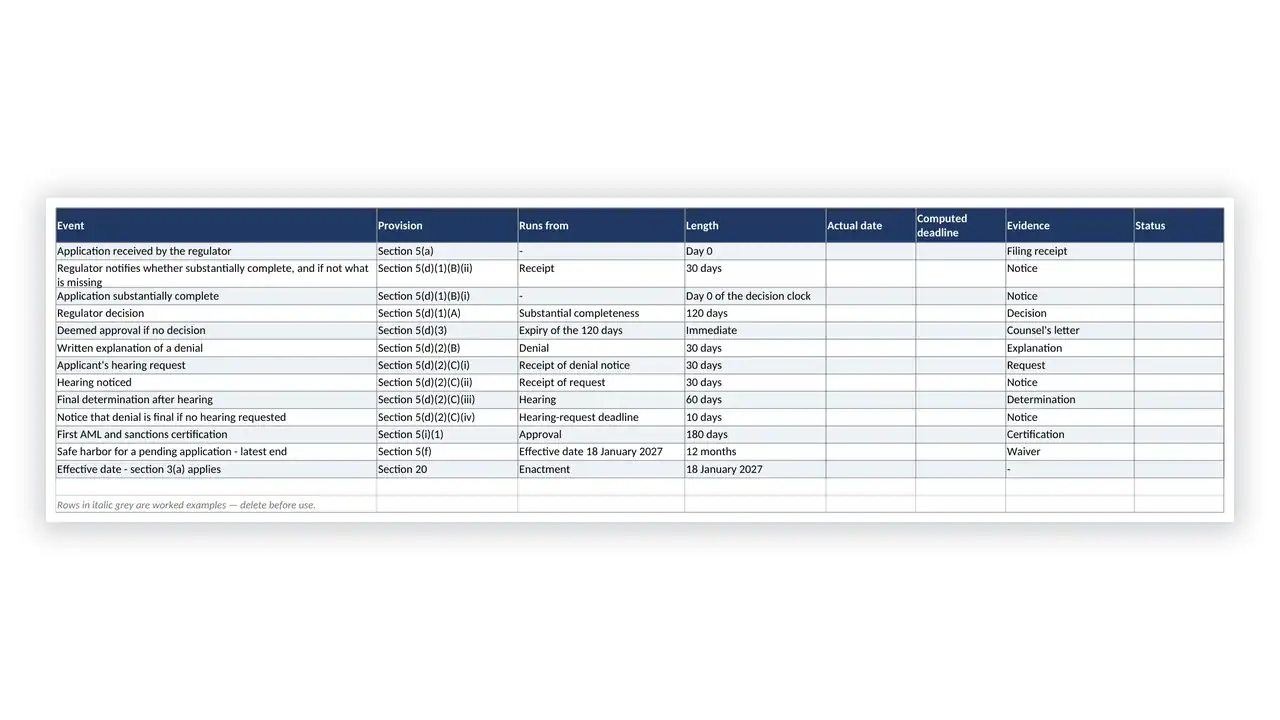
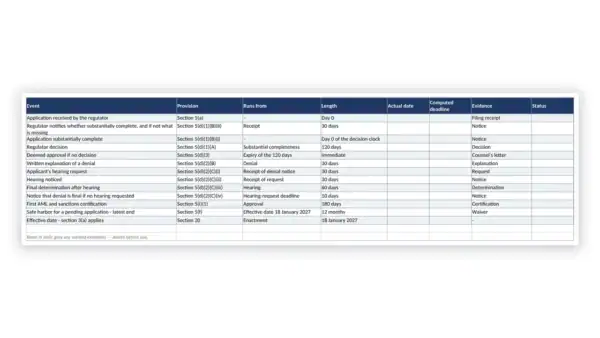
Section 13 required the implementing regulations by 18 July 2026. On the day this GENIUS Act Toolkit was written the Federal Register held eighteen GENIUS Act documents from the OCC, the FDIC, the NCUA, FinCEN, OFAC, the Federal Reserve and Treasury – every one a proposed rule, none final. Section 20 does not wait for them: the effective date is the earlier of 18 months after enactment and 120 days after any final rule, and with no final rule the date is 18 January 2027.
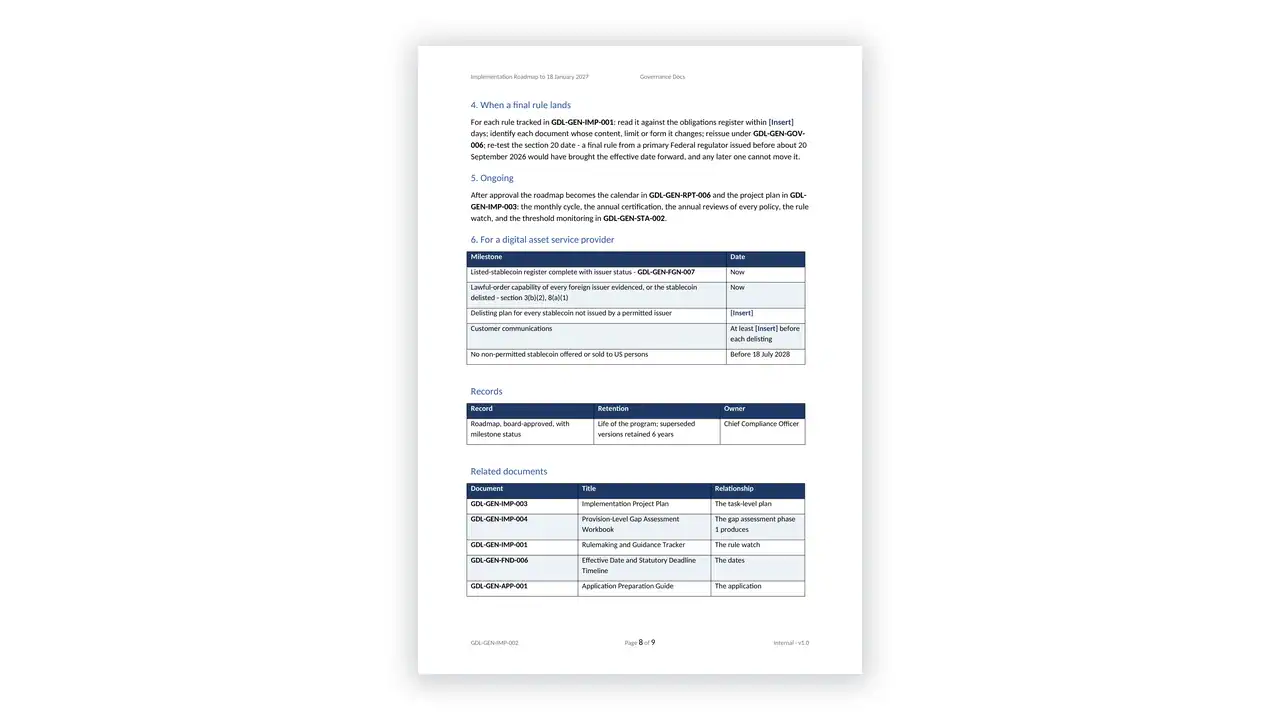
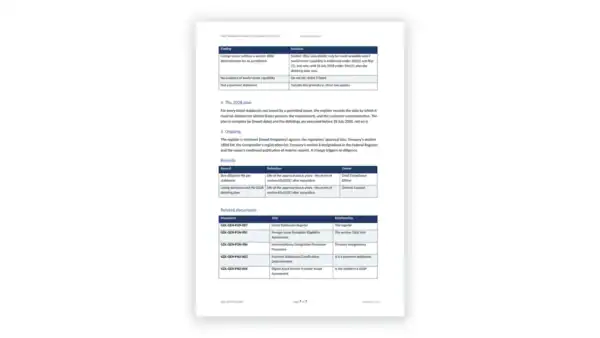
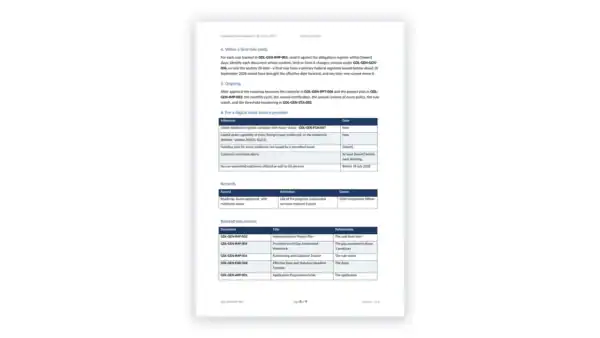
So every document in the GENIUS Act Toolkit rests on the Act itself. No capital floor, liquidity ratio, redemption timeline or reserve tier from a proposal appears as a requirement anywhere in the pack. Where a final rule will add detail, the document says so and is structured to receive it, and the Rulemaking and Guidance Tracker lists every mandate, every Federal Register document and the pack documents each one will touch. A toolkit that states proposed-rule content as binding is wrong on the day the final text lands.
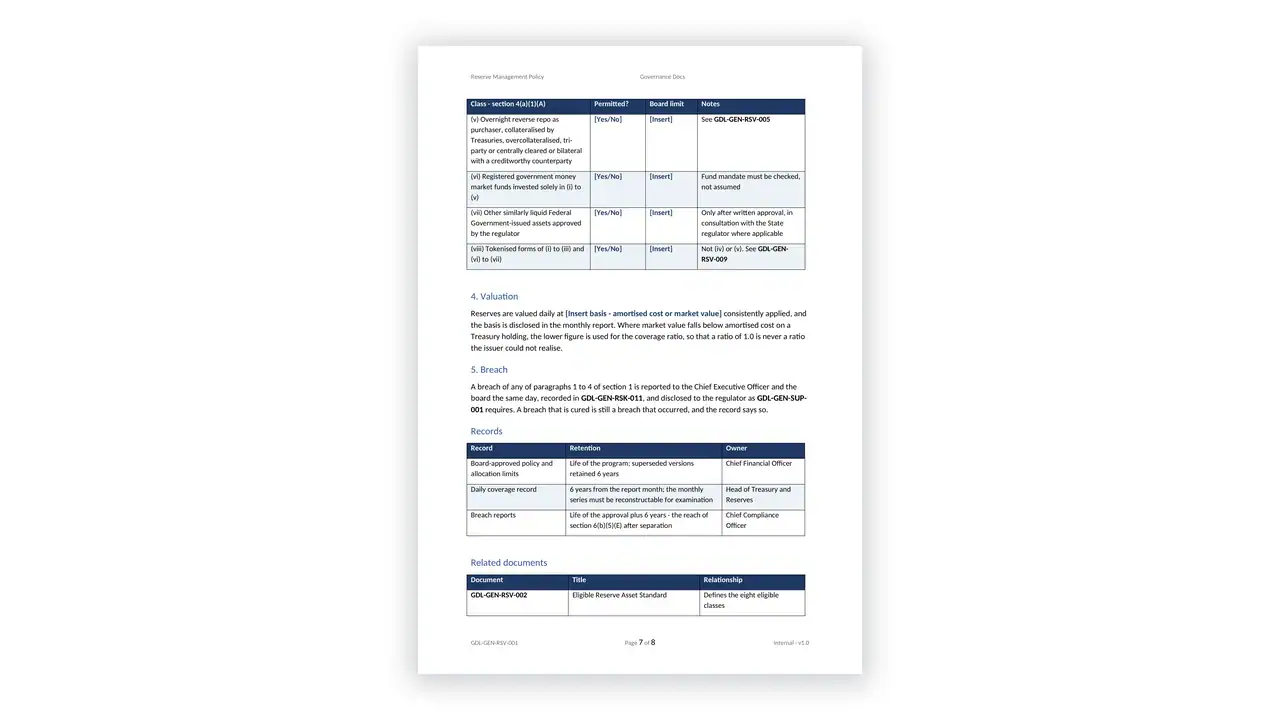
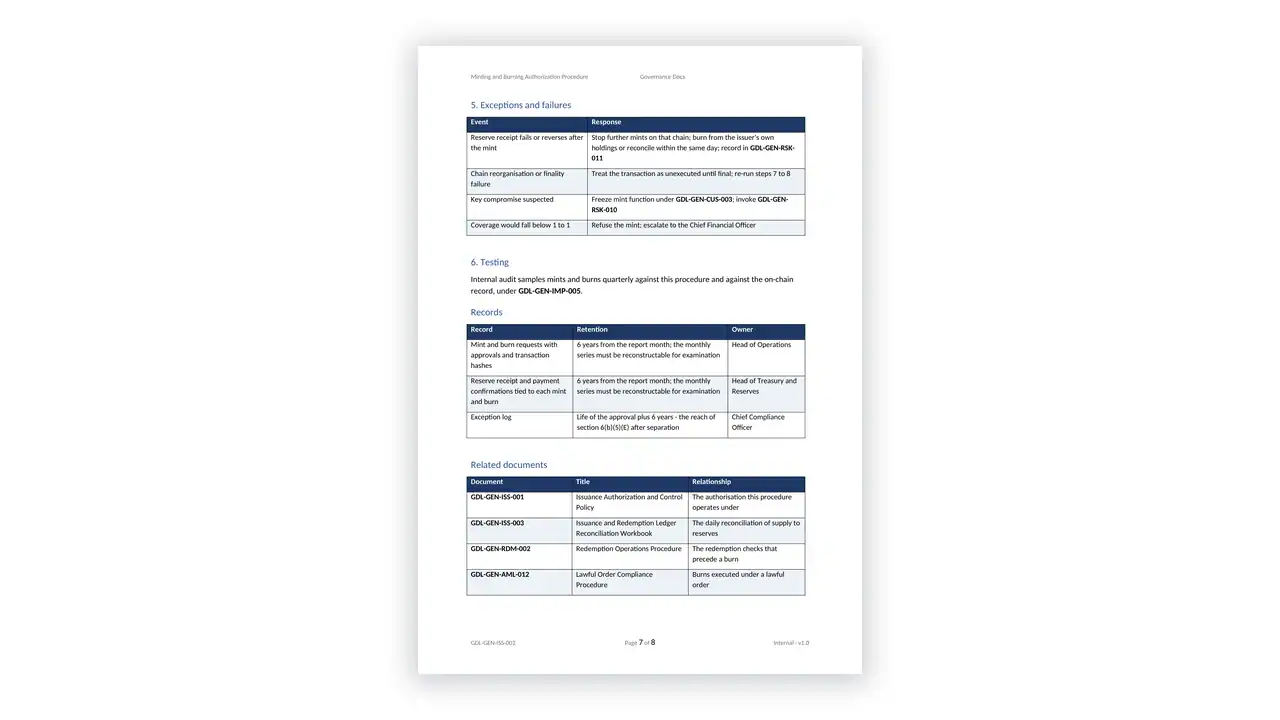
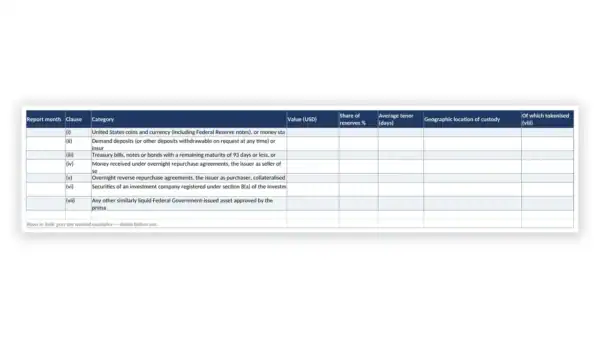
The GENIUS Act Toolkit gives section 4(a)(1) the weight the Act does. The Eligible Reserve Asset Standard defines each of the eight asset classes in section 4(a)(1)(A) with the condition the clause attaches – the 93-day Treasury ceiling measured either way, the overnight repo and reverse repo limbs, the government money market fund test, and the tokenised-form proviso that admits classes (i) to (iii) and (vi) to (vii) but not repo. The Rehypothecation Prohibition and Permitted Use Procedure confines reuse to the three exceptions in section 4(a)(2) and requires the clearing-or-approval condition before a liquidity repo.
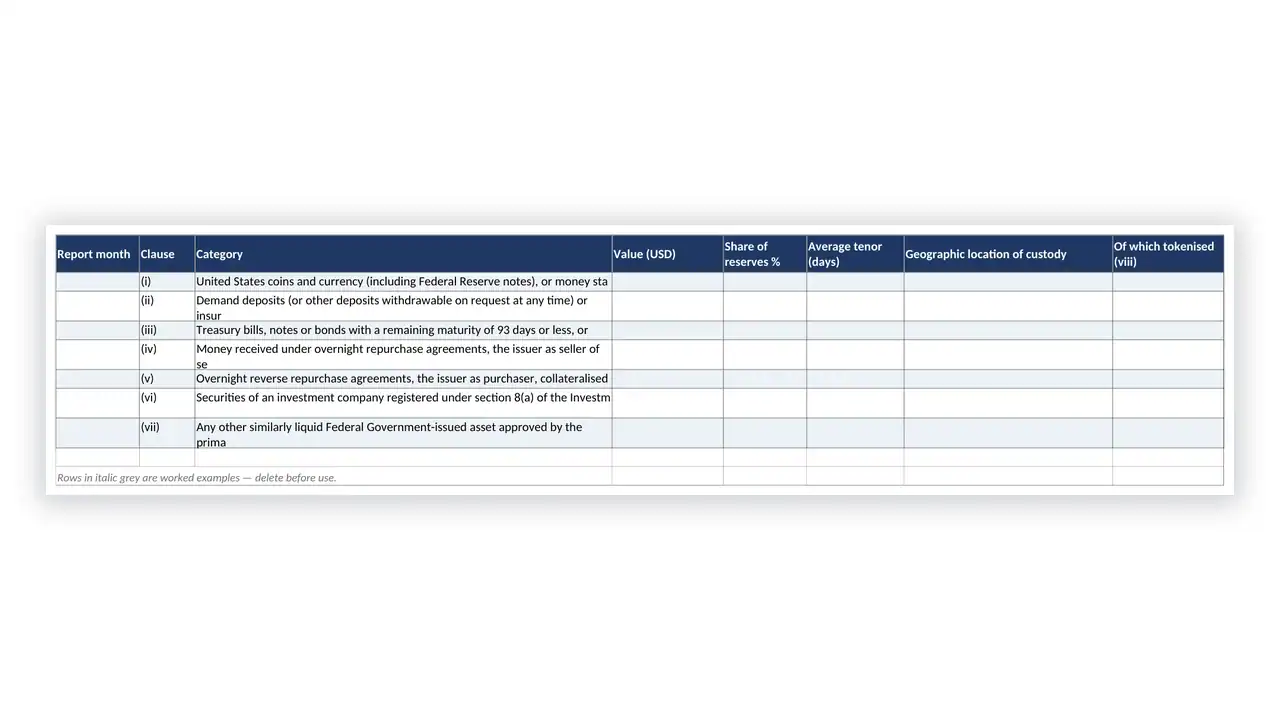
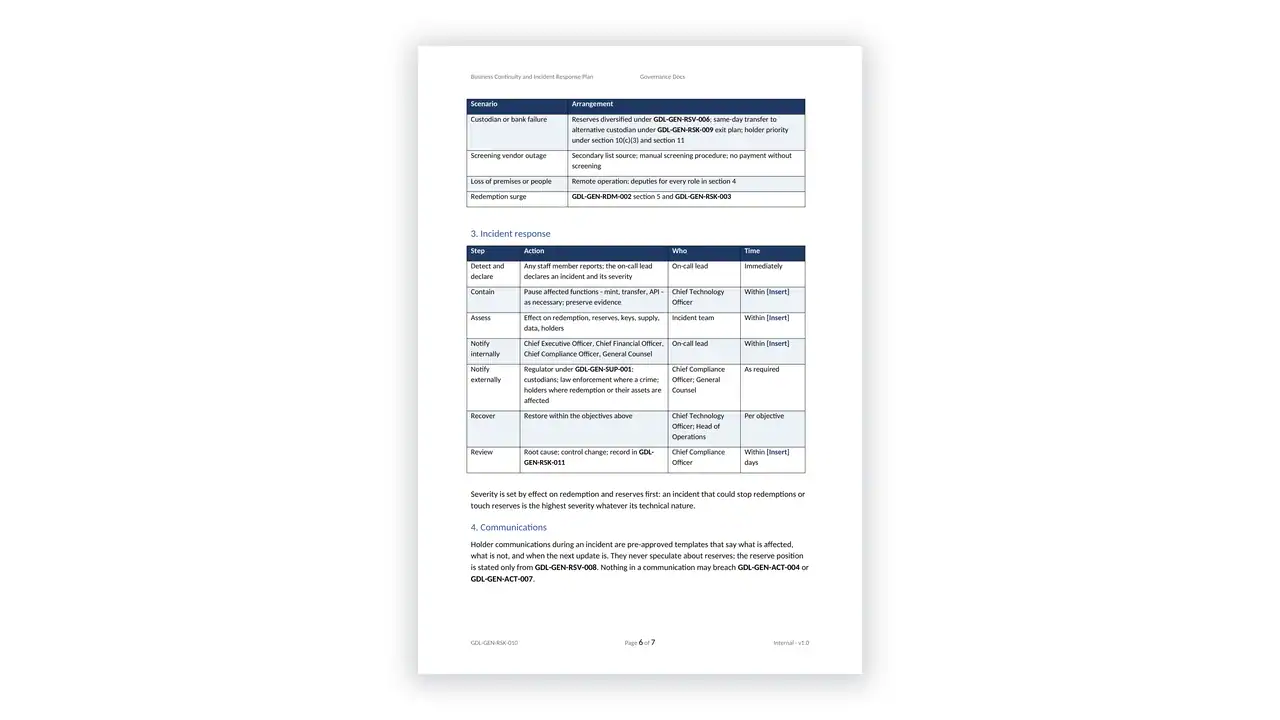
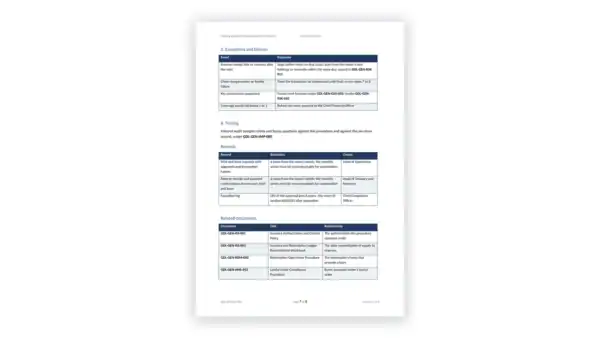
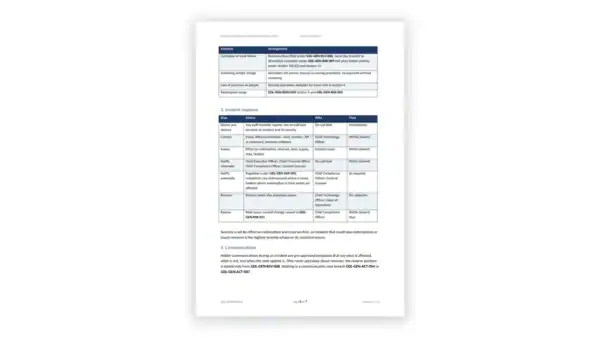
The GENIUS Act Toolkit’s public Redemption Policy is written to be read by a holder and filed with the application as the section 5(c)(4) factor. The Monthly Reserve Composition Report Template carries every element section 4(a)(1)(C) names – total outstanding, composition, average tenor and geographic location of custody per category – and the CEO and CFO Monthly Certification Template carries the 18 U.S.C. 1350(c) warning on its face, because a certification the Act attaches criminal liability to should say so where the signer will see it.
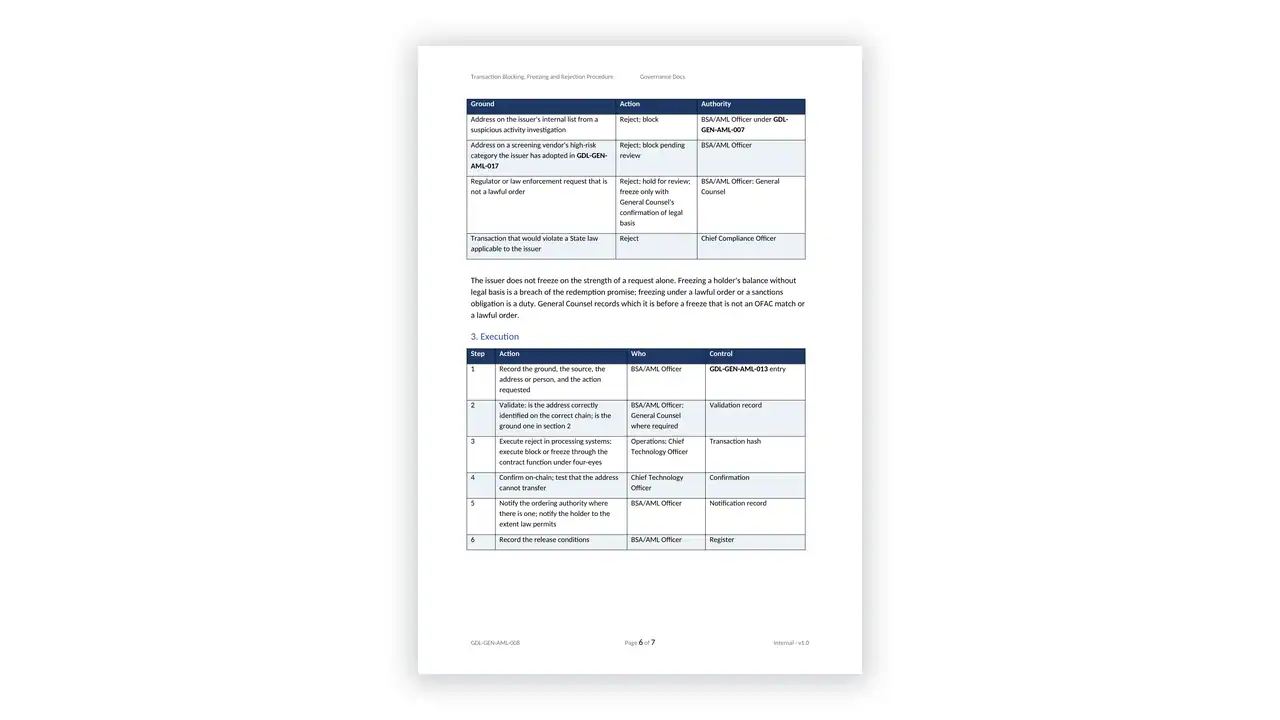
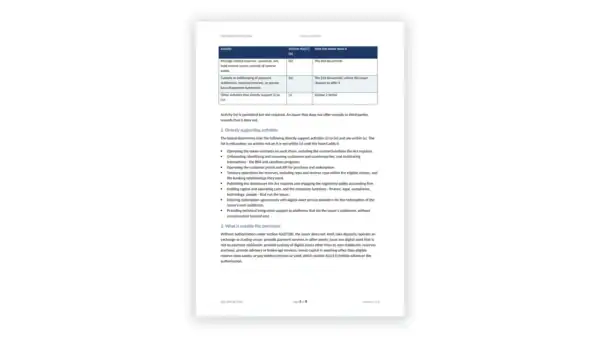
Section 4(a)(5)(A) makes an issuer a Bank Secrecy Act financial institution and enumerates six elements. The GENIUS Act Toolkit carries each one – the program with its designated officer, records, suspicious activity monitoring, the block-freeze-reject capability, the customer identification program with high-value transactions and enhanced due diligence, and the sanctions program with list verification – and adds on-chain monitoring of the stablecoin itself, because an issuer’s stablecoin moves between addresses it never onboarded.
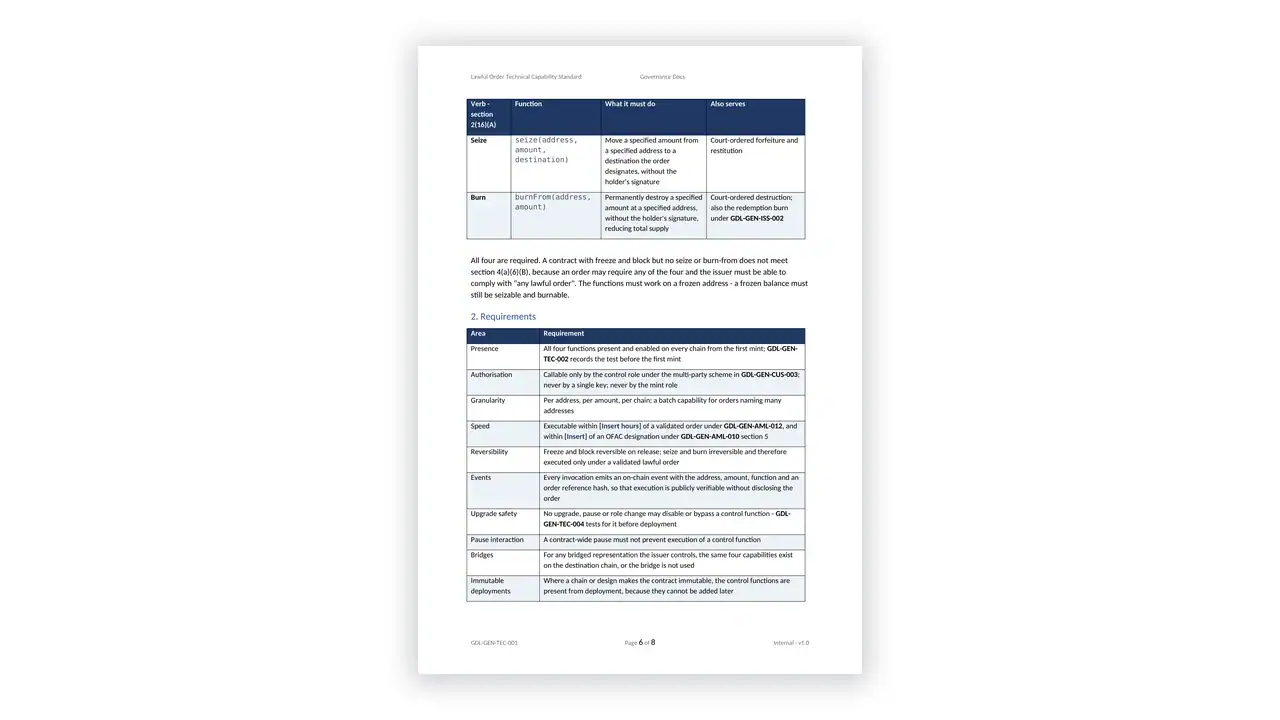
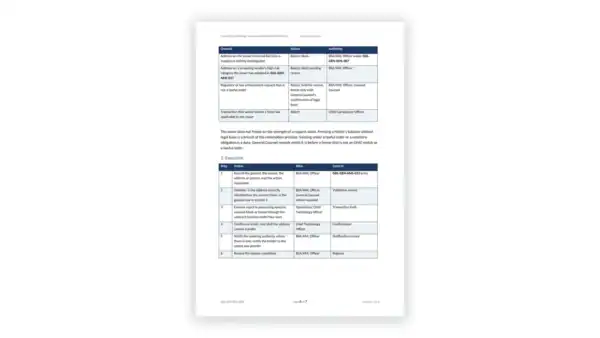
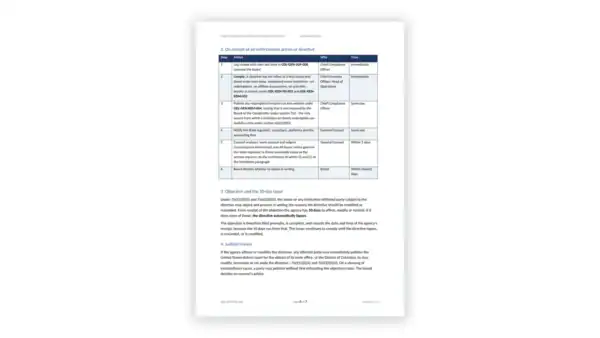
Section 2(16) defines a lawful order as one requiring the issuer to seize, freeze, burn, or prevent the transfer of its stablecoins, and section 4(a)(6)(B) makes the technological capability to comply a condition of issuing at all. A token contract that can freeze but cannot burn does not meet it. The GENIUS Act Toolkit’s Lawful Order Technical Capability Standard specifies all four functions on every chain, the Lawful Order Capability Test Record proves them, and the Lawful Order Compliance Procedure applies the three-part definition before anything is executed.
The detail in the GENIUS Act Toolkit comes from reading the sections, not a summary of them. A few of the things that produces:
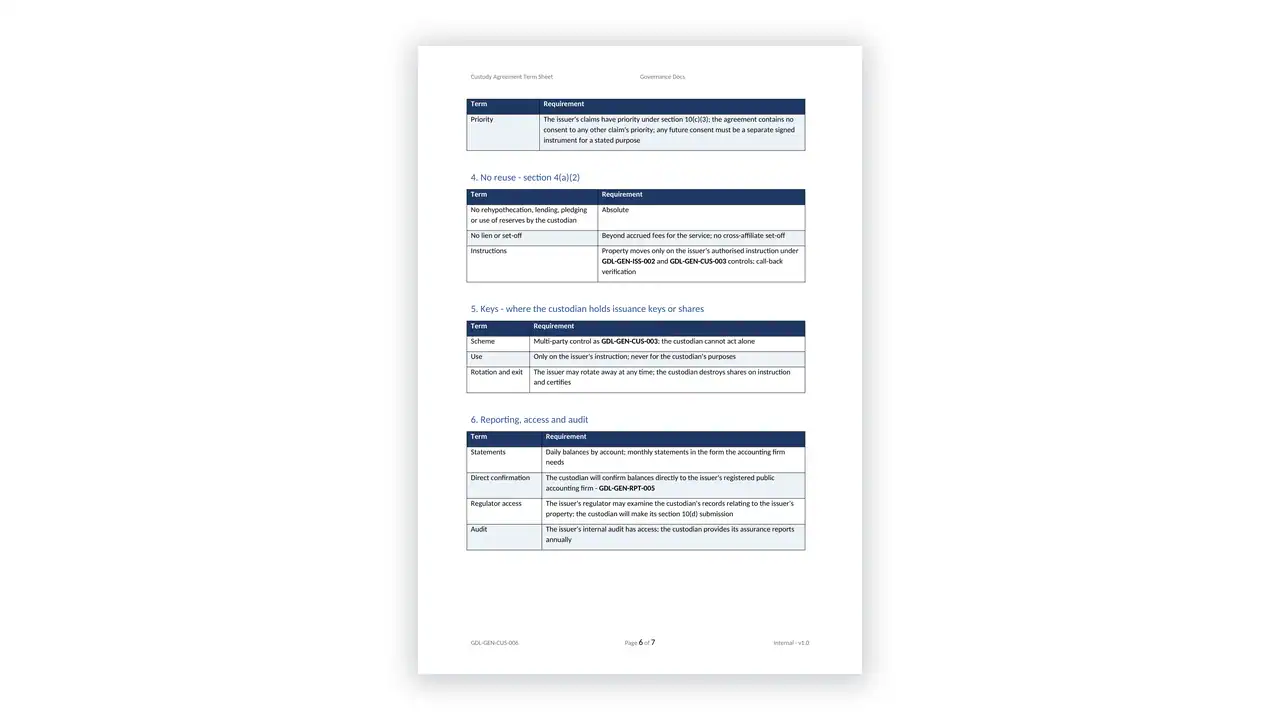
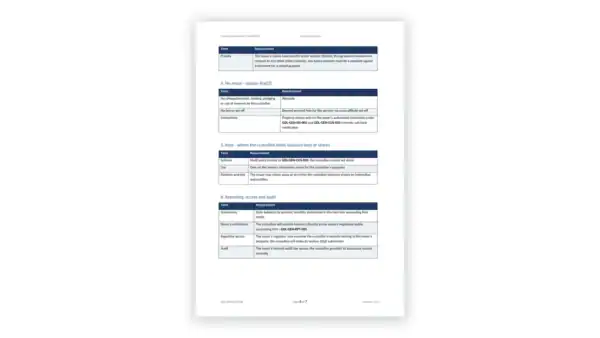
Section 10 confines custody of reserves, collateral and issuance keys to supervised persons and sets the customer-property, segregation and priority rules; the GENIUS Act Toolkit gives custodians seven documents including a Custody Agreement Term Sheet that makes those rules contractual.
Section 11 gives holders a first, ratable claim on required reserves and keeps those reserves out of the estate; the GENIUS Act Toolkit includes the Reserve Availability Attestation Template that section 362(d)(5) of the Bankruptcy Code, as added by the Act, requires on the petition date.
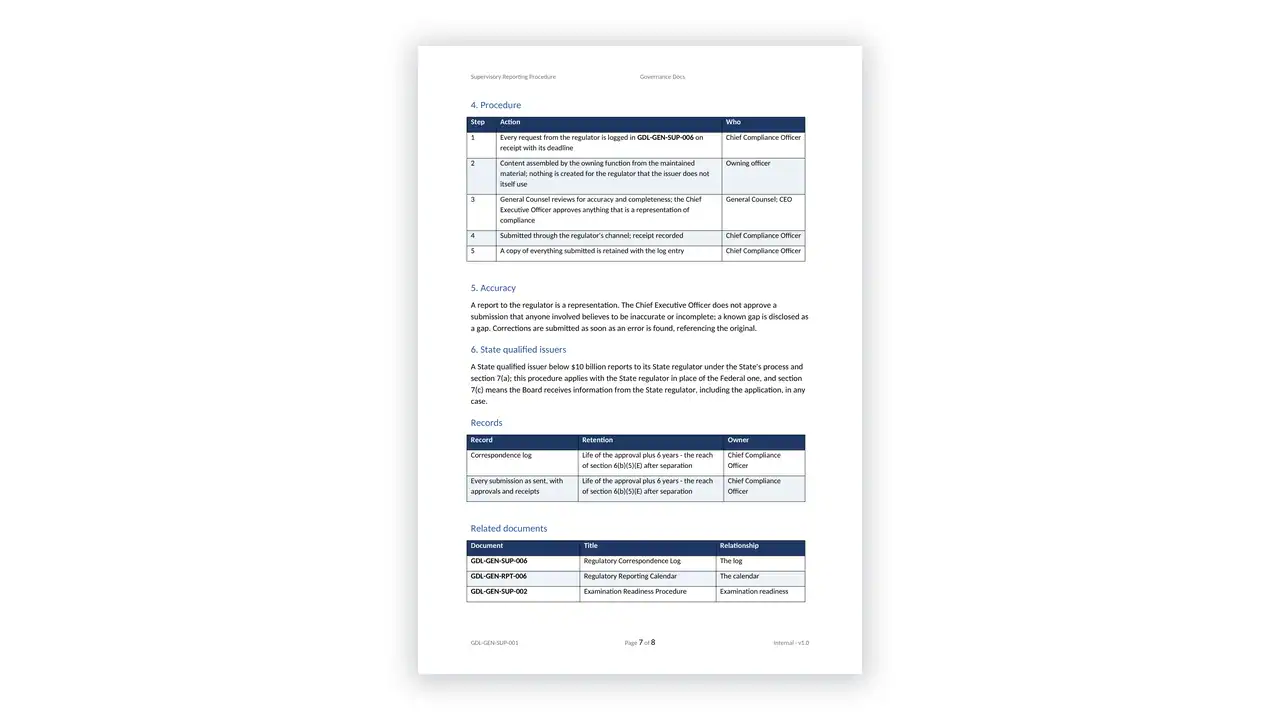
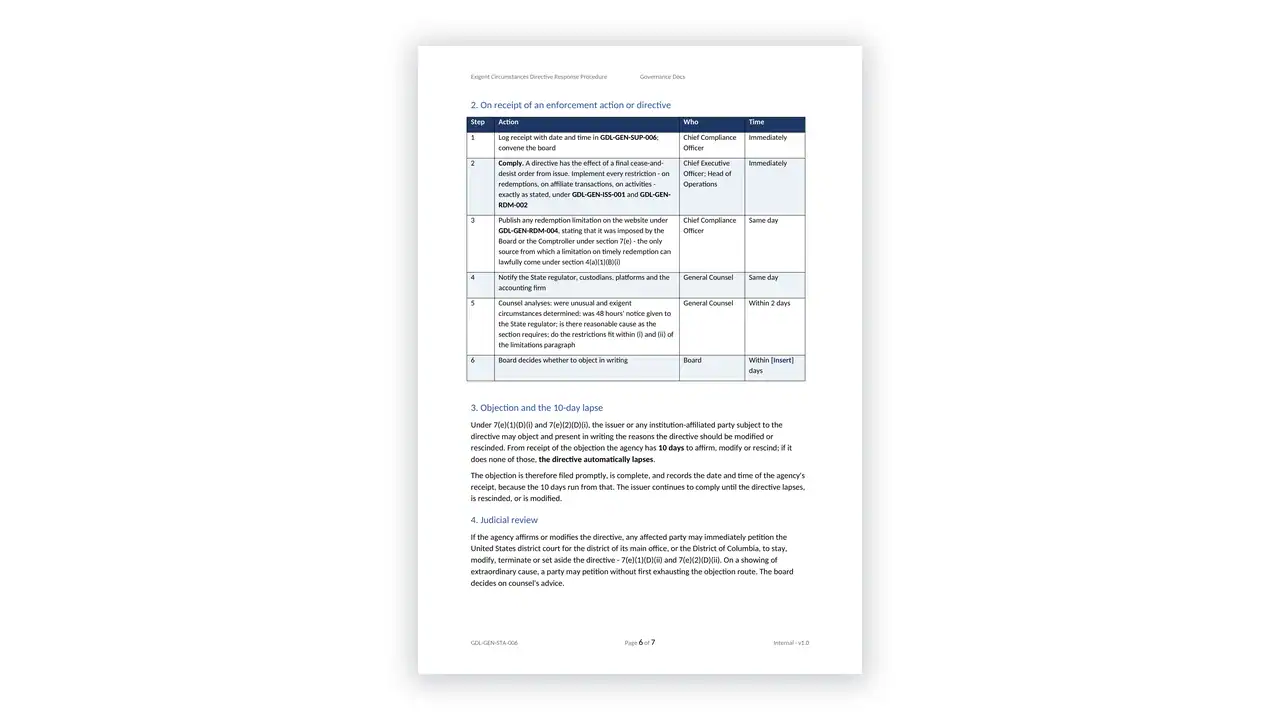
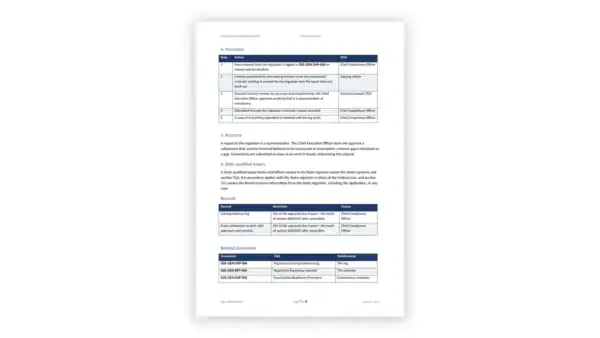
Section 4(c) and section 7 give a State qualified issuer below $10 billion its own regime; six documents cover the election, the certification process, the waiver, host-State law and the exigent-circumstances directive with its 10-day lapse – all in the GENIUS Act Toolkit’s State pathway section.
A stablecoin issuer rarely carries one regime at a time. The GENIUS Act Toolkit is built to sit alongside the EU AMLR Toolkit for an issuer with European obliged-entity status, the MiCA Toolkit for e-money token issuance in the EU, the DORA Toolkit for a financial entity’s operational resilience, and the ISO 27001 Toolkit for the information security management system behind the issuance stack.
| Section | Documents | Basis in the Act |
|---|---|---|
| S01 Program foundation, scope and definitions | 7 | Sections 1, 2, 3(e)-(h), 17, 20 |
| S02 Issuance authority and prohibitions | 4 | Section 3 |
| S03 Reserve requirements | 10 | Section 4(a)(1)(A), 4(a)(2), 4(a)(4)(A)(ii)-(iii) |
| S04 Redemption and fee disclosure | 6 | Section 4(a)(1)(B), 5(c)(4) |
| S05 Monthly reporting and certification | 6 | Section 4(a)(1)(C), 4(a)(3) |
| S06 Capital, liquidity and risk management | 12 | Section 4(a)(4) |
| S07 AML, sanctions and lawful orders | 17 | Section 4(a)(5), 4(a)(6), 5(i) |
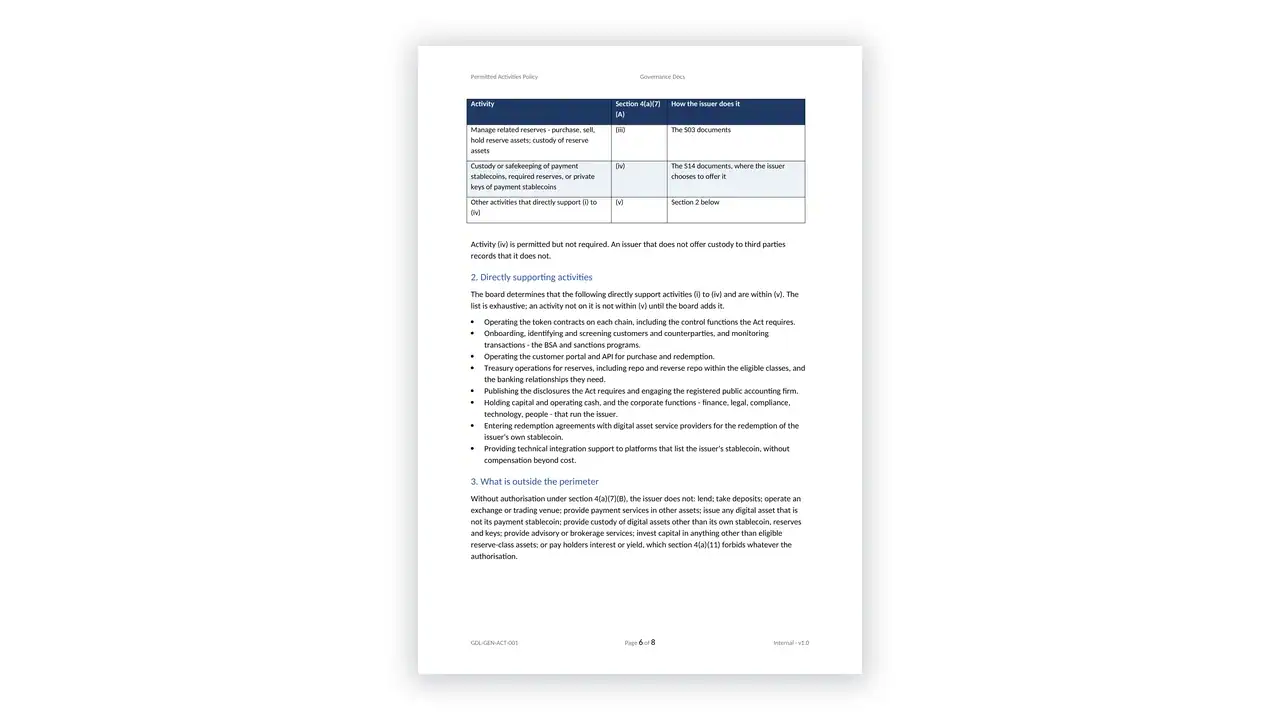
| S08 Activities, naming and marketing | 7 | Section 4(a)(7)-(9), 4(a)(11), 4(e) |
| S09 Audit, reporting and fitness | 6 | Section 4(a)(10), 4(f), 5(c)(2)-(3) |
| S10 Application and approval | 8 | Section 5 |
| S11 Supervision, examination and enforcement | 6 | Section 6 |
| S12 State pathway and Federal transition | 6 | Section 4(c), 4(d), 7 |
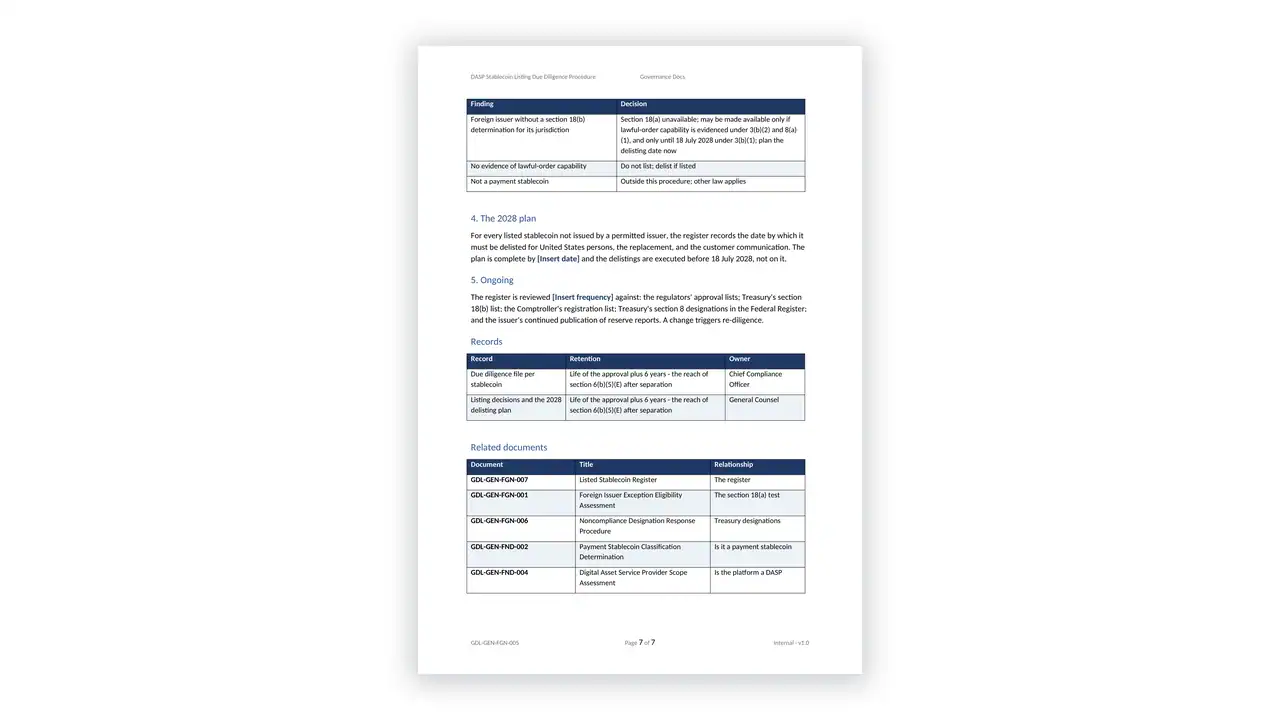
| S13 Foreign issuers and DASPs | 7 | Section 3(b), 8, 18 |
| S14 Custody and safekeeping | 7 | Section 10, 16 |
| S15 Insolvency and holder protection | 4 | Section 11 |
| S16 Technology and lawful orders | 5 | Section 4(a)(6)(B), 5(d)(2)(A)(ii), 12 |
| S17 Non-financial public companies | 3 | Section 4(a)(12) |
| S18 Rulemaking watch and implementation | 5 | Sections 9, 13, 14, 15, 18(d) – effective 18 January 2027 |
S01 Program foundation, scope and definitions
S02 Issuance authority and prohibitions
S03 Reserve requirements
S04 Redemption and fee disclosure
S05 Monthly reporting and certification
S06 Capital, liquidity and risk management
S07 AML, sanctions and lawful orders
S08 Activities, naming and marketing
S09 Audit, reporting and fitness
S10 Application and approval
S11 Supervision, examination and enforcement
S12 State pathway and Federal transition
S13 Foreign issuers and DASPs
S14 Custody and safekeeping
S15 Insolvency and holder protection
S16 Technology and lawful orders
S17 Non-financial public companies
S18 Rulemaking watch and implementation


 GENIUS Act Toolkit – 126 Stablecoin Compliance Templates$99.00


Reviews
There are no reviews yet