
-
×
 PCI PIN Security Toolkit – 149 Templates for PIN v3.1
3 × $99.00
PCI PIN Security Toolkit – 149 Templates for PIN v3.1
3 × $99.00 -
×
 ISO 27001 Assessment Tool – Premium Quality
1 × $19.00
ISO 27001 Assessment Tool – Premium Quality
1 × $19.00
Subtotal: $316.00
 PCI PIN Security Toolkit – 149 Templates for PIN v3.1
3 × $99.00 ISO 27001 Assessment Tool – Premium Quality
1 × $19.00
PCI PIN Security Toolkit – 149 Templates for PIN v3.1
3 × $99.00 ISO 27001 Assessment Tool – Premium Quality
1 × $19.00 Subtotal: $316.00
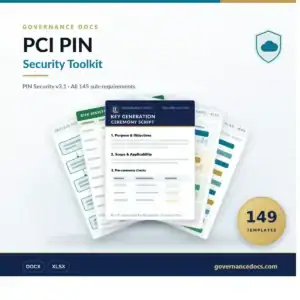
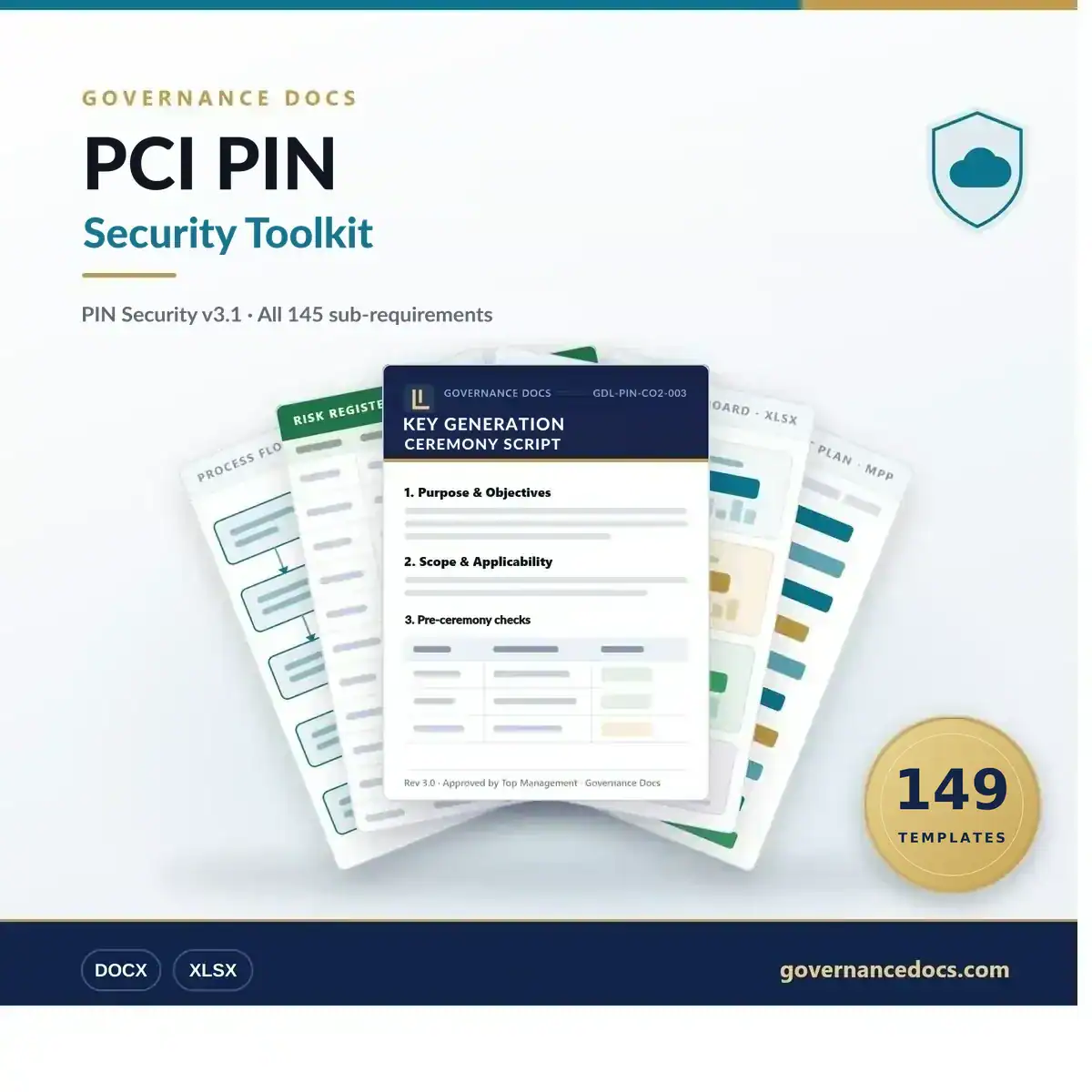
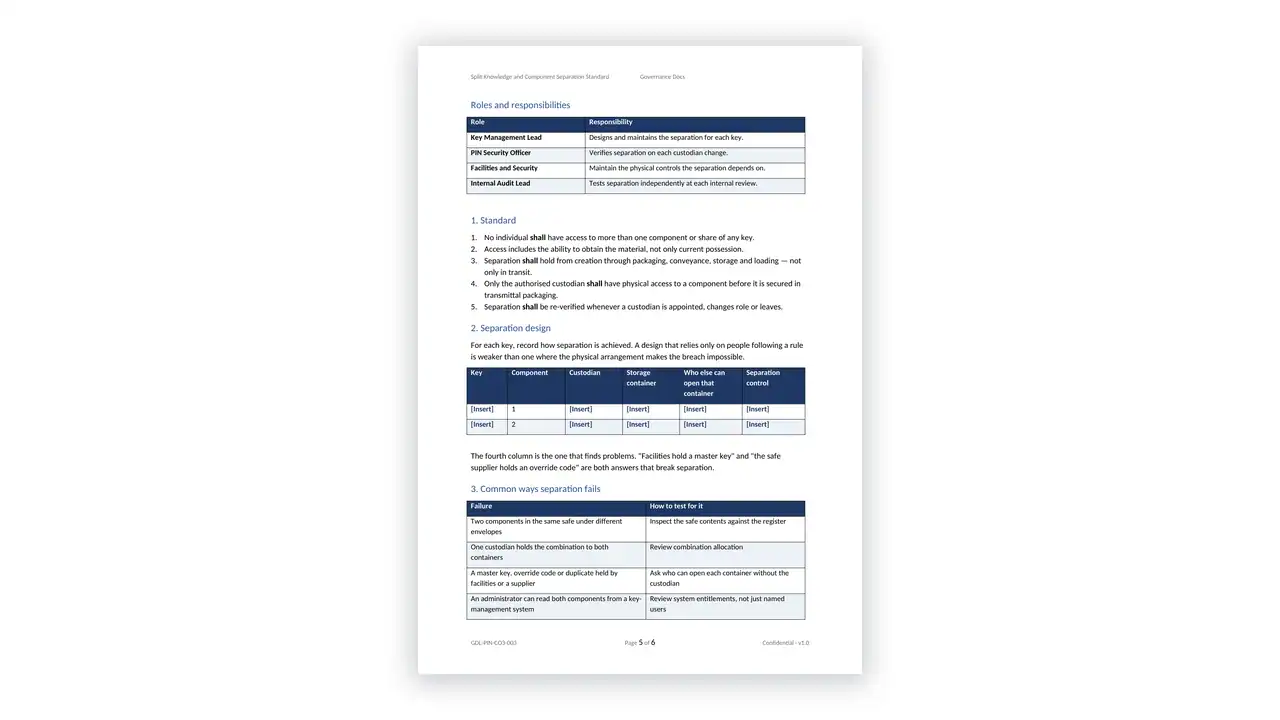
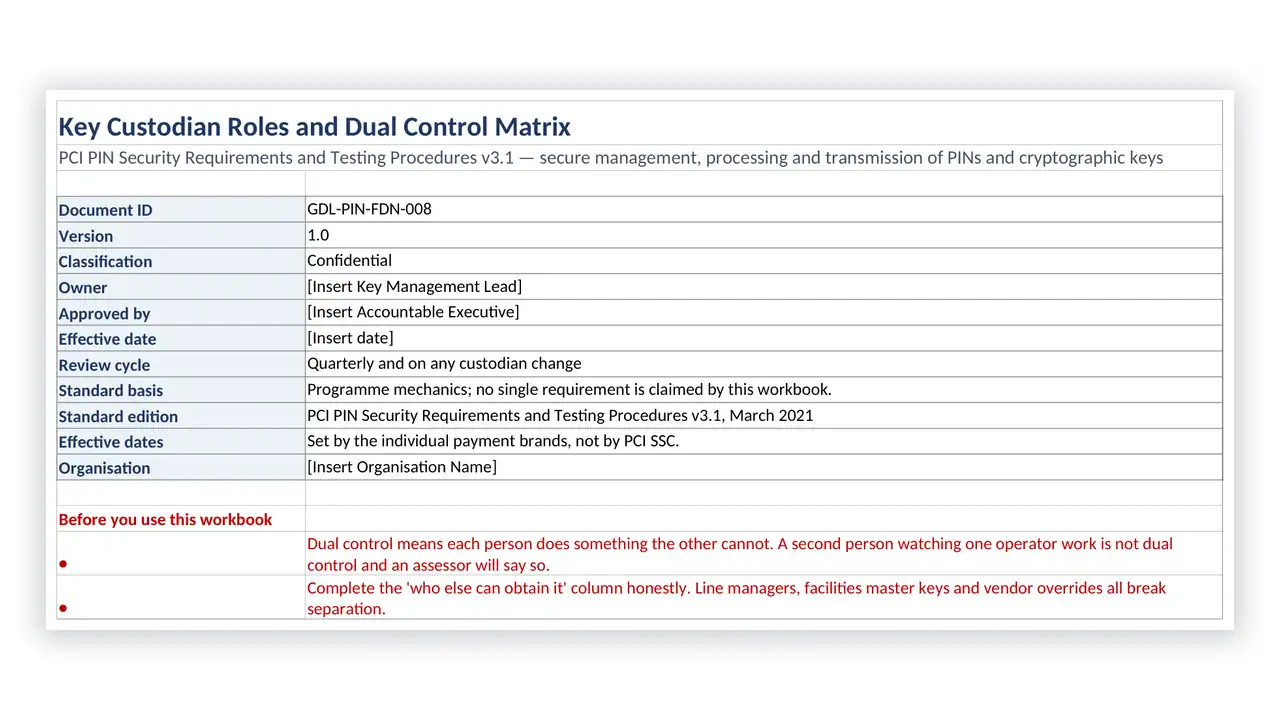
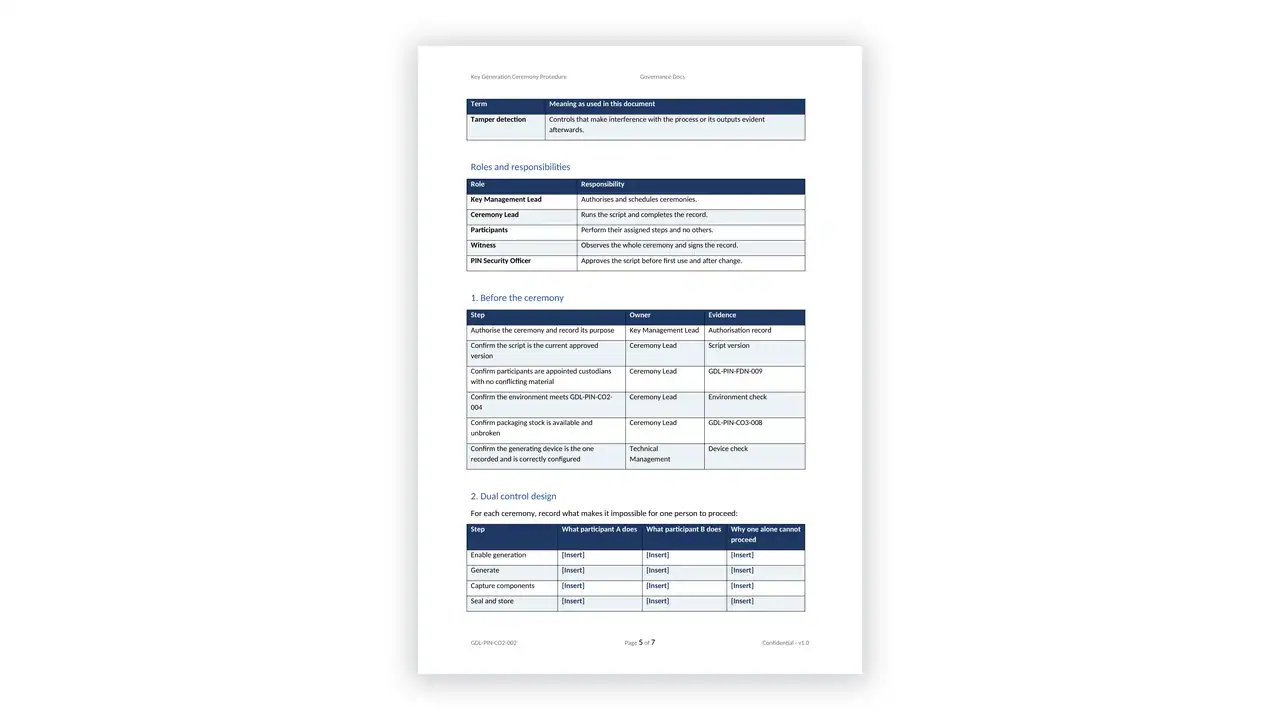
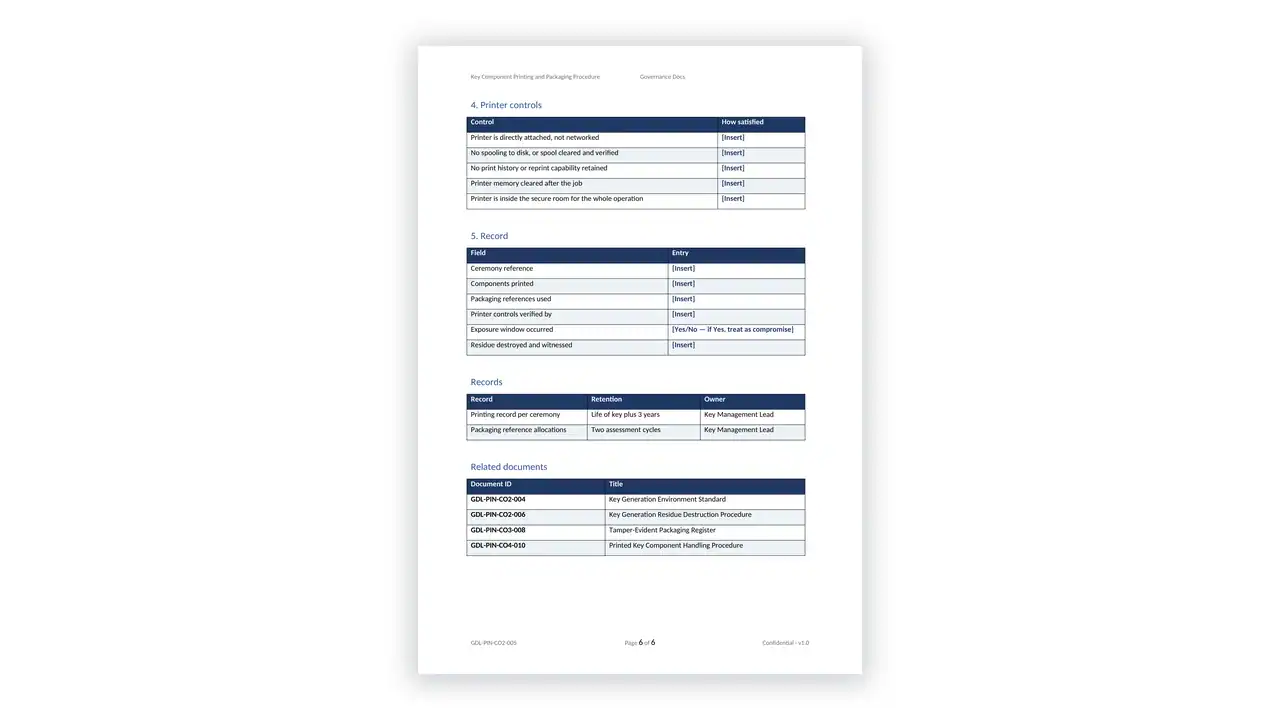
The PCI PIN Security Toolkit delivers 149 ready-to-use Microsoft Office templates — 118 Word documents and 31 Excel workbooks — covering all 145 sub-requirements of PCI PIN Security Requirements and Testing Procedures v3.1, including Normative Annex A for remote key distribution and certification authorities and Normative Annex B for key-injection facilities. Eleven sections follow the standard’s own seven Control Objectives, so a Qualified PIN Assessor can walk the pack in the order they already work in.
$99.00
✓ In stock — instant download after checkout
PCI PIN Security is the standard for how a cardholder’s PIN, and every cryptographic key that protects it, is generated, moved, loaded, used, administered and destroyed. It applies to acquirers and their agents — processors, key-injection facilities and certificate processors — rather than to every merchant, and it is assessed onsite by a Qualified PIN Assessor, a different qualification from the QSA scheme used for PCI DSS.
What the standard does not come with is the documentation an assessment asks for.
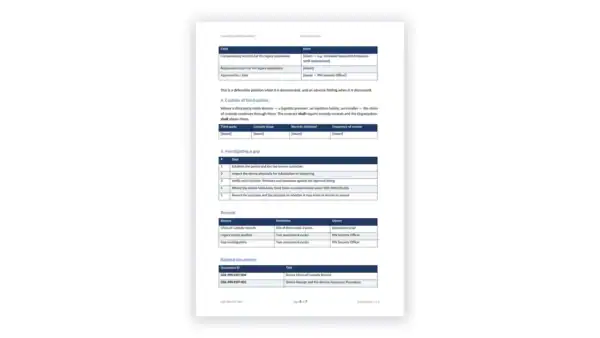
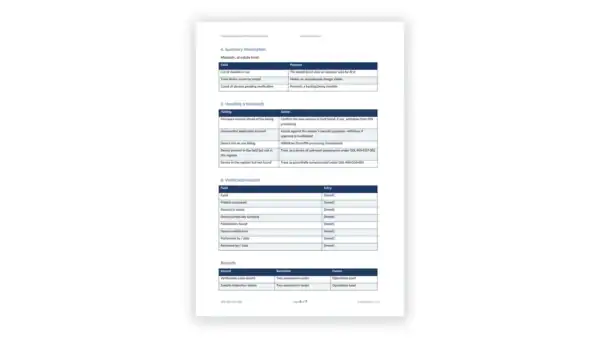
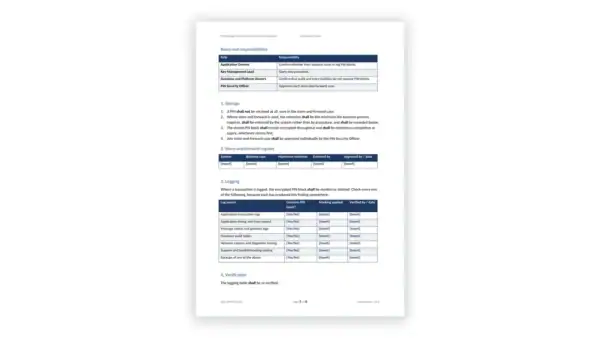
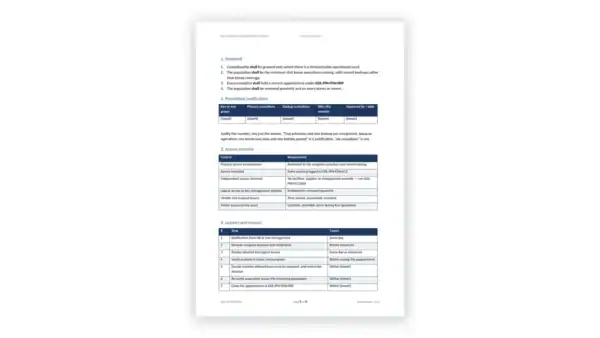
The PCI PIN Security Toolkit is 149 editable templates written against PCI PIN Security Requirements and Testing Procedures v3.1, March 2021, and it covers all 145 sub-requirements across all four of the standard’s scope columns.
There is no PCI PIN deadline, because PCI SSC does not set one. The standard says in as many words that the individual payment brands set the effective date for compliance. Anyone selling you a pack against a single industry-wide date is selling you something that does not exist. Contact the payment brands you work with.
What the standard does set is a phase-in for particular requirements — and as of today every one of those dates has passed:
| Date | Requirement | What changed |
|---|---|---|
| 1 June 2019 | 18-3 Phase 1 | Key blocks for internal connections and key storage in service provider environments |
| 1 January 2021 | 13-9 (Annex B) | Entities key-loading on behalf of others could no longer use PC-based key-loading platforms exposing clear-text material |
| 1 January 2023 | 18-3 Phase 2 | Key blocks for external connections to associations and networks |
| 1 January 2023 | 2-2 | Fixed key for TDEA PIN encryption disallowed in POI devices and host-to-host connections |
| 1 January 2023 | 13-9 (Annex B) | The PC-based key-loading restriction extended to entities loading only for their own processing |
| 1 January 2024 | 32-9 (Annex B) | Clear-text key injection disallowed for entities injecting on behalf of others |
| 1 January 2025 | 18-3 Phase 3 | Key blocks extended to merchant hosts, POS devices and ATMs |
| 1 January 2026 | 32-9 (Annex B) | The clear-text injection restriction extended to entities injecting for their own processing |
There is no remaining grace period on anything.
These are the reasons to buy this pack rather than a cheaper one. Each is a limit on a requirement that reads much broader than it is, and each is sourced from the standard or from PCI SSC’s own technical FAQs.
| The common claim | What the standard and the FAQs actually say |
|---|---|
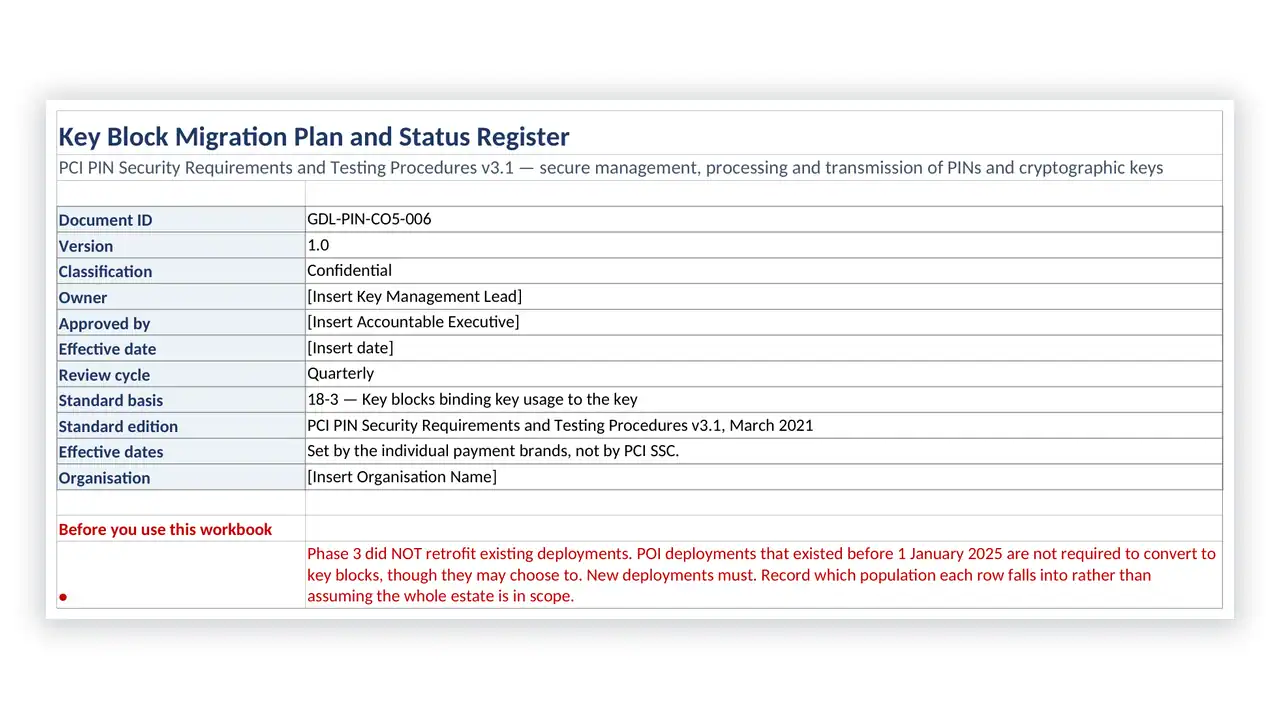
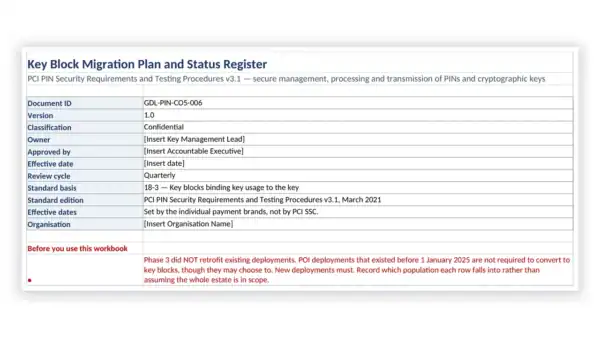
| “All POS devices and ATMs had to convert to key blocks by January 2025” | No. POI deployments that existed before that date are not required to convert, though they may choose to. New deployments must |
| “Clear-text key injection is banned” | Only for the more recent POI device generations. Injection into earlier generations remains acceptable past both the 2024 and 2026 dates, until a payment brand mandates those devices out of service |
| “Fixed key is no longer allowed” | The prohibition is on fixed key with TDEA. Fixed key with AES is unaffected |
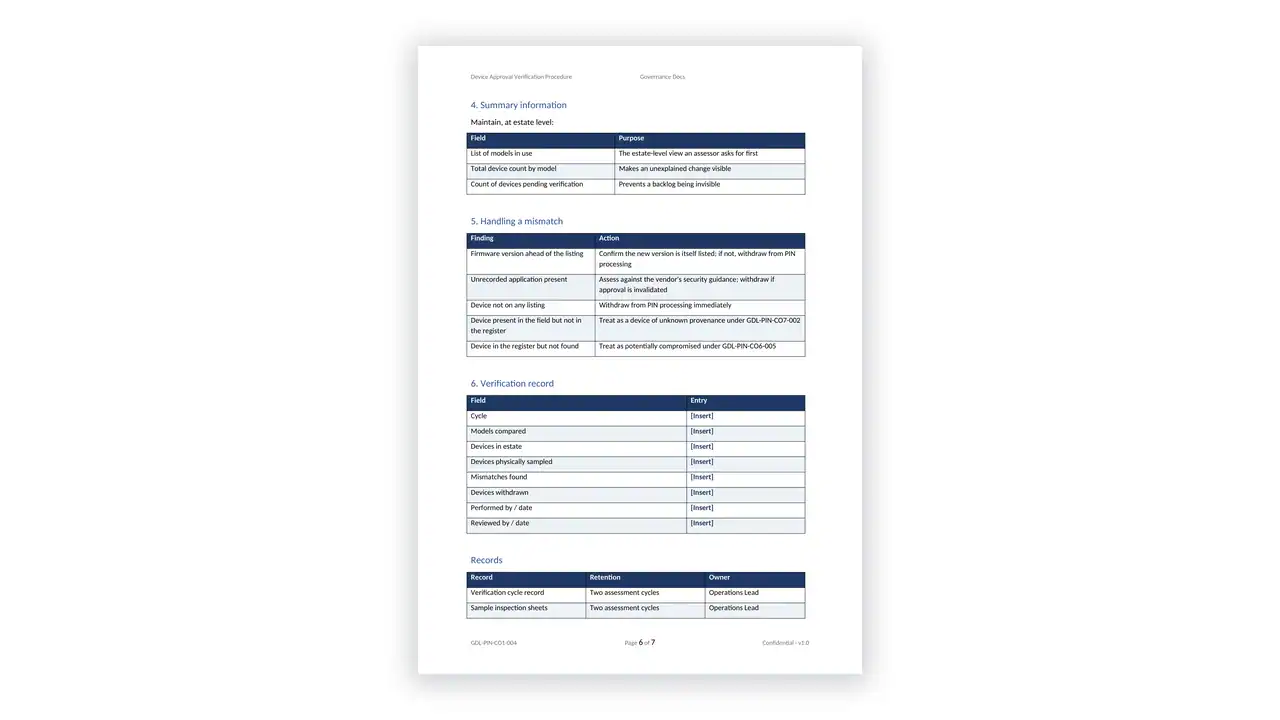
| “You must support ISO Format 4 PIN blocks by [date]” | Those sunrise dates were suspended in v3.1 and PCI SSC is re-evaluating them. They were dates for supporting the format, not for using it. No replacement date has been published |
A toolkit that gets these wrong sends you to rip out working estates. The relevant documents in the PCI PIN Security Toolkit carry each limit on their face, with a register to record which population each of your connections and device estates actually falls into.
Buyers arrive from PCI DSS expecting to repeat this every year. A PCI PIN listing shows as expired two years after the date the assessor signs Part 3c of the Attestation of Compliance — not two years from submission, and PCI SSC does not prorate for a past-dated attestation. Submit late and you shorten the listing rather than moving it.
The PCI PIN Security Toolkit plans backwards from that: the programme charter, the governance procedure and the listing guide all work to the two-year clock, and the listing guide sets out the milestone dates to work back from.
There is no transaction threshold below which these requirements stop applying. The standard divides into transaction processing operations, symmetric key distribution using asymmetric techniques, and key-injection facilities — and an organisation is subject to the requirements of every activity it performs.
| Scope column | Sub-requirements |
|---|---|
| Transaction Processing Operations (main body) | 96 |
| Normative Annex A — remote key distribution operations | 85 |
| Normative Annex A — certification and registration authority operations | 105 |
| Normative Annex B — key-injection facilities | 94 |
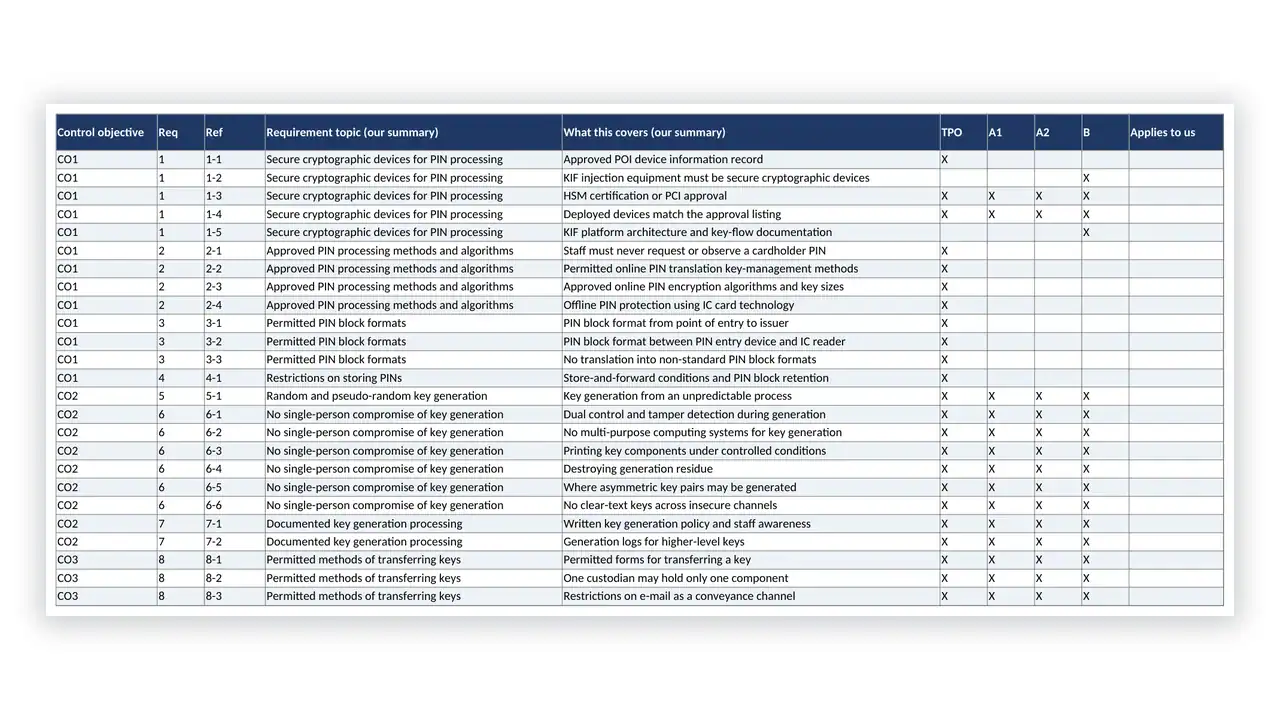
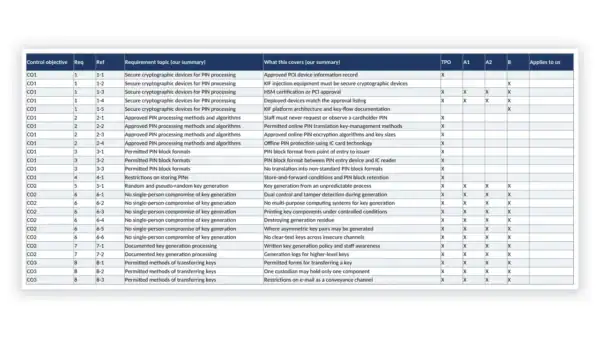
Those four figures overlap heavily and must not be added together. The standard contains 145 distinct sub-requirement identifiers in total, across 33 numbered Requirements in 7 Control Objectives. An entity subject to more than one column satisfies the union of them, not the sum. The PCI PIN Security Toolkit ships an applicability matrix seeded with all 145 rows against all four columns, so you filter rather than guess.
Most PIN material stops at the main body. The PCI PIN Security Toolkit does not:
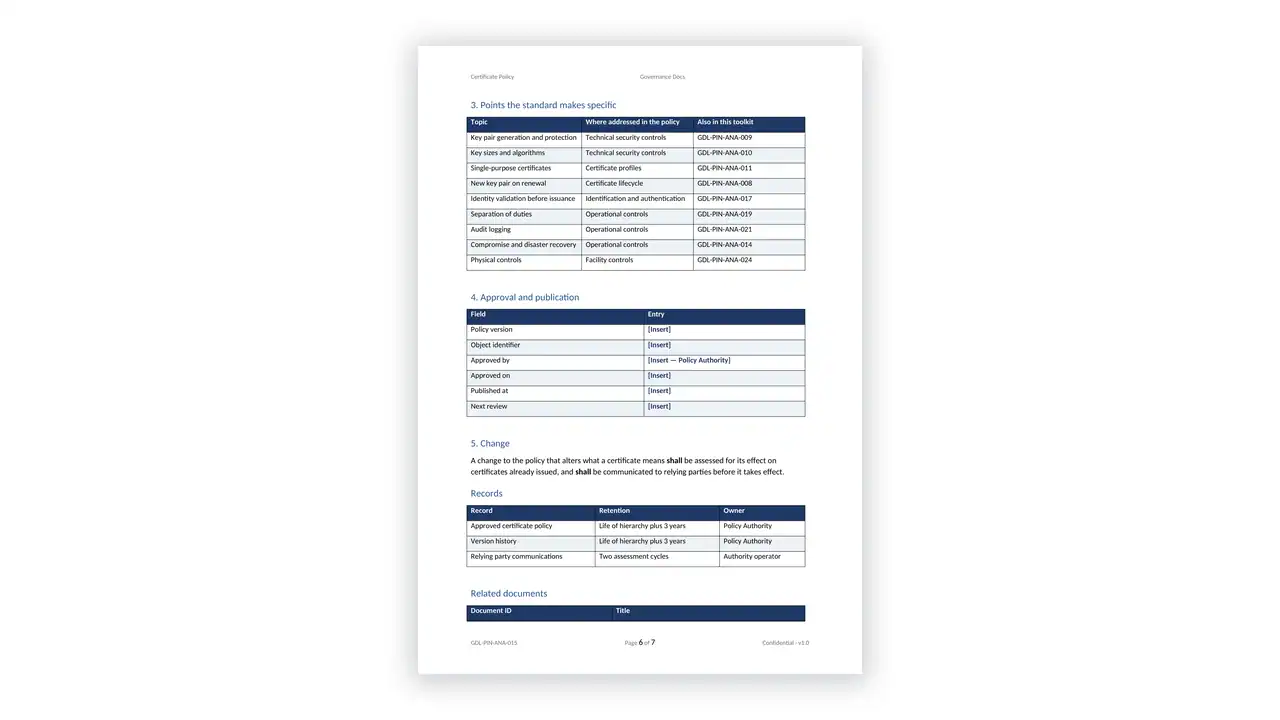
remote key distribution, and certification and registration authority operations, including a certificate policy, a certification practice statement, CA hardening, audit trail integrity and the three tiers of physical barrier around an authority facility.
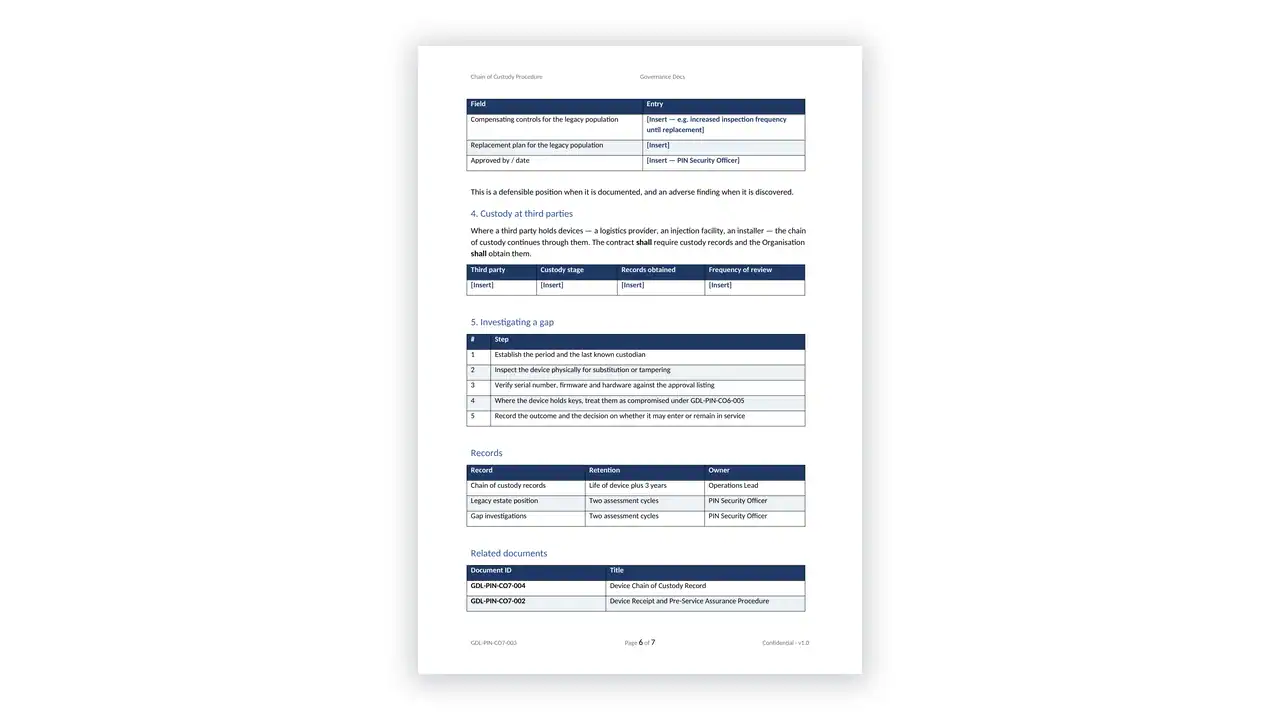
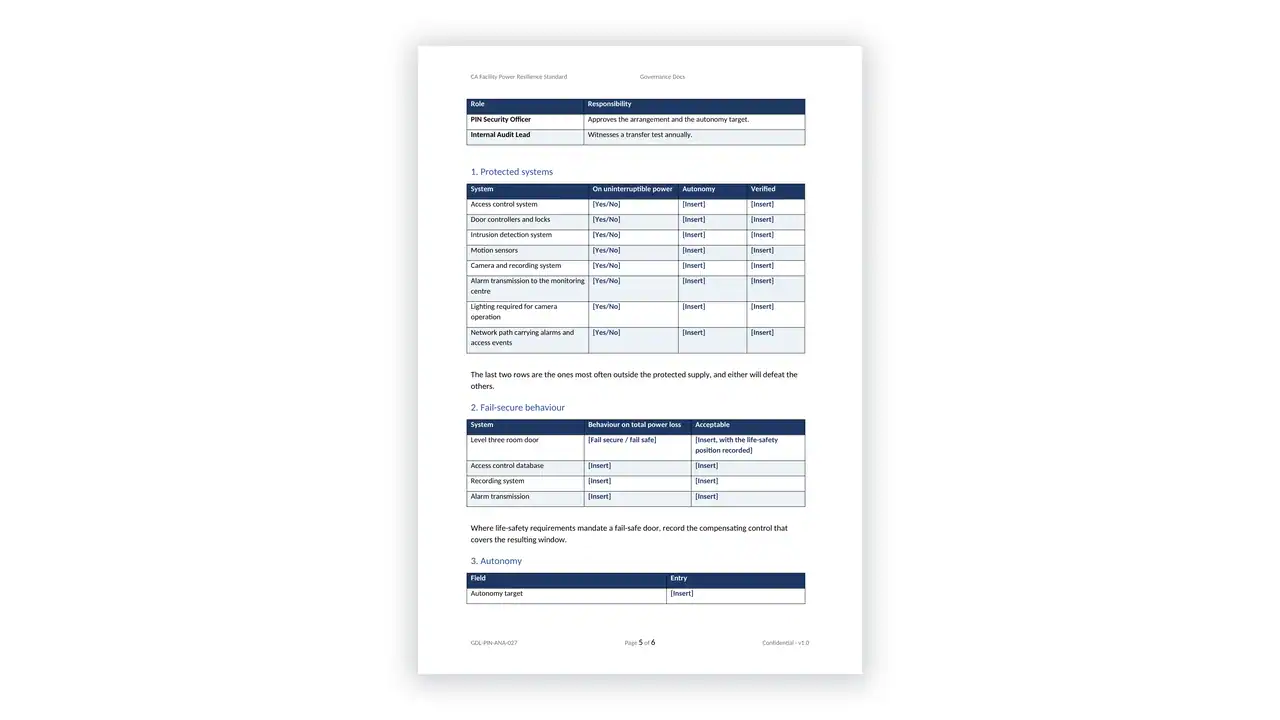
the secure injection room, the caged-environment case, device serial number tracking and reconciliation against a pre-authorised device inventory.
If you do not perform those activities, the sections tell you to record that determination rather than delete them — an assessor asks why a section is absent, and a recorded decision answers faster than a missing folder.
PCI SSC owns the copyright in PIN Security v3.1, and the licence under which it is distributed conveys no right to create a derivative work of it. So unlike toolkits built on US Government publications, the PCI PIN Security Toolkit does not reproduce PCI’s requirement text — and you should be sceptical of any pack that does.
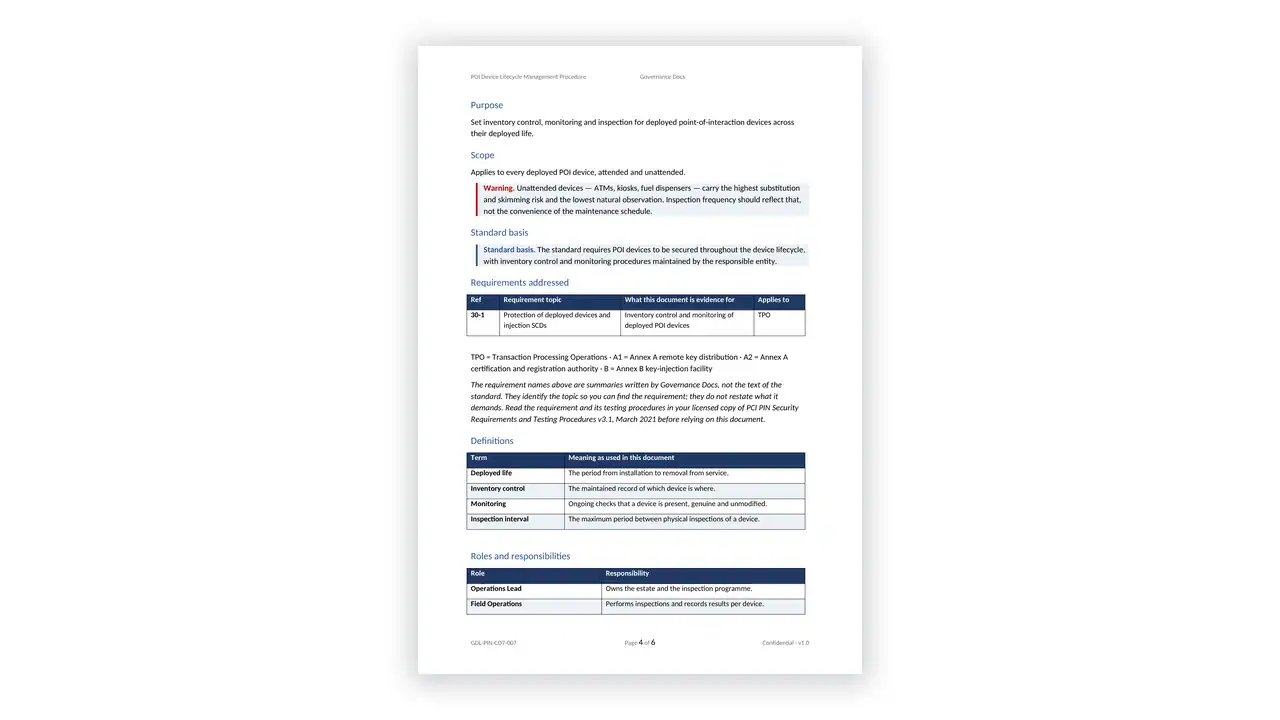
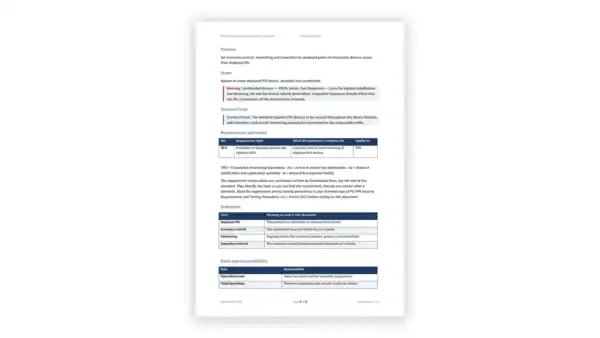
What each document carries instead is a Requirements addressed table naming the identifier, the requirement topic and what the document is evidence for, in our own words, with the paraphrase labelled as a paraphrase on every page it appears. You will need your own licensed copy of the standard, which is free to download from PCI SSC’s document library after accepting their licence.
That is a limitation, and we would rather you knew it before buying than after.
| Section | Documents | Coverage |
|---|---|---|
| Programme Foundation | 11 | Programme mechanics |
| PIN Processing and Devices | 10 | 11 sub-requirements |
| Key Generation | 9 | 9 sub-requirements |
| Key Conveyance | 11 | 13 sub-requirements |
| Key Loading | 18 | 25 sub-requirements |
| Key Usage | 11 | 13 sub-requirements |
| Key Administration | 14 | 15 sub-requirements |
| Equipment Management | 12 | 10 sub-requirements |
| Annex A Remote Key Distribution | 28 | 38 sub-requirements |
| Annex B Key-Injection Facilities | 12 | 11 sub-requirements |
| Assessment and Listing | 13 | Programme mechanics |
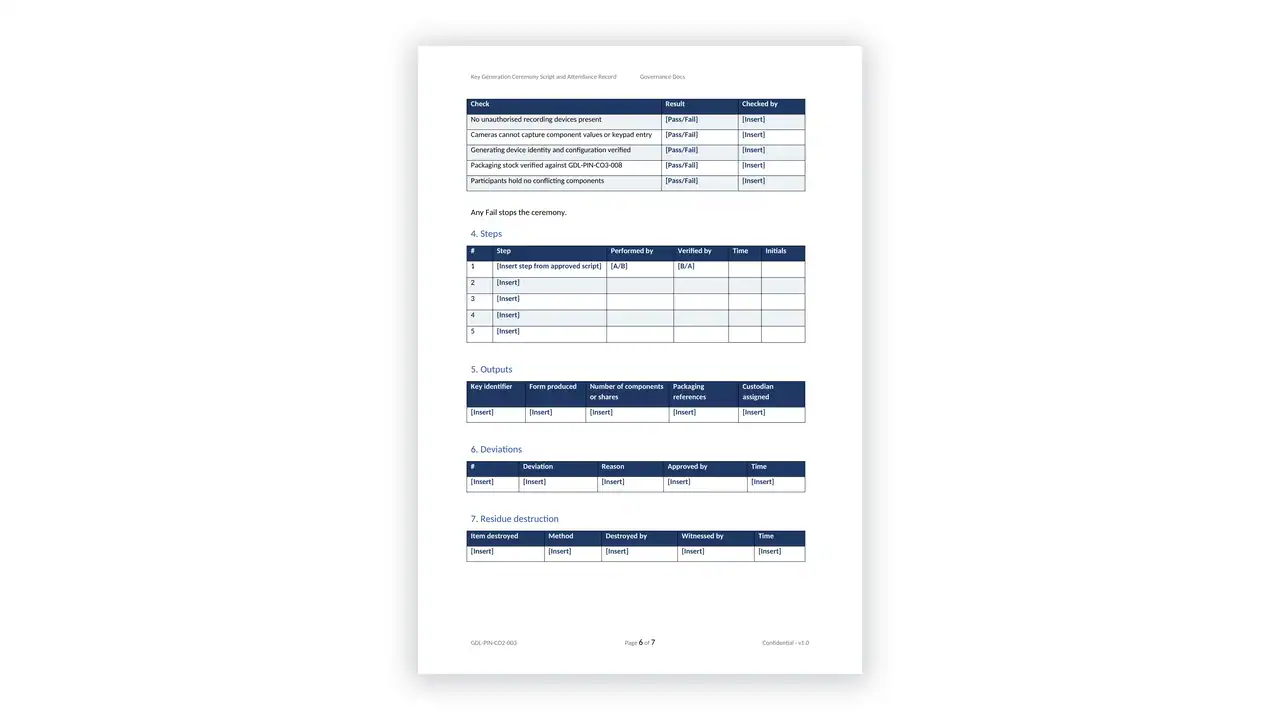
The register that defines this pack fails the build if any of the 145 sub-requirements is unclaimed, and fails separately if a document filed in a transaction processing section cites a requirement the standard scopes to an annex only. That second check is what stops the pack telling an acquirer it has to satisfy a key-injection-facility requirement.
The four seeded workbooks — the applicability matrix, the self-assessment checklist, the gap analysis tool and the evidence register — each assert they wrote exactly 145 rows before saving.
Office format, fully editable and rebrandable.
Does this make us PCI PIN compliant? No toolkit can. Compliance is assessed onsite by a Qualified PIN Assessor against the testing procedures in the standard. The PCI PIN Security Toolkit is the documentation and the records that assessment asks to see.
Is there a self-assessment questionnaire for PCI PIN? No. Unlike PCI DSS, there is no self-assessment route. Validation is an onsite assessment by a QPA. The self-assessment checklist in the PCI PIN Security Toolkit is for your own internal readiness review, not a submission.
When is our deadline? The payment brands set it, not PCI SSC. Contact the brands you work with. The phase-in dates for individual requirements listed above have all passed.
Do we need Annex A and Annex B? Only if you perform those activities. The scope statement in section 00 works that out, and the applicability matrix then filters the 145 requirements down to the ones that apply to you.
Does the pack include the standard itself? No, and it cannot — PCI SSC’s licence does not permit redistribution. The standard is free to download directly from PCI SSC after accepting their licence agreement.
How often do we have to be assessed? The listing expires two years after the assessor signs the attestation. Plan the renewal backwards from that date; the listing guide in section 10 sets out the milestones.
Programme Foundation
PIN Processing and Devices
Key Generation
Key Conveyance
Key Loading
Key Usage
Key Administration
Equipment Management
Annex A Remote Key Distribution
Annex B Key-Injection Facilities
Assessment and Listing
 PCI PIN Security Toolkit – 149 Templates for PIN v3.1$99.00


Reviews
There are no reviews yet