
-
×
 ISO 27001 Toolkit - 162 Comprehensive Templates
1 × $99.00
ISO 27001 Toolkit - 162 Comprehensive Templates
1 × $99.00
Subtotal: $99.00

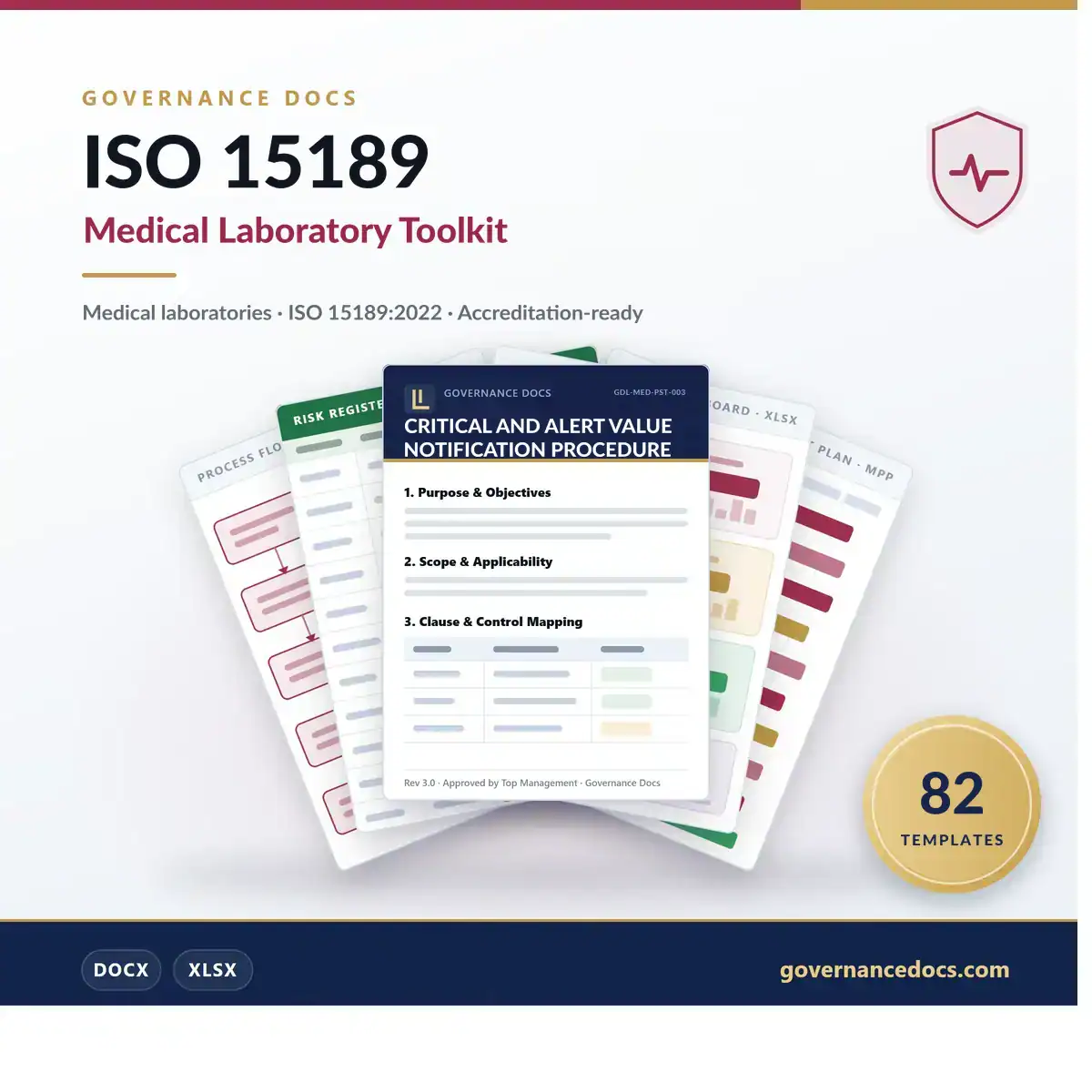
ISO 15189 Toolkit delivers 82 ready-to-use Microsoft Office templates covering every clause of ISO 15189:2022 — obligations to patients, the laboratory director, risk management, the full pre-examination, examination and post-examination pathway, critical result notification, point-of-care testing, and the management system. Built for medical laboratories preparing for accreditation.
$99.00
✓ In stock — instant download after checkout
Medical laboratories are accredited, not certified. An accreditation body assesses your laboratory against ISO 15189:2022 and grants accreditation for a defined scope: named examinations, on named sample types, by named methods, at named locations. An examination outside that schedule is not accredited work, however well it is performed.
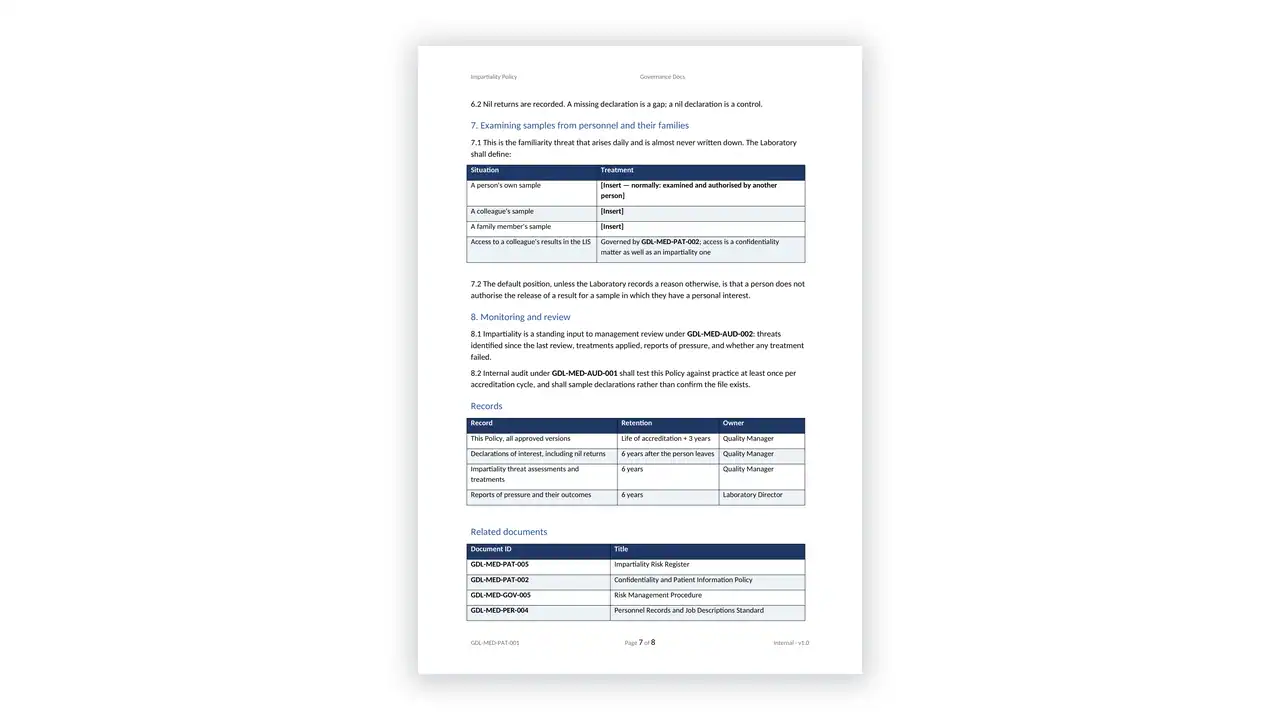
The other thing the standard makes explicit is who the work is for. ISO 15189’s stated objective is the welfare of the patient, and clause 4.3 places obligations on the laboratory that run to the patient rather than to the clinician who requested the examination. That clause has no equivalent in ISO/IEC 17025, and it is where a medical laboratory toolkit either does the work or quietly skips it.
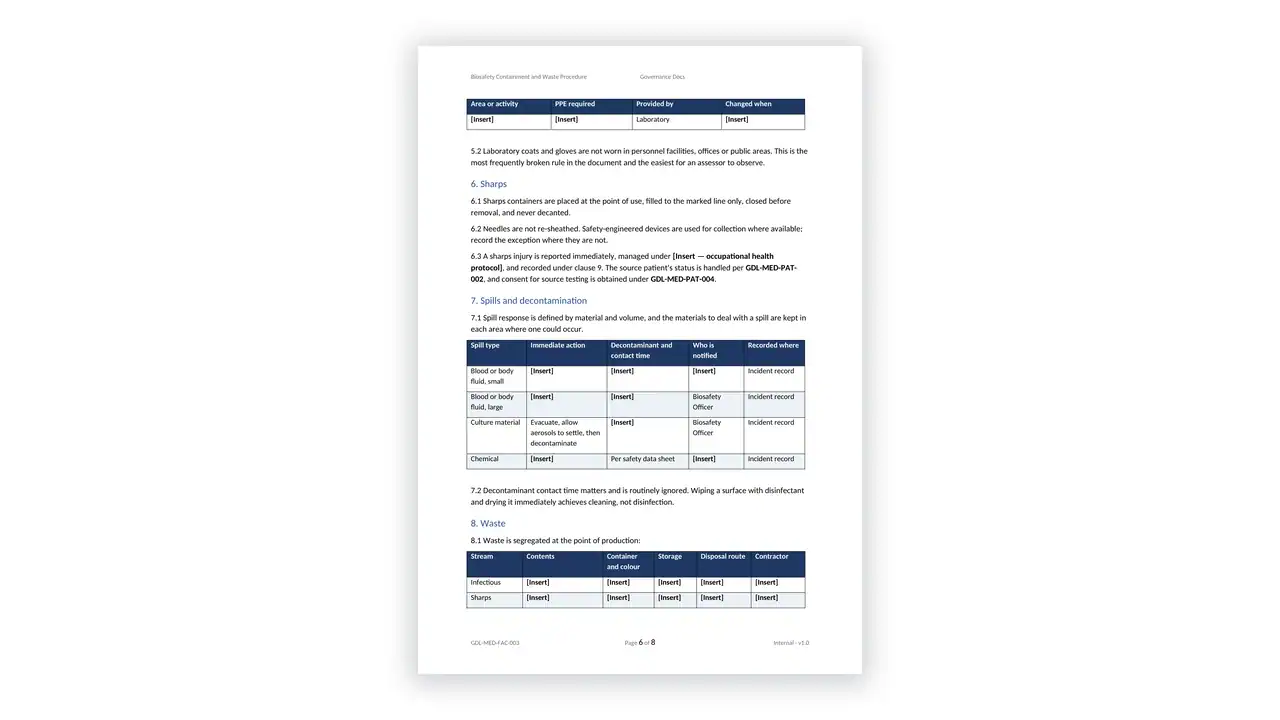
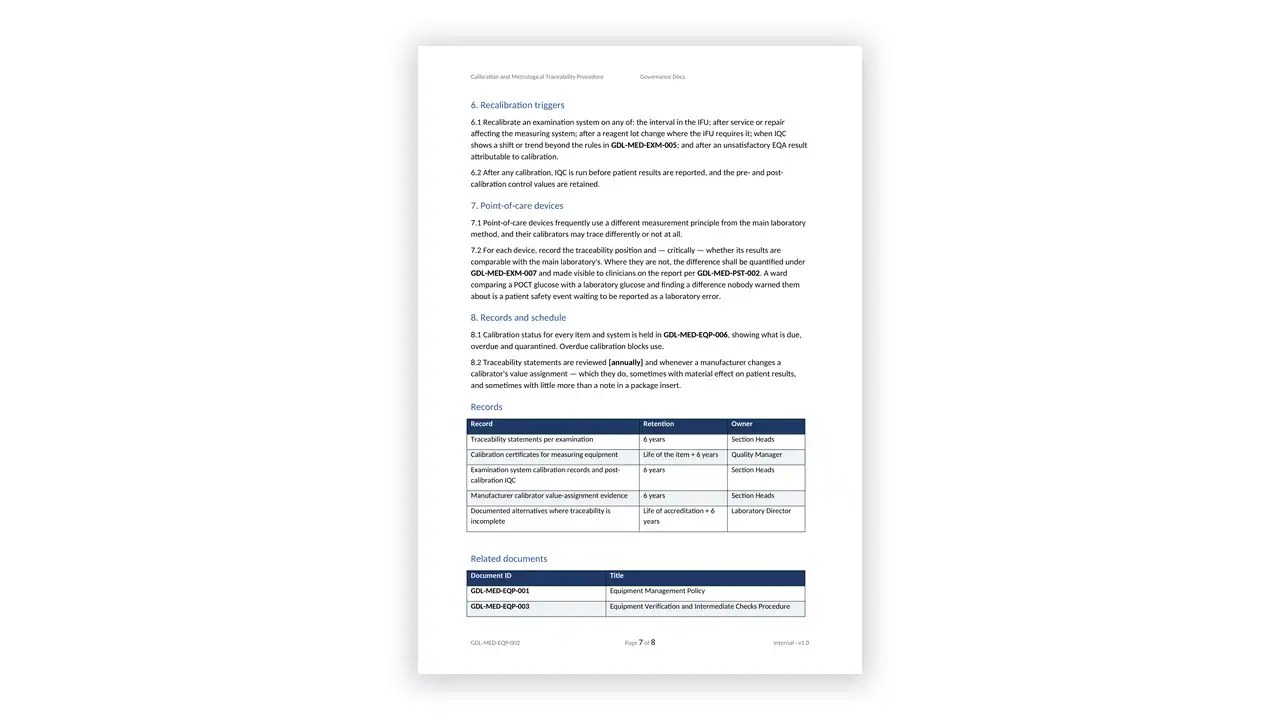
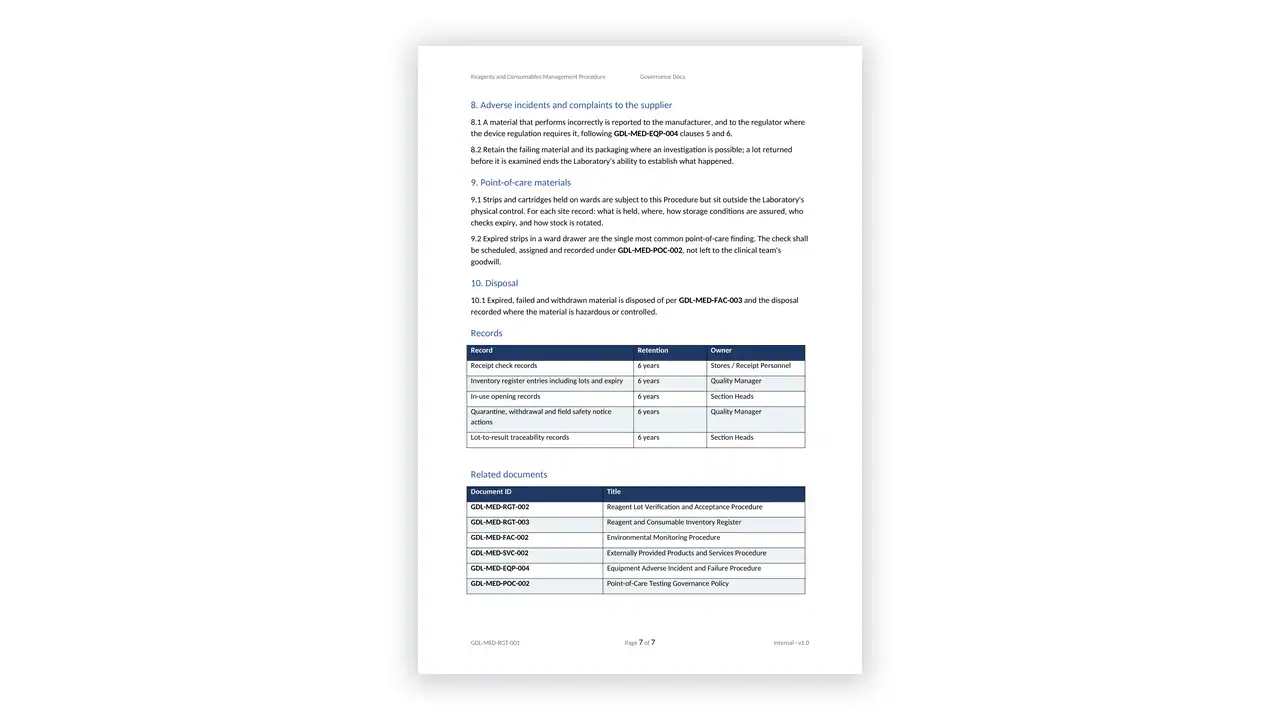
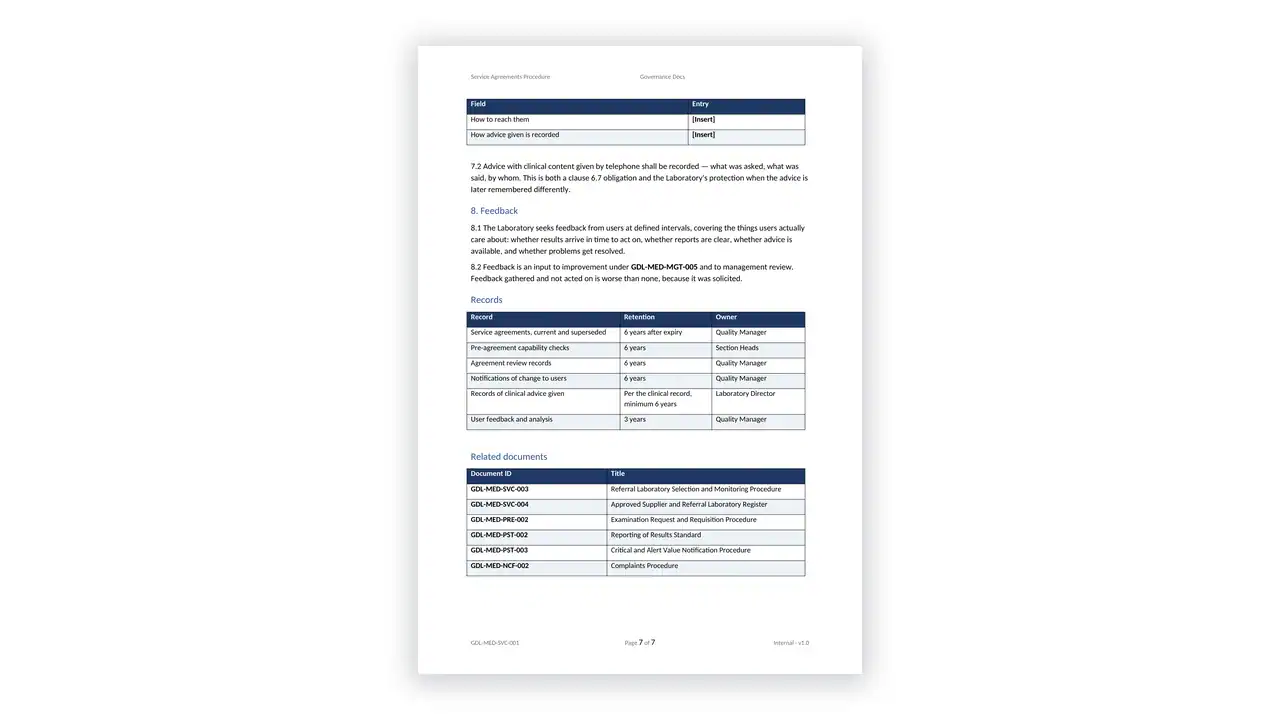
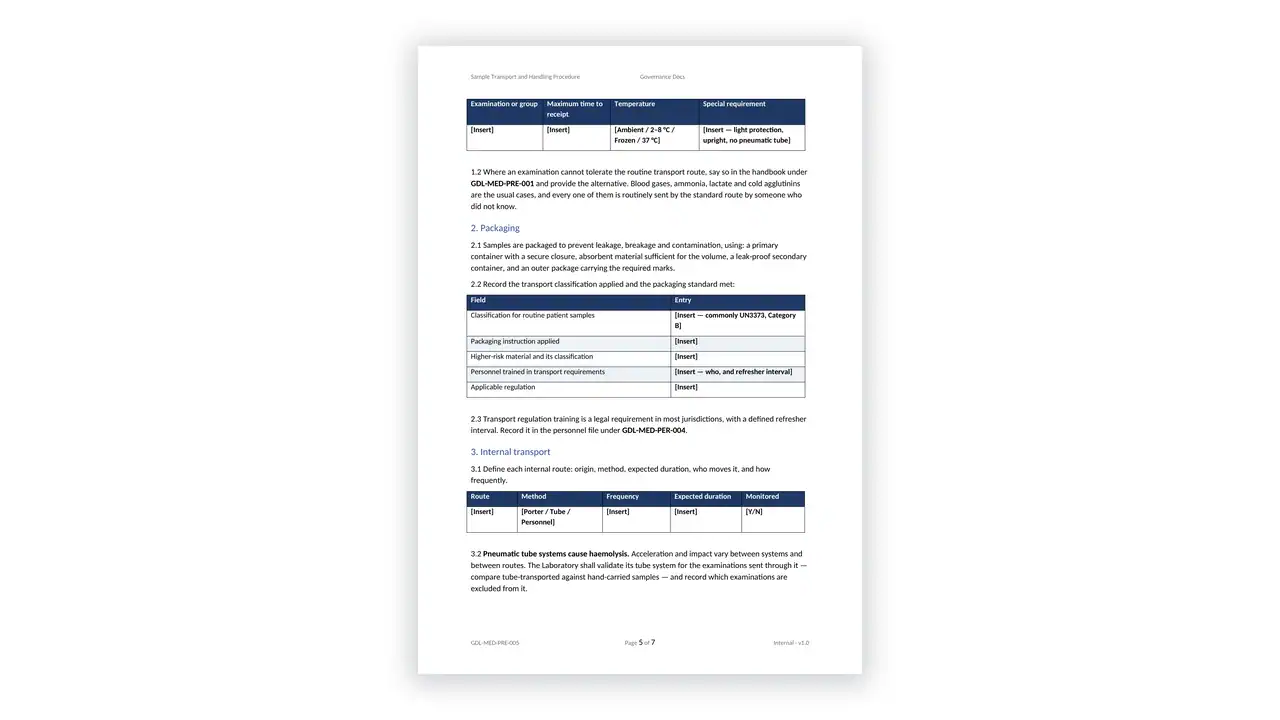
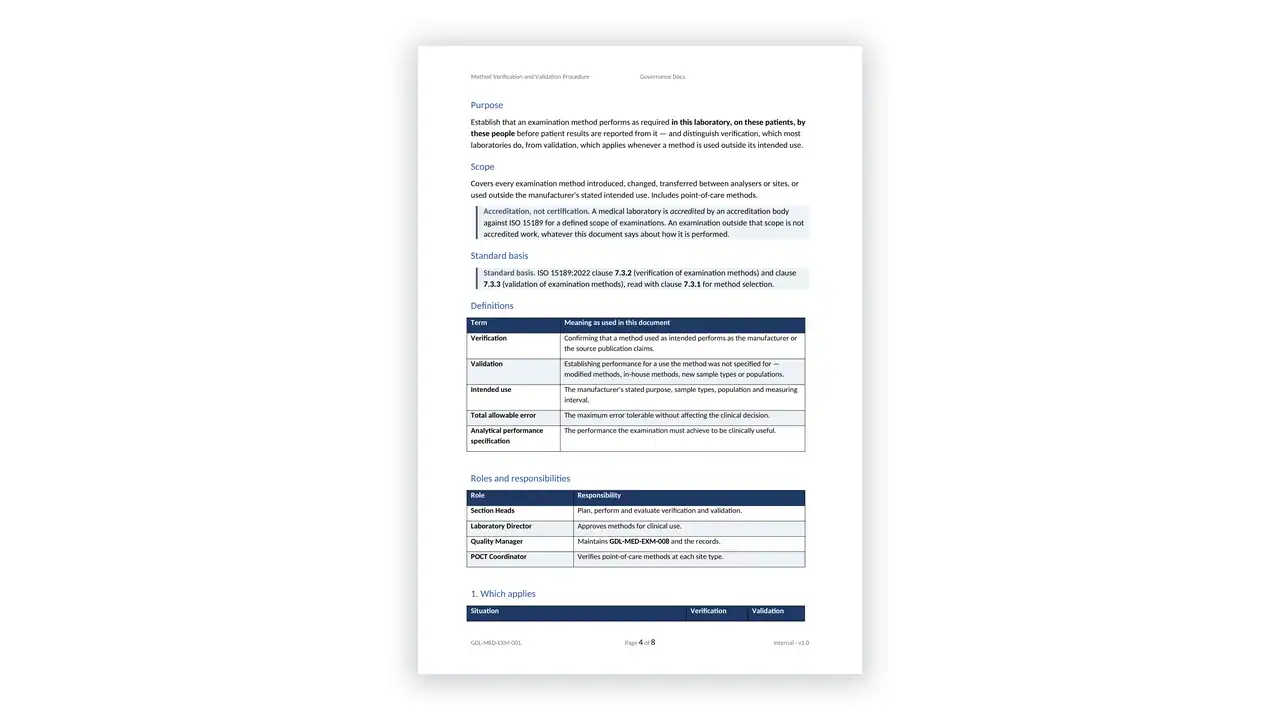
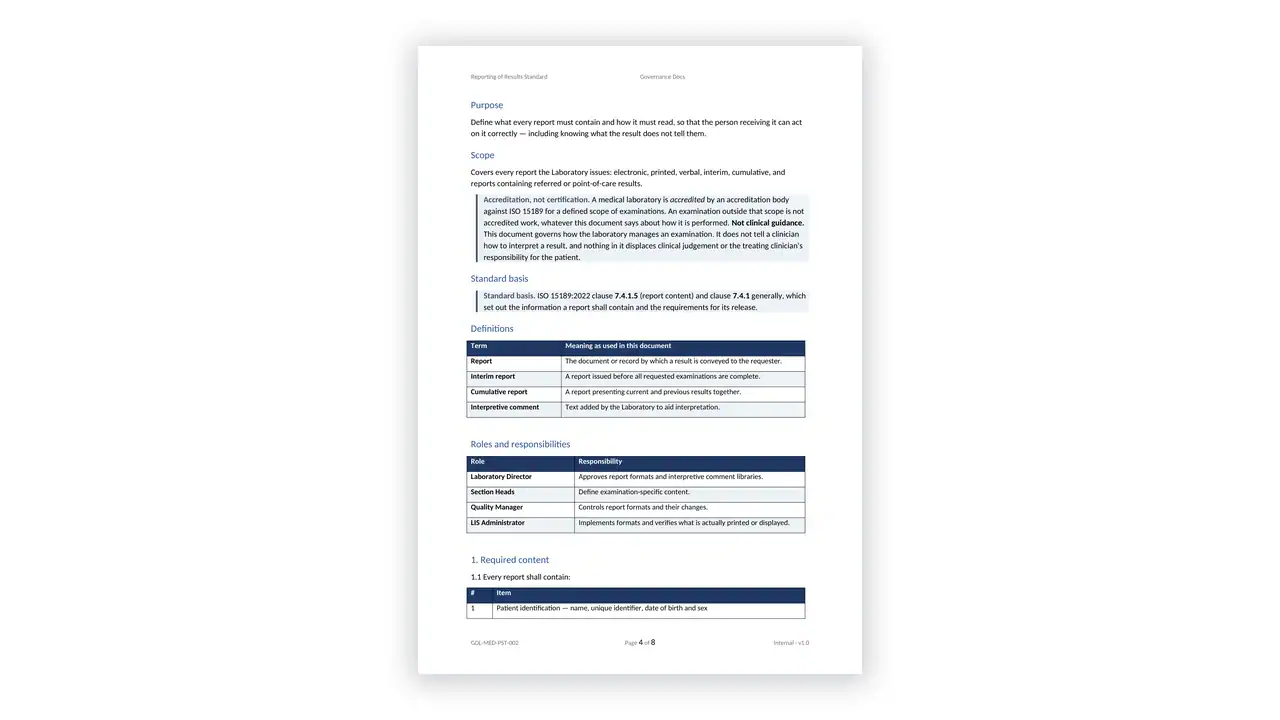
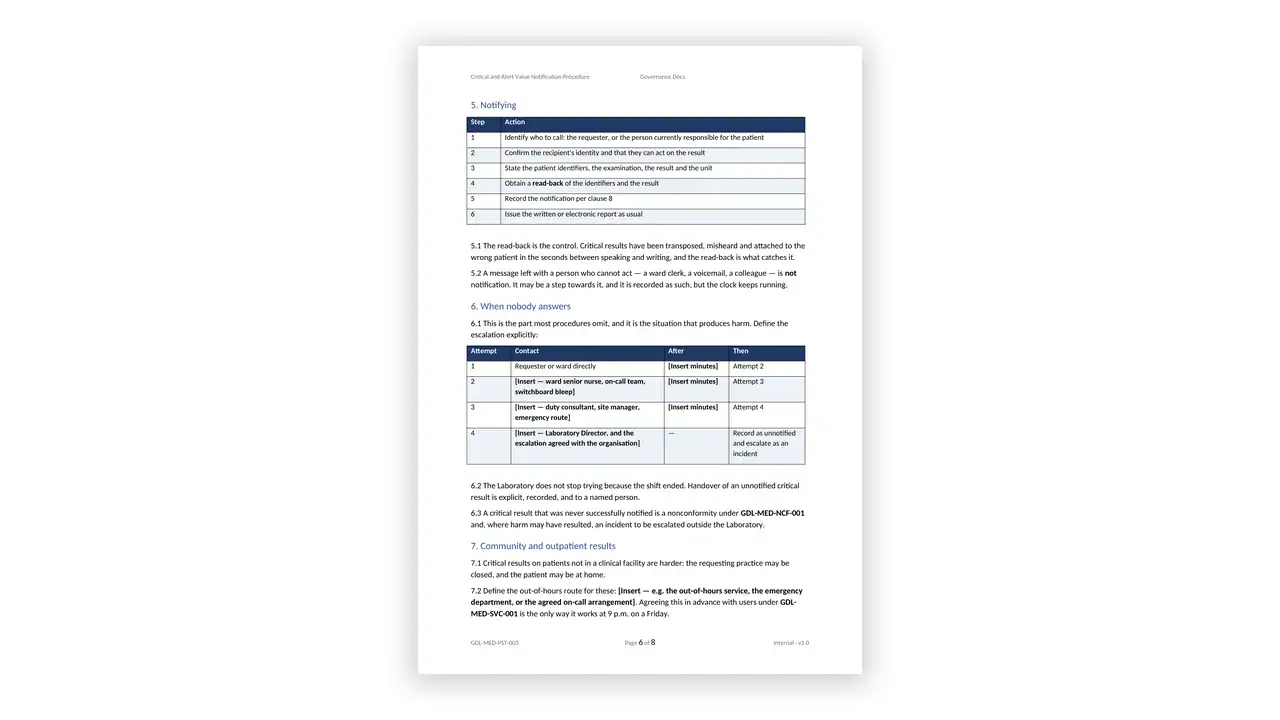
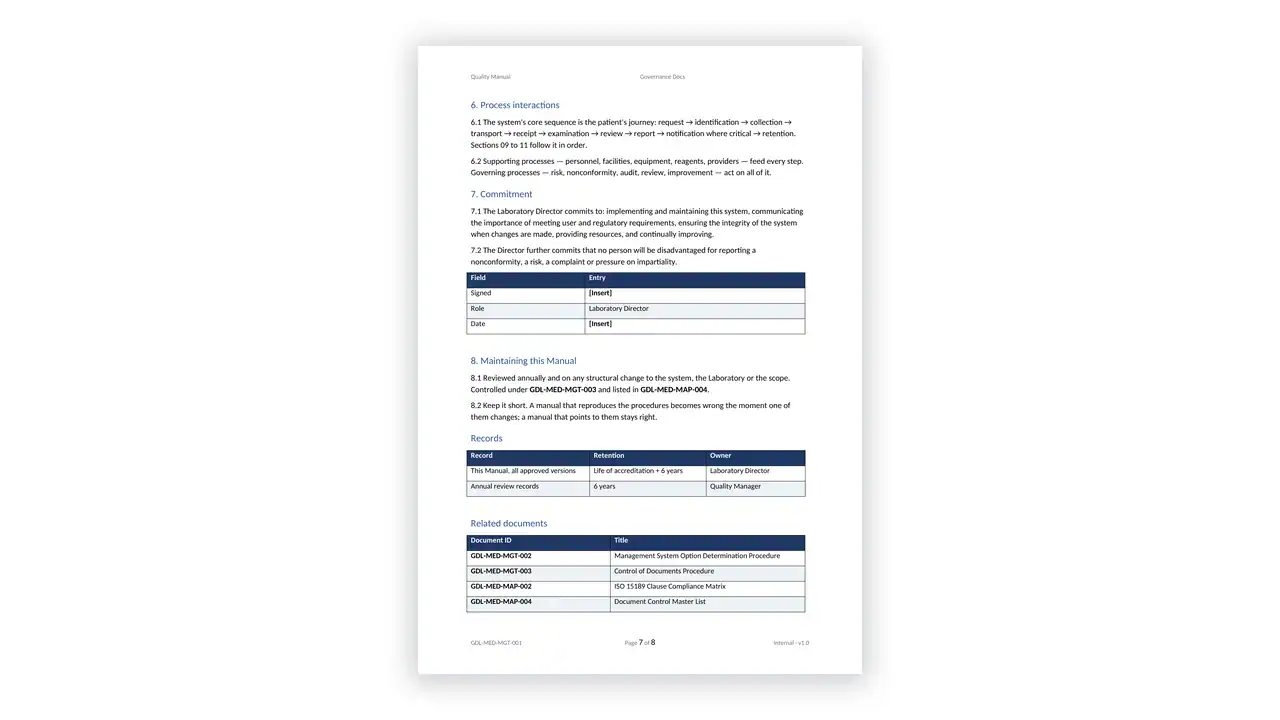
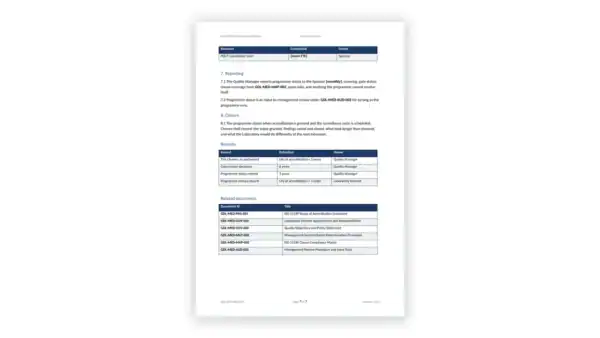
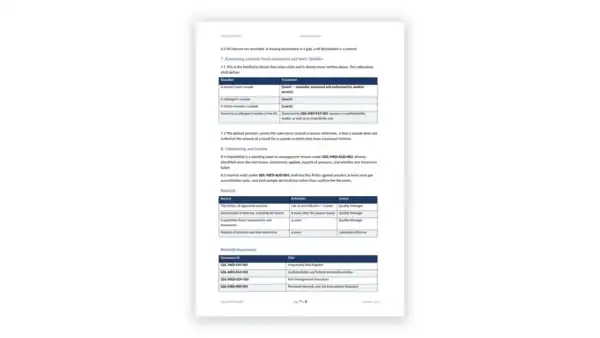
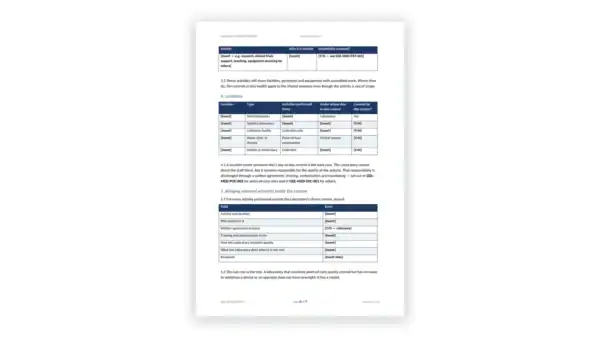
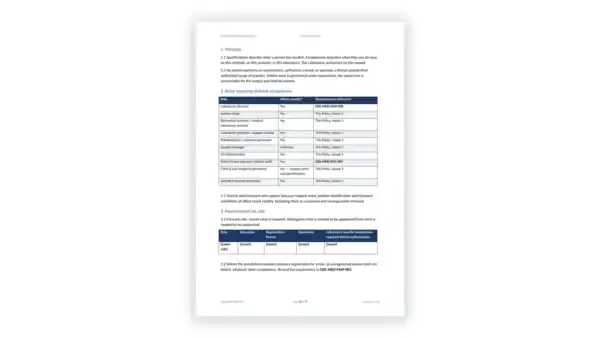
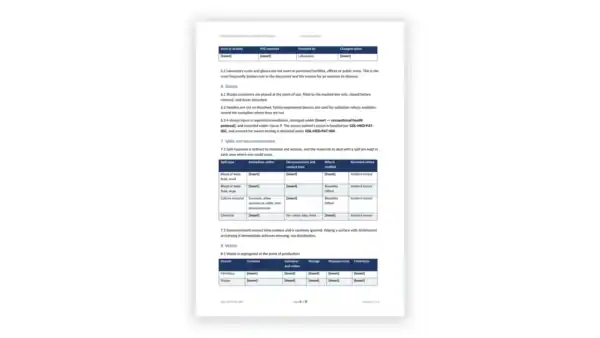
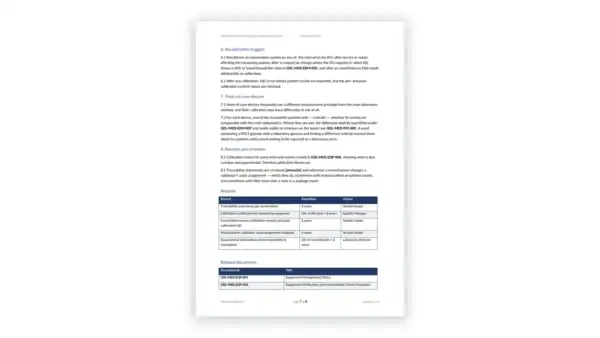
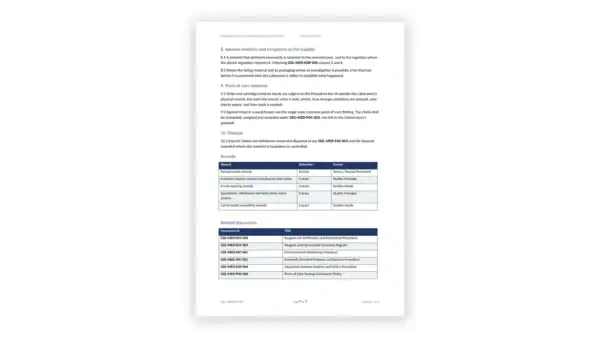
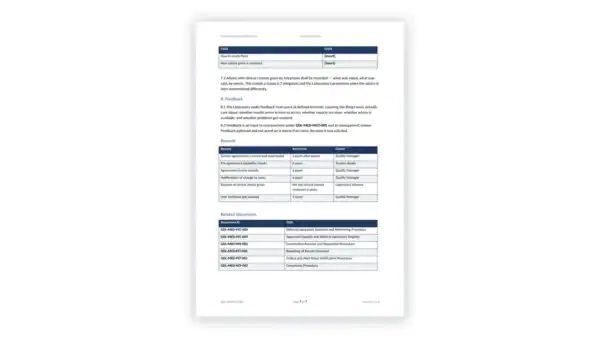
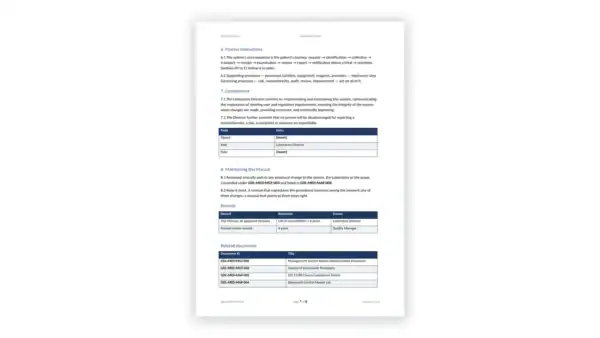
The ISO 15189 Toolkit contains 82 templates: 63 Word documents and 19 Excel registers, matrices, logs and checklists. Every document cites the clauses it implements, and every one is editable in Microsoft Office.
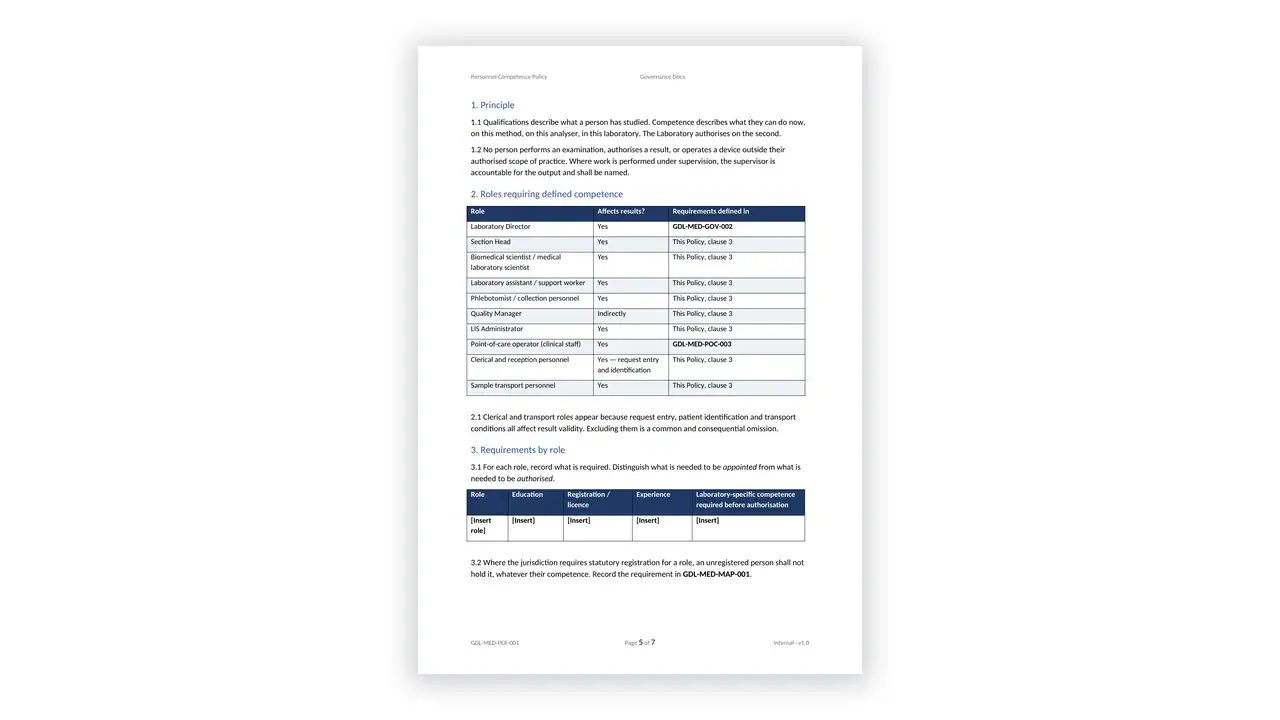
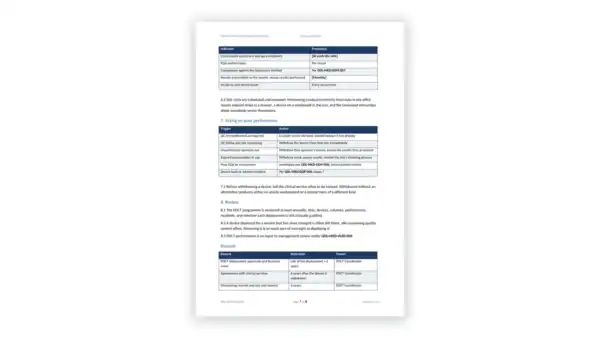
Clinical laboratories run on registers — examination schedules, competence authorisations, calibration status, reagent lots, sample rejections, critical value notifications, POCT devices and operators — which is why 19 of the 82 documents are working Excel tools rather than prose.
ISO 15189:2022 is the fourth edition, published in December 2022. It withdrew both ISO 15189:2012 and ISO 22870:2016, the separate point-of-care testing standard, whose requirements were absorbed into it. ISO’s own summary of the changes names three things: alignment with ISO/IEC 17025:2017, which moved the management requirements to the end of the document; the incorporation of point-of-care testing; and increased emphasis on risk management.
All three are reflected in how the ISO 15189 Toolkit is built. Risk management sits among the governance documents rather than inside the management system, because that is where clause 5.6 puts it. Point-of-care testing gets its own section rather than a paragraph. And the clause order follows the 2022 structure, so the folder list reads as an implementation sequence rather than a translation exercise.
Most medical laboratory template packs are thin exactly where accreditation is won or lost, and where patients are actually harmed. The ISO 15189 Toolkit is not:
Clause 8 can be met two ways, and choosing late means writing documents twice. Option A implements the management system requirements set out in ISO 15189 itself. The alternative lets a laboratory already operating a system in accordance with ISO 9001 satisfy clause 8 through it.
The ISO 15189 Toolkit ships a determination procedure that records the decision and its evidence before any clause 8 document is drafted, a full Option A management system, and a gap assessment identifying which clause 8 requirements an existing system already meets.
One consequence is routinely missed: clause 8.9.2 requires management review inputs that an ISO 9001 review does not have — external quality assessment performance, turnaround time monitoring, continuing education, feedback from patients as well as users, risk to patients, and impartiality outcomes. The toolkit’s management review pack lists all twenty-six inputs so an existing-system laboratory can see exactly what it has to add.
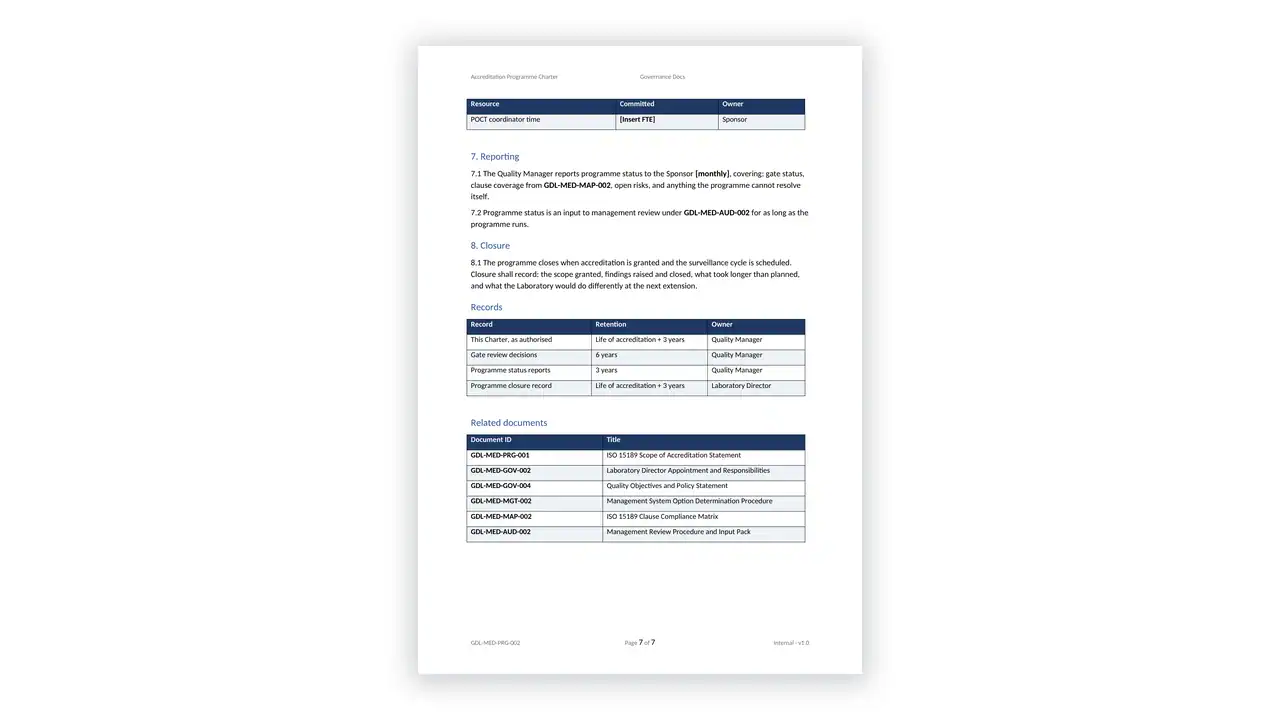
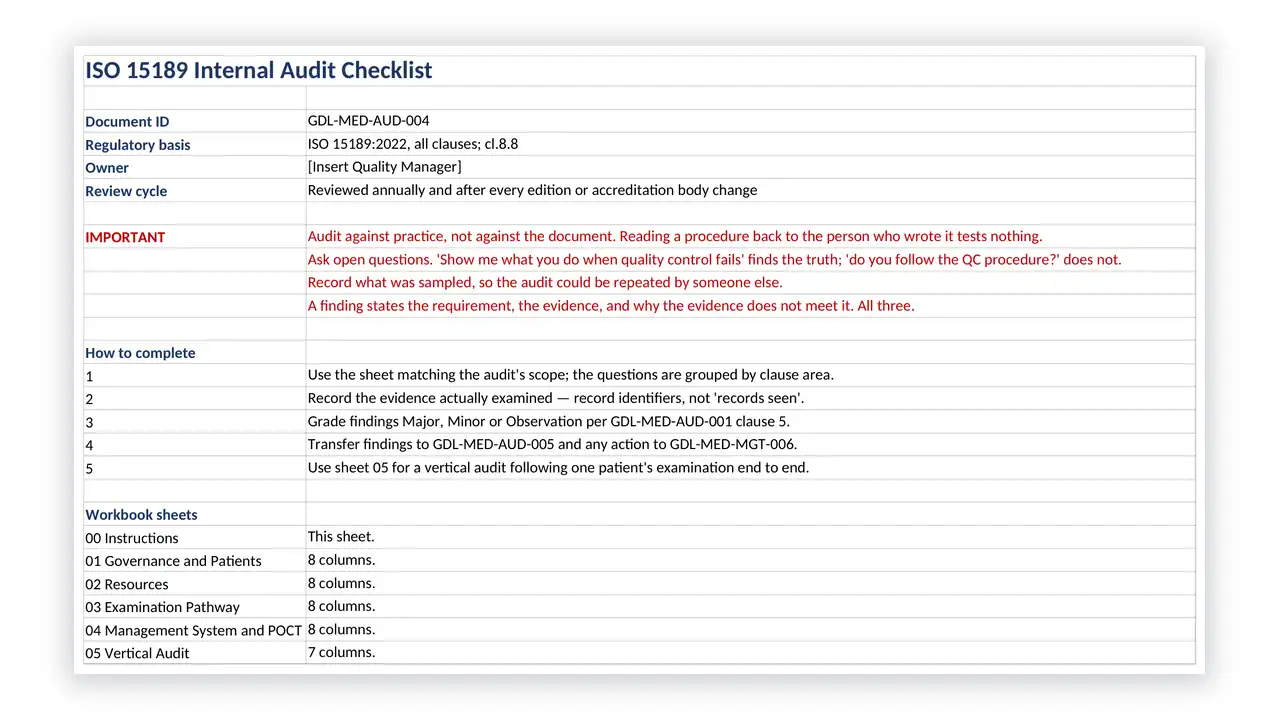
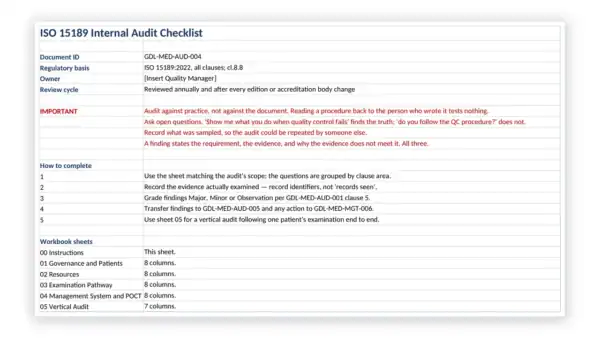
Because ISO 15189:2022 is assessed by an accreditation body rather than a certification body, the ISO 15189 Toolkit includes what an assessor asks for: a clause compliance matrix, an internal audit checklist covering every clause, an audit programme and findings register, a management review pack, and an assessment evidence pack index organised around the patient journey an assessor will trace — because assessors do not read a system from the top, they pick a patient and follow the sample.
For laboratories holding or seeking ISO/IEC 17025 as well, the toolkit includes a crosswalk between the two standards showing where evidence transfers and — more usefully — where it does not. Our guide to ISO 15189 explains what the 2022 edition changed and where medical laboratories most often lose findings; the guide to ISO 17025 covers the testing and calibration side of that comparison.
Simply add your laboratory’s name, replace the bracketed placeholder values with your own detail, and implement the documented policies and procedures within your operational framework.
It is a set of 82 ready-to-edit documentation templates covering every clause of ISO 15189:2022, the international standard for quality and competence in medical laboratories. It includes policies, procedures, registers, matrices and checklists across sixteen sections, from scope of accreditation through to assessment evidence.
No. Medical laboratories are accredited, not certified, and accreditation is granted for a defined scope of examinations rather than for the standard as a whole. There is no ISO 15189 certificate in the sense that ISO 9001 has one.
ISO 15189:2022, the fourth edition and the current one. It replaced ISO 15189:2012 and also withdrew ISO 22870:2016, the point-of-care testing standard, whose requirements it absorbed.
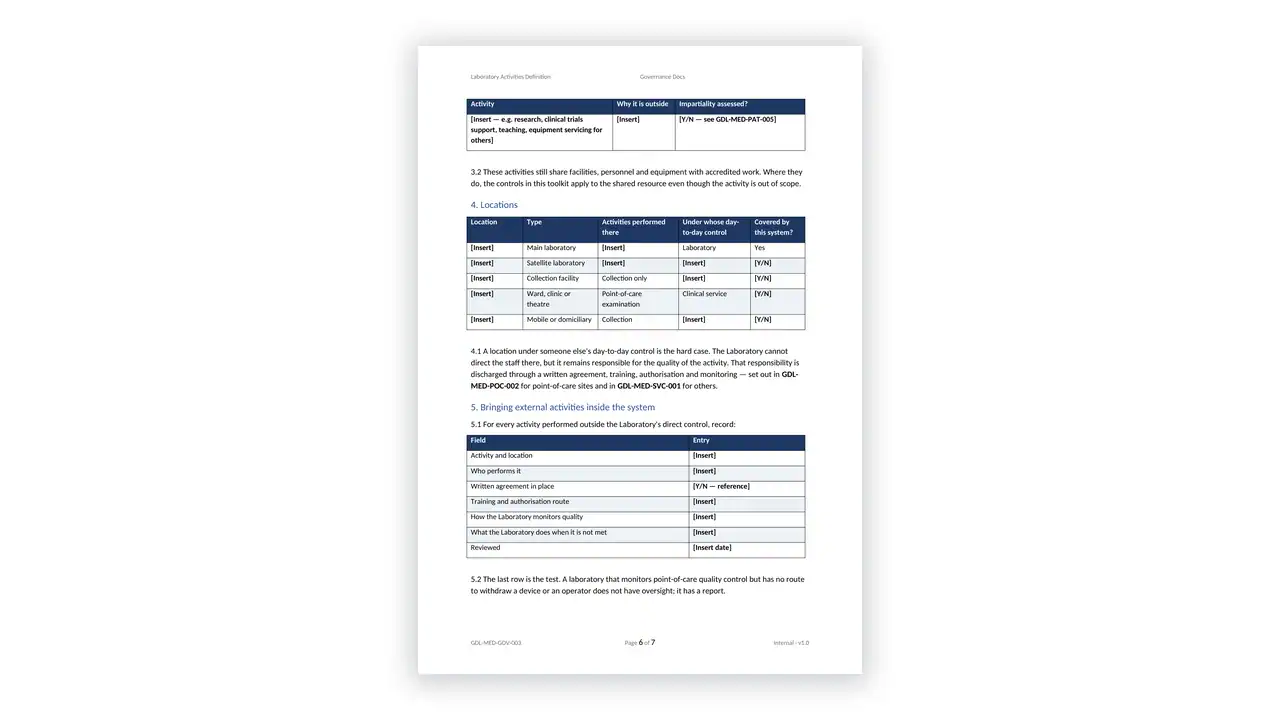
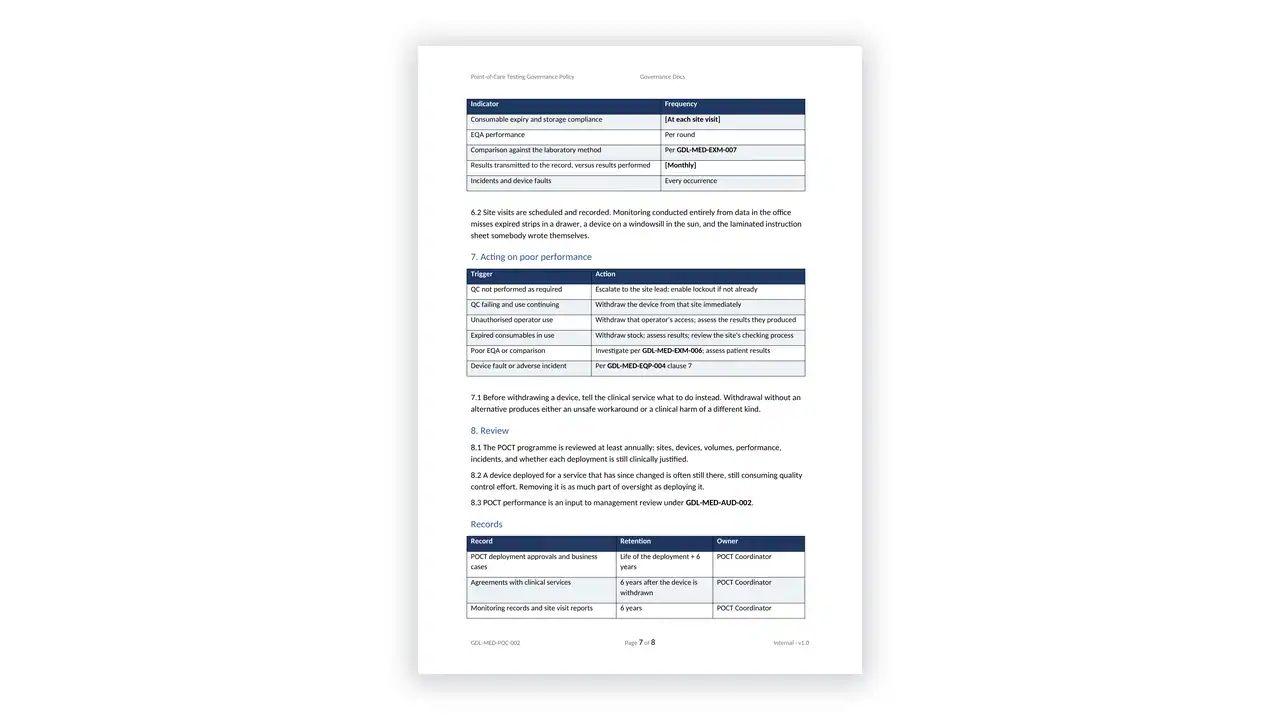
Yes, and this is one of the reasons to prefer a toolkit built after 2022. ISO 22870 no longer exists as a separate standard, so POCT performed under your laboratory’s oversight is inside ISO 15189’s scope. The toolkit covers governance, deployment approval, agreements with clinical services, operator training and authorisation at ward scale, and a device and operator register.
ISO 15189 applies to medical laboratories and ISO/IEC 17025 to testing and calibration laboratories generally. Clause 8 and most of the resource requirements are close cousins. The differences are substantial: ISO 15189 adds obligations to patients, a named laboratory director with evidenced competence, risk management among the governance clauses, biological reference intervals, critical result notification, and a pre-examination, examination and post-examination structure that ISO/IEC 17025 does not use. The toolkit includes a crosswalk quantifying exactly that.
No. If you hold an ISO 9001 system, the toolkit’s determination procedure and gap assessment let you carry clause 8 through it. If you do not, the full clause 8 documentation is included.
63 Microsoft Word documents and 19 Microsoft Excel workbooks. The Word documents carry a table of contents, document control fields and a consistent structure; the workbooks include instruction sheets, controlled dropdown lists, worked example rows, conditional formatting and validation checks. Nothing is locked and no password is required.
Typically twelve to twenty-four months from a standing start. The documents are rarely the constraint. The long poles are external quality assessment, which runs to the scheme provider’s distribution calendar; metrological traceability, which has to be established; competence, which has to be demonstrated over time; and point-of-care sites, which are consistently the largest underestimate in the programme.
It provides the framework for them. Accreditation bodies add requirements on top of ISO 15189 — participation frequency, symbol use, notification obligations, director qualifications, sector schemes — and these differ by body and change without notice. The toolkit includes a supplement structured around the areas where bodies commonly add requirements, together with a notification obligations table, for you to complete from your body’s current publications.
 Comprehensive ISO 15189 Toolkit – 82 Medical Laboratory Templates$99.00


Reviews
There are no reviews yet